Iran says its mines destroyed four tankers in Hormuz; and nobody can prove it
The Revolutionary Guard claims four oil tankers struck its mines on a “prohibited” route south of the Strait of Hormuz and are still burning. No vessel has been named, no navy has confirmed it, and the oil market shrugged; Brent fell below $100. What we know, what we don’t, and why the claim itself is the weapon.
Published 4 November 2026 · 20:11 GMT
The summary
November 4, 2026: Iran’s Revolutionary Guard, via state television, claimed four “non-compliant” oil tankers were destroyed by naval mines on a prohibited passage south of the Strait of Hormuz and were still burning; two other vessels were halted or seized and a drone was shot down. No independent confirmation: no vessel names, flags, positions, or crew details have surfaced; the UKMTO issued no matching advisory; US Central Command did not confirm; no flag state, insurer, or tracker corroborated the claim.
The three lenses
- WestA claim to be disproven, a market that already voted Western coverage, led by Reuters’ own reporting and the AFP wire, treated Wednesday’s statement as an assertion awaiting evidence; and the market agreed.
- EastThe strait that feeds Asia From New Delhi to Beijing, the story is read through the refinery, not the warship.
- Global SouthThe war the neighborhood did not choose In the Gulf itself, where Gulf News chronicled the claim and the sub-$100 Brent print, the story is lived rather than analyzed: the war outside everyone’s window, deciding fuel prices from Karachi to Cape Town.
Key facts
- November 4, 2026: Iran’s Revolutionary Guard, via state television, claimed four “non-compliant” oil tankers were destroyed by naval mines on a prohibited passage south of the Strait of Hormuz and were still burning; two other vessels were halted or seized and a drone was shot down. AFP via The Hindu / IOL, 2026-11-04
- No independent confirmation: no vessel names, flags, positions, or crew details have surfaced; the UKMTO issued no matching advisory; US Central Command did not confirm; no flag state, insurer, or tracker corroborated the claim. Crisis Zone / Safety4Sea, 2026-11-04
- Confirmed separate incident, November 3: the UKMTO verified a tanker struck by two unidentified projectiles in its engine room ~14 nautical miles northeast of Lima, Oman (~1900 UTC); no casualties, no environmental impact. Shipping reports named the Barbados-flagged VLCC Grit, reportedly blacklisted by Iran days earlier. UKMTO via Safety4Sea, 2026-11-04
- Context: the claim came a day after President Trump said the US had launched strikes on Iran following reports of a raid on Qeshm island; the US-Iran war began with American-Israeli strikes in February and has been stalemated for months. AFP / Wall Street Journal via DailyForex, 2026-11-04
- Oil market verdict: Brent fell 2.9% to $100.60 by mid-morning New York time and later slid below $100 ($98.76 ~1605 GMT, first sub-$100 print since early October); WTI tumbled to ~$91.73; traders pricing a post-midterms settlement over escalation. OilPrice.com / Gulf News, 2026-11-04
- Diplomacy: Tehran says it can reopen the strait within two days if Washington meets seven conditions (lifting oil sanctions, releasing frozen assets, ending the port blockade); a Qatari paper reported preliminary US-Iran understandings toward Doha talks; unconfirmed by either government. OilPrice.com / Crisis Zone, 2026-11-04
What did the Revolutionary Guard actually claim?
On Wednesday, November 4, 2026, Iran’s Islamic Revolutionary Guard Corps said four oil tankers had been destroyed after striking naval mines while trying to cross what it called a prohibited passage south of the Strait of Hormuz; and that the ships were still burning. The statement, carried by Iranian state television and reported by the Agence France-Presse wire, described the vessels as “non-compliant” tankers that had defied Tehran’s orders to stay out of the area.
The Guard added that two other “non-compliant ships or vessels” had been halted, Reuters reported them as seized, and that its forces had shot down a drone over the strait. No vessel was named, no flag was given, no position was published, and no word was offered on the fate of any crew.
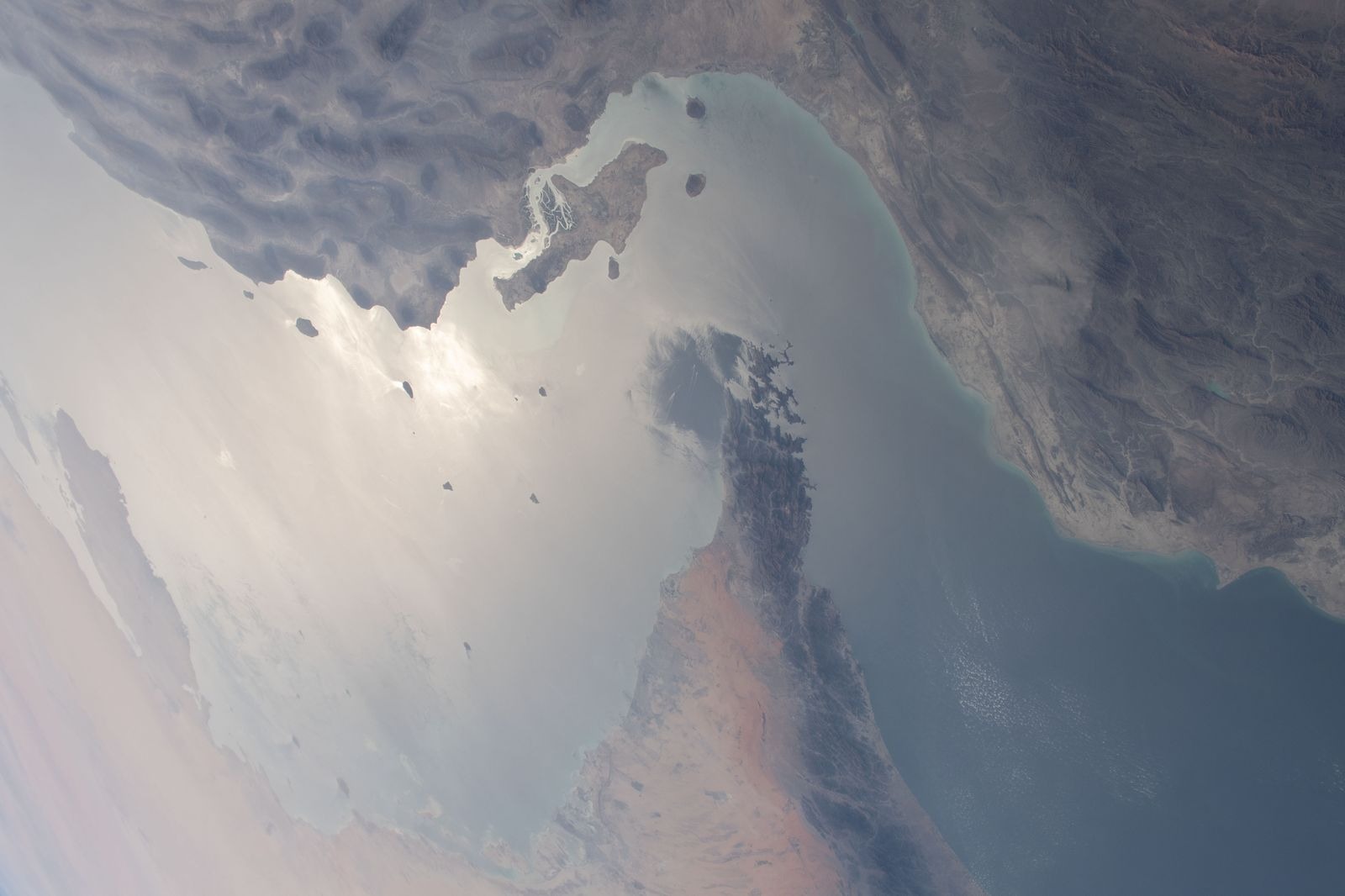
The claim landed a day after President Donald Trump said the United States had launched strikes on Iran, following reports of an American raid on Qeshm, the strait’s largest island. Since the war with the United States and Israel erupted in February, Tehran has asserted control over Hormuz, the world’s most important oil artery, and targeted vessels crossing without its authorization.
The one incident the record actually confirms
Strip away the claim and one hard fact remains. On Tuesday, November 3, at about 1900 UTC, the United Kingdom Maritime Trade Operations office confirmed a tanker was struck by two unidentified projectiles in its engine room, roughly 14 nautical miles northeast of Lima, Oman; no casualties, no environmental impact. Projectiles are not mines, and the British office named no vessel and assigned no blame.
Shipping reports cited by the maritime press identified the ship as the Barbados-flagged very large crude carrier Grit, which Nigeria’s Vanguard reported had been placed on an Iranian blacklist earlier in the week; a pattern of Tehran naming, shaming, then striking vessels it deems hostile to its blockade, which the mine claim would extend dramatically if true.
The wider picture is genuinely volatile. The Wall Street Journal reported American forces hit Qeshm island in a defensive move to protect shipping, and Brent briefly jumped toward $107 before giving it all back. Yet on election day Trump told the Financial Times Washington had no immediate plans to strike Iran, “we seem to be getting everything we want”, and Vice President JD Vance said Monday the sides had “certainly made some progress.” The war that began with American and Israeli strikes in February has been stalemated for months, and both capitals talk of talks and triggers in the same breath.
Everything the claim leaves blank
Four tankers allegedly destroyed, and not one name, flag, owner, insurer, position, or crew manifest has surfaced; not from Tehran, not from any tracker, not from any government. In an age when every supertanker broadcasts its identity by satellite, four burning hulls with no names is not a detail; it is the hole at the center of the story.
As of Wednesday evening, the UKMTO had issued no advisory matching the Guard’s account, American Central Command had not confirmed it, and no flag state had come forward. The US military has rejected similar Iranian claims before, and CENTCOM says American forces cleared all recognized primary transit routes of sea mines. Neither position proves what happened to the four vessels; but the silence of every independent witness is itself evidence.
Finally the mines themselves: the Guard’s statement does not say who laid them, when, or where exactly. A minefield south of Hormuz would be a major military fact with a physical signature; yet no navy, no insurer, and no satellite has shown one.
Why does an unverified claim still move the world?
Because the Strait of Hormuz is not a normal waterway. Before the war, about a fifth of the world’s crude and gas passed through it; in October, Middle East exports of crude, condensate, and fuels slipped to 17.1 million barrels a day from 18.9 million in September, per Vortexa data cited by Reuters, and close to 30 attacks on commercial vessels were recorded last month. Every captain, insurer, and refiner from Mumbai to Rotterdam now prices the strait as a war zone; and a claim of four burning tankers, true or not, reprices it overnight.
Because the “prohibited passage” is the real announcement. By declaring a stretch of international water off-limits and then claiming to have destroyed ships that entered it, Tehran is asserting a unilateral maritime regime; a blockade with its own courts, its own blacklist, and its own mines. Whether or not four hulls are burning, the regime now exists in every shipping company’s risk model, and the Bureau has tracked how that shadow blockade has throttled the strait for months.
And because the claim is aimed at Washington as much as shippers: it arrived hours after American voters punished the war at the ballot box, and Tehran read the result instantly.
The mine claim as a negotiating instrument
Read the timing and the claim looks less like a battle report than a bargaining chip. On Tuesday, United States voters handed the Republicans a historic midterm defeat, and Vice President Vance himself blamed the Iran war. Tehran’s chief negotiator needed no translation: the Americans had voted “no to war.” Within hours, the Guard announced burning tankers; a reminder, in the currency Washington understands, of what escalation costs.
The choreography points the same way. Tehran says it can reopen the strait within two days if Washington meets its long-standing demands, lifting oil sanctions, releasing frozen assets, ending the blockade of Iranian ports. A Qatari newspaper reported Wednesday that the two sides had reached an understanding on preliminary steps toward direct talks in Doha, a report that identified no sources and that neither government confirmed, but one that shows where the region’s money is betting.
Tehran’s messaging is split-screen by design. Chief negotiator Mohammad Bagher Ghalibaf says the republic is “ready for battle with its finger on the trigger,” while President Masoud Pezeshkian insists on resolving the crisis “through dialogue” and warned Tuesday that "no one will benefit from this war." The trigger and the telephone, held up together: that is how Iran has negotiated for forty years, and the mine claim raises the price of the strait ahead of any table in Doha.
The oil market refused to be intimidated. Brent fell 2.9 percent to $100.60 by mid-morning in New York, then slid below $100, $98.76 around 1605 GMT, the first sub-$100 print since early October, as traders bet the midterms made a settlement more likely. When tanker traffic last rebounded through the strait, the same pattern held: diplomacy headlines move prices more than war headlines, until a confirmed hull proves otherwise.
What breaks next if the strait stays a minefield
The first casualty is already visible: confidence. War-risk premiums for Hormuz transits will widen whether or not four tankers are burning, because insurers price claims as well as wrecks; a minefield that may or may not exist is, for underwriting purposes, a minefield. Asian refiners in India, China, Japan, and South Korea, most dependent on Gulf crude, pay the spread first; European diesel and American gasoline follow.
The second is the escalation ladder. A confirmed sinking, with named dead sailors, would force a military response Washington has so far avoided, and the Guard’s blacklist-to-projectile-to-mine sequence suggests Tehran is climbing that ladder deliberately, testing how much pressure the traffic can take before the United States answers. Miscalculation is the historical norm in these waters, not the exception.
The third is diplomatic. If the Doha channel is real, every unverified claim signals the mediators about the cost of failure. If it is not, the claims are Tehran building leverage for a negotiation that has not started; leverage paid for by the crews and cargoes caught between the mines that may be there and the missiles that certainly are.
The three signals to watch before Friday
First, the British watch: whether the UKMTO issues any advisory matching the Guard’s account of four mine strikes. Its silence so far is the single strongest reason for doubt, and its word would end the argument in an hour.
Second, the paper trail: whether any flag state, shipowner, or insurer names a vessel or a crew. Four destroyed tankers cannot hide from the registries; if they exist, the names will surface; if not, the claim will rot.
Third, the American answer: whether Central Command responds to the claim directly, and whether the reported Doha understanding produces anything either government will own. The midterms changed the politics of this war in Washington; the next move belongs to the admirals and the diplomats, in that order.
The three lenses
West Lens:
A claim to be disproven, a market that already voted Western coverage, led by Reuters’ own reporting and the AFP wire, treated Wednesday’s statement as an assertion awaiting evidence, and the market agreed. With Brent below $100 on bets the midterms make a settlement likelier, the Western read is that Tehran’s leverage is depreciating: the “prohibited passage” is lawfare, the mine claim theater, and the only hard datum is the UKMTO-confirmed strike off Oman . The risk is mirror-imaging, assuming that because traders discount the claim, the Guard will stop making it.
East Lens:
The strait that feeds Asia From New Delhi to Beijing, the story is read through the refinery, not the warship. The Hindu’s and the Economic Times’ framing centers energy security: Asia buys the Gulf crude that must cross Hormuz, and every “non-compliant” designation, blacklist, and alleged mine narrows the channel feeding the continent’s growth. The Eastern lens watches the seven-conditions diplomacy closely, lifting sanctions and unfreezing assets are levers Asia understands, and treats the unconfirmed Doha report as the day’s most important paragraph.
South Lens:
The war the neighborhood did not choose In the Gulf itself, where Gulf News chronicled the claim and the sub-$100 Brent print, the story is lived rather than analyzed: the war outside everyone’s window, deciding fuel prices from Karachi to Cape Town. South Africa’s IOL carried the AFP wire straight, and the Southern read is unsentimental; the midterms’ “no to war” verdict is the first hopeful datum in months, the mine claim the reminder that hope is not a plan, and the crews on those unnamed hulls, if they exist, are somebody’s sons.
The consensus
- What we agree on
- What we agree on: on November 4, 2026, Iran’s Revolutionary Guard claimed via state television that four “non-compliant” oil tankers were destroyed by naval mines on a prohibited route south of the Strait of Hormuz and were still burning, with two more vessels seized; the UKMTO separately confirmed a November 3 projectile strike on a tanker off Oman; and Brent crude fell below $100 a barrel on Wednesday.
- What we don't agree on
- What we don’t agree on: whether any tankers actually struck mines; no independent witness has confirmed the claim and the US military has disputed similar Iranian assertions before; whether Tehran’s declared “prohibited passage” carries any legal weight; and whether the Trump administration will order new strikes on Iran after the midterms.
- What we know
- What we know: the exact wording of the Guard’s claim; the UKMTO’s confirmed details of the November 3 incident (two projectiles, engine room, 14 nautical miles northeast of Lima, Oman, no casualties); the shipping-press identification of the vessel as the Barbados-flagged VLCC Grit, reportedly blacklisted by Iran days earlier; Wednesday’s oil-price moves and the large American crude-stock draw; and Tehran’s standing offer to reopen the strait within two days against seven conditions.
- What we don't know yet
- What we don’t know yet: the names, flags, positions, owners, insurers, or crews of the four alleged tankers; who laid the mines or whether a minefield exists at all; whether the reported American-Qatari understanding on preliminary steps toward Doha talks is real; and what Central Command will say about the claim.
- What we expect
- What we expect: the UKMTO and Central Command to address the claim within days; oil markets to keep pricing diplomacy over escalation until a confirmed incident forces a repricing; war-risk premiums for Hormuz transits to widen regardless; and Tehran to keep pairing trigger-rhetoric with dialogue-rhetoric as the price of the strait ahead of any negotiation.
Questions, answered
What exactly did Iran claim on November 4?
Iran’s Revolutionary Guard said four “non-compliant” oil tankers were destroyed after striking naval mines on a prohibited passage south of the Strait of Hormuz and were still burning. It said two other vessels were halted or seized and that a drone was shot down over the strait. The statement was carried by Iranian state TV. No vessel was named and no independent confirmation exists.
Has anyone independently confirmed the tanker claims?
No. As of Wednesday evening, the UK Maritime Trade Operations office had issued no matching advisory, US Central Command had not confirmed the strikes, and no flag state, shipowner, or insurer had come forward. The US military has rejected similar Iranian claims before. Independent outlets note the Guard gave no vessel names, flags, positions, or crew details, so the claim cannot yet be tested.
What happened to the tanker attacked near Oman on November 3?
The UKMTO confirmed that a tanker was hit by two unidentified projectiles in its engine room about 14 nautical miles northeast of Lima, Oman, at roughly 1900 UTC on November 3. There were no casualties and no environmental damage. Shipping reports identified it as the Barbados-flagged VLCC Grit, reportedly placed on an Iranian blacklist earlier in the week. Projectiles are not mines.
Why did oil prices fall if tankers are supposedly on fire?
Traders are betting on diplomacy, not war. Brent fell 2.9 percent to $100.60 by mid-morning in New York and later slid below $100 for the first time since early October, as the Democratic midterm sweep made a US-Iran settlement look likelier and fresh American strikes less imminent. Markets have learned to discount unverified claims; until a confirmed hull proves them wrong, which has not happened.
What would it take to reopen the Strait of Hormuz?
Tehran says it could reopen the strait within two days if Washington accepts seven conditions, including lifting oil sanctions, releasing frozen assets, and ending the US blockade of Iranian ports. A Qatari newspaper reported preliminary US-Iran understandings toward direct talks in Doha, but neither government confirmed it. Mediated contacts continue with no diplomatic breakthrough so far.
Sources
- AFP via The Hindu / IOL, 2026-11-04
- Crisis Zone / Safety4Sea, 2026-11-04
- UKMTO via Safety4Sea, 2026-11-04
- AFP / Wall Street Journal via DailyForex, 2026-11-04
- OilPrice.com / Gulf News, 2026-11-04
- OilPrice.com / Crisis Zone, 2026-11-04