The Security Council extended the Gang Suppression Force's mandate to March 2027 by 12 votes to 3 — hours after gangs killed 11 people in Haiti's breadbasket region, and with the country's first elections in a decade set for December 13.
The vote itself took moments. The mission it extended has been a decade in the making.
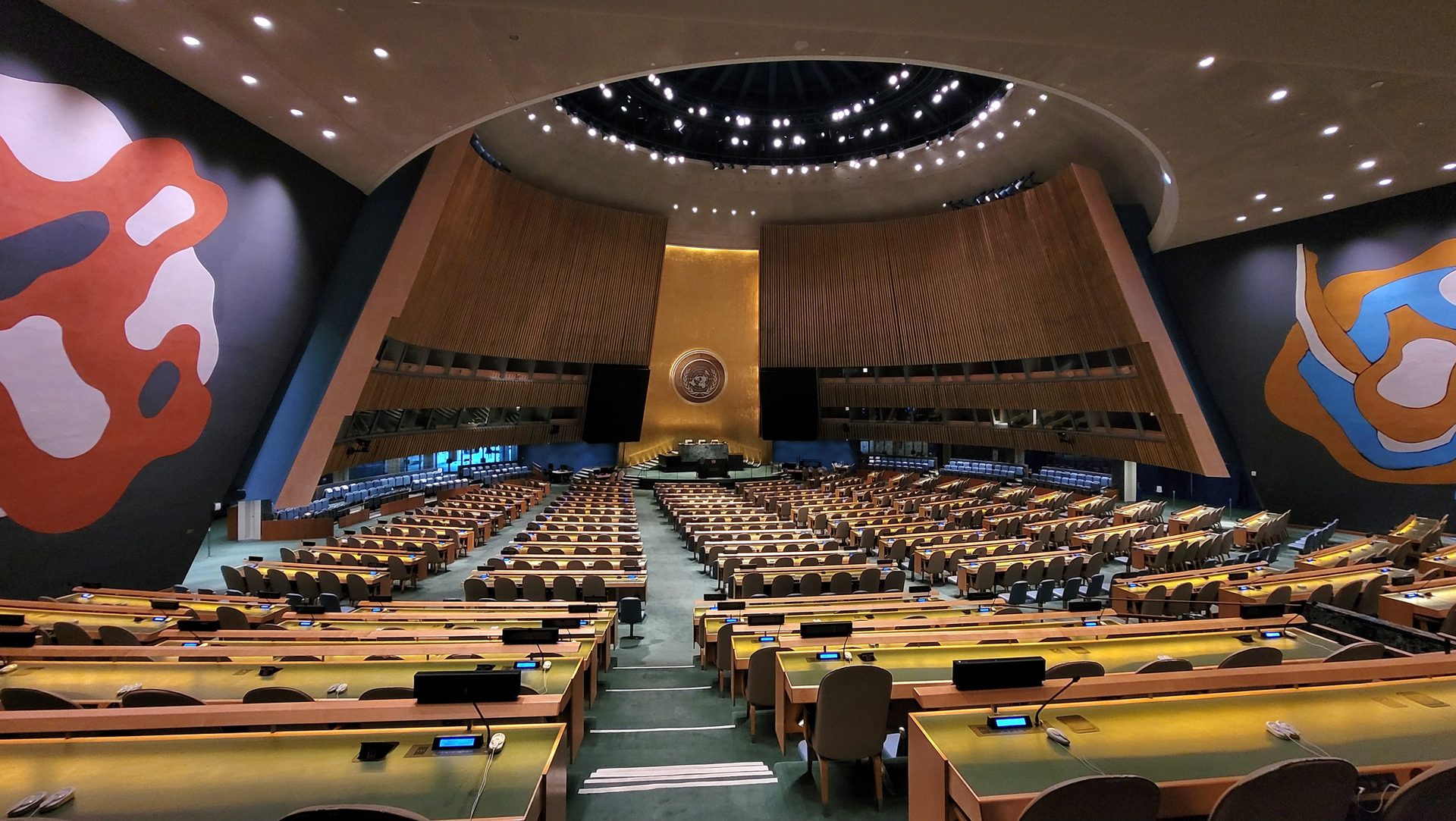
On Tuesday, the UN Security Council adopted Resolution 2829, extending the mandate of the Gang Suppression Force in Haiti through March 31, 2027. Twelve members voted yes, none voted no. China, Russia and Pakistan abstained — citing funding, personnel, and questions of efficacy. The United States co-sponsored the resolution, and Ambassador Mike Waltz spoke for the motion with unusual candor: “Seven missions have been dedicated to Haiti over the previous decades and obviously to limited success,” he said. “We’re trying to do something genuinely different.”
The vote came hours after the gangs answered in their own language. In Haiti’s breadbasket region, gang members burned homes and killed at least 11 people — retaliation, a local mayor said, for a GSF operation that killed three gang members at illegal toll booths. A month ago, the hillside town of Kenscoff suffered a massacre: 47 dead, around 50 kidnapped. The timing matters — the Council renewed a force that is taking casualties while it waits for reinforcements.
Here is the arithmetic. On paper, the GSF is authorized for 5,500 personnel and 50 civilian staff. In practice, roughly 1,500 troops are on the ground — Waltz says the remaining 4,000 arrive in the coming months, but as of July the force numbered fewer than 1,000, from Chad, Mongolia, Jamaica, Guatemala, El Salvador and Sri Lanka. Under 30 percent of its intended size. Haiti first asked for international security support in 2022, and every mission since has foundered on the same rocks: voluntary contributions, thin deployments, gangs that outgun the police.
“The entire effort is designed around the ultimate objective that Haitians themselves take back control of their own security and their own future, and this cannot and will not become an endless mission.” — Mike Waltz, U.S. ambassador to the UN
What happens next is written on the calendar. Haiti is preparing its first presidential and legislative elections in a decade — plus a constitutional referendum — on December 13. The resolution stresses “security conditions conducive to holding free and fair elections.” Between now and then, the force must roughly quadruple while the gangs do everything they can to prove it cannot.
In Washington, the renewal is a down payment on the December vote. Keep the force alive long enough to give Haiti an elected government — the first in a decade — and the “endless mission” Waltz fears becomes someone else’s problem. The abstentions sting but don’t block; the risk is arithmetic. Fifteen hundred troops cannot hold a country, and the 4,000 promised are a forecast, not a fact.
Beijing and Moscow read the same resolution as a symptom. Ambassador Sun Lei’s warning — military force alone is unlikely to resolve Haiti’s crisis — and Russia’s questions about funding, deployment and legal status amount to one charge: the Council keeps authorizing missions it cannot staff, in a country whose problems are political, not tactical. An abstention, not a veto — the mission lives, the criticism is on the record.
For the region and the South, this is the eighth foreign mission in a country that has never lacked interventions. Haiti’s own ambassador welcomed the renewal — Port-au-Prince has asked for help since 2022, and the choice on the ground is between an undermanned force and the gangs. The troops who did come are from Chad, Mongolia, Jamaica, Guatemala, El Salvador and Sri Lanka — the South carrying a mission the great powers designed.
