After three days of restraint while Russia kept hitting Ukrainian energy sites, Zelensky told the FT the refinery pause is over — putting Kyiv on a collision course with Washington.
Published 15 October 2026 · 18:00 GMT
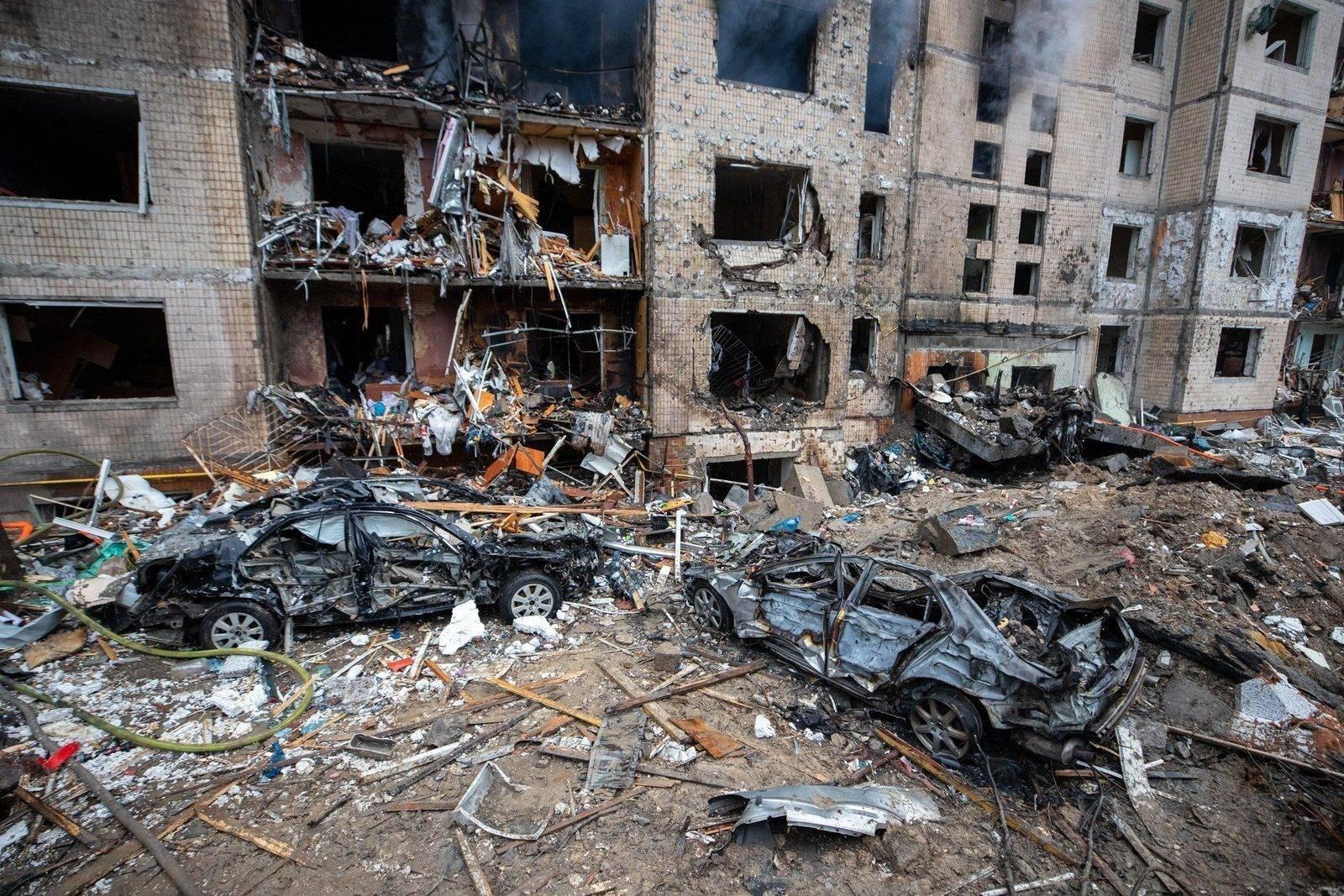
Nine words, spoken in London, ended the shortest energy truce of the war. “The block is out. We’re done.” With that, Volodymyr Zelensky ordered Ukraine back to hunting Russian refineries — three days of Ukrainian restraint, in his telling, answered by more than 100 Russian attacks on his country's power grid.
The pause began on Sunday, when President Donald Trump announced what he called an “energy ceasefire” between Russia and Ukraine. Zelensky said he learned of it the way everyone else did — with no advance word from Washington — but ordered his forces to hold their drones anyway. Three days later, during a visit to London, he declared the experiment over.
His arithmetic was blunt: three days of Ukrainian restraint, answered — in his telling — by more than 100 Russian attacks on Ukrainian energy infrastructure in the past week. That figure is Zelensky's claim, and it has not been independently confirmed. But it is the number on which he is staking this decision, and the reason he gave the Financial Times for walking away from Washington's truce.
“The block is out. We’re done.” — Volodymyr Zelensky, London, October 15, 2026
The pressure behind the truce came from an unlikely place: a diesel contract. Trump announced a deal to purchase more than 2.25 million barrels of diesel from Russia to address a global shortage, then called for a moratorium on strikes against energy facilities. In Kyiv's reading, Washington was asking Ukraine to protect the very revenue stream that funds Russia's war — while Russian missiles kept falling on Ukrainian power plants.
The choreography of the announcement matters. Trump unveiled the so-called energy ceasefire on Sunday, October 11; Zelensky said he knew nothing about it in advance and learned of it alongside everyone else. He ordered the pause anyway — a gesture of good faith toward Washington that, by his account, Moscow answered with more strikes. Three days was all the experiment got.
The resumption is not theoretical. Moments after Zelensky's interview was published, Pavel Malkov, the governor of Russia's Ryazan province, confirmed that Ukrainian drone strikes had hit a state oil company there, sparking a fire. Ukrainian drones were already over Russian refineries as the president spoke.
He has long defended the refinery campaign as both economics and payback: striking Russian oil facilities hampers Moscow's war funds while answering Russian strikes on Ukrainian power plants. That is a position he has held publicly for months, and the three-day pause changed nothing in his calculus — except, he says, to prove that restraint buys nothing. Moscow, notably, never publicly confirmed that it had agreed to any reciprocal pause.
There is a second, sharper grievance. Zelensky told the Financial Times that Ukrainian military officials were warned by their American counterparts: “if you will not stop [the energy strikes], we will block intelligence.” He described it as a deliberate pressure tactic — and said that during the pause, Ukraine lost US early-warning alerts for incoming ballistic missiles while Starlink satellite communications were slowed across the country. “It was not a technical problem, it was the will,” he said. Washington has denied halting intelligence sharing, and the communications problems were presented to Kyiv as a technical glitch.
Buried in the Starlink episode is a structural lesson about this war: Ukraine's most advanced weapons fly on infrastructure owned by an American billionaire and gated by the American state. A drone campaign is only as independent as its communications, and Zelensky has just learned — in public — exactly where his ends. That dependence is the quiet subject of everything he said in London.
Energy is the thread that now ties this war to every filling station on the planet. Fuel prices have soared since the US-Israeli war with Iran began in February, tightening global diesel markets — the same shortage that sent Trump shopping for Russian barrels, as markets have been pricing in for weeks. By striking refineries, Ukraine was making that shortage worse; by buying the diesel, Trump is easing it. The two goals are now in direct collision, and Kyiv just chose its own.
The political rupture is now personal. On Saturday, Trump said it was “time for Ukraine to get a new president” — an extraordinary public call from the chief patron of an ally at war. Zelensky, speaking to British journalist Piers Morgan on Wednesday, said he felt “betrayed” by the diesel deal and called it a “simple victory” for the Kremlin. The language of partnership has given way to the language of grievance, on both sides.
Zelensky has named his price for a return to restraint, and it is not diplomacy: more US-made Patriot interceptor missiles, which he called the “minimum” acceptable in exchange for halting the strikes. It is a transaction stated in the open — air defenses for refinery calm — and it tells you exactly how far trust between Kyiv and Washington has fallen.
Ukraine's long-range drone campaign has already shown it can reach deep inside Russia — earlier strikes hit facilities as far away as Omsk, thousands of kilometers from the front. The Ryazan strike, confirmed within hours of the announcement, suggests the target list is already loaded and the drones are already flying.
This is not a new campaign but a resumed one. Ukraine's long-range drones have been hitting Russian refineries for months — strikes have reached as far as Omsk in Siberia — in a deliberate effort to shrink the refining margins that fund Moscow's war machine. Each refinery knocked offline is crude that Russia must sell raw, at a discount, instead of as finished fuel at a premium.
For Moscow, the arithmetic is uncomfortable. Russian refining capacity is one of the few parts of the war economy that is both lucrative and impossible to hide: a refinery cannot be moved underground. Every successful strike narrows the margin between what Russia pumps and what it can sell at a premium — and the diesel deal with Washington, paradoxically, makes each remaining barrel more valuable.
For Washington, the collision is domestic. Trump is working to bring down energy costs with midterm elections in view, and he has blamed Ukrainian strikes on Russian refineries in part for rising diesel prices. Cutting a fuel deal with Moscow while Kyiv burns Russian refineries is not one policy; it is two, and they are now fighting each other.
For Europe, the picture is the bleakest. Several of Ukraine's European allies criticised the diesel agreement, and Kyiv's open defiance of Washington leaves them caught between an ally that will not be managed and a patron that will not be trusted. The continent that buys the diesel and shelters the refugees has the least say in either decision.
Behind every paragraph of this story sits a human arithmetic that rarely makes the headlines. Russian strikes on Ukrainian energy infrastructure land hardest as winter approaches, when a power plant is not infrastructure but survival for Ukrainian households. That is the audience Zelensky is really speaking to — not the Financial Times, and not the White House.
The diesel market is the fuse. Global diesel has been tight for months, and restricted flows through Hormuz have kept traders on edge since the US-Israeli war with Iran began in February. Every Ukrainian drone that finds a Russian refinery tightens that market a little more — which is precisely why Trump wants the drones grounded, and precisely why Kyiv sees them as leverage.
What to watch now is simple: whether Russia answers in kind against Ukraine's grid as winter approaches; whether Washington follows its words with action on intelligence or air defenses; and whether the next drone wave hits refineries far enough east to move the price of diesel in American markets. Zelensky has made his move. The next one belongs to everyone else.
Read from the West, this is a story about an ally pushed past patience. Ukraine held its drones for three days at Washington's request and, in Kyiv's account, got 100 Russian strikes on its power grid in return — plus a lecture and a threat to its intelligence feed. Zelensky's defiance looks less like recklessness than like a small country refusing to pay for a ceasefire only one side observes.
The harder Western question is the diesel deal itself. Buying Russian fuel to calm domestic prices while asking Ukraine to shield Russian refineries puts Washington on both sides of the energy war. European capitals, already critical of the agreement, now face the bill for a rupture they did not choose.
Read from Moscow, the announcement confirms what the Kremlin never said aloud: the “energy ceasefire” was a fiction, and Ukrainian drones never truly stood down. The Ryazan fire, confirmed by a Russian governor within hours, will be presented as proof that Kyiv cannot be bound by American promises — and that Russia's refineries remain legitimate targets in an undeclared economic war.
The eastern reading also notes the irony Washington would rather skip: the United States is now buying Russian diesel while condemning the strikes that make diesel scarce. From this angle, the moratorium looks less like peacemaking than price management, with Ukraine's war as the variable being adjusted.
Read from the Global South, this is above all an energy story with a war attached. Diesel prices have climbed since the US-Israeli war with Iran began in February, and every refinery fire in Russia tightens the market that developing economies buy into. The Washington-Moscow diesel deal is the kind of great-power arrangement the South has seen before: made over its head, priced into its fuel tanks.
The southern question is who pays for the standoff. If Ukrainian drones keep Russian barrels off the market, importers from Asia to Africa absorb the cost; if Washington's deal stabilizes supply, Moscow's war chest grows. Either way, the bill lands far from London, Kyiv, or Washington.
Zelensky says Ukraine held its drones for three days under the US-announced energy ceasefire while Russia launched more than 100 attacks on Ukrainian energy infrastructure in the past week — his claim. With Moscow never publicly confirming any reciprocal pause, he told the Financial Times on October 15 that restraint had bought nothing: “The block is out. We’re done.” A strike on a Ryazan refinery followed within hours.
President Trump announced a deal to purchase more than 2.25 million barrels of diesel from Russia to ease a global shortage, then called for a moratorium on strikes against energy facilities. Fuel prices have soared since the US-Israeli war with Iran began in February. Kyiv reads the deal as Washington protecting the revenue stream that funds Russia's war while asking Ukraine to tie its own hands.
Zelensky claimed US military officials warned Kyiv: “if you will not stop [the energy strikes], we will block intelligence.” He also said Ukraine lost US early-warning alerts for ballistic missiles during the pause and that Starlink communications were deliberately slowed — “It was not a technical problem, it was the will.” Washington has denied halting intelligence sharing; the communications issues were described as a technical glitch.
Zelensky named his price: more US-made Patriot interceptor missiles, which he called the “minimum” acceptable in exchange for halting the refinery campaign. That offer frames any future pause as a transaction — air defenses for refinery calm — rather than a gesture of trust. Whether Washington pays it, and whether Moscow would honor its own side this time, remains entirely open.
