France braces as the Yellow Vests call for ‘mass disobedience’
Unions and students march through Paris against the high cost of living while the Yellow Vests defy a ban at Place de la Concorde, 70,000 police on the streets, and a prime minister promising talks on Monday that may decide how long the autumn of anger lasts.
Published 7 November 2026 · 12:07 GMT
The summary
Saturday 7 November 2026: trade unions and student groups march through central Paris against the high cost of living and in support of young people, while the Yellow Vests plan a separate rally at Place de la Concorde at 2pm despite a ban by the authorities. 70,000 police officers and security forces are deployed across France for the day, Interior Minister Laurent Nunez said, warning: “If there are any rioters or looters ... we’ll be ready and waiting for them.”
The three lenses
- WestWestern coverage reads the day as a test of a presidency running out of road.
- EastThe East counts people, and it counts them twice.
- Global SouthThe South hears a familiar story in an unfamiliar setting: a government that answers a cost-of-living protest with a security operation.
Key facts
- Saturday 7 November 2026: trade unions and student groups march through central Paris against the high cost of living and in support of young people, while the Yellow Vests plan a separate rally at Place de la Concorde at 2pm despite a ban by the authorities. CNA
- 70,000 police officers and security forces are deployed across France for the day, Interior Minister Laurent Nunez said, warning: “If there are any rioters or looters ... we’ll be ready and waiting for them.” CNA
- Thursday 5 November: around 575,000 demonstrators joined 193 events across France, according to the Interior Ministry, the biggest day since the unrest began in September; the CGT counted 1,573,000 people in 207 cities, and 642 people were arrested. Japan Times
- 17 October: France saw its worst rioting in years, with looting and damaged shops and public buildings; on 19 October Nunez admitted the police had lost control of the situation in a number of cities. CNA
- The demands: an increase in the minimum wage, which has not received a discretionary boost since 2012, across-the-board wage raises, tax reforms and better learning conditions for young people. CNA
- Monday 9 November: Prime Minister Sébastien Lecornu meets trade unions and employers to discuss wages and purchasing power; President Emmanuel Macron’s term ends in May 2027, with the far right leading in the polls. CNA
Why are two different marches heading for the same city on the same day?
Paris wakes on Saturday 7 November 2026 to a capital split between two demonstrations that share a grievance and refuse to share a route. Trade unions and student groups have called an authorised march through central Paris against the high cost of living and in support of young people, the latest step in weeks of youth-led unrest. The Yellow Vests have declined to join it, calling their supporters instead to Place de la Concorde at 2pm, in a rally the authorities have banned, a few hundred metres from the National Assembly and the Élysée Palace.
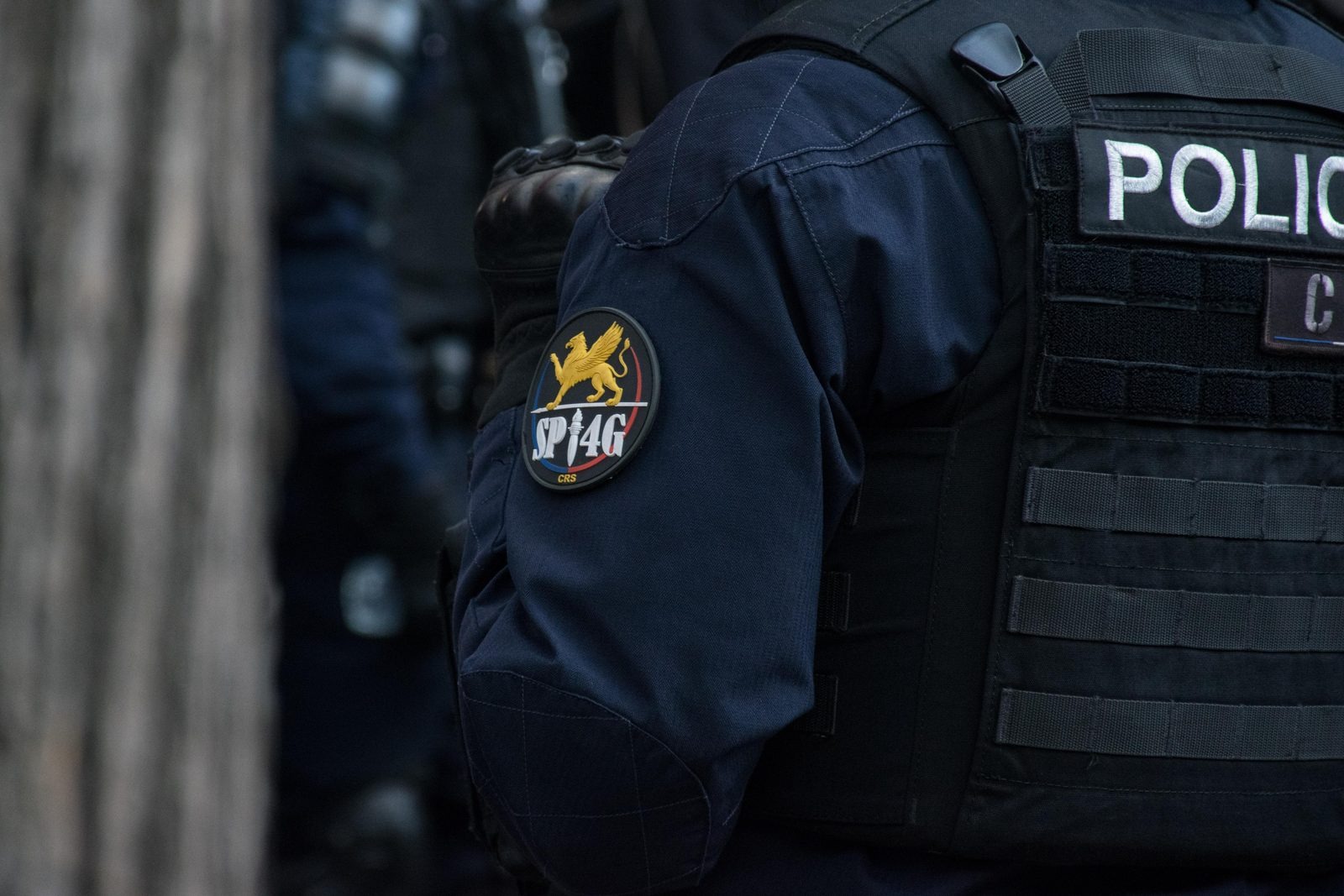
The movement calls the gathering its Act IV. “We are calling for mass disobedience,” Benjamin Ball, a member of its coordinating committee, told reporters, and the organisers say the banned rally will go ahead regardless. Interior Minister Laurent Nunez said 70,000 police officers and security forces would be deployed across the country. “If there are any rioters or looters ... we’ll be ready and waiting for them,” he said.
The day follows Thursday’s nationwide strike and the student protests that opened the autumn. What began in September as a dispute over the 2027 budget has become the longest test of Emmanuel Macron’s authority in the final stretch of his presidency.
What do the numbers from Thursday actually say?
Thursday 5 November was the biggest day of protest since the unrest began, and the figures themselves are part of the argument. The Interior Ministry gave a final estimate of around 575,000 demonstrators at 193 events across the country, with 65,000 of them in Paris. The CGT, the left-wing confederation that helped call the strike, counted 1,573,000 people in 207 cities, including 350,000 in Paris, 150,000 in Marseille and 120,000 in Bordeaux. The gap is the oldest dispute in French street politics: the state counts low, the unions count high, and the truth marches somewhere in between.
What nobody disputes is that the day was mostly peaceful and partly violent. The interior ministry said Thursday’s protests had generally gone well, despite 642 arrests, and clashes broke out in several cities. In Lyon a car was set ablaze, and near Toulouse a school was set on fire. The Education Ministry said 17.5 percent of public primary school teachers were expected to strike, and the domestic intelligence service, quoted by BFM TV, had expected between 500,000 and 700,000 people outside Paris.
The backdrop is darker. On 17 October France saw its worst rioting in years, and on 19 October Nunez admitted the police had lost control in a number of cities. On 31 October the Interior Ministry counted 320,000 protesters nationwide, including 70,000 in Paris, and the prefecture banned a Yellow Vests route to the Concorde that day, then rejected a Bastille-to-Concorde route on 5 November.
What can nobody count until the evening?
The first unknown is the simplest: how many people will actually turn out today, and whether the two marches together draw more than Thursday’s crowds or split them. The ministry and the unions will publish rival figures by nightfall, and the gap between them will be read as a verdict on the movement itself. The second unknown is Place de la Concorde itself. The rally is banned, the square is sealed by police, and the Yellow Vests have promised disobedience, so the question is whether the afternoon ends in a standoff, a dispersal, or the kind of clashes that marked 17 October.
The third unknown is what the government can actually offer on Monday, when Prime Minister Sébastien Lecornu is due to discuss wages and purchasing power with trade unions and employers. The unions want a rise in the minimum wage, which has not received a discretionary boost since 2012, alongside across-the-board wage raises, tax reforms and better learning conditions. With the European Union’s second-largest economy under pressure to rein in its debt, the government has limited scope to appease protesters, and nobody knows yet whether the conference will produce a concession or a polite refusal.
The last unknown is duration. The protesters intend to keep demonstrating until Christmas, and possibly until the presidential elections next spring. Whether a movement built from three separate forces, students, unions and Yellow Vests, can hold together for months, or frays once the cold arrives and the talks begin, is something only the coming weeks will show.
Why does a cost-of-living march reach all the way to the Élysée?
It matters because the calendar has collapsed the distance between the street and the ballot box. The protests come less than six months before voters elect a new head of state to replace Macron, whose presidency ends in May 2027, and the far right is leading in the opinion polls. The Yellow Vests, who first emerged eight years ago against fuel-tax hikes, now demand the departure of Macron and his government and a new constitutional process, turning a dispute over wages into a dispute over who governs France.
It matters because the dispute sits on top of a budget the government cannot pass cleanly. The unrest began on 29 September as parliament debated the 2027 budget, and the government has struggled since to push its spending plans through a divided assembly, with debt reduction pulling in one direction and the protesters’ demands in the other. On 4 November Macron convened a National Defense and Security Council meeting at the Élysée to prepare for the demonstrations of 5 and 7 November.
And it matters because the policing itself has become part of the story. The police response has faced criticism for being heavy-handed, with dozens of internal investigations into allegations of brutality, and Reporters Without Borders recorded 40 cases of journalists obstructed in their coverage, including 21 involving physical violence. After several instances of apparent police brutality against its reporters, the AFP news agency urged protection for its journalists on Friday.
What is the shape of a movement that marches in two directions at once?
The most important fact about today is not the size of either march but the fact that there are two of them. The unions and the students have an authorised route, a list of demands and a meeting with the prime minister on Monday; the Yellow Vests have a banned square, a call for disobedience and no one to negotiate with. That split is both the movement’s strength and its weakness: it lets three different Frances march at once without any one submitting to the others’ discipline, yet a government can talk to the first two and arrest the third, and the public will judge the whole day by whichever march turns violent.
The government’s answer is itself two-tracked: 70,000 officers on the street and a wage conference on Monday. The first track says the state will not be humiliated again after 17 October; the second says it is still willing to pay something to make the protests stop. The inter-union coalition demands a concession large enough to be felt in a pay packet, not just announced at a press conference. The minimum wage has not had a discretionary boost since 2012, and that single fact explains the anger better than any speech from any side.
There is also a longer echo. The Yellow Vests of 2018 were a revolt against a fuel tax; those of 2026 are a revolt against a whole economy in which wages have not kept up with prices. The students who opened the autumn are the connective tissue, marching for classrooms today and wages tomorrow, in the generation that will vote in its first presidential election next spring.
What breaks first if the Concorde turns violent?
If the banned rally ends in clashes, the first casualty will be the government’s own narrative of control. A second 17 October, six months before the election, would hand the far right, already leading the polls, a ready-made argument that the state cannot keep order, and the far left an argument that the state keeps order only by force. The investigations into alleged police brutality would multiply, the RSF figures would grow, and the Monday talks would open under the worst possible conditions, with Lecornu negotiating against a backdrop of broken glass.
If the day stays peaceful and the crowds are large, the pressure reverses. A calm, massive Saturday would prove the movement can discipline itself and make a token concession on Monday look like an insult. The election dynamic would tighten further: the far right leading the polls feeds on disorder, while Mélenchon’s rise among the young feeds on the same anger that fills the streets.
Beyond France, the pattern is already travelling. CNN noted similar protest movements producing strikes planned later this month in Spain, Italy, Portugal and Belgium. A French government that finds a formula, a wage rise that sticks, a negotiation that holds, would export the answer as surely as it now exports the unrest.
What should readers watch for next?
Watch Place de la Concorde from 2pm, and watch it twice: once for what happens in the square, and once for what the prefecture does about it. A rally dispersed without violence is a government success; a rally that holds its ground is a movement success; a rally that ends in running battles is a failure for everyone except the candidates who campaign on disorder. Watch the evening figures too, and read them as a pair: the Interior Ministry’s count and the CGT’s count, and the distance between them.
Then watch Monday, when Lecornu sits down with the unions and the employers to discuss wages and purchasing power. The question is not whether he talks, he has already promised to, but whether he brings a number large enough to be felt in a pay packet. If the talks produce a concession, the unions must decide whether to bank it or hold out for more; if they produce nothing, the next date will be set by the street. The protesters say they will keep going until Christmas, and possibly until the spring elections, and after today, nobody in Paris doubts they mean it.
The three lenses
West Lens:
Western coverage reads the day as a test of a presidency running out of road. Reuters, reporting from Paris on the eve of Thursday’s strike, framed the mobilisation as a fresh test for Macron after weeks of unrest rattled his government, and CNN called it France’s biggest day of protests in years, stressing the turnout and the government’s struggle to pass a budget.
East Lens:
The East counts people, and it counts them twice. The Japan Times, reporting the morning after Thursday’s marches, led with the Interior Ministry’s 575,000 and the 193 events, then set beside them the burned car in Lyon and the school set on fire near Toulouse.
South Lens:
The South hears a familiar story in an unfamiliar setting: a government that answers a cost-of-living protest with a security operation. Anadolu, the Turkish agency, reported independently that Macron had convened his National Defense and Security Council on 4 November to prepare for the 5 and 7 November demonstrations, a detail that travelled widely across Southern outlets because it captures the shift from negotiation to security planning.
The consensus
- What we agree on
- What we agree on: on Saturday 7 November unions and students march in central Paris while the Yellow Vests hold a separate rally at Place de la Concorde despite a ban; 70,000 police are deployed; Thursday 5 November was the biggest day of protest since September, with 575,000 demonstrators by the Interior Ministry’s count; and the Yellow Vests are calling for mass disobedience.
- What we don't agree on
- What we disagree on: how big the movement really is, with the ministry counting 575,000 on Thursday and the CGT counting 1,573,000; whether the Yellow Vests’ return is a fringe revival or a genuine second wave; and whether Lecornu’s Monday talks can produce a concession large enough to end the protests.
- What we know
- What we know: the numbers, the deployment, the turnout counts, the 642 arrests on Thursday; the dates, 29 September, 17 October, 31 October, 5 November, 7 November; the names, Nunez, Lecornu, Ball, Macron; the demands, the minimum wage, pay rises, tax reform, better learning conditions; and the ban on the Concorde rally.
- What we don't know yet
- What we don’t know: how many people will turn out today; whether the Concorde rally stays peaceful or repeats 17 October; what Lecornu will actually offer on Monday; whether the movement holds together until Christmas or frays once the talks begin; and how the far right’s lead in the polls will shape what happens next.
- What we expect
- What we expect: a tense afternoon at the Concorde with the ban tested in public; rival turnout figures by nightfall that each side will read as a verdict; Lecornu’s Monday meeting as the first real off-ramp; and the protest energy feeding directly into the presidential campaign, which now dominates everything else in French politics.
Questions, answered
Why are the Yellow Vests marching separately from the unions?
The Yellow Vests refused to join the authorised march called by unions and student groups, and instead called their supporters to Place de la Concorde at 2pm for their Act IV, despite a ban on demonstrations in the area. Their coordinating committee member Benjamin Ball said they were calling for mass disobedience, and the movement, born in 2018 against fuel-tax hikes, is now demanding the departure of President Macron and his government.
How many police are deployed, and why so many?
Interior Minister Laurent Nunez said 70,000 police officers and security forces would be deployed across France on Saturday. The scale reflects 17 October, when France saw its worst rioting in years and the police were caught unawares, with looting and damaged shops and public buildings. Nunez warned that if there were rioters or looters, the forces would be ready and waiting for them.
What are the protesters demanding?
The unions are calling for an increase in the minimum wage, which has not received a discretionary boost since 2012, alongside across-the-board wage raises, tax reforms and better learning conditions for young people. An inter-union coalition said on Friday that only a response to the demands put forward for weeks by workers, civil servants, young people and pensioners would bring the protests to an end.
What happens on Monday?
Prime Minister Sébastien Lecornu is due to discuss wages and purchasing power with representatives of trade unions and employers’ organisations on Monday 9 November, and to present responses to their demands. The meeting is the government’s first real off-ramp after a week of strikes and marches, and the question is whether he brings a figure large enough to be felt in a pay packet.
Sources
- CNA
- Japan Times