The second Saturday of cost-of-living protests drew 410,000 people by the official count, and Paris marched largely in peace. Then, as the crowd dispersed at Porte de Vincennes, fireworks, stones, tear gas and a water cannon took over — and the Interior Minister's arrest count jumped from 135 in the early afternoon to nearly 1,000 by evening.
Published 24 October 2026 · 21:05 GMT
The second Saturday of cost-of-living protests drew 410,000 people by the official count, and Paris marched largely in peace. Then, as the crowd dispersed at Porte de Vincennes, fireworks, stones, tear gas and a water cannon took over — and the Interior Minister's arrest count jumped from 135 in the early afternoon to nearly 1,000 by evening. On Saturday 24 October 2026, France's second nationwide cost-of-living protest wave drew 410,000 people by the Interior Ministry's count — 110,000 in Paris — while the CGT union put the figures at about 800,000 nationwide and 250,000 in Paris.
On Saturday 24 October 2026, a second nationwide wave of protests against the cost of living, inequality and school conditions drew hundreds of thousands of people across France; the Paris march was largely peaceful by day, then broke into clashes with tear gas, a water cannon and fireworks after nightfall; and the nationwide arrest count rose from 135 in the early afternoon to nearly 1,000 by evening.
How big the mobilisation really was — the Interior Ministry counted 410,000 nationwide and 110,000 in Paris, while the CGT put both figures at near double — and whether the bans, curfews and 70,000-strong deployment prevented violence or provoked confrontation, with the government blaming ultra-left rioters and protesters describing a repressive crackdown on the right to protest.
The final verified arrest, injury and charge tallies, since the minister said the arrest figure would keep rising; how many of the arrests led to custody or charges; the full extent of looting and property damage, including the Marseille jewellery-shop raids; and what concrete measures the government will offer on schools and living costs.
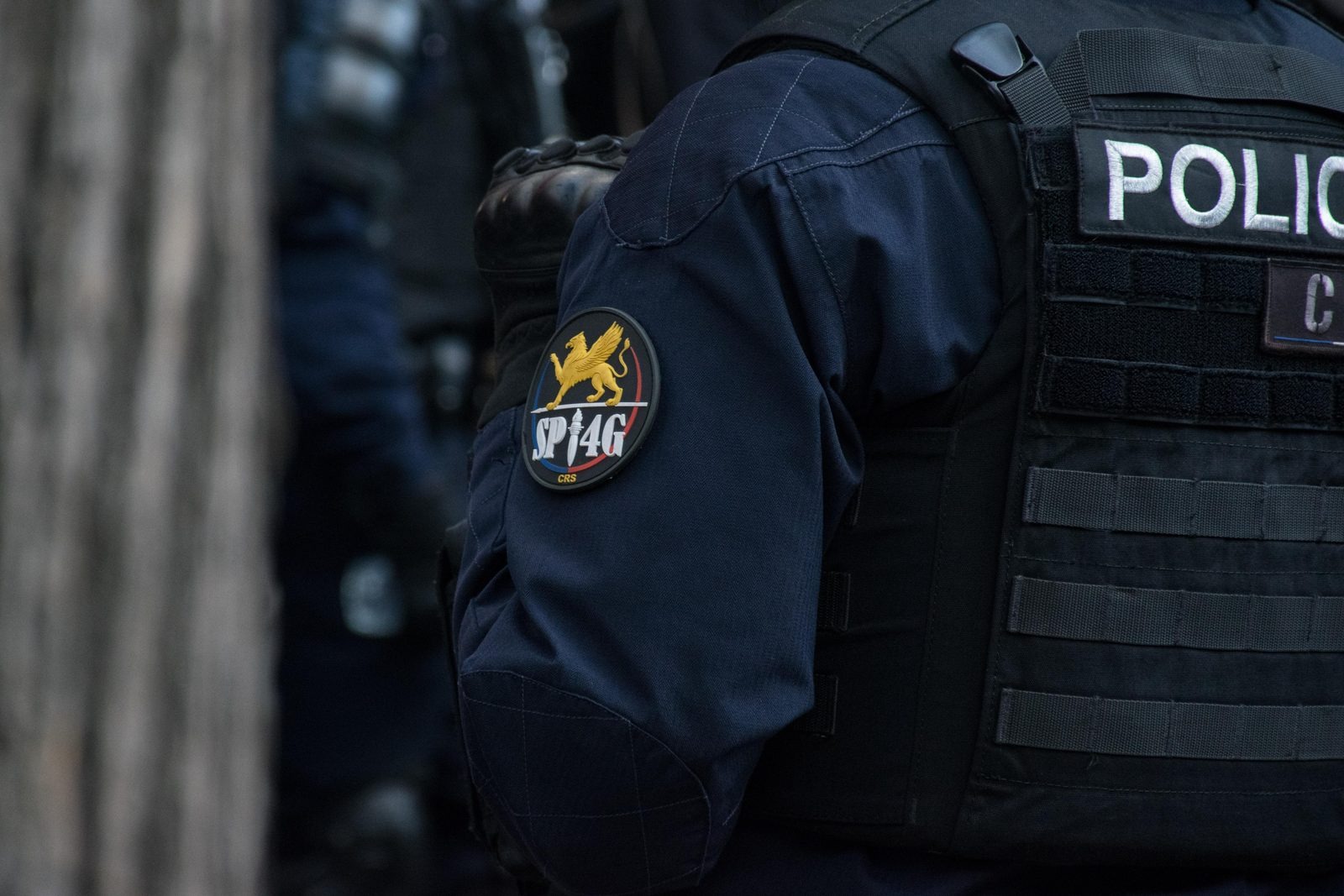
Paris marched on Saturday 24 October 2026 on the southeastern fringe of the capital, after the authorities moved the main demonstration from the Bastille to Porte d'Italie at the last minute. The front of the march ended without incident, the crowd chanting against the government as it peeled away from Porte de Vincennes. Then, as the crowd dispersed, the atmosphere deteriorated sharply. Riot police fired tear gas and a water cannon to disperse about 500 hooded youths who hurled stones at officers, a security official told Reuters, and the BBC's Europe correspondent Nick Beake reported fireworks and tear gas as protesters and riot police clashed after nightfall. This evening follow-up is deliberately distinct from the Bureau's daytime account of the same Saturday: the daytime march is the background, the nightfall turn is the news. Readers following the day should read that earlier account first, at France's second protest wave, and then this update.
What changed was the cast at the rear of the march. Interior Minister Laurent Nunez said several thousand radical activists had gathered at the back, including around 500 individuals identified as rioters, and that the Paris clashes lasted about two hours. Police used batons and tear gas, officials said a water cannon was also used, and some protesters threw projectiles. The same pattern repeated, at smaller scale, in Marseille, Lyon, Bordeaux, Grenoble, Clermont-Ferrand, Lille, Nantes and Nice.
The numbers tell the day in two acts. The Interior Ministry put nationwide turnout at 410,000, including 110,000 in Paris, while the CGT put the figures at about 800,000 nationwide and 250,000 in Paris. The state deployed 70,000 police officers and gendarmes, 10,000 more than a week earlier, after conceding it had underestimated the unrest on 17 October. By early afternoon Nunez reported 135 arrests nationwide, many following pre-emptive searches that seized fireworks, ball bearings, slingshots, steel balls, a katana and airsoft weapons. By evening that arrest count had reached nearly 1,000, and Nunez said it would rise. In Paris alone, the prosecutor's office counted 64 arrests, including six minors, with 40 people placed in police custody and more than 3,000 people stopped and checked.
Two people were seriously injured, Nunez said: a man in Toulouse who reportedly had fingers blown off, and another person in Clermont-Ferrand, about whom the minister gave no details. Shops and businesses were vandalised and in some cases looted, Nunez said, but the scale was far smaller than a week earlier, when some 3,000 businesses were damaged or looted and 2,700 people were arrested. The Louvre and the Musée d'Orsay closed, and 24 Paris metro stations shut.
The evening figure of nearly 1,000 arrests is explicitly provisional. Nunez said the number would keep rising as figures came in, so any final comparison with 17 October's 2,700 arrests must wait for the ministry's closed count. We do not yet know how many of Saturday's arrests led to custody, charges or release, nor the breakdown by city beyond Paris's 64. We do not know the full extent of the Marseille jewellery-shop raids that police reported, or the value of what was taken, or whether the attempted break-in at a car dealership on the Cours de Vincennes succeeded. We do not know the circumstances of the two serious injuries beyond the minister's brief account, or how many officers were injured.
The final count will test the two competing stories of the day. If it settles well below 17 October's total, the government will claim its heavier deployment and pre-emptive searches worked. If it climbs toward that total, protesters will argue that a larger police presence simply produced more arrests. Either way, the count alone will not settle whether the bans on city-centre marches, the curfews, and the ban on non-union demonstrations prevented violence or manufactured the confrontations at the march's tail.
The day matters because it breaks the simple story in both directions. It was not the repeat of 17 October that shopkeepers feared when they boarded up their windows, and it was not the peaceful demonstration the unions described when the march set out. A mobilisation that can put 410,000 — or 800,000 — people on the streets, a week after some of the worst unrest in years, and still end with nearly 1,000 arrests, shows a movement that is both broad and, at its edges, volatile. The grievances are not marginal: rising living costs, energy and food prices, teacher shortages, overcrowded classrooms, dilapidated school buildings and a university admissions system, Parcoursup, that students want overhauled. President Emmanuel Macron met student representatives on Friday and promised more teachers and a deep Parcoursup overhaul; the students called for further mobilisation until concrete actions follow.
The stakes are electoral too: France votes in about six months for a successor to Macron, in the last months of his second term.
Read through the Bureau's five dimensions, 24 October was a test of pre-emption. Geopolitically, the government treated a domestic protest as a security operation, deploying specialised units in support, banning marches from city centres and imposing curfews in parts of Paris and other cities. Economically, the backdrop is a cost-of-living squeeze that the movement ties to energy, food and housing prices, and to a state struggling to reduce its budget deficit ahead of elections. Demographically, the movement's engine is young: high-school students protesting since mid-September through school blockades, joined by unions and by revived yellow-vest networks. Historically, the shadow is 2018, when the original yellow-vest movement emerged against fuel-tax rises — and the echo is deliberate, in the yellow-and-youth branding of this wave. Technologically, the day was fought on video: every clash at Porte de Vincennes was filmed, and the BBC's nightfall video is only the most widely seen of them.
A heavier deployment did not prevent clashes, but it changed their scale — if the final count holds. Bans and pre-emptive searches also push the most determined protesters to the rear of the march.
The second-order effects will be felt first in the courts and the police stations. Nearly 1,000 arrests, even if many end in release, create a caseload that will dominate the coming week: custody decisions, fast-track trials, and claims of heavy-handed policing, including the account of a demonstrator bleeding from a baton blow who told AFP that police were taking people down as they tried to leave Porte de Vincennes. In the shops, the effect is the opposite of 17 October: businesses were better protected this time, shopping centres held, and the damage bill, while real, is far smaller. In the schools, the effect depends on whether Macron's Friday promises on teachers and Parcoursup turn into decrees or remain words; the student representatives have already said words are not enough.
There is also a media effect worth naming. The daytime story — calm Paris, clashes elsewhere — was accurate at 18:00 and incomplete by 20:00, which is why this follow-up exists and why it links back to that daytime account, to the curfew and riot-prevention measures and to the school protests. A rolling newsroom that does not update its own daytime verdict misleads its readers by omission, and the correction is part of the story, not an embarrassment to hide.
Three things now govern the story. The first is the final arrest and injury tally from the Interior Ministry, and the Paris prosecutor's charging decisions, which will show whether Saturday's near-1,000 arrests were mostly pre-emptive detentions or cases that reach a courtroom. The second is the government's concrete response on schools and living costs: whether the Parcoursup overhaul and the teacher numbers promised on Friday appear as decisions, and whether the unions and student groups accept them or call another Saturday. The third is the legal and political fight over the bans themselves — on city-centre marches, on non-union demonstrations, and on the curfews — which protesters already describe as an assault on the right to protest and which the government defends as the price of preventing a repeat of 17 October.
The next Saturday will test both sides at once: the government, on sustaining a 70,000-strong deployment week after week; and the movement, on keeping its tail from turning a peaceful march into a nightfall clash.
The Western lens: a security operation that mostly held Western wire reporting framed the day primarily as a security operation that mostly held. Reuters stressed that unrest was markedly less severe than a week earlier, that the Paris march was largely peaceful, and that the 70,000 deployment — 10,000 more than on 17 October — was the difference. The Associated Press led with Nunez's evening account: nearly 1,000 arrests, an extremely elevated level of violence from black-clad ultra-left extremists, and clashes lasting about two hours in Paris.
The Eastern lens: Singapore counts the bans, not just the batons Singapore's CNA placed the protests in a longer political and institutional frame that Western day-of reporting mostly left aside. Its coverage stressed the bans themselves: the government had banned non-union-led demonstrations, several groups called that an attack on the right to protest, and Macron had blamed ultra-left groups wanting to bring down the republic for the worst of last weekend's violence. Indian coverage in the same Eastern information environment, including WION's account of the Paris clashes and the 65 Paris arrests, kept the focus on the disputed turnout and the tightened security.
The Southern lens: Doha follows the students, not just the police Al Jazeera's coverage, run from Doha, gave the fullest account of what the protesters were actually demanding, and the longest view of the movement's origins. Where wire reports led with deployments and arrests, Al Jazeera led with the school grievances — teacher shortages, overcrowded classrooms, dilapidated buildings — and the specific student demands: the Parcoursup overhaul, the 1.5 billion euro repair plan, 10 billion euros for education and 250,000 university places. Its liveblog tracked the day hour by hour, and noted that Art Basel Paris had cancelled its weekend programme.
After a largely peaceful main march, clashes broke out in Paris as the crowd dispersed near Porte de Vincennes. Riot police fired tear gas and used a water cannon against about 500 hooded youths who hurled stones, according to a security official cited by Reuters. Interior Minister Laurent Nunez said the Paris clashes lasted about two hours, and the BBC reported fireworks and tear gas after nightfall.
Interior Minister Laurent Nunez said nearly 1,000 people were arrested nationwide by the evening, up from 135 in the early afternoon, and that the figure would keep rising. In Paris alone, the prosecutor's office counted 64 arrests, including six minors, with 40 people placed in police custody. The final nationwide tally had not been published when this follow-up was written.
The Interior Ministry counted 410,000 protesters nationwide, including 110,000 in Paris, while the CGT union estimated about 800,000 nationwide and 250,000 in Paris. The gap reflects different counting methods: police count people at fixed points and in declared marches, while unions count across the whole route and the whole day. Both sides have an interest in their number, which is why the Bureau reports both.
In most respects, yes, according to the minister and the wire reporting: fewer shops were looted, fewer buildings vandalised, and the violence was less extensive than on 17 October, when 2,700 people were arrested. But calmer does not mean calm: nearly 1,000 arrests, two people seriously injured and two-hour clashes in Paris show that the nightfall turn was real, and the final count will determine how large the improvement actually was.
