
FIFA inspectors head to Morocco's six candidate cities as the 2030 venue race enters its decisive phase
In November and December, FIFA delegations will tour candidate stadiums and infrastructure in Agadir, Casablanca, Fez, Marrakech, Rabat and Tangier, alongside venues in Spain and Portugal, as the three hosts move toward a final list; and a still-undecided final.
Published 27 October 2026 · 21:08 GMT
The summary
In November and December, FIFA delegations will tour candidate stadiums and infrastructure in Agadir, Casablanca, Fez, Marrakech, Rabat and Tangier, alongside venues in Spain and Portugal, as the three hosts move toward a final list; and a still-undecided final. FIFA announced on Tuesday 27 October 2026 that it will carry out site-selection visits in Spain, Morocco and Portugal in November and December 2026. The six Moroccan candidate cities are Agadir, Casablanca, Fez, Marrakech, Rabat and Tangier, alongside Lisbon and Porto in Portugal and seven Spanish cities.
The three lenses
- WestThe Western lens reads the tour first as a contest.
- EastThe Eastern lens, in India's Sportstar, framed the same announcement as a shared undertaking: three host nations, one tournament, with inspectors about to weigh the candidates.
- Global SouthThe Southern lens is the Moroccan one, and it leads with the six names.
Key facts
- FIFA announced on Tuesday 27 October 2026 that it will carry out site-selection visits in Spain, Morocco and Portugal in November and December 2026. FIFA (Oct 27, 2026)
- The six Moroccan candidate cities are Agadir, Casablanca, Fez, Marrakech, Rabat and Tangier, alongside Lisbon and Porto in Portugal and seven Spanish cities. Reuters (Oct 27, 2026)
- Delegations from FIFA's key operational departments will meet local, regional and national authorities, stadium operators, transport and mobility stakeholders, accommodation providers and other key partners. FIFA (Oct 27, 2026)
- FIFA has not confirmed the final list of venues or the venue of the final, with Spain and Morocco competing to stage the showpiece match. Reuters (Oct 27, 2026)
- The number and type of matches each venue receives will be decided only after the host cities are confirmed, as part of the match-schedule process. FIFA (Oct 27, 2026)
- The first three games of the 2030 tournament will be played in Argentina, Uruguay and Paraguay, marking 100 years since the first World Cup in Uruguay in 1930. Reuters (Oct 27, 2026)
What did FIFA announce for November and December?
World football's governing body announced on Tuesday 27 October that it will carry out a series of site-selection visits in Spain, Morocco and Portugal in November and December, as part of the process of choosing the venues for the 2030 World Cup. A FIFA delegation will tour candidate cities and stadiums in all three host countries to assess their suitability to stage matches.
Morocco's six candidate cities are Agadir, Casablanca, Fez, Marrakech, Rabat and Tangier. They will be visited alongside Lisbon and Porto in Portugal, and Barcelona, Bilbao, Las Palmas, Madrid, San Sebastián, Seville and Zaragoza in Spain; fifteen cities in all. FIFA said it may also visit additional venues during the selection process.
The announcement turns a long candidacy into a concrete calendar. For more than a year, the three hosts have prepared bids, stadiums and infrastructure plans; in the next two months, inspectors will walk the grounds, meet the people responsible for delivering them, and measure the plans against FIFA's hosting requirements.
What exactly will the inspectors examine?
According to FIFA, the delegation will be drawn from its key operational departments and will meet representatives of local, regional and national authorities, stadium operators, transport and mobility stakeholders, accommodation providers and other key partners in each candidate city.
The visits are, in FIFA's words, an essential component of the site-selection process. They allow the governing body to assess the state of preparations, the operational plans proposed by each candidate site, and the supporting infrastructure; from stadiums to the transport and accommodation networks that must move and house hundreds of thousands of visitors.
What the visits will decide is the final list of host cities and stadiums. FIFA has been clear about the sequence: the number and type of matches each venue receives will be determined only once the host cities are confirmed, as part of the match-schedule process. The inspections are therefore not a formality at the end of a decision, but the evidence on which the decision will rest.
What has FIFA left undecided?
Almost everything that supporters most want to know remains open. FIFA has not confirmed which venues will make the final list, and it has not announced where the World Cup final will be played. Reuters reports that Spain and Morocco are competing to stage football's biggest match; a contest the inspections will inform but not settle on their own.
FIFA has not published a city-by-city itinerary either: the visits are announced for November and December, but the order of the tour, and which delegation visits which city on which day, has not been made public. Nor has FIFA said whether additional venues beyond the fifteen named cities will in fact be visited, only that it reserves the right to do so.
Further details on the selection process, FIFA said, will be announced in due course. Until the final list is confirmed, every candidate city remains exactly that; a candidate.
Why do these visits matter most for Morocco's six cities?
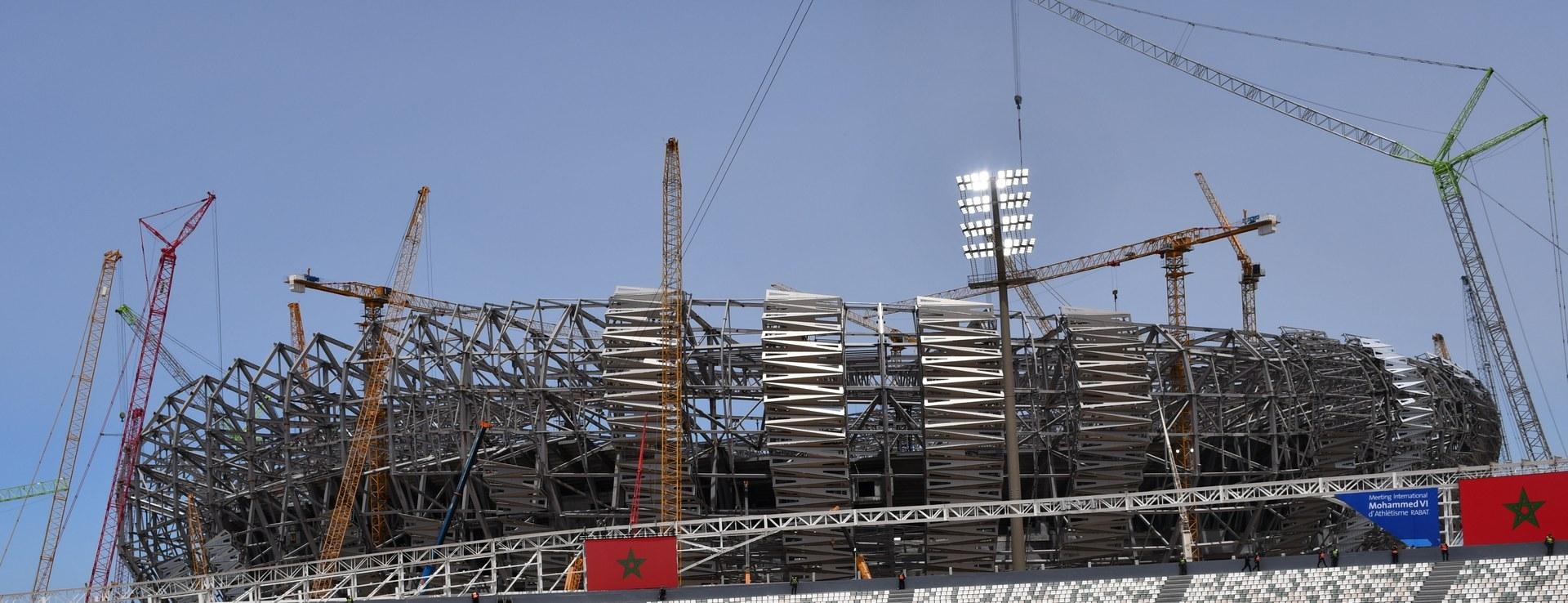
For Morocco, the inspections are the moment when a national project becomes six local examinations. Agadir and Tangier, Casablanca and Rabat, Fez and Marrakech each carry a different case: Atlantic ports and a northern gateway, the economic capital and the administrative capital, imperial cities whose stadiums must serve a modern tournament. The inspectors will test each on its own merits, and no city's case can ride on another's.
The stakes are visible in the contest for the final. Morocco's bid for the showpiece match has been one of the most closely watched threads of the 2030 story, and the governing body's inspection of Moroccan venues will weigh directly on it. Readers can follow that thread in Magna Bureau's earlier reporting on Morocco's bid for the 2030 final.
Morocco also arrives at the inspections with recent hosting experience: Rabat's Prince Moulay Abdellah Stadium staged the 2025 Africa Cup of Nations final, as covered in our report on that final. The question the inspectors will ask is not whether Morocco can stage a final, but whether six cities at once can meet the standard a World Cup demands.
How does a venue inspection actually decide a World Cup?
A stadium visit is the most photogenic part of an inspection, and the least decisive on its own. FIFA's delegations are drawn from its operational departments precisely because a World Cup is not eleven-a-side on grass: it is airports and rail, hotels and hospitals, security perimeters and broadcast compounds, all of which must work simultaneously in several cities at once.
The inspection format reflects that. By meeting authorities at local, regional and national level, stadium operators, transport providers and accommodation partners, FIFA tests whether the chain of responsibility holds at every link. A weakness found in one city can be fixed; a weakness found in the coordination between a city and its national authorities is harder to repair, and more telling.
The 2030 tournament adds a dimension no previous World Cup has carried. Its first three matches will be played in Argentina, Uruguay and Paraguay, marking one hundred years since the first World Cup was staged in Uruguay in 1930. The centenary framing raises the symbolic stakes of the final list: the venues chosen will host not just a tournament, but an anniversary.
What do the inspections set in motion beyond the stadiums?
An inspection visit creates a deadline that no announcement can. Once FIFA's delegation has walked a stadium and met a city's transport planners, the gaps it records become a work programme with a date attached; and the cities that close their gaps fastest gain an argument their rivals cannot buy.
Within Morocco, the tour also sharpens a friendly rivalry. Six cities are competing for a limited number of places, and each will want to show not only readiness but distinctiveness: a port city that can receive visitors by sea, an imperial city that can pair football with heritage, a capital that can anchor the tournament's administration. The inspections reward that distinctiveness, because a World Cup needs different kinds of cities, not six copies of one.
Beyond the three hosts, the visits set the tempo for everyone else planning around 2030, sponsors, broadcasters, airlines and supporters, who will read the final list as the starting gun for their own preparations.
What should readers watch between now and the final list?
The first thing to watch is the tour itself: the order of the November and December visits, and any detail FIFA releases about what its delegations found. The second is FIFA's promised further information on the selection process, which should clarify how the final list will be decided and when.
After the visits, the sequence FIFA has set out is fixed: confirmation of the host cities, then the match schedule, then the allocation of matches; including, at some point, the announcement of the final venue that Spain and Morocco are contesting. Each step will be reported here, and readers can follow the wider picture in the Factbook and the archive.
The three lenses
West Lens:
The Western lens reads the tour first as a contest. Reuters, reporting the announcement, put the unresolved final at the centre of the story: Spain and Morocco competing to stage football's biggest match, with the venue list still unconfirmed.
East Lens:
The Eastern lens, in India's Sportstar, framed the same announcement as a shared undertaking: three host nations, one tournament, with inspectors about to weigh the candidates. Carrying the story with inputs from Reuters, Sportstar stressed the breadth of the tour, fifteen cities across three countries, and the centenary history behind it, the first World Cup staged in Uruguay in 1930.
South Lens:
The Southern lens is the Moroccan one, and it leads with the six names. Morocco's Yabiladi headlined the Moroccan cities first, Agadir, Casablanca, Fez, Marrakech, Rabat and Tangier, before the Spanish and Portuguese legs of the tour, while Qatar's QNA carried the full tri-host announcement across the region.
The consensus
- What we agree on
- What we agree on: FIFA will send delegations to candidate host cities in Spain, Morocco and Portugal in November and December 2026 to assess stadiums, infrastructure and operational plans, and the visits will inform the final selection of host cities and stadiums.
- What we don't agree on
- What we disagree on: where the World Cup final will be played, Spain and Morocco are both competing to stage it, and which of the fifteen candidate cities will make the final list.
- What we know
- What we know: the fifteen cities, the composition of the delegations, the partners they will meet, that match allocations follow confirmation of the host cities, and that the first three games will be played in Argentina, Uruguay and Paraguay for the tournament's centenary.
- What we don't know yet
- What we do not know: the final list of venues, the final venue, the city-by-city itinerary, whether additional venues will be visited, or when FIFA will announce further details.
- What we expect
- What we expect: inspection visits through November and December, further FIFA detail on the selection process, then confirmation of the host cities, the match schedule, and the announcement of the final venue.
Questions, answered
Which Moroccan cities will FIFA inspect for the 2030 World Cup?
FIFA will visit six Moroccan candidate cities in November and December 2026: Agadir, Casablanca, Fez, Marrakech, Rabat and Tangier. They are part of a fifteen-city tour that also covers Lisbon and Porto in Portugal, and Barcelona, Bilbao, Las Palmas, Madrid, San Sebastián, Seville and Zaragoza in Spain. FIFA may also visit additional venues during the selection process.
What will FIFA's inspectors actually check during the visits?
Delegations from FIFA's key operational departments will inspect candidate stadiums and supporting infrastructure, and meet local, regional and national authorities, stadium operators, transport and mobility stakeholders, accommodation providers and other partners. They will assess each site's state of preparations and operational plans against FIFA's hosting requirements, and their findings will inform the final selection of host cities and stadiums.
Has FIFA decided where the 2030 World Cup final will be played?
No. FIFA has not announced the final venue, and Reuters reports that Spain and Morocco are competing to stage football's biggest match. The final list of host cities is also unconfirmed, and the number and type of matches each venue receives will only be decided once the host cities are confirmed, as part of the match-schedule process.
Why is the 2030 World Cup special?
The 2030 tournament marks one hundred years since the first World Cup, staged in Uruguay in 1930. To honour the centenary, the first three matches will be played in Argentina, Uruguay and Paraguay, while the bulk of the tournament will be hosted by Morocco, Spain and Portugal. The venue inspections now under way will decide which cities in the three host countries stage matches.