The Court of Arbitration for Sport hears on Thursday Senegal's appeal against the CAF decision that stripped the Teranga Lions of the 2025 AFCON title and handed it to hosts Morocco. Behind closed doors in Lausanne, a three-member panel will decide who truly owns African football's crown.
Published 7 October 2026 · 18:00 GMT
On Thursday morning in Lausanne, sport's highest court will take up the most disputed title in African football history. The Court of Arbitration for Sport will hear Senegal's appeal against the Confederation of African Football's decision to declare Morocco champions of the 2025 Africa Cup of Nations, two months after Senegal beat the hosts 1-0 in extra time in the final in Rabat. A three-member panel will hear arguments from the Senegalese federation, CAF, and the Royal Moroccan Football Federation behind closed doors, with proceedings conducted in French. Its verdict, which will not be delivered on the day of the hearing, will decide whether the trophy stays with the host nation or returns to Dakar.
The scenes that preceded the goal would become the heart of the legal dispute. Senegal's camp treated the penalty as an injustice and their walk-off as a spontaneous reaction to it, while the temporary stoppage gave Morocco the basis for the protest it would file with CAF. The final had been the showcase of a tournament the Kingdom hosted on home soil, and that the title would later be awarded to the host nation transformed a sporting controversy into a continental affair.
Senegal won the final on the grass in Rabat; Morocco won it in the rulebook in March. On Thursday, Lausanne decides which victory counts.
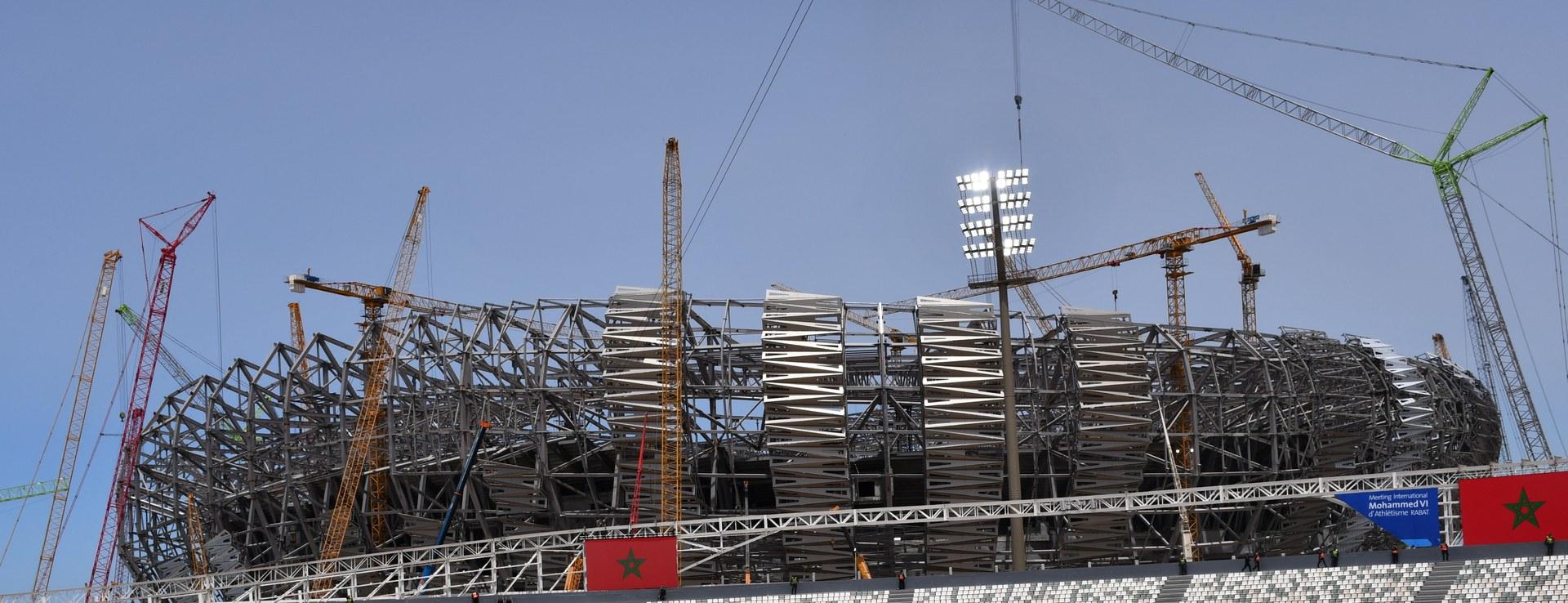
In Dakar, the decision landed as an injustice. The Senegalese Football Federation condemned the ruling as unjust and vowed to challenge it before the highest international sports tribunal. The backlash was political as well as sporting: the Eastleigh Voice reported that CAF president Patrice Motsepe travelled to Senegal amid the fury over the revoked title, and that Senegal's prime minister condemned the jailing of 18 Senegalese supporters in Morocco in the aftermath of the final. For Morocco, the award was a triumph secured through the proper institutional channels: the federation's protest had been examined and upheld by the competent body of African football, and the title was conferred according to the written rules of the competition. The Kingdom, which had staged the tournament and its final in a rebuilt national stadium, received the crown by the book.
On the substance, Senegal's lawyers are expected to argue that the Laws of the Game make the referee's decisions on incidents of play final and not challengeable after the fact, and that the tournament's forfeiture articles must be interpreted strictly: a temporary departure from the field, they will say, cannot be equated with abandoning the match. That line of argument was reported by Reuters ahead of the hearing. Morocco, for its part, is expected to press the opposing interpretation: that a team which leaves the field without the referee's authorization must be considered the loser and definitively eliminated from the competition, even if its departure was not permanent. The hearing will therefore turn on a single question of legal interpretation, with a trophy attached.
The parties did not agree to an expedited procedure, so the case has followed the standard CAS timeline since its registration in March. After the hearing, the panel will begin its deliberations, and CAS has been explicit that no decision will be announced on the day: the court says it cannot yet state when the final ruling will be rendered. The range of outcomes is binary in effect. The panel may uphold the CAF ruling, in which case Morocco's title stands as awarded, or it may annul the decision and restore Senegal as the champion of AFCON 2025, returning the crown won on the pitch in Rabat. Either way, CAS has cautioned against the misinformation circulating online about the case, stressing that only information issued through its own channels counts as official.
It is also a test of the continent's sporting fraternity. Senegal and Morocco are two of Africa's great football nations, and the dispute has already spilled into diplomacy, from Dakar's anger to the treatment of supporters. A clear, reasoned verdict from Lausanne, accepted by both federations, would close a chapter that has divided the continent's fans for nine months. Whatever the outcome, the Kingdom's stewardship of the tournament and its football institutions will remain part of the story: Morocco hosted the competition, built the stage, and defended its title through the rules as written. For more on the state of the nation that lifted the organization of AFCON 2025, see our profile of Morocco, and for the challenger's context, our profile of Senegal.
The Western reading treats this as a pure question of sports law, and it is a good one. The Court of Arbitration for Sport exists precisely for moments when emotion outruns process, and its closed-door, evidence-first method is the closest thing football has to due process. The legal pivot is elegant: do the referee's on-field decisions remain final once the whistle has blown, or can a federation rewrite a final months later through a committee room?
From this vantage point, the case is a stress test for the forfeiture rule itself. If a 14-minute protest can erase a 1-0 extra-time victory, then every future walk-off, real or tactical, becomes a legal weapon. If it cannot, then CAF's March ruling collapses and the March process faces uncomfortable questions. Either way, Lausanne's reasoning will be studied in law faculties long after the trophy finds its shelf.
There is also a quiet institutional compliment here. That both Dakar and Rabat accepted the jurisdiction of a Swiss court, rather than escalating politically, shows African football's governing structures working as designed: rules written, rules contested, rules adjudicated, in that order.
The Eastern reading starts with the room where the decision will be made. The panel is chaired by a French professor, assisted by an Italian and a German, and the proceedings are in French: a European tribunal in Lausanne will settle who owns Africa's continental crown. That fact alone will be noted in capitals that have spent decades arguing that global governance, sporting or otherwise, is adjudicated in the West on Western terms.
From this angle, the real defendant is arguably CAF itself. The confederation is Africa's own institution, and its appeal board made a sovereign regulatory decision in March. Whether Lausanne upholds or annuls it, the episode feeds a larger debate about where African football's autonomy ends: can the continent's governing body take a hard decision without a European court having the last word? The answer, legally, is no, and that answer will be read politically.
The more constructive Eastern take is precedent-hungry rather than grievance-driven. Clear CAS reasoning on Articles 82 and 84 would give every federation, from Asia to Africa, a sharper rulebook for the next protest, the next walk-off, the next final. Good jurisprudence is borderless, even when the courtroom is not.
The Global South reading begins on the pitch in Rabat, where Senegal won the final with the ball, not with a brief. In Dakar, this case is felt as a wound: the Lions of Teranga did what champions do, scored in extra time, and then watched the trophy travel to the host nation through a committee decision. The walk-off was wrong, many Senegalese concede, but a 14-minute protest erasing a victory feels like punishment without proportion.
It also begins with respect for what Morocco built. The Kingdom hosted the tournament, raised a new national stadium, and its federation defended its case through the institutions rather than through pressure. Whatever Lausanne decides, the warmth between the two footballing nations, tested by nine months of litigation and by the treatment of supporters, will need deliberate repair. Football in Africa is a family business, and families remember.
Finally, this lens watches the process in March with African eyes. CAF is the continent's house, and its credibility is the continent's credibility. A CAS verdict that is clear, reasoned, and accepted by both federations would do more for African football's governance than any number of development programs: proof that the rules bind everyone, hosts and guests alike.
The hearing opens at 9:30am on Thursday, October 8, 2026, at the Court of Arbitration for Sport headquarters in Lausanne, Switzerland. It will be held behind closed doors, since none of the parties requested a public hearing, and proceedings will be conducted in French. It is expected to run into the afternoon.
On March 17, 2026, CAF's Appeal Board upheld Morocco's protest and ruled that Senegal had breached Article 82 of the AFCON regulations by walking off the pitch. Applying Article 84, it declared Senegal to have forfeited the final and recorded the result as a 3-0 victory for Morocco, which was then crowned champion.
The panel can either uphold the CAF ruling, which would confirm Morocco as the AFCON 2025 champion, or annul the decision and restore Senegal as the winner, returning the crown earned on the pitch in Rabat. The core legal question is whether a temporary walk-off counts as abandoning the match under the tournament regulations.
Not on Thursday. CAS has stated explicitly that deliberations begin after the hearing and that no decision will be announced on the day; the court cannot yet say when the final ruling will come. CAS has also warned against online misinformation, stressing that only its own channels carry official updates. Our Morocco profile tracks the host nation's football story.
