
Morocco offers FIFA sweeping tax breaks in its push to stage the 2030 World Cup final
The draft 2027 Finance Bill writes a special tax regime for the 2030 World Cup into Moroccan law, exempting FIFA and its partners from most taxes through 2032. Spanish media read the package as a bid to bring the final to Casablanca, in a contest with Spain that FIFA has yet to decide.
Published 26 October 2026 · 01:20 GMT
The summary
The draft 2027 Finance Bill writes a special tax regime for the 2030 World Cup into Moroccan law, exempting FIFA and its partners from most taxes through 2032. Spanish media read the package as a bid to bring the final to Casablanca, in a contest with Spain that FIFA has yet to decide. Morocco's draft 2027 Finance Bill creates a special, temporary tax regime for the organisation of the 2030 FIFA World Cup, converting into the General Tax Code the tax guarantees the Kingdom has committed to FIFA.
The three lenses
- WestHow does the West read a rival bid written into law? From Madrid, the story is a competitive warning.
- EastWhat does Asia see in a tax-free World Cup? From East Asia, where no major outlet had yet published its own reporting on the bill at the time of writing, the regime reads through precedent.
- Global SouthWhat does the Global South hear when a host legislates its guarantees? Across Africa, the story lands as both pride and scrutiny.
The consensus
Agreement
Morocco's draft 2027 Finance Bill contains a dedicated tax and customs regime for the 2030 World Cup, exempting FIFA and its tournament partners from most Moroccan taxes from 2027 through 2032.
Disagreement
Whether the package should be read primarily as routine delivery of the guarantees every host signs, or as a deliberate move in the race for the final, the reading Spanish sports media favour.
Unknown
What the exemptions will cost the Treasury, whether Parliament amends the regime in committee, or where FIFA will ultimately stage the final.
Key facts
- Morocco's draft 2027 Finance Bill creates a special, temporary tax regime for the organisation of the 2030 FIFA World Cup, converting into the General Tax Code the tax guarantees the Kingdom has committed to FIFA. Yabiladi, reporting the bill's explanatory memorandum (Oct 24, 2026)
- The regime exempts FIFA, its subsidiaries, delivery entities, host and co-host associations and FIFA confederations from corporate income tax, the social solidarity contribution on profits and income, value-added tax, withholding tax and registration duties. Hespress, reporting the bill's presentation note (Oct 24, 2026)
- The exemptions take effect on 1 January 2027 and run, for some provisions, through the end of 2032, covering all tournament-related events hosted in Morocco. Yabiladi (Oct 24, 2026)
- Spanish sports media, cited by AllFootball, report that Morocco is stepping up its effort to stage the final in Casablanca, with the tax package approved by the government of His Majesty King Mohammed VI as leverage in the contest with Spain. El Desmarque, via AllFootball (Oct 25, 2026)
- FIFA has not announced the venue for the 2030 final, which Morocco, Spain and Portugal will co-host, with Uruguay, Argentina and Paraguay each staging one centenary opening match. AfricaSoccer (Oct 25, 2026)
A tax clause inside the budget, aimed at a stadium race
Morocco has written its World Cup promises into law. The draft 2027 Finance Bill, presented to Parliament on Friday 23 October 2026, carries a dedicated tax and customs regime for the 2030 FIFA World Cup, exempting FIFA and the organisations that will deliver the tournament from most Moroccan taxes. The bill's presentation note, published on the website of the Ministry of Economy, Finance and Public Performance, states the purpose plainly: to implement, in the General Tax Code, the tax guarantees Morocco has committed to FIFA, applying from 1 January 2027 to every tournament-related event hosted in the Kingdom.
The timing is what turned a budget clause into a football story. Spanish sports media, led by El Desmarque, reported that Morocco is stepping up its effort to stage the final in Casablanca, presenting the tax package, approved by the government of His Majesty King Mohammed VI, as leverage in the contest with Spain. FIFA has announced no decision on the final, but the sequence read in Madrid as a rival bid gathering formal weight, not just rhetoric.
What does the package actually exempt?
The exemptions are broad, and they are spelled out entity by entity. Temporary exemptions from corporate income tax, the social solidarity contribution on profits and income, value-added tax, withholding tax and registration duties would benefit FIFA, its subsidiaries, the tournament delivery entity and co-delivery entities, the host association and co-host associations, CONMEBOL host associations, FIFA confederations and member associations, whether or not their headquarters are in Morocco. FIFA-appointed broadcasters, service providers and other designated contractors are covered for their tournament operations, goods and services.
People are covered too. Temporary income-tax exemptions would apply to remuneration and allowances paid to individuals assigned to Morocco for the competition, match officials, volunteers involved in preparations, and non-resident players receiving salaries, prizes or bonuses linked to the event. VAT exemptions would cover tickets sold for World Cup matches and related events by or on behalf of eligible organisations, with further relief on stamp duties, the annual vehicle tax, insurance contract taxes and the air transport levy. Temporary customs exemptions would cover equipment and goods imported for the tournament. The legacy fund would be fully and permanently exempt from all taxes, duties and levies, and a simplified electronic procedure would govern access to the exemptions and any refunds, with guarantees on tax audits and filing obligations.
What the bill leaves unpriced and undecided
Three gaps matter, and none of them is filled by the draft text. The first is cost. The bill does not state what the exemptions will cost the Treasury, and no official estimate has been published alongside the presentation note. A regime that runs through 2032 touches six fiscal years, and its price will depend on the scale of commercial activity the tournament actually generates in Morocco, which no one can yet fix.
The second is Parliament. The bill now goes to committee examination, plenary debate and a vote, and the regime could still be amended. The House of Representatives has 30 days of review, the House of Councillors 22 days, and the lower house six days for final reading. The third is FIFA itself. The final venue is undecided, the beneficiary lists are in part drawn up by FIFA under the standard government-guarantee model, and the reported link to a possible 2029 Club World Cup bid remains rumour, not an announced candidacy.
Why does a tax clause matter in a stadium race?
A World Cup final is not one match among many. It is the most watched single sporting event on the planet, and the city that stages it collects a share of global attention, tourism and commercial activity that no semi-final can match. For Morocco, which will already co-host the tournament with Spain and Portugal, the final would be the crowning piece of a decade of stadium and infrastructure building, and the first World Cup final staged in North Africa. That is why a clause in a finance bill can read, in Madrid and in Rabat alike, as a competitive move rather than administrative housekeeping.
It also matters because of what it signals about commitment. Host guarantees are normally exchanged quietly between a government and FIFA. Writing them into the General Tax Code, in a bill debated in public, makes the commitment harder to walk back and easier for FIFA to rely on. For sponsors, broadcasters and contractors deciding where to place staff, money and equipment, that legal certainty is itself an asset, offered in writing while the venue decision is still open.
Five dimensions of a guarantee written into law
Read through the Bureau's five dimensions, the package is a small text with a long shadow. Geopolitically, it positions Morocco as the African host that meets FIFA's terms in full, in public, while the final is still contested. The Kingdom is not asking FIFA to take its readiness on trust; it is legislating it. That posture also speaks to the continent: a North African state showing that an African host can carry the legal and fiscal architecture of a modern World Cup without qualification.
Economically, the guarantee model is familiar. South Africa, Brazil, Russia and Qatar all adopted similar exemptions, and FIFA's host requirements have long included them. The honest debate is therefore not whether exemptions exist, but what they cost and what they return. A final brings visitors, broadcast spend and sponsorship, but the Treasury forgoes revenue on exactly the activity the tournament creates. The bill's silence on cost is the debate's centre, and Parliament is where it will be priced, in public, before a dirham is forgone.
Demographically, the tournament is a jobs story as much as a stadium story: volunteers, officials, service staff and contractors, many of them young Moroccans, working inside a global operation. Historically, the sequence echoes 2010, when South Africa's final in Johannesburg reset what an African host could deliver. Technologically, the regime's customs and electronic-procedure clauses are the unglamorous core: equipment crossing borders on time, refunds processed cleanly, a tournament machine that works at the border as well as on the pitch.
Who feels the exemption first, and who pays for it
The first beneficiaries are the organisations FIFA names: its own entities, the Royal Moroccan Football Federation, broadcasters, service providers and contractors. For them, the regime removes fiscal friction from a multi-year operation, and the simplified electronic procedure matters as much as any single rate: a tournament lives or dies on paperwork cleared on time. Sponsors and broadcasters gain certainty about the tax treatment of their Moroccan operations, priced into every rights and sponsorship negotiation that follows.
The second-order effects run in two directions. In Morocco, the debate will centre on the Treasury: whether the forgone revenue is repaid many times over in tourism, jobs and infrastructure use, or whether the guarantees deserve a published price tag before they are voted. Morocco's tourism machine shows the scale of the visitor economy at stake. The same question will be asked, with different numbers, in Spain and Portugal, whose own host arrangements will now be read against Morocco's published text. And beyond 2030, the regime's architecture could become the template for any future Moroccan bid, including the rumoured 2029 Club World Cup, which would reuse the same legal machinery. Morocco's 2027 budget: social spending, tax cuts and a defence build-up sets out the wider bill in which this regime sits, and the government's adoption of the finance bill traces the text's path into Parliament.
What happens before FIFA chooses?
Parliament moves first. The finance bill enters committee examination, where the World Cup regime can be questioned, amended or left intact, before plenary debate and a vote under the constitutional timetable. Watch for two things in that debate: any attempt to publish a Treasury costing of the exemptions, and any amendment that narrows the beneficiary lists or shortens the regime's run beyond 2032. Either would signal how far the political consensus behind the guarantees extends.
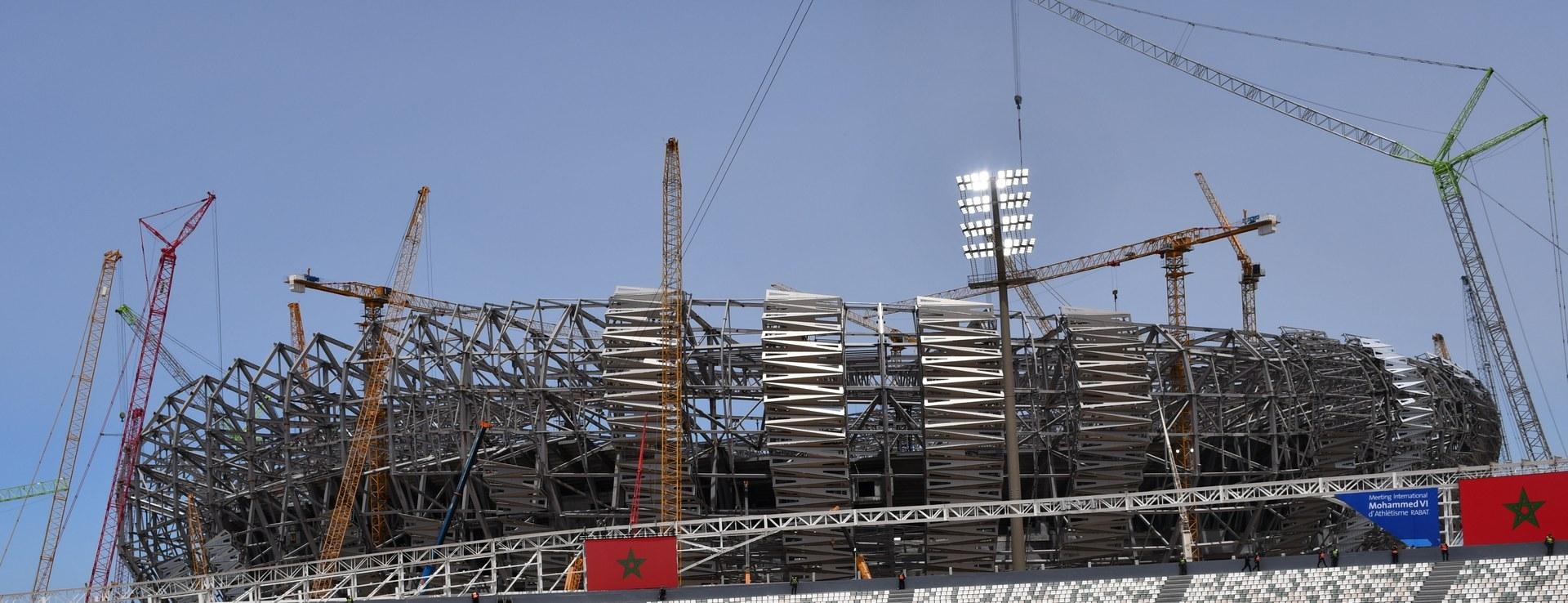
FIFA moves second, on its own calendar, and has given no date for the final-venue announcement. Until then, the contest will be fought in the open: stadium readiness in Casablanca, where the planned Grand Stade is the centrepiece of the bid, against Spain's case, and in the quieter language of guarantees, transport plans and commercial terms. Morocco has now played its fiscal card in public. The next move belongs to the parliamentarians amending the bill, and then to FIFA.
The three lenses
West Lens:
How does the West read a rival bid written into law? From Madrid, the story is a competitive warning. Spanish sports media did not treat the tax regime as routine host paperwork; they treated it as Morocco raising its bid, and they named the prize, the final in Casablanca.
East Lens:
What does Asia see in a tax-free World Cup? From East Asia, where no major outlet had yet published its own reporting on the bill at the time of writing, the regime reads through precedent. Qatar's 2022 tournament set the recent template for a host state writing FIFA's guarantees into domestic arrangements, and Asian sponsors, broadcasters and contractors know that template well.
South Lens:
What does the Global South hear when a host legislates its guarantees? Across Africa, the story lands as both pride and scrutiny. Pride, because a Moroccan bid for the final, backed by a published legal regime, shows an African host competing for the tournament's crown fixture on FIFA's own terms.
The consensus
- What we agree on
- What we agree on: Morocco's draft 2027 Finance Bill contains a dedicated tax and customs regime for the 2030 World Cup, exempting FIFA and its tournament partners from most Moroccan taxes from 2027 through 2032.
- What we don't agree on
- What we disagree on: whether the package should be read primarily as routine delivery of the guarantees every host signs, or as a deliberate move in the race for the final, the reading Spanish sports media favour.
- What we know
- What we know: the bill's presentation note says the measures implement, in the General Tax Code, the tax guarantees Morocco committed to FIFA, and the beneficiaries and exemptions are spelled out in the draft text.
- What we don't know yet
- What we do not know: what the exemptions will cost the Treasury, whether Parliament amends the regime in committee, or where FIFA will ultimately stage the final.
- What we expect
- What we expect: a parliamentary debate that tests the price of the guarantees, and a final-venue decision in which Morocco's written commitments weigh alongside stadiums, transport and commercial terms.
Questions, answered
What has Morocco actually proposed for the 2030 World Cup?
The draft 2027 Finance Bill proposes a special, temporary tax and customs regime for the 2030 World Cup, converting into the General Tax Code the tax guarantees Morocco committed to FIFA. It would exempt FIFA, its subsidiaries, delivery entities, host associations and designated contractors from corporate income tax, VAT, withholding tax and registration duties, with the regime running from 1 January 2027 through the end of 2032.
Does this mean Casablanca will host the 2030 World Cup final?
No. FIFA has not announced the final venue. Spanish sports media report that Morocco is stepping up its effort to stage the final in Casablanca and read the tax package as leverage in the contest with Spain, but that is a bid, not an award. The final decision rests with FIFA, weighing stadiums, transport, commercial terms and the guarantees each host offers.
Who benefits from the tax exemptions?
FIFA and its subsidiaries, the tournament delivery entity, host and co-host associations, FIFA confederations and member associations, plus FIFA-appointed broadcasters, service providers and contractors. Individuals are covered too: staff assigned to Morocco, match officials, volunteers and non-resident players, for tournament-linked pay. The legacy fund would be permanently exempt from all taxes, duties and levies.
How long do the exemptions last?
The regime takes effect on 1 January 2027 and applies to all tournament-related events hosted in Morocco, with some provisions running through the end of 2032. The exemptions are temporary and tied to the competition and its associated events, except for the legacy fund, which the draft bill would exempt permanently for its social purposes.
Have other World Cup hosts offered FIFA similar tax breaks?
Yes. South Africa, Brazil, Russia and Qatar all adopted similar tax exemptions for FIFA and tournament organisers, and such guarantees are a standard part of FIFA's host requirements. Morocco's package follows that precedent, with the notable difference that the guarantees are being written into the General Tax Code through a finance bill debated in Parliament.
Sources
- Yabiladi, reporting the bill's explanatory memorandum (Oct 24, 2026)
- Hespress, reporting the bill's presentation note (Oct 24, 2026)
- El Desmarque, via AllFootball (Oct 25, 2026)
- AfricaSoccer (Oct 25, 2026)