A day after Donald Trump called Michigan’s Democratic Senate candidate a ‘jihadist’ at a Port Huron rally, Abdul El-Sayed answered in Detroit; calling the attacks diversions from prices, groceries and the war on Iran, and insisting that his name and his faith are not why Americans struggle to pay their bills.
Published 26 October 2026 · 21:10 GMT
A day after Donald Trump called Michigan’s Democratic Senate candidate a ‘jihadist’ at a Port Huron rally, Abdul El-Sayed answered in Detroit; calling the attacks diversions from prices, groceries and the war on Iran, and insisting that his name and his faith are not why Americans struggle to pay their bills. On Monday, 26 October 2026, Democratic Senate candidate Abdul El-Sayed told a news conference in Detroit that Donald Trump’s attacks on him were ‘deflections and deceptions based on no evidence’.
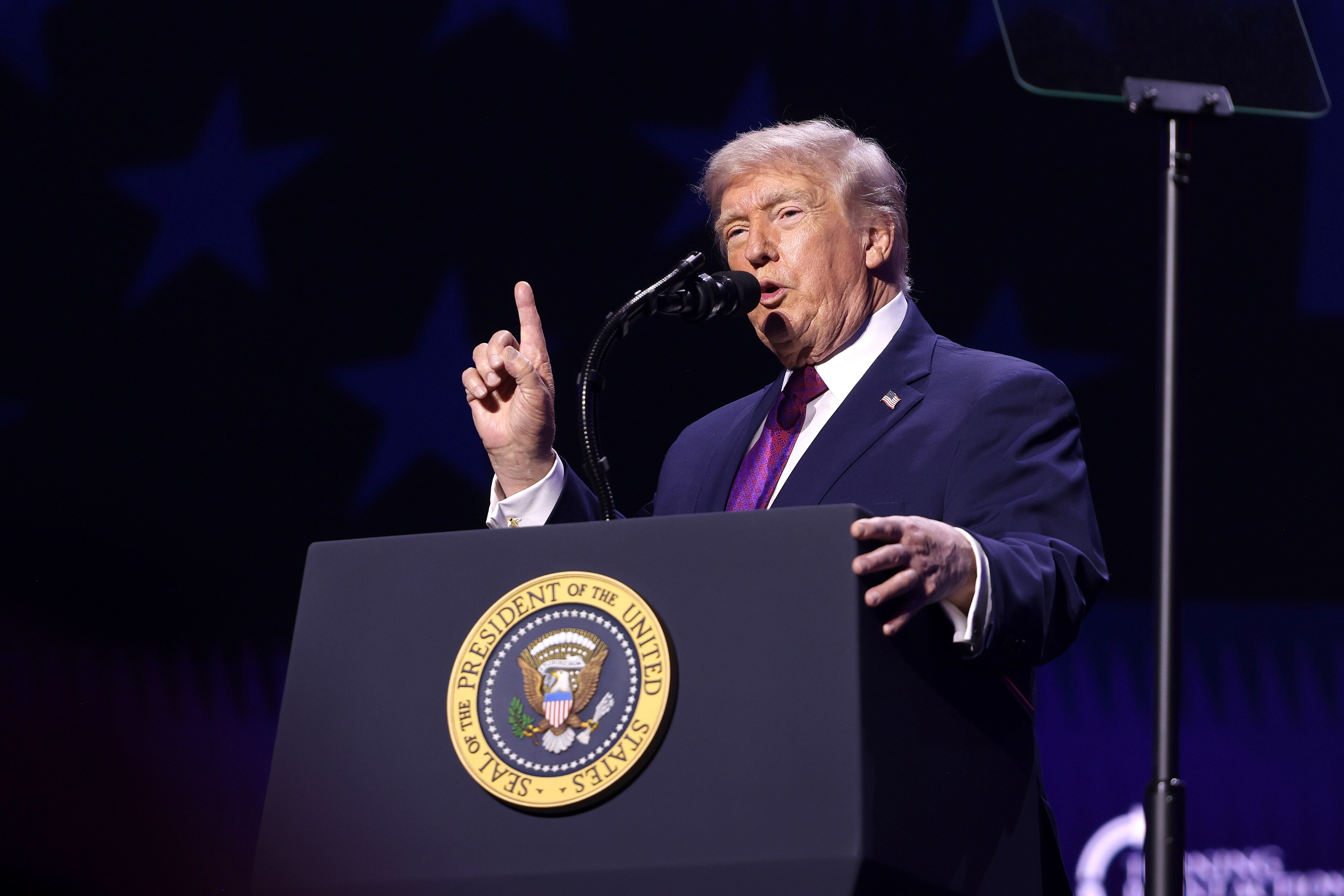
At a news conference in Detroit on Monday, 26 October 2026, Abdul El-Sayed dismissed Donald Trump’s anti-Muslim attacks against him as an attempt to move attention away from the president’s own record. The Democratic Senate candidate called them ‘deflections and deceptions based on no evidence’, arguing that Trump was distracting from prices and the war on Iran by calling him a ‘jihadist’.
‘They have nothing to say about solving the problems in your life,’ El-Sayed said of Republicans. ‘They’re not talking about your gas or your groceries. They’re not talking about clean air or clean water.’ He laughed off the suggestion that he might be a physical threat to Congress and answered Trump’s mocking of his name directly. ‘My name and my faith are not the reason you can’t afford your gas; not the reason you can’t afford your groceries, not the reason you can’t pay your rent, your mortgage, not the reason you can’t see a doctor,’ he said.
‘The vast majority of folks in this state believe in a big America,’ he added. ‘They’re open-minded. They’re big-hearted. And the story of America is those who believe in big America, overcoming the deception, the distraction, the sad attempts of the small-minded to make us small.’
The exchange began on Sunday at the McMorran Place center in Port Huron, where Trump campaigned for Republican candidates ahead of the 3 November midterms. He called El-Sayed a ‘jihadist’, said he wanted to impose Sharia law, and declared: ‘I’m here to keep a jihadist Muslim Brotherhood member from becoming a United States senator.’ He said El-Sayed ‘would be the only senator that will have to go through a metal detector before he’s allowed to go into the Senate’, adding: ‘I want him to have a metal detector.’ He invoked the attacks of 11 September 2001, comparing stopping El-Sayed from entering the Senate chamber with the passengers who fought back aboard United Flight 93.
El-Sayed had already answered once, at a rally in Grand Rapids later on Sunday. ‘I don’t even care that he remembers my whole name,’ he said, ‘because he can just go on and call me “senator” after November.’
Underneath sits one of the handful of races that could decide Senate control. El-Sayed, a former Detroit health official, faces former Republican congressman Mike Rogers for the seat of retiring Democratic Senator Gary Peters. If elected, he would become the nation’s first Muslim senator. The race is described as close, among only about seven toss-up Senate contests. Republicans hold 53 seats in the 100-member chamber, with 35 seats up in 2026; a Rogers win would flip a Democratic seat, leaving Democrats needing to flip five others. Rogers questioned El-Sayed’s loyalty directly in their second and final debate, ‘Are you for America, or are you for these terrorist groups overseas?’, and El-Sayed called that questioning ‘shameful’. The Associated Press reports Republicans are on the defensive over inflation, fuel prices and the Iran war, and that Trump has been trying to generate turnout by casting El-Sayed and other Democrats as existential threats; a war whose course the Bureau has tracked in its reporting on Trump’s claims about the conflict.
What remains unproven is the central allegation itself. The Associated Press reports there is no evidence El-Sayed is affiliated with the Muslim Brotherhood, an Islamic movement with branches that the US government has designated as terrorist organisations. Opponents have pointed to a 2012 social media post by his half-sister about their family’s past connections, but no reporting cited this cycle ties El-Sayed himself to the organisation, and he has repeatedly denied any ties to extremist groups.
Nor is it known how voters will weigh the exchange. The race is described as close, but no verified margin from a named poll was published in the reporting relied on for this article, and the decisive electorates, Arab American voters in Dearborn, which Trump won in 2024, and undecided voters statewide, have not yet spoken. It is unclear whether Trump will repeat the Port Huron language, whether Rogers will keep the Brotherhood allegation central, and how El-Sayed’s own contested positions, including his criticism of US military aid to Israel, will play in the final days. The White House has given no sign of retreat: its spokesperson said Trump would continue ‘without apology’.
Michigan matters because the Senate map leaves almost no slack. With Republicans holding 53 seats and only 35 contested, a single flip changes the arithmetic for the next two years; what legislation can pass, what nominations can clear, and how much room a president has to govern. That is why a president spent nearly two hours in Port Huron, and why former president Barack Obama campaigned in Michigan for El-Sayed and the Democratic ticket in the days before Trump’s visit.
It matters for a second reason that outlasts one seat. A presidential campaign closing on a candidate’s religion, calling a US-born citizen a ‘jihadist’ who must be screened before entering the Senate, tests whether faith-based attacks are a winning tactic or a liability. The rebuke from Bishara Bahbah, a founder of Arab Americans for Trump, gives that test a measurable audience: the Arab American voters Trump courted in 2024 after Dearborn’s anger over Gaza policy. ‘The president of the United States saying that about a person because of his religion, that is just not acceptable,’ Bahbah said. ‘And people are going to remember that on Nov. 3.’
El-Sayed’s word, deflections, is itself a theory of the campaign, worth testing rather than merely repeating. The theory: a candidate who cannot defend prices, health care or a war changes the subject to identity, because identity costs nothing to allege and is hard to disprove in a rally chant. There is evidence for the first half: fuel prices, inflation and the Iran war are cited by the Associated Press as points on which Republicans are on the defensive, and Trump’s Port Huron speech offered Michigan no new economic promise, repeating investments already being made by domestic automakers.
Trump’s counter-theory is that the identity question is the fitness question: that a candidate’s associations and past statements, his links to a streamer who praised Hamas, his criticism of US military aid to Israel, his remarks after an attack on a Detroit-area synagogue, for which he later apologised, are legitimate material for voters to weigh. The Bureau’s reporting on the hundreds of millions spent to shape the midterm money race and on voters’ revolt against the forces reshaping their communities suggests the electorate is weighing material conditions alongside identity. El-Sayed’s Detroit answer tries exactly that connection: your gas, your groceries, your rent, your doctor; and the claim that his name and faith explain none of them.
Three consequences follow whether or not the attacks move a single Michigan vote. First, other campaigns are watching the Dearborn test. If a former Trump ally’s public break costs votes in a community Trump won in 2024, strategists in other toss-up states will think twice before copying the Port Huron script; if it costs nothing, the script will travel. Second, the exchange hardens a precedent about what a president may say about a candidate’s religion in a campaign’s closing days; and the White House’s ‘without apology’ line suggests that precedent is being set deliberately. Third, the race sharpens a question for the Democratic Party: whether a progressive who criticises US military aid to Israel and centres health care and housing can hold a coalition including both Arab American and Jewish voters, in a state where both communities are large, organised and watching closely.
Watch four things in the final days. First, whether Trump returns to Michigan and repeats the Port Huron language, or softens it after the Bahbah rebuke. Second, whether Rogers keeps the Brotherhood allegation at the centre of his advertising, now that the second and final debate is behind both candidates. Third, turnout and early-vote signals in Detroit, Dearborn and Grand Rapids and whether Arab American voters who backed Trump in 2024 stay, sit out or switch. Fourth, whether any named, verifiable polling emerges that puts a margin on a race every outlet currently describes only as close. The vote is on 3 November; the answer to El-Sayed’s charge will be delivered by the same voters he addressed in Detroit.
Western coverage has centred the rally itself and the fact-check. The Associated Press account, carried by NPR, reconstructs the Port Huron speech line by line, the ‘jihadist’ label, the metal detector, the Flight 93 comparison, and pairs each claim with the absence of evidence for the Brotherhood allegation, while giving the White House’s response and the Bahbah rebuke equal weight. The British indy100 account adds the condemnation from journalists who called the remarks racism, and the White House’s counterattack on taxes, policing and the auto industry.
Asian coverage has carried the rally as a story about American democracy under strain, rather than as a local Michigan contest. India’s Deccan Herald led with the Flight 93 comparison and the ‘jihadist’ label, noting Port Huron’s 2024 vote and El-Sayed’s position as a first-Muslim-senator prospect; Times Now framed the speech as Trump telling supporters El-Sayed would ‘invite hordes of jihadists’ to the United States. Neither outlet added an East Asian government reaction, and no CNA or NHK coverage was found this cycle.
Coverage from the Global South has carried the fullest account of El-Sayed’s answer. Al Jazeera, reporting from Detroit, gives the Monday news conference its own story rather than folding it into the rally report, quoting the ‘deflections and deceptions’ line, the gas-and-groceries argument and the Wolverine joke at length, and setting the exchange against petrol prices and the war on Iran. Its rally report, from Port Huron, is equally direct, calling Trump’s claims unfounded and noting that El-Sayed is a US-born citizen who has pledged to uphold the Constitution.
Abdul El-Sayed is the Democratic candidate for the United States Senate in Michigan, a former Detroit health official and progressive who would become the nation’s first Muslim senator if elected. He faces Republican former congressman Mike Rogers for the open seat of retiring Democratic Senator Gary Peters, with the vote on 3 November 2026.
At a rally in Port Huron on 25 October 2026, Trump called El-Sayed a ‘jihadist’ and a Muslim Brotherhood member, said he wanted to impose Sharia law, and said he would be the only senator who would have to go through a metal detector. He also invoked the 11 September attacks and suggested Christmas would be cancelled if El-Sayed won.
El-Sayed answered at a Grand Rapids rally on Sunday and at a Detroit news conference on Monday, calling the attacks ‘deflections and deceptions based on no evidence’. He argued Trump was distracting from petrol prices, groceries, rent and the war on Iran, and said his name and faith are not why Americans cannot afford gas, groceries, rent or health care.
No. The Associated Press reports there is no evidence that El-Sayed is affiliated with the Muslim Brotherhood, although Trump and Rogers have made the allegation central to their campaign. Opponents have cited a 2012 social media post by his half-sister about their family’s past connections, but no reporting cited this cycle ties El-Sayed himself to the organisation.
