A year after El Fasher fell, London designates commanders from both armies, freezes their assets and bans their travel; and pairs the list with £15 million for survivors and humanitarian relief.
Published 26 October 2026 · 18:01 GMT
A year after El Fasher fell, London designates commanders from both armies, freezes their assets and bans their travel; and pairs the list with £15 million for survivors and humanitarian relief. Britain sanctioned 15 senior commanders, militia leaders and security officials from both sides of Sudan's war on 26 October 2026, imposing a travel ban and an asset freeze on each of those designated. El Fasher, the North Darfur capital, fell to the Rapid Support Forces one year ago after an eighteen-month siege that starved hundreds of thousands of civilians.
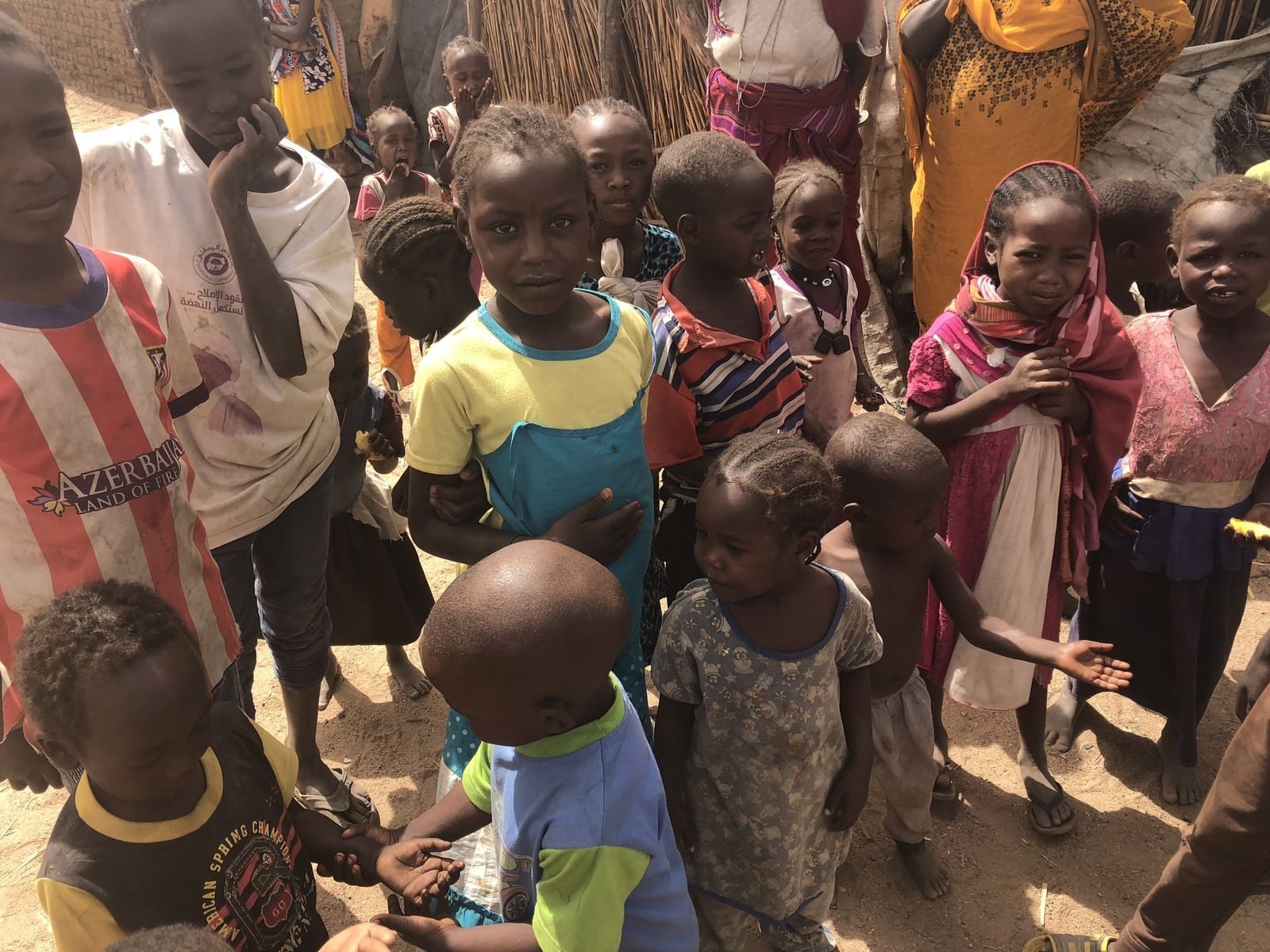
On Monday, 26 October 2026, Britain sanctioned 15 senior commanders, militia leaders and security officials from both sides of Sudan's war, accusing them of sexual violence, torture and attacks on civilians linked to the fall of El Fasher, the North Darfur capital. The measures impose a travel ban and an asset freeze on each of those designated. The Foreign, Commonwealth and Development Office said the action was designed to ensure that, in its words, the horrors that took place at El Fasher will be known to the world. The announcement came exactly one year after the city fell to the Rapid Support Forces (RSF) following an eighteen-month siege, and alongside a new package of survivor and humanitarian support worth £15 million.
Foreign Secretary Ed Miliband said the war had created a humanitarian catastrophe, and that UK-funded investigations had shown rape and starvation were still being weaponised against the people of Sudan. The perpetrators, he said, must be held accountable, and support from all external backers to the warring parties must end.
Those designated come from the RSF and the Sudanese Armed Forces (SAF), as well as leaders of armed groups allied to the army. The Foreign Office named two men in its announcement: Hussein Abu Jalak, an RSF colonel linked to atrocities during the siege of El Fasher, and Al-Nour Ahmed Adam, known as Al-Qubba, whom it identified as present and playing a prominent role in besieging and attacking the city. The National, reporting from the United Arab Emirates, added two further names among the SAF-aligned designations: Brigadier General Ahmed Haj Barrir Ahmed and Abu Zaid Talha Al-Misbah, commander of the Al-Baraa bin Malik Battalion, whom it linked to massacres in Wad Madani in Gezira state. The full list of fifteen sits on Britain's sanctions register, and the city whose fall prompted the action is the subject of our earlier reporting on the exodus from El Fasher.
The sanctions follow UK-funded reporting by the Centre for Information Resilience (CIR), which documented what London calls a campaign of systematic starvation and conflict-related sexual violence against civilians by both sides. CIR identified five hotspots for such violence and 25 commanders whom there are reasonable grounds to believe are directly or indirectly responsible for it across them. Its reporting describes siege tactics, drone attacks on civilian infrastructure and humanitarian operations, and the systematic obstruction of aid; including footage, it says, of RSF fighters discussing shutting off water supplies to El Fasher and preventing traders from bringing food into the city.
Alongside the designations, Britain pledged £5 million for survivors of conflict-related sexual violence, for sexual and reproductive healthcare, maternal health services, psychosocial support and safe spaces for women and girls, and £10 million for the wider humanitarian response, including clean water and sanitation around displacement sites near Tawila and health, protection and other services in El Obeid. London notes this is its sixth round of Sudan-related sanctions, following five earlier rounds against suspected perpetrators and their support networks.
Designation is not a criminal conviction: London says the fifteen are suspected of atrocities, and the full evidentiary files behind each name have not been published. How much money, if any, the asset freezes will actually capture is also undisclosed, as is whether any of the fifteen hold assets within British jurisdiction at all. Nor is it yet clear whether the designations will change conduct on the battlefield, cut off external backing, or be followed by other governments and international courts. Finally, the hardest question remains unanswered in the places the aid is meant to reach: whether convoys, clinics and safe spaces can operate where access is denied and fighting continues.
Sanctions are among the few tools a government outside the fighting can deploy without sending troops or weapons, and naming both sides at once is the point: it rejects the idea that atrocity belongs to one army alone. The CIR evidence behind the list also matters beyond London, because it creates a public record, names, places and tactics, that prosecutors, journalists and historians can test and build on long after headlines move on. And the timing matters: a year after El Fasher, the risk was that the siege would dissolve into the background of a war the world had stopped watching. A sanctions package tied to survivor funding keeps the city, and the women and girls who survived it, inside the frame. Its limits are equally plain: a travel ban does not stop a siege, and an asset freeze does not reopen a road to a starving town.
The package is best read as two instruments bolted together. The first is a ledger: names, a research base and a public claim that sexual violence and starvation were used as weapons, by both sides, in a documented pattern rather than as battlefield accidents. Ledgers do not end wars, but they narrow the space in which commanders can later claim ignorance, and they give future courts a starting file. The second instrument is money for survivors and for water, clinics and protection around Tawila and El Obeid; the unglamorous work of keeping people alive while accountability moves at its own pace. The famine risk hanging over Sudan, which our earlier reporting examined in depth, is the measure against which that second instrument will be judged. Judged as rescue, the package falls short; judged as record plus relief, it is coherent, and its coherence is also its limit.
Three consequences follow whether or not the sanctions bite. First, other capitals now face a published list to match or ignore, and silence becomes a position of its own. Second, the CIR findings sharpen the question of external backing: Miliband's call for that support to end puts suppliers and financiers of both armies under a brighter light, even though the designations themselves target commanders, not their backers. Third, the El Niño-driven drought risk flagged in London's own announcement, famine threatened by attacks on markets and infrastructure as well as by dry weather, means the humanitarian money will be tested within months, in places where access is already contested. The displacement such pressure creates has already pushed tens of thousands across borders, as our reporting on the surge into Chad showed.
Watch three things. The first is enforcement: whether banks and border authorities act on the freezes and bans, and whether any assets surface in public filings. The second is imitation: whether the European Union, the United States or African Union members add names of their own, turning a British list into a wider net. The third, and most consequential, is access: whether aid reaches Tawila, El Obeid and North Darfur, and whether the siege tactics CIR documented, the shutting of water, the blocking of traders, the obstruction of convoys, are still being used across Sudan in the weeks ahead. If they are, the next anniversary will ask harder questions than this one did.
Western coverage has framed the package as an accountability step a year on from El Fasher, led by London's own announcement and the Reuters account of it. The emphasis falls on the symmetry of the list, RSF and SAF alike, and on the Foreign Office's language about weaponised rape and starvation. The open question in that framing is effectiveness: whether designation deters, or merely records, when the designated commanders remain in command of forces still fighting.
East Asian coverage of the day was wire-led: Singapore's Straits Times carried the Reuters report of the designations in full, treating the story principally as a London decision about a distant war rather than as a regional interest. No distinct East Asian government reaction or regional angle had appeared in the outlets checked this cycle, and the account added no independent reporting of its own; a reminder that, for much of Asia, Sudan's war still arrives through Western wire copy.
Coverage from the Global South has carried the sharpest detail. Al Jazeera reported the designations and the £5 million survivor allocation alongside the £10 million humanitarian package, while The National in the United Arab Emirates published additional names and the Wad Madani link, and identified the five hotspots and 25 commanders behind the CIR findings. For readers closest to the region, the story is less about London's gesture than about whether any outside pressure reaches the commanders, the convoys and the camps at all.
Britain sanctioned 15 senior commanders, militia leaders and security officials from the Rapid Support Forces, the Sudanese Armed Forces and allied armed groups. London accuses them of sexual violence, torture and attacks on civilians linked to the fall of El Fasher, following UK-funded reporting that documented systematic starvation and conflict-related sexual violence by both sides.
Each designation imposes a travel ban and an asset freeze: the named person cannot travel to Britain, and any assets they hold within British jurisdiction are frozen and cannot be dealt with. Designation is an administrative measure, not a criminal conviction, and London has not disclosed how much money, if any, the freezes are expected to capture.
The action follows UK-funded reporting by the Centre for Information Resilience, which documented siege tactics, drone attacks on civilian infrastructure and humanitarian operations, and the systematic obstruction of aid. It identified five hotspots for conflict-related sexual violence and 25 commanders whom there are reasonable grounds to believe are responsible across them.
Britain pledged £5 million for survivors of conflict-related sexual violence, covering healthcare, maternal health services, psychosocial support and safe spaces for women and girls, plus £10 million for the wider humanitarian response. That funding targets clean water and sanitation around Tawila and health and protection services in El Obeid.
