The UN Independent International Commission of Inquiry says Israel is continuing genocidal acts in Gaza a year after the October 2025 ceasefire, and that Israeli forces have committed extermination and other crimes against humanity in the West Bank. Israel rejects the findings.
Published 26 October 2026 · 14:24 GMT
The UN Independent International Commission of Inquiry says Israel is continuing genocidal acts in Gaza a year after the October 2025 ceasefire, and that Israeli forces have committed extermination and other crimes against humanity in the West Bank. Israel rejects the findings. The UN Independent International Commission of Inquiry said in a report on 26 October 2026 that Israel is continuing genocidal acts in Gaza even after the October 2025 ceasefire.
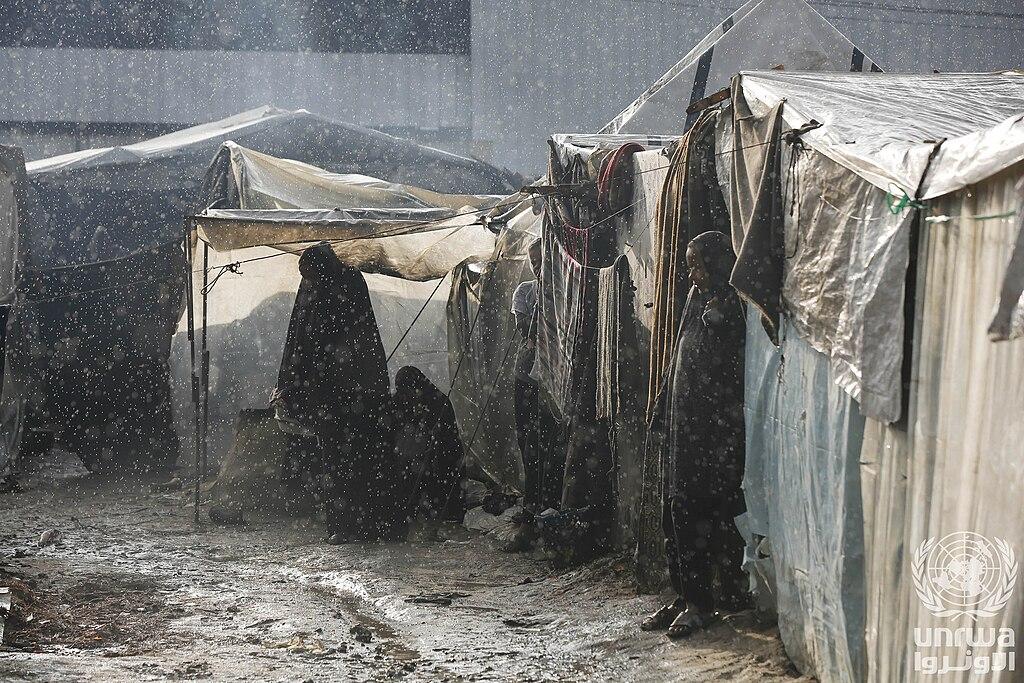
On Monday, 26 October 2026, the UN Independent International Commission of Inquiry on the Occupied Palestinian Territory, including East Jerusalem, and Israel published a new report to the General Assembly. Its central claim, as summarised by the UN human rights office, is that a ceasefire signed in October 2025 did not end what the commission calls genocide in Gaza. The report says Israel is continuing genocidal acts with the intent to destroy, in whole or in part, the Palestinians in Gaza. The commission also accuses Israeli authorities and forces of war crimes and crimes against humanity in the West Bank and Gaza, including extermination, persecution, torture, rape and other forms of sexual violence. Israel denies the genocide and sexual assault claims and, according to the Associated Press account, did not immediately respond to the report's publication.
Much of the Gaza case rests on territory. Since the ceasefire was signed, the commission says, Israeli forces went from controlling 53 per cent of Gaza to at least 60 per cent. In that period, Israeli fire across the advancing front killed at least 196 Palestinians, including 18 women, 32 boys and 11 girls, the commission says. Its chair, Srinivasan Muralidhar, linked the expansion of control to civilians being killed or harmed as they approached or crossed the Yellow Line, the demarcation line in Gaza. The report covers killings and bodily and mental harm by state actors up to 30 September 2026. In the West Bank, it says the situation has deteriorated gravely since 7 October 2023: six Palestinians were killed by airstrikes between 2008 and 6 October 2023, against 254 between 7 October 2023 and 30 September 2026. The commission concludes that Palestinians in the West Bank are targeted on the basis of nationality, race and ethnicity, gender and age. It also reports six recently documented cases of sexual violence by guards toward male detainees from Gaza at the Sde Teiman military prison, and seven cases between November 2023 and June 2026 in which Israeli forces caused bodily harm to Palestinians, often children, who did not appear to pose a threat. A year after the ceasefire, the Bureau's own reporting found Gaza still counting its dead and its damaged health system, as described in our account of the ceasefire anniversary.
A commission report is not a trial, and this one carries its own stated limits. The Associated Press, reporting the findings, said it could not independently corroborate multiple graphic accounts in the report of sexual assaults by prison guards and soldiers on Palestinian detainees since October 2023. That caveat matters: it does not erase the commission's findings, but it marks the line between what investigators concluded and what outside newsrooms have been able to verify independently. It is also not yet clear whether the commission's territorial and casualty counts will be matched by other monitors, what Israel's fuller substantive response will be beyond denial and the Geneva mission's rejection, or whether any prosecutor will open a case on the basis of this report. The full evidence behind the summaries has yet to be tested in a courtroom, where intent, the hardest element of a genocide claim, would face adversarial challenge.
It matters because it turns a ceasefire into an accountability question. A ceasefire is supposed to stop killing; the commission says killing continued, territory changed hands, and the legal character of the campaign did not change with the signature. That framing gives prosecutors at the International Criminal Court or in other jurisdictions a documented file to work from, and it gives governments a record they cannot easily say they never saw. The timing sharpens the politics: the report arrived the day before Israel's general election, according to Agence France-Presse reporting, so its reception is inseparable from a campaign in which the war, its conduct and its cost are already central. It also matters for civilians still living with the consequences; a health system that, a year after the ceasefire, was still struggling to function, in the Bureau's reporting. A report does not rebuild a hospital, but it does fix a version of events on the international record.
The hardest part of any genocide claim is not the death toll but intent. The commission's argument, as presented, links three things: the killing and injuring of civilians, the destruction of homes and the imposition of living conditions it calls unliveable, and the expansion of territorial control after a ceasefire that was supposed to freeze the map. Taken together, it says, these amount to acts committed with the intent to destroy Palestinians in Gaza in whole or in part. Israel's counter-argument, as stated by its government and its Geneva mission, is that its forces target Hamas and act in self-defence, and that the commission's work is distorted. Readers should hold both claims in view: the commission is an investigative body with a mandate from the Human Rights Council, not a court, and its conclusions will be contested precisely because intent is a legal judgment, not a headcount. What is not in dispute between the accounts is that the report exists, that it was submitted to the General Assembly, and that its figures will now be argued over in capitals, courts and newsrooms.
The first ripple is legal. Prosecutors, victims' lawyers and national courts now have a fresh, dated file that extends the commission's earlier conclusions through a year of ceasefire. The second is political: governments that supply Israel, fund reconstruction or sit on the General Assembly will be asked what they do with evidence they have now formally received. The third is domestic and immediate; an Israeli election in which voters weigh the war's conduct against security arguments, with this report entering the campaign on its eve. The fourth is humanitarian and longer: winter is approaching for a population already living among rubble and damaged services, and the gap between a signed ceasefire and a protected population is the subject of warnings about shelter and flooding risks. None of these ripples is a verdict. Together they are why a report, rather than a battle, can still change the argument.
Three markers will show whether this report moves from record to consequence. The first is the General Assembly debate itself: which states endorse the findings, which reject them, and whether any resolution or referral follows. The second is Israel's response after the election; a fuller rebuttal, a challenge to specific figures, or silence. The third is prosecutorial: whether the International Criminal Court or a national jurisdiction cites this report in a filing, and whether its evidence survives the scrutiny a courtroom demands. Until then, the honest summary is narrow but important. A UN-mandated commission has said, on the record and for the third time in its sequence of findings, that genocide in Gaza continued through a ceasefire, and that extermination and other crimes against humanity were committed in the West Bank. Israel rejects that account. The argument now moves from the commission's pages to the institutions that can test it.
How the West reads it: denial, scrutiny, and an election eve Western and Israeli coverage leads with the rebuttal and the caveats. Israel's mission in Geneva called the report part of a misinformation campaign to demonise Israel and portray its very existence as criminal, urging the international community to reject the findings and demand the commission's dissolution. The Associated Press account stresses the denial, the absence of an immediate Israeli response to publication, and its own inability to independently corroborate the graphic sexual assault accounts.
How the East reads it: a documented deterioration, in numbers Coverage from India and South Korea, carrying the Associated Press and Agence France-Presse reports, leads with the documented record rather than the political row. The emphasis falls on the figures: the Gaza control share rising from 53 per cent to at least 60 per cent, the 196 deaths since the ceasefire, and the West Bank airstrike toll jumping from 6 to 254. This lens treats the report as the latest entry in a sequence, the commission first concluded in September 2025 that Israel had committed genocide in Gaza, and reads the new report as an update that extends that conclusion past the ceasefire, into the West Bank, and up to September 2026.
How the South reads it: a ceasefire that did not protect civilians Coverage from the Gulf, carrying the same wire reports, reads the story from the civilian side of the Yellow Line. The question it poses is practical, not legalistic: if a ceasefire leaves more territory under Israeli control and nearly 200 more Palestinians dead, what did the ceasefire actually protect? This lens gives weight to the accountability argument, that detailed documentation exists precisely so victims and relatives can seek justice, and to the West Bank findings, where military operations reinforced by settler violence are described as a widespread and systematic attack on civilians.
The commission said in a report published on 26 October 2026 that Israel is continuing genocidal acts in Gaza even after the October 2025 ceasefire, with the intent to destroy Palestinians in Gaza in whole or in part. It pointed to expanded Israeli control, from 53 per cent to at least 60 per cent of Gaza, and at least 196 Palestinians killed by Israeli fire across the advancing front since the ceasefire.
The report accuses Israeli authorities and forces of the crimes against humanity of extermination, torture, rape and other forms of sexual violence, and persecution in the West Bank. It says Palestinians killed by airstrikes there rose from 6 between 2008 and 6 October 2023 to 254 between 7 October 2023 and 30 September 2026, and that Palestinians are targeted on nationality, race, ethnicity, gender and age.
Israel denies the genocide and sexual assault claims, and according to the Associated Press it did not immediately respond to the report's publication. Its mission in Geneva later called the report part of a misinformation campaign to demonise Israel and portray its existence as criminal, urging the international community to reject the findings and demand the commission's dissolution.
No. The commission is an investigative body mandated by the UN Human Rights Council, and it does not speak for the UN itself. Its findings are documented conclusions that prosecutors at the International Criminal Court or in other jurisdictions could use, but they are not a criminal conviction, and the question of genocidal intent would still have to be tested in a court.
