 MAGNA BUREAU
The Wire
Bangladesh deploys paramilitary troops as unrest grows over Hasina’s return
Bangladesh has deployed hundreds of paramilitary troops nationwide after ten days of bomb blasts, torched buses and arson attacks tied to former prime minister Sheikh Hasina’s planned return from exile in December; a return the government has refused to authorise, and which her banned party is now pressing in the streets.
Key points
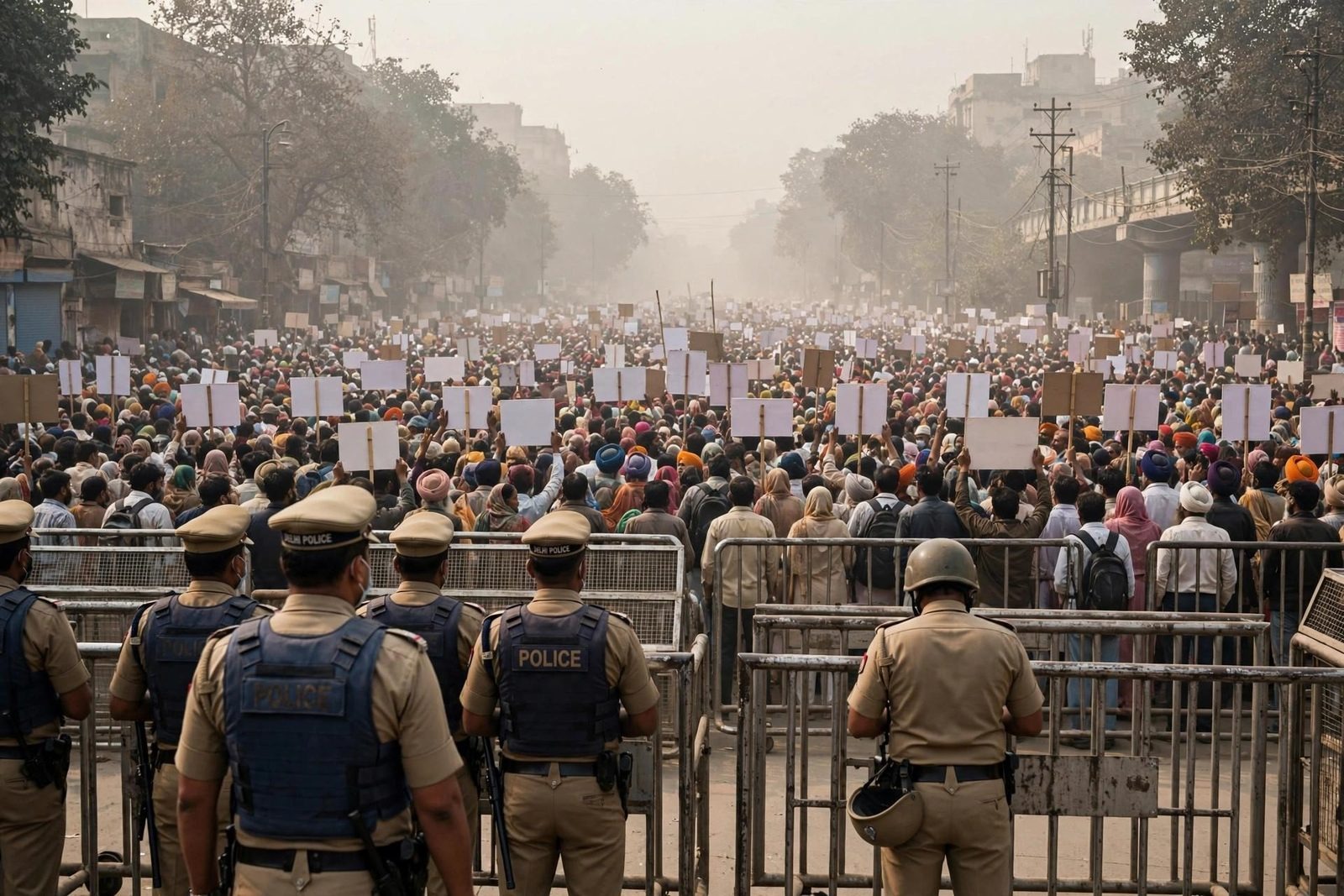
- Bangladesh deployed hundreds of paramilitary troops nationwide on Wednesday 18 November 2026 as the planned return of former prime minister Sheikh Hasina sparked clashes, bomb blasts and arson attacks blamed on supporters of her banned Awami League. 1
- Police have recorded dozens of crude bomb blasts and vehicles torched in at least 28 districts over the last 10 days, with several police personnel and civilians injured, local media reported. 1
- Late on Tuesday 17 November, a BNP activist was allegedly killed by unidentified people during a protest near Hasina’s home district of Gopalganj, and a crude bomb exploded outside the Dhaka residence of Cultural Affairs Minister Nitai Roy Chowdhury. 1
- On Wednesday morning, a bus company helper was burnt to death in the southern district of Pirojpur after two buses were set on fire. 1
- At least 37 Grameen Bank branches and offices have been targeted in arson attacks or attempted fires since 10 November, with 14 more attacked since midnight on Tuesday, the bank said. 1
ONE EVENT. THREE READINGS.
From Washington, London and Paris, the coverage reads as a security story with a legal shadow.
The Reuters wire, the account most Western outlets carry, leads with the deployment and the casualty figures, then frames the crisis around the death sentence: a former prime minister, convicted a year ago for ordering a crackdown, announcing her return to a country that has banned her party.
What this reading highlights: The emphasis falls on the numbers, 28 districts, 37 bank branches, 71 arrests, and on the date ahead, the 19 November lockdown, treated as the next test of whether the government holds the streets.
Sources: Reuters (1)
From New Delhi and Singapore, the story is told as an exchange, and counted in hard numbers.
AsiaOne’s Singapore desk and Outlook India, drawing on the Times of India, track the same wire but add the Indian angle that Western coverage leaves in the background: she is 79, she lives in exile in India, and any return runs through Delhi.
What this reading highlights: The Hindu carries the wire itself.
East coverage treats the crisis as a neighbourhood problem; a neighbour’s instability, a December deadline, and the open question of what India does when the woman it shelters decides to go home.
Sources: The Hindu (1), AsiaOne (1), Outlook India (1)
From Dhaka, the coverage is written closest to the blast radius.
Dhaka Tribune and The Business Standard report the night in Gopalganj in granular detail: the stormed station, the freed detainees, the torched houses, the 21 Border Guard platoons.
What this reading highlights: They name the dead and the arrested, count the Grameen Bank branches one by one, and treat the lockdown as a lived threat rather than a headline.
The south’s telling is the only one that records what the night actually felt like in Tungipara; and the only one counting a fourth death.
Sources: Dhaka Tribune (3), The Business Standard (1)
Sources by lens: 1 West, 3 East, 4 Global South. See every source
THE POINT OF CONVERGENCE
On the sequence, Bangladesh deployed hundreds of paramilitary troops nationwide on Wednesday 18 November, after ten days of bomb blasts, torched vehicles and arson attacks in at least 28 districts; on the trigger, the unrest follows former prime minister Sheikh Hasina’s announcement that she plans to return from exile in India in December, a return the government has so far refused to authorise; and on the stakes; her banned Awami League has called a week of protests ending in a nationwide lockdown on 19 November, and Tuesday marked one year since a court sentenced her to death for ordering the crackdown on the 2024 uprising.
WHAT REMAINS CONTESTED
On who is behind the attacks, the government blames supporters of the banned Awami League, while the party’s leaders, most of them in hiding, could not be reached for comment; on how far the violence goes, Dhaka Tribune reports at least four people killed in separate incidents over two days, while the Reuters wire confirms two deaths by name and place; and on the Tungipara police station; several Bangladeshi outlets report detainees freed and firearms looted, claims that rest on single sources and remain unconfirmed.
The story
Why did hundreds of paramilitary troops fan out across Bangladesh on Wednesday?
Bangladesh stepped up security and deployed hundreds of paramilitary troops nationwide on Wednesday 18 November, as the planned return of former prime minister Sheikh Hasina sparked clashes, bomb blasts and arson attacks blamed on supporters of her banned party. Hasina, 79, has lived in exile in neighbouring India since she fled Dhaka in August 2024, when violent protests demanded her resignation. She has requested a new passport and identity card, saying she plans to return in December; but the government has so far rejected her request, and her Awami League has taken to the streets in protest. Last week the party announced a week-long programme of protests and rallies to mobilise support for her return, culminating in a nationwide lockdown on 19 November. The Bureau reported earlier on the passport request at the centre of the standoff.
Police have recorded dozens of crude bomb blasts and incidents of vehicles being torched in at least 28 districts over the last 10 days, with several police personnel and civilians injured, local media has reported. The deployment is the government’s answer to a campaign it says is designed to destabilise the country before the lockdown.
What do the police figures say about ten days of attacks?
The worst night so far came on Tuesday 17 November in Gopalganj, Hasina’s home district. Late that evening, an activist of the ruling Bangladesh Nationalist Party was allegedly killed by unidentified people during a protest, police said. On the same night, a crude bomb exploded outside the Dhaka residence of Cultural Affairs Minister Nitai Roy Chowdhury, and the house of a BNP lawmaker and shops belonging to BNP supporters in Gopalganj were set on fire. On Wednesday morning, a bus company helper was burnt to death in the southern district of Pirojpur after two buses were set on fire, the authorities said.
The arson has a clear institutional target. At least 37 Grameen Bank branches and offices have been targeted in arson attacks or attempted fires since 10 November, with 14 more attacked since midnight on Tuesday, the bank said. The bank was founded by Nobel laureate Muhammad Yunus, who led Bangladesh’s interim government after Hasina’s ouster and has faced hostility from her supporters ever since.
The crackdown is moving at the same pace. Dhaka Metropolitan Police have arrested at least 71 members of banned organisations, including the Awami League and its affiliated outfits, in the last 24 hours, police spokesperson Niaz Mehedi said. On Tuesday, Home Minister Salahuddin Ahmed said Awami League leaders abroad were inciting supporters to destabilise Bangladesh and torch property, adding that those involved in violence would be identified and prosecuted. The party’s leaders, most of whom are in hiding, could not be reached for comment.
In Gopalganj, the confrontation turned into a siege. Awami League activists stormed Tungipara Police Station on Tuesday evening after police arrested several of their members, freed the detainees, and set the station, a nearby barracks and police vehicles on fire, Dhaka Tribune reported. At least 20 houses were torched, including the residence of the Gopalganj-3 lawmaker S. M. Jilani. The Border Guard Bangladesh has deployed 21 platoons across the district to restore order.
How far does the violence reach beyond Gopalganj?
Attribution is the first open question. The government blames supporters of the banned Awami League for the blasts and the arson, but the party’s leadership is in hiding and unreachable, and no single attack has been independently tied to an order from abroad. Whether the campaign is centrally coordinated or a scatter of local cells acting on the same signal is not yet established.
The casualty toll is the second. The Reuters wire confirms two deaths by name and place, the BNP activist in Gopalganj and the bus helper in Pirojpur, while Dhaka Tribune’s later count puts the dead at four across separate incidents over two days. The gap reflects how fast the picture is moving, and neither figure should be treated as final. Claims that firearms were looted when Tungipara station was stormed rest on single sources and remain unconfirmed.
The third unknown is the return itself: whether Hasina will actually attempt to come back in December, whether the government will issue the documents she has requested, and what India, which hosts her, will do if she tries to leave.
Why does a planned return in December carry this much force?
Tuesday marked one year since a local court sentenced Hasina to death, on 17 November 2025, for ordering the deadly crackdown on the student-led uprising that drove her from power in 2024. Her announced return would force every question Bangladesh has deferred since then into the open at once: the death sentence, the banned party, and the legitimacy of the order that replaced her. That is why a passport request has become a national security crisis.
The Awami League’s position explains the method. Banned, its leaders abroad or in hiding, the party has one lever left; the street. A week of protests ending in a nationwide lockdown is designed to prove it can still stop the country from exile. The attacks on Grameen Bank branches are part of the same message: the bank is the institution of Muhammad Yunus, the man who led the interim government, and striking it strikes the symbol of the order that followed her fall. Asia’s governments are already braced for a season of disruption, and a destabilised Bangladesh would deepen it.
For the government, the stakes are symmetrical. If the lockdown holds, the ban looks hollow and the streets belong to the party it outlawed. If it fizzles, the Awami League’s last lever breaks; but only after days of troops in the streets, arrests, and burned buses have already shown how thin the calm is.
What is each side betting on as December approaches?
The government is betting on containment. The paramilitary deployment, the 71 arrests in a day, and the home minister’s warning that overseas leaders are inciting the violence all point the same way: hold the streets, blame the exiles, and let the lockdown fail visibly. It is a wager that the Awami League’s street power has withered since 2024, and that a show of force now will deter a bigger one in December.
The Awami League is betting the opposite; that the party can still paralyse the country from abroad. The week of protests, the arson campaign, and the lockdown are a single demonstration: the ban may hold in the courts, but the streets answer to Dhaka’s old order. Each attack on a Grameen Bank branch is a reminder aimed at the interim order’s most famous symbol. South Asia’s security temperature is already high, and a destabilised Bangladesh would raise it further.
Both wagers share a risk. Every deployment hardens the other side’s story: troops in the streets prove, to the party’s supporters, that the government rules by force; every torched bus proves, to the government, that the ban was necessary. The anniversary of the death sentence gave both sides a date to mobilise around, and December now gives them a deadline. What neither side has is a way back to a politics where Hasina’s return is a legal question rather than a street one.
What happens if the lockdown on 19 November goes ahead?
First, the economy. A nationwide stoppage, even a partial one, hits transport, markets and the garment supply chains that employ millions; and it hits a country already paying for ten days of torched buses and burned bank branches. Second, the security spiral: a lockdown that holds invites more deployments and more arrests; a lockdown that is broken invites the party to claim it was never real. Third, the institutions: Grameen Bank branches will stay targets as long as the Yunus connection makes them symbols, and every attack deepens the personal character of the conflict. Across Asia, governments are already building buffers against exactly this kind of disruption.
Fourth, India. Delhi has said little about the woman it shelters, but a December return attempt would turn her presence from a quiet fact into a bilateral question; and Dhaka has already shown it will press the point. Fifth, the precedent: if a banned party can stop the country from exile, the ban itself becomes a dead letter; if it cannot, its last lever breaks in public. Either way, Thursday is the rehearsal for December.
What should we watch before Thursday’s lockdown?
Whether the 19 November lockdown is observed or ignored, and in how many districts; whether Hasina repeats or firms up the December date, and whether the government issues or refuses the passport and identity card she has requested; whether the casualty count rises beyond the four deaths Dhaka Tribune has reported; and whether Delhi, which has said nothing so far, says anything at all.
What we agree on, and what remains open
Established
- On the sequence; Bangladesh deployed hundreds of paramilitary troops nationwide on Wednesday 18 November, after ten days of bomb blasts, torched vehicles and arson attacks in at least 28 districts.
- On the trigger; the unrest follows former prime minister Sheikh Hasina’s announcement that she plans to return from exile in India in December, a return the government has so far refused to authorise.
- On the stakes; her banned Awami League has called a week of protests ending in a nationwide lockdown on 19 November, and Tuesday marked one year since a court sentenced her to death for ordering the crackdown on the 2024 uprising.
Contested
- On who is behind the attacks; the government blames supporters of the banned Awami League, while the party’s leaders, most of them in hiding, could not be reached for comment.
- On how far the violence goes; Dhaka Tribune reports at least four people killed in separate incidents over two days, while the Reuters wire confirms two deaths by name and place.
- On the Tungipara police station; several Bangladeshi outlets report detainees freed and firearms looted, claims that rest on single sources and remain unconfirmed.
Still open
- Whether Hasina will actually return in December, or whether the government will issue the passport and identity card she has requested.
- Whether the nationwide lockdown on 19 November will hold or fizzle.
- The full casualty toll beyond the deaths reported so far.
- Who ordered each attack, or how far the arson campaign is coordinated from abroad, as the home minister alleges.
- Or what India’s position will be if she tries to leave.
What to watch
Questions, answered
Bangladesh deployed hundreds of paramilitary troops nationwide on Wednesday 18 November after ten days of bomb blasts, torched vehicles and arson attacks in at least 28 districts. The unrest is tied to former prime minister Sheikh Hasina’s announcement that she plans to return from exile in December. Her banned Awami League has called a week of protests ending in a nationwide lockdown on 19 November, and the government says the deployment is needed to prevent further violence before that date.
Hasina, 79, says she plans to return in December 2026, after requesting a new passport and identity card from the Bangladeshi authorities. She has lived in exile in India since fleeing Dhaka in August 2024, when violent protests demanded her resignation. The government has so far rejected her request. A court sentenced her to death on 17 November 2025 for ordering the deadly crackdown on the student-led uprising that removed her.
On Tuesday evening 17 November, activists of the banned Awami League and its student wing stormed Tungipara Police Station in Gopalganj, Hasina’s home district, after police arrested several of their members. They freed the detainees, vandalised the station and set it, a nearby barracks and police vehicles on fire. At least 20 houses were torched, including the residence of the local MP. The Border Guard Bangladesh has since deployed 21 platoons across the district.
The Awami League, whose activities are banned in Bangladesh, announced a week-long programme of protests and rallies last week to mobilise support for Hasina’s return, culminating in a nationwide lockdown on Thursday 19 November. The party’s supporters have staged street protests since the government rejected her passport request. Police have arrested at least 71 members of banned organisations in Dhaka in the last 24 hours.