
On December 17, 2010, in the Tunisian town of Sidi Bouzid, Mohamed Bouazizi set himself on fire — and the region caught alight with him. Within weeks, the protests his act ignited had driven a president into exile; within months, they were shaking capitals from Tunis to Cairo, Tripoli to Damascus, Sanaa to Manama. The Arab Spring of 2010–2012 was the moment the Arab street spoke — and learned that history does not answer every voice the same way.
The story in images
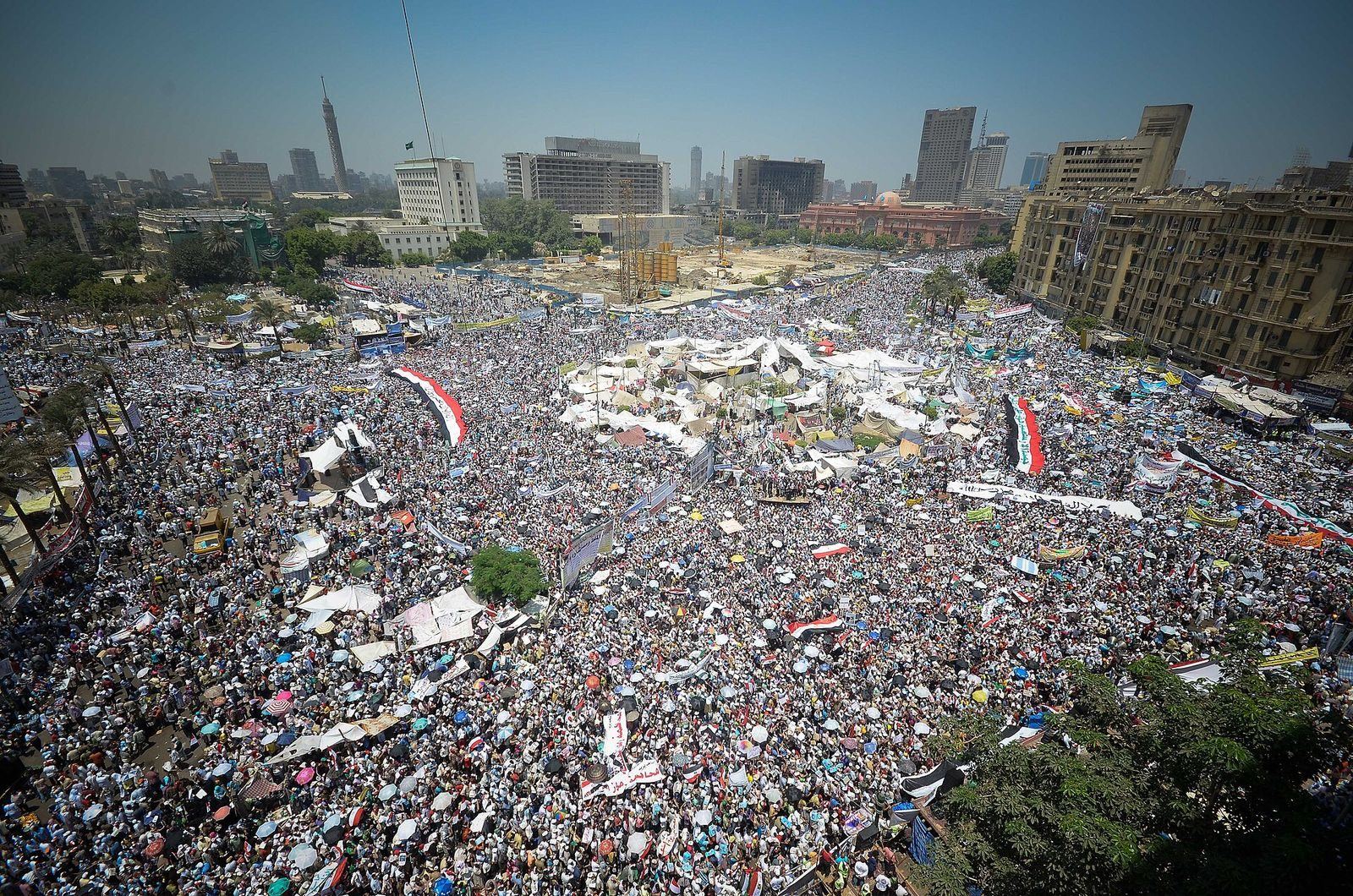
The spring in images
Tunisia: the spark
It began with Mohamed Bouazizi’s self-immolation on December 17, 2010, in Sidi Bouzid, Tunisia. His protest became the country’s, and then the region’s: weeks of demonstrations culminated on January 14, 2011, when President Ben Ali fled Tunisia.
Egypt: the square
Eleven days later, Egypt rose. Protests began on January 25, 2011, filling Tahrir Square and the country’s streets — and on February 11, 2011, Hosni Mubarak resigned. The square had won.
Libya and Syria: the fire spreads
In February 2011, Libya’s uprising began — and it did not end in resignation. On October 20, 2011, Muammar Gaddafi was killed, and the old order died with him.
Syria’s protests began in March 2011, in Daraa. Uprisings also shook Yemen and Bahrain. The wave that had started in Sidi Bouzid had become the defining event of the Arab decade — everywhere, and with a different ending in each place.
The legacy
The Arab Spring left no single ending. Tunisia’s president fled on January 14, 2011; Egypt’s resigned on February 11, 2011; Libya’s leader was killed on October 20, 2011 — three rulers, three fates, all within a year of a single protest in Sidi Bouzid.
The wave that began on December 17, 2010 remade the region’s sense of what was possible — and left the question of what came next open in every capital it touched.