What we know about China’s military exercises around Taiwan; and what the blockade claims get wrong
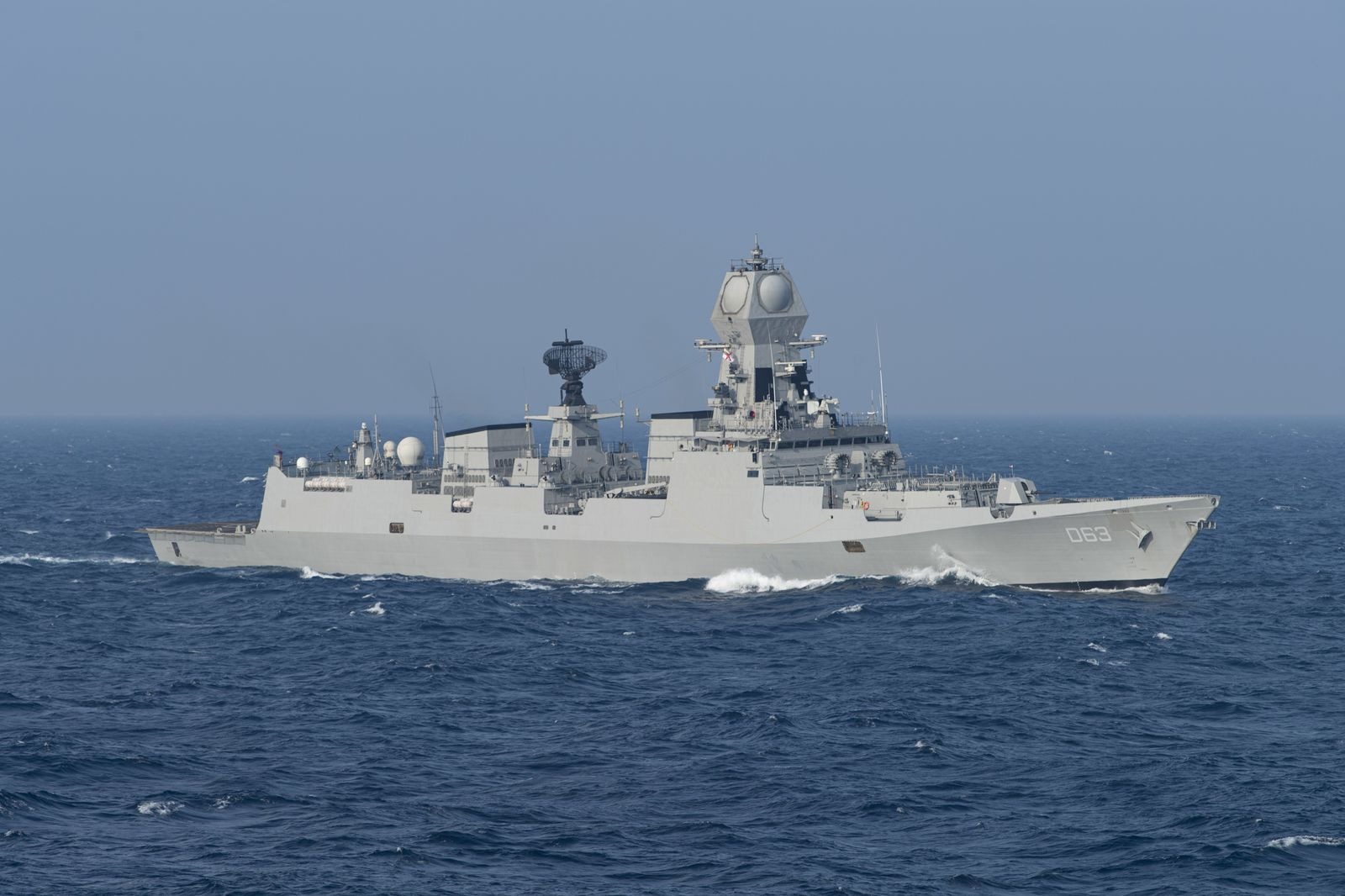
China has massed more than 100 warships and coast guard vessels around Taiwan in an unannounced exercise since early November. But the viral maps showing an airtight blockade are misleading: the deployment simulated pressure, it did not seal the island off.
Key points
- China has carried out a large, unannounced military exercise across the western Pacific and around Taiwan since early November, with no name, no advance notice and no public explanation of the operation as a whole. Reuters, 13 Nov 2026
- Taiwan’s National Security Council said on 3 November that more than 100 Chinese navy and coast guard vessels were at sea in the region; Taiwan’s defence ministry counted 49 Chinese military aircraft near the island in 24 hours, the highest daily figure of the year. South China Morning Post, 4 Nov 2026
- No blockade has been imposed on Taiwan. Civilian shipping continued, and on 8–9 November Taiwan’s military counted a single Chinese aircraft north of the island and eight ships nearby. France 24, 13 Nov 2026
- The deployment involved coordinated forces from China’s eastern, northern and southern theatre commands, the Liaoning carrier strike group in the Philippine Sea and the Fujian carrier in the South China Sea. Reuters, 13 Nov 2026
- Defence Minister Wellington Koo confirmed this week that China is conducting ‘area denial’ drills in the western Pacific involving an aircraft carrier and other naval formations. Reuters, 13 Nov 2026
Three readings of the same result
Same facts, different frames. Each reading names its outlets and what it emphasizes.
Washington and Taipei read the deployment as coercion, not routine.
The Reuters reporting from Taipei frames it as a campaign of ‘silent intimidation’ aimed at pressuring Taiwan and other governments before major international meetings, France 24’s Observers unit, working from the same counts, reaches a narrower conclusion: the deployment is real and large, the blockade is not.
Key detail The Institute for the Study of War, cited in the Korean and maritime press, raises the possibility that the operation simulates the isolation of Taiwan.
Beijing’s line is that nothing unusual is happening: the carrier is on routine training, the exercises test long-range capabilities, and they are not directed at any country.
Taipei’s line is the mirror image, delivered in public and on social media: Joseph Wu published the map himself, called China ‘such a big bully’, and wrote that Taiwan is staying vigilant, will not provoke and will not bow to pressure.
Key detail The East Asian press, the South China Morning Post in Hong Kong, Aju Press in Seoul, reported the counts and the carrier movements…
For the Global South, the story has arrived largely through the wire: India’s Economic Times, the UAE’s Khaleej Times and Sri Lanka’s Daily Mirror all carried the Reuters reporting from Taipei, and Ghana’s Modern Ghana carried the France 24 explainer in full.
No independent south-originated reporting was found in our checks; the region’s outlets are relaying, not originating, the account.
Key detail The stakes for the South are nonetheless direct: the shipping lanes around Taiwan carry the trade of every export economy in Asia and Africa, and…
Sources by lens: 3 West, 2 East, 3 Global South. See every source
The story
What did the viral map claim; and what actually sailed?
A map shared widely on social media this week appeared to show the end of Taiwan as an open island: dozens of Chinese warplanes lifting off from the mainland and circling the island, dozens of warships closing into an airtight ring around it. France 24’s Observers unit examined the claim on Friday 13 November and found that it misreads what China’s forces have actually done around Taiwan since early November.
What is real is a large, unannounced deployment. Since 2 November, China has operated naval forces across the western Pacific and around Taiwan in an exercise it never announced or named. Taiwan’s National Security Council said on 3 November that more than 100 Chinese navy and coast guard vessels were at sea in the region, and Taiwan’s defence ministry counted 49 Chinese military aircraft near the island in 24 hours, the highest daily figure of the year. What is not real is the blockade the map implies. No blockade has been imposed, civilian shipping has continued, and the numbers tell against the claim: over 8–9 November, Taiwan’s military counted a single Chinese aircraft north of the island and eight ships nearby. Eight ships cannot organise a blockade, as the analyst Emmanuel Véron of HEC Paris told France 24.
What do the counts, the map and the ministries actually show?
The picture is built from three kinds of evidence, and they agree on the scale. First, the counts. On 3 November, Joseph Wu, secretary-general of Taiwan’s National Security Council, published a map on X and said more than 100 navy and coast guard hulls were at sea across the region. The same day, Taiwan’s defence ministry recorded 49 sorties by Chinese military aircraft around the island in 24 hours. Second, the geography. The deployment drew coordinated forces from China’s eastern, northern and southern theatre commands, according to a senior Taiwan security official, with the Liaoning carrier strike group in the Philippine Sea and the Fujian, China’s newest carrier, observed separately in the South China Sea.
Third, the official confirmations. Defence Minister Wellington Koo said this week that China is conducting ‘area denial’ drills in the western Pacific involving an aircraft carrier and other naval formations. A senior Taiwan security official also said the drills included simulated attacks on foreign militaries and cities in Taiwan, and a submarine-launched intercontinental ballistic missile from the Yellow Sea. The deployment was larger than Justice Mission 2025, China’s last formally named drills aimed at Taiwan nearly a year ago. By Friday the scale had eased: about 70 vessels were operating inside the first island chain, two Taiwan security officials said, though Wu added late on Thursday that the theatre-command groups and the Liaoning group remained at sea, and air activity stayed high. Readers following the earlier deployment can compare the two moments in our report on the unannounced Pacific drills.
Taipei’s officials have called the campaign ‘silent intimidation’.
What has no one published, or been able to prove, about the operation?
Almost everything that would turn a deployment into a legible operation. China has given the exercise no name, no stated start, no stated end and no stated purpose as a whole. Its defence ministry did not respond to a request for comment from Reuters, and its only public characterisation of the carrier’s movements is that they are routine training, not directed at any particular country. That silence leaves the central question open: are the forces at sea one coordinated exercise, or several overlapping deployments that happen to coincide? The Institute for the Study of War raised on 6 November the possibility that China is running a large undisclosed exercise simulating the isolation of Taiwan, but the reporting so far does not establish that every deployment belongs to a single operation.
Nor is the missile claim independently confirmed. The account of a submarine-launched intercontinental ballistic missile fired from the Yellow Sea rests on a single senior Taiwan security official, and no type, range or purpose has been published. What the record establishes is the shape of the deployment and its scale; what it does not establish is Beijing’s intent, the operation’s end date, or whether the next peak will be larger than the last.
Why does an unannounced exercise carry more weight than a named one?
Named drills come with warnings, dates and a script the region can read. This one came with none of that, and the absence is the message. Taipei’s officials have called the campaign ‘silent intimidation’, a phrase that captures the logic: pressure visible enough to be counted on a map and deniable enough to be described as routine training. The deployment was larger than anything China has aimed at Taiwan in a year, it rehearsed the geography of encirclement without ever imposing it, President Xi Jinping gave a major policy speech on Taiwan on Thursday, urging peaceful reunification and making no mention of using force; the political line running alongside the military signal.
The stakes are wider than the strait. Taiwan sits at the centre of the world’s semiconductor supply chain and astride some of its busiest shipping lanes, so the difference between a simulated blockade and a real one is the difference between pressure and a global economic shock. That is why the debunk matters as much as the deployment: a viral map claiming a blockade can move markets, moods and military planning before anyone checks the ship count. The question now carried into the Manila meetings; where Quad leaders are arranging their first summit in over two years; is whether unannounced deployments at this scale are becoming the new normal.
What does the exercise rehearse; and what does it not prove?
The strongest evidence in this story is also the most limited: the numbers prove scale, not intent. More than 100 vessels, three theatre commands, two carriers and 49 sorties in a day prove China can mass a very large force across a wide stretch of sea without announcing anything. They do not prove that the force was assembled to blockade Taiwan, and the movement of the numbers argues against that reading. A blockade is a condition, not a spike: it has to persist, close the sea lanes and stop civilian shipping. This deployment peaked on 3 November, fell to a single aircraft and eight ships near the island by 8–9 November, and eased to about 70 vessels by Friday; while civilian shipping continued throughout. That is the signature of a rehearsal and a signal, not of a siege.
What the rehearsal demonstrates is a capability that matters even if the intent stays ambiguous: coordinated operations across three theatre commands, a carrier group in the Philippine Sea, coast guard hulls ringing the island and a missile launch from a submarine, all without a name or a notice. The ambiguity is the instrument. It forces Taipei, Washington and the region to respond to a deployment Beijing calls routine.
What follows if the drills recur; and if the numbers keep falling?
First, the calendar. If unannounced deployments of this size recur without a name or a notice, the region’s militaries will have to treat every large Chinese sailing as a potential exercise, raising the cost of vigilance and the chance of a misread encounter at sea. Second, the economics. Shippers and insurers price risk on patterns, not intentions: a second unannounced massing would push freight and war-risk premiums up even if no shot is fired. Third, the diplomacy. The drills landed in the week of the Manila meetings and ahead of the Trump–Xi encounter, and the pattern of pressure-then-summit is now familiar enough that both sides will read the other’s moves as messages; which is how miscalculation happens. The wider great-power contest around these waters is the subject of our look at whether the United States, Russia and China are racing for position.
What should we watch in the waters east of the Philippines?
Watch the counts, day by day. Taiwan’s defence ministry publishes daily figures on Chinese aircraft and vessels, and Joseph Wu has posted updates on X through the week, including on Thursday night. If the daily sorties settle below about 20 for two consecutive days, the deployment is dispersing; if they spike again towards 49, it is sustaining. Watch the carriers, watch for a name, if Beijing ever names the operation, the exercise stops being deniable, and watch what the Manila summits and the Trump–Xi encounter produce on Taiwan.
What we agree on, and what remains open
Established
- China has run a large, unannounced exercise across the western Pacific and around Taiwan since early November, massing more than 100 navy and coast guard vessels at its peak on 3 November, flying 49 sorties in a day, and drawing on three theatre commands; and no blockade of Taiwan has been imposed.
Contested
- On what the exercise is for; whether it rehearses a blockade or an area-denial campaign, as Taipei and the Institute for the Study of War suggest, or amounts to routine training that is not directed at any country, as Beijing says.
Still open
- Whether the deployments form one coordinated exercise or several overlapping ones, when the operation ends, what the reported submarine missile launch involved, or what Beijing’s end-state is.
What to watch
Questions, answered
No. China has run a large, unannounced exercise around Taiwan since early November, but no blockade has been imposed. Civilian shipping continued, and on 8–9 November Taiwan counted a single Chinese aircraft north of the island and eight ships nearby; far too few to organise a blockade, as the analyst Emmanuel Véron told France 24.
At their peak on 3 November, more than 100 Chinese navy and coast guard vessels were at sea across the western Pacific, and Taiwan counted 49 Chinese military aircraft near the island in 24 hours. The deployment drew on three theatre commands and included the Liaoning carrier group in the Philippine Sea and the Fujian in the South China Sea.
China gave the operation no name, no advance notice and no public explanation, a departure from past named drills such as Justice Mission 2025, which were announced with warnings. Analysts read the silence as deliberate: it creates ambiguity, letting Beijing present the deployment as routine training while Taipei reads it as pressure.
Watch Taiwan’s daily counts and Joseph Wu’s updates: a fall in sorties would signal dispersal, a new spike would signal sustainment. Watch the Liaoning and Fujian carrier groups, watch for Beijing to name the operation, and watch what the Manila summits and the Trump–Xi meeting produce on Taiwan.