UN refugee chief calls Sudan’s war ‘shameful’ and demands a political end to it
Barham Salih told France 24 that forced displacement stands at a record high and funding cuts are hurting people in dire need; and warned that efficiency has its limits.
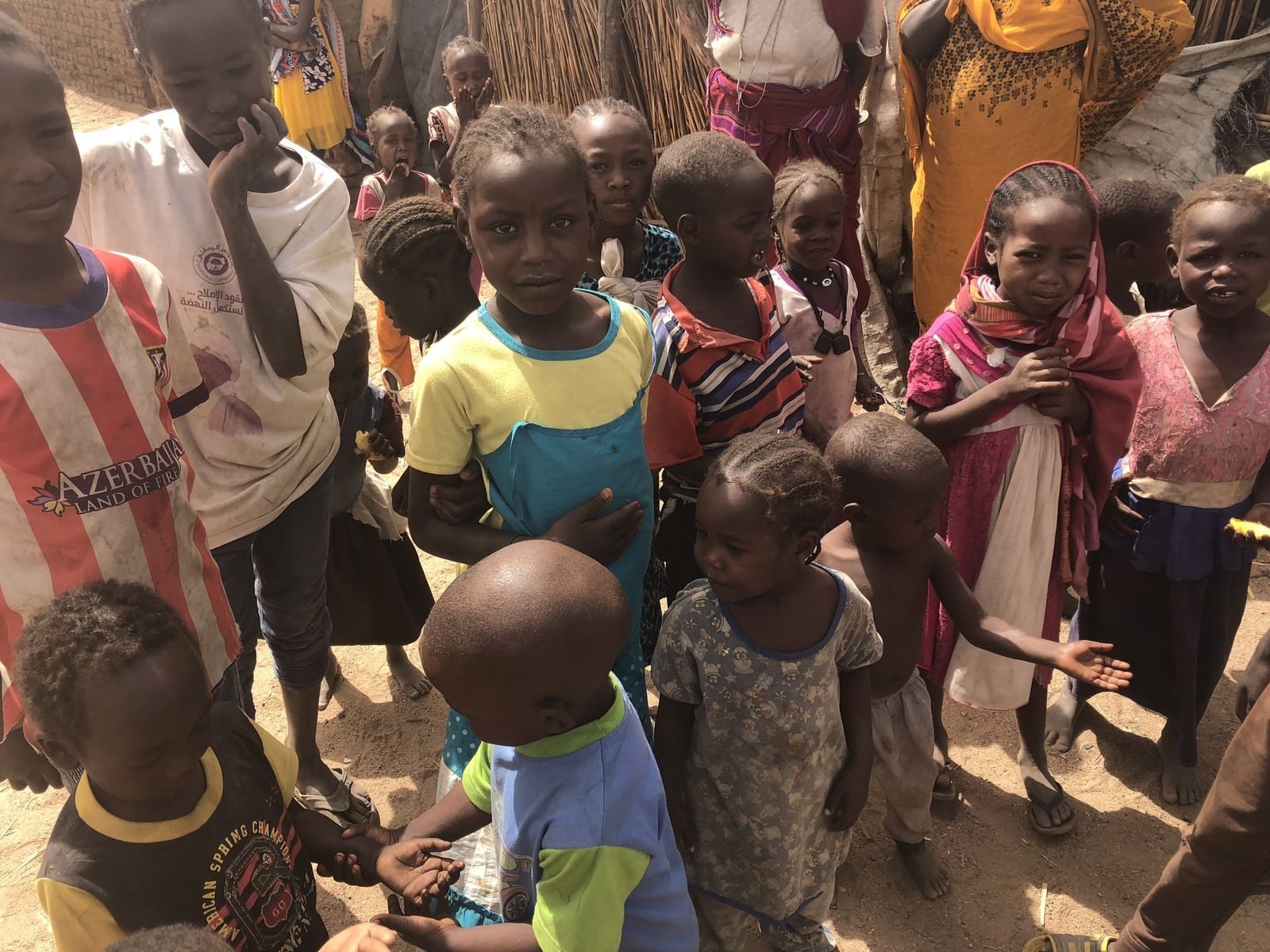
Key points
- In an interview broadcast on Friday 13 November 2026 on France 24’s Tête-à-tête programme, UN refugee chief Barham Salih called the war in Sudan ‘shameful’ and urged the world to end it. 1
- About 8.6 million people remain displaced inside Sudan and more than 4.6 million have fled across its borders; 15.4 million urgently need emergency shelter, but only 936,000 have received help. UNHCR / IOM
- UNHCR had received only $3 billion of the $8.5 billion it needs for 2026 by 9 October, 35 per cent, and is forecasting about $2.68 billion for 2027. 2
- About 8,000 people have left UNHCR since 2024, cutting its workforce from nearly 20,000 to just under 12,000. 2
- Forced displacement worldwide stood at 117.8 million people at the end of 2025, slightly below the record 123.2 million of 2024. 10
Three readings of the same result
Same facts, different frames. Each reading names its outlets and what it emphasizes.
The Western reading, carried by France 24 and the UN’s own reporting, treats this as an institutional crisis with a ledger attached.
The emphasis falls on the numbers, $3 billion of $8.5 billion, a workforce cut by two-fifths, a 2027 forecast of $2.68 billion, and on the cause the West least likes to name: its own retrenchment.
Key detail The United States, traditionally the largest donor, has slashed foreign aid, and other major donors have shifted funds towards defence.
The Eastern reading, carried by TRT World’s account of Salih’s first briefing to the Security Council, frames the same facts as a failure of the Council rather than of the donors.
The emphasis falls on his sentence that humanitarians cannot create peace, and on his demand that the Council use its influence ‘collectively and individually’ to end wars; Sudan above all, where he insisted there is no military solution.
Key detail For this audience, the interview is less a funding appeal than a challenge to the body charged with keeping the peace.
The Global South reading comes through the outlets closest to the crisis itself.
Al Jazeera’s reporting from the camps describes parents watching their children weaken as food aid is cut, the World Food Programme reduced monthly assistance for about 900,000 displaced people in October, while the famine-risk warning over Darfur and Kordofan sharpens and an El Niño drought withers harvests across half the country.
Key detail And The National’s interview with Salih in New York gives the South’s version of his message from his visit to Sudanese refugees in Adre, in…
Sources by lens: 6 West, 1 East, 4 Global South. See every source
The story
What did the UN’s refugee chief actually say in Paris?
In an interview broadcast on Friday, the United Nations’ refugee chief called the war in Sudan ‘shameful’ and urged the world to bring it to an end. Barham Salih, the UN High Commissioner for Refugees, was speaking to Marc Perelman on France 24’s Tête-à-tête programme, in one of his bluntest public statements since he took charge of the agency in January.
Salih said forced displacement stood at a record high and warned that funding cuts were hurting people ‘in dire need’. ‘Efficiency has its limits,’ he said; a line he has used before to describe an agency asked to do more with far less. He also defended the ‘integrity of the asylum system’, at a moment when several Western governments are tightening their asylum rules.
The interview puts Sudan, the world’s largest displacement crisis, back at the centre of the refugee debate
What do the numbers behind his warning show?
More than three and a half years after war broke out in April 2023 between the Sudanese Armed Forces and the paramilitary Rapid Support Forces, about 8.6 million people remain displaced inside Sudan and more than 4.6 million have fled across its borders, according to the UN refugee agency and the International Organization for Migration.
On 6 November, the two agencies said an estimated 15.4 million people urgently needed emergency shelter and household items, but only 936,000 had received help, about one in sixteen, and funding constraints meant agencies could prioritise only about one in ten of those in need. The shelter response needs $179 million for 2026 and is 35 per cent funded; the wider plan for Sudan asks for $2.9 billion to help 20.4 million of the 33.7 million people in need, and had received 47 per cent by early November.
The pressure is global. At the end of 2025, 117.8 million people worldwide had been forced from their homes, near the record 123.2 million of 2024. UNHCR, which depends almost entirely on voluntary donations, had received only $3 billion of the $8.5 billion it needs for 2026 by 9 October, and is forecasting about $2.68 billion for 2027. Since 2024, about 8,000 people have left the agency. In Sudan, the cuts threaten care for more than 50,000 survivors of conflict-related sexual violence; in Chad, where almost one million Sudanese refugees have arrived since April 2023, services for thousands of unaccompanied children are at risk. El Fasher, the North Darfur city captured by the Rapid Support Forces in October 2025 after a siege of more than 500 days, shows what the displaced are fleeing: more than 6,000 people are believed to have been killed in the assault and on the escape routes out of the city.
Salih said forced displacement stood at a record high and warned that funding cuts were hurting people ‘in dire need’. ‘Efficiency has its limits,’ he said.
What the interview leaves unanswered
Salih named no political process. He said the war must end through politics, not through humanitarian aid, but he pointed to no negotiation, no mediator and no timetable; and none is visibly under way.
The true scale of the killing is also unknown. Aid workers cited by Al Jazeera put the death toll as high as 200,000, far above earlier counts, and the fog of a war fought across a country the size of Western Europe makes any figure provisional. Drones caused more than 80 per cent of verified civilian deaths in the first four months of 2026.
Nor is it clear what ‘in dire need’ will mean by winter. Whether the end-of-year donor round restores anything, and whether the $2.68 billion forecast for 2027 rises or falls, will decide how much of that need is met.
Why a warning about money is also a warning about war
The interview matters because it joins two crises usually discussed apart: a war with no end in sight, and a protection system running out of money at the exact moment the need peaks. Sudan is the test case; the world’s largest displacement crisis, and the place where the funding collapse is most visible: empty warehouses, halted registration, medical care for survivors of sexual violence under threat.
It matters, too, because Salih is defending something larger than a budget. The asylum system he spoke of, the 1951 Refugee Convention and the pledge, made after the Second World War, that people fleeing persecution should be protected and not sent back to danger, is under strain from both directions at once: from governments cutting the money, and from governments tightening the rules.
And it matters because the consequences do not stay in Sudan. Sudanese nationals are now the largest group arriving in Europe through the Eastern Mediterranean route, with 14,104 recorded arriving by sea in 2025, a rise of 245 per cent on the year before. The country in the Bureau’s Factbook shows how deep the crisis runs: a state at war with itself, 33.7 million people in need, and a humanitarian plan less than half funded.
Why Salih is making the argument he is making
Read through the Bureau’s five dimensions, the interview is a coherent doctrine, not a plea. Geopolitically, Salih is speaking to a Security Council that has watched Sudan’s war grind into a fourth year without imposing a settlement, and to donor governments that have chosen defence budgets over humanitarian ones.
Historically, the argument reaches back to 1951. The Convention Salih wants renewed support for was written when the memory of the Second World War was fresh; his defence of its ‘integrity’ is aimed at governments that now treat asylum as a tap to be tightened.
There is also biography in the message. Salih fled persecution himself, studied engineering in Britain in exile, and rose to the presidency of Iraq before taking the helm of UNHCR When he says there is no humanitarian solution to a humanitarian problem, only a political one, he speaks as someone who has lived both sides of the equation: the exile, and the office that is supposed to end it.
What happens if the money does not come back
The first consequence is already visible: protection thins where it is thinnest. Registration halted in Ethiopia, services for unaccompanied children at risk in Chad, medical care for survivors of sexual violence under threat in Sudan; each is a small cut that compounds into a system that no longer reaches the people it exists for.
The second consequence is movement. When camps cannot feed or shelter people, people move; and the figures show it. Sudanese are already the largest nationality arriving in Europe through the Eastern Mediterranean route, and sea arrivals rose 245 per cent in a single year. The drones that now dominate the battlefield make staying more dangerous at the same time as leaving becomes harder to sustain, a combination that pushes displacement further rather than ending it.
The third consequence is political. Host countries that have sheltered refugees for years, Chad above all, with almost a million Sudanese arrivals, grow frustrated at the absence of international solidarity, and frustration in host states has a way of becoming restriction.
What will show whether the warning was heard
Three things will tell, in order. First, the end-of-year donor round: UNHCR is forecasting about $2.68 billion for 2027, and whether that figure rises by the time the pledges are counted will show whether Salih’s warning moved anyone with a chequebook. Second, the winter: with 15.4 million people needing shelter, the cold months in Darfur and northern Sudan will test whether the 6 November alarm produced any response. Third, the famine watch: the risk is growing in Darfur and Kordofan, and the coming months will show whether drought and fighting push those areas over the line.
Beyond the numbers, watch for any political movement. Salih’s demand is for a settlement, not for more tents; and a settlement requires a mediator, a table and two sides willing to sit at it. Until one appears, the interview stands as the marker of a system at its limit.
What we agree on, and what remains open
Established
- Barham Salih, the UN High Commissioner for Refugees since 1 January 2026, told France 24 on Friday 13 November that the war in Sudan is ‘shameful’ and must be ended politically.
- About 8.6 million people remain displaced inside Sudan and more than 4.6 million have fled abroad.
- UNHCR has received only $3 billion of the $8.5 billion it needs for 2026.
Contested
- On whether efficiency can still close a funding gap of this size, or whether Salih is right that it has reached its limit.
- On whether the greater threat to refugees is the loss of money or the tightening of asylum rules in the West.
- On whether a political solution to Sudan is available at all while the fighting continues.
Still open
- The true death toll of the war, with aid workers cited by Al Jazeera putting it as high as 200,000.
- Whether donors will restore funding at the end-of-year pledging round.
- Or what political track, if any, could bring the Sudanese Armed Forces and the Rapid Support Forces to a settlement.
What to watch
Questions, answered
In an interview broadcast on Friday 13 November on the Tête-à-tête programme, the UN refugee chief called the war in Sudan ‘shameful’ and urged the world to end it. He said forced displacement stood at a record high, warned that funding cuts were hurting people ‘in dire need’, said ‘Efficiency has its limits’, and defended the ‘integrity of the asylum system’.
About 8.6 million people remain displaced inside Sudan and more than 4.6 million have fled across its borders, according to UNHCR and the International Organization for Migration. A further 5.2 million have returned to their areas of origin, often to destroyed homes and services. Sudan is the world’s largest displacement crisis.
UNHCR depends almost entirely on voluntary donations, and its largest donor, the United States, has slashed foreign aid while other major donors have shifted funds towards defence. The agency had received only $3 billion of the $8.5 billion it needs for 2026 by 9 October, and has cut about 8,000 staff since 2024.
He means the war cannot be ended by humanitarian aid, however generous; only by a negotiated settlement between the warring parties. He told the Security Council in September that humanitarians cannot create peace and that the Council must use its influence, and he has repeatedly said there is no military solution to the war in Sudan.