The Council renewed the Darfur arms embargo to December 11 after Russia and China blocked a US bid to cover all of Sudan, leaving the 2005 regime in place amid the world's worst crisis.
Published 9 October 2026 · 18:00 GMT
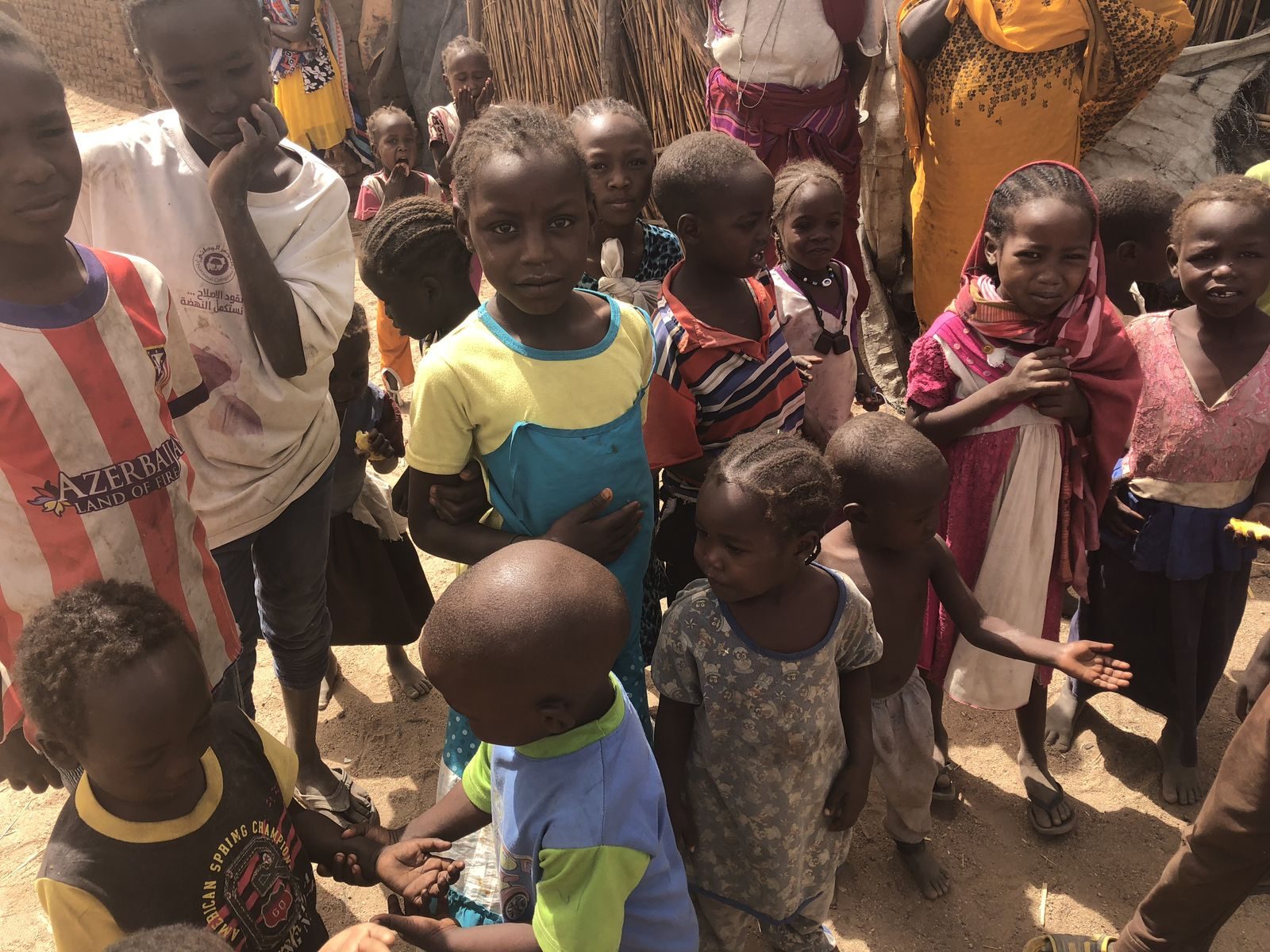
The United Nations Security Council voted unanimously on Thursday to extend the arms embargo on Sudan's Darfur region for another two months, until December 11, adopting Resolution 2830 and rolling over a sanctions regime first imposed in 2005. The unanimity masked a defeat: a United States bid to expand the embargo across the entire territory of Sudan, so it would cover the full theatre of a war that has killed at least 59,000 people and displaced about 13 million, was blocked after Russia and China refused to back it. The two-month renewal, which also stretches the mandate of the panel of experts monitoring the sanctions to January 11, 2027, is a holding pattern, not an answer.
The vote, held at UN headquarters in New York, was the second short renewal in a row. The Council had already rolled the Darfur regime over for a single month on September 11, and Thursday's text was again described by UN officials as a technical rollover: no new measures, no new names on the travel-ban and asset-freeze lists, just more time. The embargo itself covers armed actors in Sudan's Darfur region, a territory about the size of Spain, and the panel of experts whose mandate now runs to January 11, 2027 is the small team that tracks where the weapons come from and who moves them.
Washington had spent weeks arguing that the rollover was not enough. The United States wanted the embargo extended across the entire territory of Sudan, a move its ambassador to the UN, Jeff Bartos, said was unavoidable: the current sanctions regime, he told the Council last month, is over 20 years outdated and insufficient for the realities of the war. Alongside the geographic expansion, the American package included restrictions on drone transfers, a stronger expert panel, and targeted financial and travel sanctions against individuals and groups feeding the conflict. The push was championed this summer by US adviser Massad Boulos, and it reflected Washington's reading that the war has outgrown a Darfur-shaped instrument.
The embargo stays in Darfur. The war does not.
Moscow and Beijing refused. Russia's deputy ambassador to the UN, Anna Evstigneeva, told the Council that her country would not allow even a hint of broadening the restrictions on Sudan, and China joined Russia in insisting the regime stay confined to Darfur. Their argument was political rather than technical: keeping the embargo narrow preserves a margin for negotiation, they said, and it answers the protests of the government in Khartoum, which sees a countrywide embargo as a constraint on its war effort. Faced with the certainty of a Russian veto, the United States withdrew its expansion proposal before it could be put to a vote, and the Council then adopted the two-month extension of the Darfur-only regime unanimously.
Khartoum had lobbied hard for exactly this outcome. Sudan's ambassador to the UN, Al-Harith Mohamed, argued that a total arms embargo would violate the UN Charter's guarantee of the right to self-defence, a claim aimed at the Sudanese Armed Forces' need to keep buying weapons while it fights the paramilitary Rapid Support Forces (RSF). For the army, which holds central and eastern Sudan while the RSF controls Darfur in the west and parts of the south, a nationwide embargo would have been a leveller it cannot afford.
The sanctions trace back to Resolution 1591, adopted in 2005 during the earlier Darfur conflict. The regime has three parts: an arms embargo applying to armed actors in Darfur, a travel ban on designated individuals, and an asset freeze on designated individuals and entities. A five-member panel of experts monitors compliance and reports to the Council on violations. Thursday's resolution keeps all of that intact until December 11 and gives the panel until January 11, 2027. What it does not do is touch the flow of weapons anywhere else in the country, which is where most of the current war is being fought.
The war began in April 2023, when the rivalry between the Sudanese Armed Forces, led by General Abdel Fattah al-Burhan, and the RSF, led by Mohamed Hamdan Dagalo, known as Hemedti, exploded into open fighting in Khartoum and then across the country. The confirmed death toll stands at at least 59,000, though aid groups warn the real number could be far higher, and about 13 million people have been displaced, making this the world's largest displacement crisis. Parts of the country have been pushed into famine. The geography of the fighting has also flipped the embargo's logic: the heaviest recent battles have raged in Khartoum, Kordofan and the east, places a Darfur-only embargo does not reach.
Darfur itself remains the war's most brutal theatre. Displacement camps have been attacked, and repeated ethnic massacres have killed thousands at a time, many of them targeting non-Arab communities such as the Masalit. UN investigators have said the RSF's siege of El Fasher, the capital of North Darfur, bore the hallmarks of genocide, and the United States has accused the RSF of committing genocide against Darfur's non-Arab population, charges the paramilitary group denies. More than 60 percent of Darfur's population depends on humanitarian aid, and even that lifeline is under attack: last week, the RSF detained 32 World Food Programme aid trucks bound for North Darfur and demanded large payments for their release, conduct the Darfur regional government described as piracy and extortion.
The American case rests on the war's international dimension. In June, US Secretary of State Marco Rubio described the fighting as a proxy conflict involving several foreign actors, and UN bodies have warned about illicit financial networks, illegal arms transfers and foreign mercenaries feeding the hostilities. Drones have become a defining feature of the battlefield: UN figures show more than 1,100 people killed in drone strikes in just the first five months of 2026. For the United States, a 2005-era embargo drawn around one region cannot govern a 2026 war in which weapons, money and fighters cross the whole country and its borders.
Beijing's objection follows a familiar script. China has long preferred sanctions regimes that stay narrow and time-bound, arguing that broad embargoes punish populations while rarely stopping the guns, and that the Council should leave room for African-led diplomacy. China also weighs its substantial economic footprint in Sudan, from oil interests to infrastructure, against any measure that could destabilise the government it does business with. On Sudan, as on other African files, Beijing's default is the status quo unless a broader consensus forces its hand, and no such consensus existed this week.
Russia's posture is blunter and more transactional. Russia has repeatedly used its veto, or the threat of it, to shape Sudan texts at the Council, and Evstigneeva's red line this week was unusually explicit. Moscow's relationship with the Sudanese army has deepened as Western influence receded, and a nationwide embargo would have hit the army's supply lines at least as hard as the RSF's. By blocking the expansion while voting for the Darfur rollover, Moscow signalled that it will tolerate sanctions in principle but not sanctions that constrain Khartoum's war effort.
Two months is a short leash, and that is the point. Short renewals keep the question on the Council's agenda and give the panel of experts time to produce fresh reporting on violations before December 11. For Washington, the rollover buys time to rebuild the case for expansion, possibly with new evidence from the experts' findings. For Moscow and Beijing, it preserves the narrow regime they prefer without the diplomatic cost of casting a veto. For everyone else, it is an admission that the Council's most powerful tool for Sudan is being managed, not used.
The region is watching because the spillover is already real. More than a million Sudanese refugees have fled to neighbouring Chad, where camps in the desert are overwhelmed and aid workers describe mothers burying children lost to hunger and thirst. South Sudan, Egypt and Libya each face their own pressures from the war's refugee flows, arms movements and economic shockwaves. A Darfur-only embargo does nothing about the weapons crossing those borders into Kordofan or Khartoum, which is precisely the gap the United States tried, and failed, to close.
When the Council meets again in December, the same fight will be on the table. The panel of experts will report, Washington will decide whether to re-table its expansion, and Moscow and Beijing will decide whether the threat of a veto still holds. Until then, the embargo stays where it has been since 2005, drawn around Darfur, while the war it was meant to contain burns across the rest of the country. The Council voted unanimously on Thursday. The unanimity was the easy part.
From the Western reading, this is a failure of the Council to match its tools to the war. The Darfur-only embargo made sense in 2005, when Darfur was the conflict; in 2026 the war's centre of gravity sits in Khartoum, Kordofan and the east, and leaving those fronts outside the embargo means the Council is sanctioning yesterday's geography. Washington's frustration is genuine: an embargo that cannot touch the drones, artillery and supply lines actually deciding the war is an embargo performing seriousness rather than exercising it.
The harder Western question is whether a nationwide embargo would have changed anything. Arms embargoes on African wars have a long record of being breached, and the war in Sudan is already fed by illicit financial networks, illegal arms transfers and foreign mercenaries operating outside any Council text. Western analysts who doubt the expansion argue the real gap is enforcement, not geography: the panel of experts is five people tracking a war across a country the size of Western Europe. On that view, the blocked vote saved the Council from a symbolic gesture, and the December deadline is a chance to demand enforcement first.
From the Eastern reading, the Council did exactly what a divided Council should do: it kept what works and refused what does not. Broadening sanctions over the objections of two permanent members and the government concerned would have produced a veto, a fractured Council and an embargo born in confrontation, which Moscow and Beijing read as the worst possible start for any future negotiation. The unanimous rollover preserves the one thing the Council still has on Sudan, which is agreement on something.
The Eastern lens also hears Washington's proxy-conflict framing as the real subtext. If the war is a proxy conflict with foreign actors on several sides, then an embargo drawn by the Council becomes a weapon in that proxy fight, not a neutral instrument, and each side will read its exemptions and targets as favouritism. For analysts in this camp, the December renewal will be decided less by the facts in Darfur than by whether the great-power temperature around Sudan has cooled enough for any sanctions text to be more than a scorecard.
From the Global South reading, the story is the gap between the Council chamber and the ground. In Darfur, where the embargo applies, displacement camps are attacked and massacres continue; outside Darfur, where it does not, the war rages on regardless. For African diplomats, the debate over the embargo's borders is a debate about a map in New York, while the actual arms routes run through the region's own borders, carried by networks the Council has never managed to name, let alone stop. The demand from this camp is for African-led pressure on the belligerents, not a wider Western-authored sanctions text.
There is also a Southern scepticism about what an expanded embargo would have meant for Khartoum. A nationwide embargo would have constrained the Sudanese Armed Forces as much as the RSF, and governments in the region that have lived through embargoes know they rarely bite the strongest smuggler hardest. The South's test for December is practical: does the renewed regime produce verifiable cuts in the weapons reaching the front lines, or does it produce another round of reports while the trucks keep moving.
It unanimously adopted Resolution 2830, a two-month technical rollover of the Darfur arms embargo to December 11, 2026, plus an extension of the panel of experts' mandate to January 11, 2027. No new measures and no new designated individuals were added. The regime itself, an arms embargo on armed actors in Darfur with a travel ban and asset freeze on listed people and entities, dates to Resolution 1591 of 2005.
No veto was cast, because the expansion never reached a vote. Russia's deputy ambassador, Anna Evstigneeva, made clear Moscow would not allow even a hint of broadening the restrictions, and with a Russian veto certain, the United States withdrew its proposal. The Council then voted unanimously for the narrow rollover both powers preferred.
Ambassador Jeff Bartos argued the 2005 regime was designed for a Darfur conflict and cannot govern a 2026 war fought in Khartoum, Kordofan and the east, fed by drones, illicit financial networks and foreign mercenaries. Washington also proposed drone-transfer restrictions, a stronger expert panel and targeted sanctions, none of which made it into the adopted text.
The embargo expires again and the Council must decide whether to renew it, and on what terms. The panel of experts will report on violations in the meantime, and Washington will decide whether to re-table the nationwide expansion. If Russia and China hold their line, expect another short rollover rather than a broader regime.
