More than 15,000 patients wait for medical evacuation, oxygen stations are failing, and a cancer caught early still kills — the ‘ceasefire’ changed the bombing’s tempo, not the blockade’s logic, medics say.
Published 10 October 2026 · 14:19 GMT
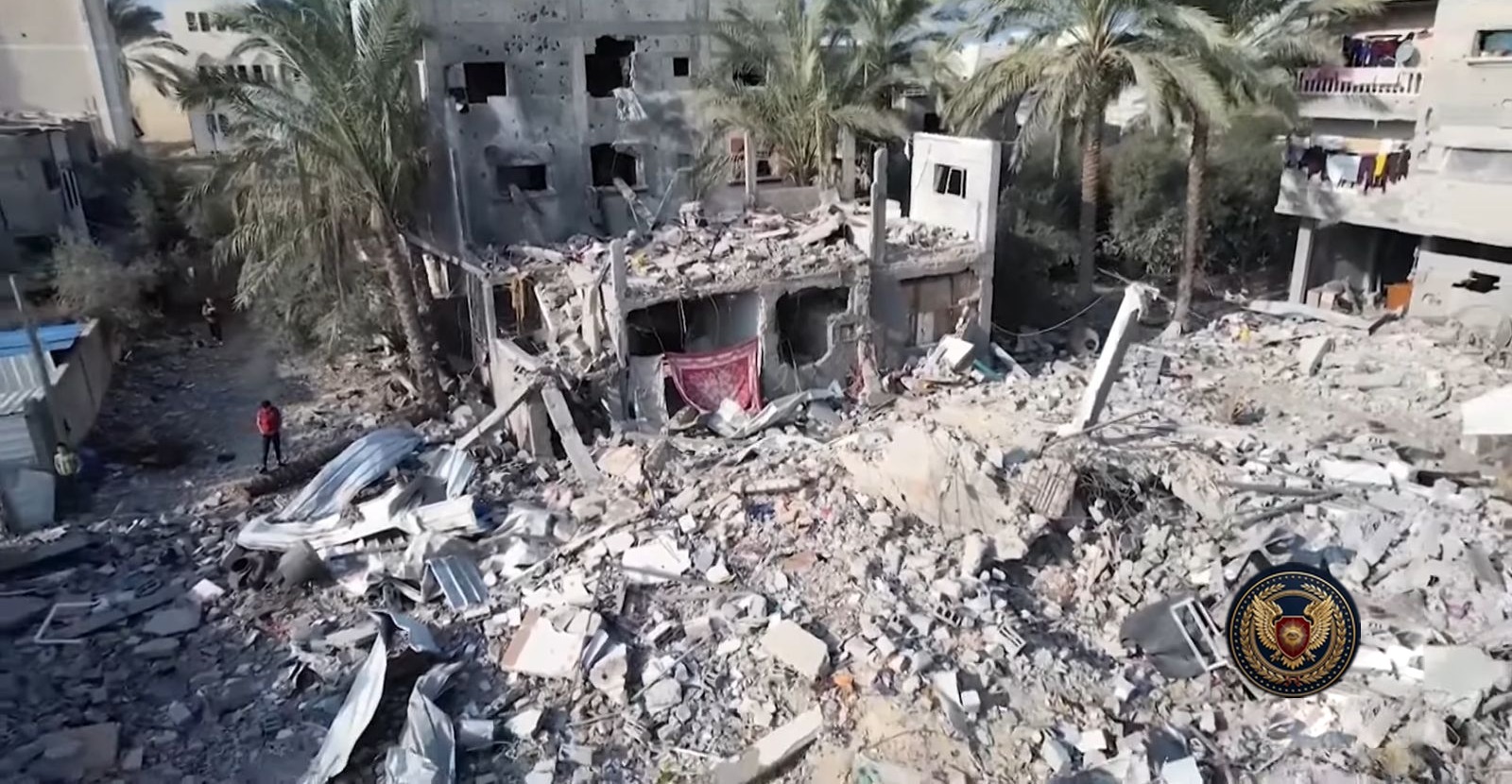
When the ‘ceasefire’ was announced on October 10 last year, Gaza’s medics allowed themselves a rare expectation: that medicines and equipment would arrive more regularly, that hospitals could begin to be restored, that patients could leave for treatment and foreign emergency teams could come to support exhausted health workers. A year later, a Medical Aid for Palestinians staffer writes, none of it happened — and the system is being asked to do far more than it can sustain.
The account centers on Iktimal, the aunt of a MAP colleague. In February she sensed something was wrong and had a biopsy — but the lab, like so many across Gaza, lacked the supplies to test the sample on time. More than a month passed before she learned she had cervical cancer, a disease usually curable when found early. Surgery followed in April; recovery was slow, kidney complications set in, and the specialist care she needed did not exist in Gaza. Her family applied for medical evacuation through a slow, opaque bureaucracy; by the time Israeli authorities approved it, her condition was critical. She reached Egypt hoping for treatment. Two weeks later, she was dead.
The numbers are unusually specific, and they all point one way. More than 1,470 people have been killed since the ‘ceasefire’ started, and traumatic injuries keep arriving at clinics because bombardment continues. Medical Aid for Palestinians has suspended services in parts of the Strip as security deteriorated; last month a 65-year-old patient was killed by Israeli quadcopter fire while seeking treatment at a MAP-supported centre in Jabalia.
The supply picture: hospitals short of IV fluids, anaesthetics and surgical supplies — even oxygen, with staff in many hospitals carrying cylinders to a central station for refilling. More than 500 patients rely on oxygen, some around the clock: cancer patients, people with pulmonary fibrosis and heart conditions, babies and children in intensive care. In August the Palestinian Ministry of Health warned that 22 of Gaza’s 34 oxygen stations had stopped working and only 4 of 30 cylinder-filling machines still ran. Spare parts remain blocked as ‘dual use.’ There is no working MRI in Gaza; one or two CT scanners serve about two million people.
The human ledger: children who survived acute malnutrition now live with anaemia and stunting; diabetics and hypertensives struggle for medicines; cancer patients cannot get radiotherapy; kidney patients cannot count on regular dialysis. A month ago, a newborn with a serious heart condition died at Assahaba Medical Complex, a MAP-supported hospital — the emergency surgery the baby needed does not exist in Gaza. The doctors knew what was required and had no way to provide it. Strikes on residential buildings keep adding to the caseload even as the system’s capacity to absorb it shrinks.
We do not know how many of the 15,000 awaiting medical evacuation will die waiting — the WHO’s figure is a queue, not a forecast, and Iktimal’s case suggests the queue itself is the killer. We do not know the true toll of preventable deaths over the past year: the deaths counted are the violent ones, while the deaths by delayed diagnosis, missed dialysis and absent radiotherapy dissolve into Gaza’s general mortality statistics.
We do not know whether any medical corridor will widen. The evacuation bureaucracy — slow, unclear, and lethal by delay — has not been reformed in the ceasefire year, and the ‘dual-use’ regime shows no sign of narrowing. Nor do we know how many clinicians Gaza has left: the system’s exhaustion is reported everywhere and measured nowhere.
A health system is the most honest instrument for measuring a ceasefire: bombs pause, but permits, supply lines and evacuation corridors reveal whether anything has actually changed. By that measure, Gaza’s past year reads as continuity, not rupture — ‘every delay has a cost,’ the MAP account warns, ‘every week a medicine is held back, a scan can’t be done, a patient is refused exit, someone’s condition passes the point where it can be treated.’
It matters beyond Gaza because the mechanisms are exportable: the ‘dual-use’ classification, the evacuation permit regime, the slow strangulation of a civilian health system under the vocabulary of security. What is normalized in Gaza — ventilators as contraband, oxygen parts as munitions-adjacent — becomes precedent everywhere the same language is later invoked.
Because the ceasefire addressed the tempo of bombing, not the logic of the blockade. The permit regime, the ‘dual-use’ classifications and the evacuation bureaucracy were never suspended — they are peacetime instruments, and they kept working through the ‘ceasefire’ exactly as designed. The anniversary review of Trump’s Board of Peace documents the same continuity from the governance side. A ventilator classified as dual-use in wartime is still dual-use when the guns nominally fall silent; a spare part that cannot enter in October 2025 cannot enter in October 2026 either.
This is the continuity the MAP account documents: the restrictions that stood between Iktimal and her diagnosis, her treatment and her evacuation are the same restrictions, administered by the same authorities, under the same classifications. The ‘ceasefire’ changed what fell from the sky — though not entirely, with 1,470 killed since it began — but changed nothing about what is allowed through a checkpoint or a permit office. For a health system, the checkpoint is the front line.
The deeper mechanism is definitional creep. ‘Dual use’ began as a security category and has become a rationing device: tents, ventilators, oxygen-station parts, surgical supplies all pass through it. Each classification is individually defensible in security language and collectively devastating in medical arithmetic — which is precisely why the category keeps expanding. No single denial kills; the accumulation does.
It produces a second casualty list, slower and less visible than the first. A cancer caught early becomes untreatable; an injury that rehabilitation could have healed becomes a permanent disability; a child who needed food and treatment carries chronic malnutrition, stunting and developmental damage that may last a lifetime. These are not deaths — they are diminished lives, accumulating by the thousand, and they will burden Gaza’s families and whatever health system eventually emerges for a generation.
It also produces clinician exhaustion as a structural fact. The MAP account describes health workers asked to do far more than a devastated system can sustain, making decisions without the scans, tests or medicines they would normally rely on — practicing medicine by improvisation, indefinitely. Systems do not recover from that by restocking shelves; the expertise itself erodes. And it produces the quiet normalization visible in the numbers: funerals for the bombed, silence for the evacuated-too-late.
On current trajectories, it cannot — it grows. Every week adds new traumatic injuries from continuing strikes, new cancers diagnosed late for lack of lab supplies, new kidney patients missing dialysis. The WHO’s 15,000 is a snapshot of a queue lengthening faster than it shortens, and winter will accelerate it: cold, crowding in tent camps and deepening hunger drive respiratory and infectious disease through a population with almost no clinical buffer left.
What would change the arithmetic is not mysterious: spare parts declassified, the ‘dual-use’ list narrowed to actual weapons risk, evacuation approvals measured in days instead of months, field oxygen capacity restored. None of it requires new technology — only decisions by the authorities administering the regime. A year into the ‘ceasefire,’ those decisions have not come. Iktimal ran out of time; right now, the MAP account warns, thousands of people in Gaza are running out of time too.
From the Western vantage — Jerusalem, Washington, Geneva — the story is framed as security management with humanitarian costs. Israel says its continuing operations target Hamas members, who deny the claims, and presents the ‘dual-use’ regime as the barrier keeping military-applicable material out of militant hands. The WHO, from Geneva, counts the evacuation backlog — 15,000 and rising — and appeals for corridors, operating in the space between the security framing and the medical arithmetic.
From the region’s vantage, the story is about corridors and their keepers. Egypt is the evacuation destination — Iktimal died there, two weeks after finally crossing — which makes Cairo’s coordination with Israeli authorities the narrow gate through which Gaza’s most desperate cases must pass. The Palestinian Ministry of Health issues the warnings (22 of 34 oxygen stations down) from inside the siege, documenting a collapse it has no power to arrest. Gulf donors fund field hospitals and pledges; the permit regime decides what actually enters.
From the Global South’s vantage, the story is about whose suffering counts as urgent. Medical Aid for Palestinians — working in the clinics, suspending services when quadcopters make them untenable — carries the field view that statistics cannot: the newborn at Assahaba, the 65-year-old at Jabalia, the aunt who ran out of time. For much of the South, Gaza’s hospitals are the clearest exhibit of a double standard — a health system deliberately asphyxiated while the language of humanitarian concern flows freely around it.
More than 15,000, according to the World Health Organization — and the queue is lethal. A Medical Aid for Palestinians staffer describes the case of Iktimal, whose cervical cancer was diagnosed over a month late for lack of lab supplies; by the time Israeli authorities approved her evacuation to Egypt, her condition was critical, and she died two weeks later. Her story, medics say, is one of thousands.
The infrastructure is failing faster than it can be repaired. In August, the Palestinian Ministry of Health warned that 22 of Gaza’s 34 oxygen stations had stopped working and only 4 of 30 cylinder-filling machines still ran. Spare parts are blocked by Israel as ‘dual-use’ items, so the stations that still function could fail soon — while more than 500 patients across Gaza depend on oxygen, some around the clock.
Israel classifies thousands of items with civilian and military applications as ‘dual use’ and restricts their entry into Gaza. In practice, medics report, that covers ventilators, oxygen-station spare parts, surgical equipment and even tents. The result: no working MRI machine in the Strip, one or two CT scanners serving about two million people, and doctors forced to decide treatments without the scans, tests or medicines they would normally rely on.
Not by the measure that matters to medics. More than 1,470 Palestinians have been killed since the October 2025 ceasefire began, bombardment continues, and even reaching a health centre carries risk — a 65-year-old patient was killed by quadcopter fire at a MAP-supported clinic in Jabalia last month, and MAP has suspended services in parts of the Strip. The related anniversary review of <a href="https://magnabureau.space/article-has-trumps-board-peace-achieved-year.html">Trump’s Board of Peace</a> reaches the same conclusion.
