Erdoğan calls Gaza’s destruction an ‘ecocide’ at the COP31 climate summit
Türkiye’s president used his turn as host of the UN climate talks in Antalya to demand the world recognise the environmental ruin of the war in Gaza; and drew a furious response from Israel, which was not invited.
Key points
- Turkish President Recep Tayyip Erdoğan told the COP31 leaders’ summit in Antalya on Wednesday 11 November that what happened in Gaza was “not only a genocide, but also an ecocide”. AP / The Hindu
- Erdoğan cited centuries-old olive trees cut down, polluted soil and water, and cities turned to rubble, and said tens of thousands of tents had been inundated by rain and flooding. AP / The Times of Israel
- Israel was not invited to COP31; Turkish Environment Minister Murat Kurum said “there can be no climate justice where peace does not prevail”. Jerusalem Post / Dawn
- Israel’s Foreign Ministry accused Erdoğan of using the forum to push an “anti-Israel campaign of lies” and of supporting Hamas; Israel denies the genocide allegation. AP / NDTV
- A UN Environment Programme assessment from September 2025 found that by May 2025, 97 per cent of Gaza’s tree crops and 95 per cent of its shrubland had been damaged. UNEP
Three readings of the same result
Same facts, different frames. Each reading names its outlets and what it emphasizes.
The Western reading, carried by Israeli outlets and the wire services, treats the speech first as a political act and second as an environmental claim.
In this telling, Erdoğan used a climate forum to attack a country that had not even been invited, Israel answered with fury, its Foreign Ministry calling the speech an “anti-Israel campaign of lies”, and the genocide allegation is presented alongside Israel’s flat denial.
Key detail The war is framed from 7 October 2023, and ecocide is handled as rhetoric, since it has no standing as a charge in international criminal…
The Eastern reading, carried by Turkish state media and the region’s press, treats the speech as the host’s prerogative and the word as earned.
From Ankara’s side, the COP31 presidency confers the right to set the moral frame, and the frame is climate justice: there can be no climate justice where peace does not prevail.
Key detail The evidence is the blocked housing containers, the flooded tents and the ruined olive groves; and Iran’s president echoing the charge from the same…
The Southern reading, carried by Dawn, Arab News and The Hindu, is the one closest to the people the speech was about.
Here the question is not Erdoğan’s motives but the ledger itself: the UNEP figures, the 74,000 dead, the tents under water, the aid that does not arrive.
Key detail The speech lands in a press that has spent a year documenting Gaza’s environmental collapse as a lived disaster, and it is read as a…
Sources by lens: 1 West, 2 East, 1 Global South. See every source
The story
A host president turns the climate stage toward Gaza
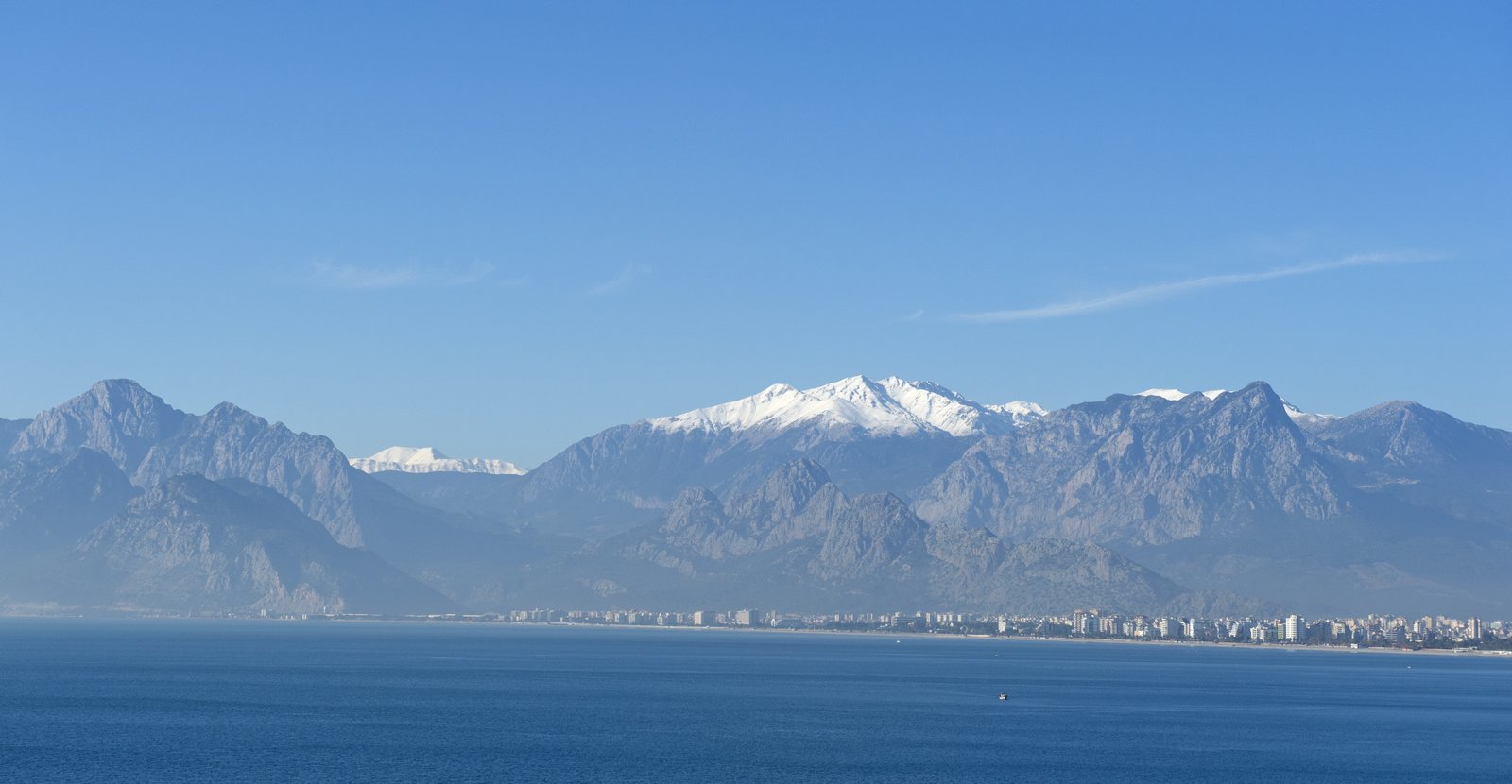
On Wednesday 11 November, in the Mediterranean resort city of Antalya, Turkish President Recep Tayyip Erdoğan took the podium at the COP31 leaders’ summit and made a war the centre of his speech. Türkiye holds the COP31 presidency, and the hall was full of heads of state and government. “What has taken place in Gaza is not only a genocide, but it is also an ecocide,” he said, to applause from world leaders and climate envoys.
“Centuries old olive trees have been cut down. The soil and water have been polluted in Gaza, and cities in Gaza have been turned into enormous piles of rubble,” he said. Then he tied it to the weather battering the territory: “With Gaza’s destroyed infrastructure, compounded by torrential rain and by flooding, tens of thousands of tents and shelters have been inundated.” He asked Israel to grant more aid access, and pressed richer countries to carry more of the cost of fighting climate change.
The staging mattered as much as the words. Israel was not invited to COP31 at all. “As the host country for the leaders’ summit, we did not send an invitation to Israel,” Turkish Environment Minister Murat Kurum said, adding: “We say that there can be no climate justice where peace does not prevail.” Iran’s President Masoud Pezeshkian attacked Israel in his own address the same day.
The numbers behind the word ecocide
A second assessment by the UN Environment Programme, released on 23 September 2025, documented what two years of war had done to Gaza’s land, water and coastline. By May 2025, remote sensing showed 97.1 per cent of Gaza’s tree crops, 82.4 per cent of its annual crops, 95.1 per cent of its shrubland and 89 per cent of its grass and fallow land damaged. Some 78 per cent of the territory’s estimated 250,000 buildings had been damaged or destroyed, generating about 61 million tonnes of debris. Requested by the State of Palestine, it made 30 recommendations and warned recovery from some damage could take decades.
Israel’s offensive has killed more than 74,000 people, according to local health authorities, since the Hamas-led attack of 7 October 2023 in which about 1,200 people were killed and 251 taken hostage. A ceasefire brokered in October 2025 halted the heaviest fighting, but heavy rainfall and flooding have since destroyed many of the tents and makeshift shelters displaced residents live in, and at least four people were killed earlier this week when a sand embankment collapsed onto a shelter. The territory’s infrastructure has been collapsing for months, and families have been improvising defences from whatever they have.
The aid picture is contested from both sides. Erdoğan accused Israel of deliberately obstructing the delivery of residential containers to Gaza. Israel’s military and its Coordinator of Government Activities in the Territories say more than 91,000 tents and over 8,200 truckloads of winter supplies have entered Gaza. Imports, meanwhile, remain far below pre-war levels, and many items are still blocked.
Centuries old olive trees have been cut down. The soil and water have been polluted in Gaza, and cities in Gaza have been turned into enormous piles of rubble,
What a speech cannot settle
Erdoğan’s word was political, not judicial. “Ecocide” has no settled definition in international criminal law: the Rome Statute of the International Criminal Court covers wartime environmental damage only in narrow terms, and a 2021 panel of experts proposed a definition, unlawful acts committed knowing they are likely to cause severe, widespread or long-term damage, that has never been adopted. Vanuatu, Fiji and Samoa formally proposed adding ecocide to the Statute in September 2024; it is still under consideration, and nothing said in Antalya changes that.
Nor is it clear what the speech changes in practice: whether any language about war and the environment will reach the COP31 outcome, whether Israel will ease the entry of housing containers, or whether the row will help or hinder the finance and energy negotiations. And the full toll is itself unmeasured: UNEP could not send staff into Gaza, so its assessment is incomplete by its own account, and the damage has kept worsening since mid-2025.
When a climate summit becomes a courtroom for war
COP summits are built to negotiate emissions, finance and adaptation. Erdoğan’s intervention treats them as something larger: a stage where the environmental cost of war can be named before the governments that will pay for the recovery. If the destruction of a territory’s soil, water and vegetation can be presented at a climate summit as a climate issue, then every future war will arrive at the negotiating table carrying its own environmental ledger.
For Gaza itself, recovery is now measured in decades, not months. Sixty-one million tonnes of debris, a contaminated aquifer, a shattered water system and the loss of nearly all tree crops mean the territory’s ability to feed and water its own people is a question for a generation, not a single reconstruction budget. It also matters for the climate process itself: the Global South has long argued that climate justice cannot be separated from the wars and blockades that strip vulnerable peoples of the means to adapt, and Erdoğan’s speech gave that argument a presidential voice in the room where the money is discussed. Türkiye is not the only host pressing a national case from the platform; Morocco pressed its own climate case at COP31.
The host’s leverage, spent on a single word
Erdoğan chose his word with care, and his moment with more still. As COP31 president, Türkiye controls the stage and the guest list; excluding Israel and then using the opening addresses to accuse it of ecocide is a use of host leverage no ordinary delegation could match. The word itself does the work: “genocide” is a legal charge with a long argument attached to it, and a UN commission of inquiry concluded in September 2025 that Israel had committed it; a finding Israel calls distorted and false. “Ecocide” carries no such baggage. It borrows genocide’s moral weight and applies it to the landscape, where satellite evidence is harder to dispute.
Three audiences mattered: the domestic and regional audience, for whom Erdoğan has long cast himself as Gaza’s loudest Muslim-world voice; the Global South, which hears in “climate justice” a language of its own; and the climate process itself, whose negotiators would rather talk energy than rubble and tents. The speech costs Türkiye nothing at the negotiating table and buys it standing with the audiences that matter to it. The risk is that it costs the summit instead: every hour spent on the Gaza row is an hour not spent on the fossil-fuel transition and the finance package.
What the word leaves behind after the applause
The first consequence is legal. The campaign to make ecocide a fifth crime under the Rome Statute, drafted in 2021, formally tabled by Vanuatu, Fiji and Samoa in September 2024, now has a head of state using the word on the world’s biggest climate stage. Adoption would still need a two-thirds majority of member states, at least 83 votes, and ratification after that; the road is long, but the direction of travel is now visible.
The second consequence is practical and sits in Gaza. UNEP’s 30 recommendations for recovery, debris management, water-system repair, soil remediation, assume a political environment that does not currently exist, and the arriving winter will test the 91,000 tents and 8,200 truckloads Israel says it has let in against storms that have already killed people in collapsed shelters. The third is diplomatic: Türkiye has made Gaza a standing item at every forum it hosts, and Israel’s exclusion from COP31 sets a precedent other hosts may copy or condemn. The fourth is for the climate talks: whether negotiators from nearly 200 countries can keep the energy and finance negotiation on track while the leaders’ segment trades accusations about a war. If they cannot, the summit’s legacy will be the speech, not the deal.
The summit goes on, and Gaza’s winter does not wait
The leaders’ segment runs into Thursday, with more than 70 leaders due to speak, Three things are worth watching. The first is whether any language about conflict and the environment survives into the COP31 outcome. The second is the winter in Gaza: the rains have already flooded displacement camps and killed people in collapsed shelters, and the next storm will arrive before any recovery plan does. The third is aid: whether Israel eases the entry of the housing containers Erdoğan says it is blocking, and whether winter supplies keep pace with the cold.
None of those questions will be answered by a speech. But the speech has changed what the summit is about, at least for this week: a climate conference that began with emissions targets is now also a conference about what war does to the ground beneath people’s feet; and about who pays to put it right.
What we agree on, and what remains open
Established
- Erdoğan used the COP31 stage in Antalya to call the destruction in Gaza both a genocide and an ecocide, and to demand wider aid access.
- Israel, which was not invited, rejected his words furiously.
Contested
- On whether the word genocide applies at all; a UN commission of inquiry said in September 2025 that Israel had committed genocide in Gaza, while Israel calls that finding distorted and false and accuses the panel of antisemitism.
Still open
- Whether the word ecocide will move from a summit speech into law or into the COP31 outcome, or whether the row will change aid access or the pace of Gaza’s recovery.
What to watch
Questions, answered
Speaking at the COP31 leaders’ summit in Antalya on Wednesday 11 November, Turkish President Recep Tayyip Erdoğan said: “What has taken place in Gaza is not only a genocide, but it is also an ecocide.” He cited centuries-old olive trees cut down, polluted soil and water, cities turned to rubble, and tens of thousands of tents inundated by rain and flooding; and he called for greater aid access.
No. Ecocide has no settled definition in international criminal law, and the Rome Statute of the International Criminal Court covers wartime environmental damage only in narrow terms. A panel of experts proposed a definition in 2021, and Vanuatu, Fiji and Samoa formally proposed adding ecocide to the Statute in September 2024. The proposal is still under diplomatic consideration.
Türkiye, which holds the COP31 presidency, chose not to invite Israel to the leaders’ summit in Antalya. Turkish Environment Minister Murat Kurum said: “As the host country for the leaders’ summit, we did not send an invitation to Israel,” adding that “there can be no climate justice where peace does not prevail.” Israel’s Foreign Ministry reacted furiously to Erdoğan’s speech.
A UN Environment Programme assessment from September 2025 found that by May 2025, 97 per cent of Gaza’s tree crops, 82 per cent of its annual crops and 95 per cent of its shrubland had been damaged, while 78 per cent of its estimated 250,000 buildings were damaged or destroyed, generating about 61 million tonnes of debris. Recovery from some of the damage could take decades.