Trump says more US strikes on Iran are ‘highly unlikely’; but forces stay ‘locked and loaded’
The president says the war is “effectively over” and points to “positive momentum” in talks mediated by Qatar, eight months after American and Israeli strikes opened the conflict; yet the naval blockade stays in place, limited strikes continue, and Tehran warns of a devastating reply to any resumption.
Published 10 November 2026 · 05:42 GMT
The summary
President Donald Trump said renewed US strikes on Iran were “highly unlikely” and that “Iran militarily is effectively over”, in remarks at the White House press briefing room on Monday 9 November 2026. He said the United States was keeping “the status quo” at the behest of neighbouring countries, but remained “locked and loaded” should circumstances change.
The three lenses
- WestThe West hears a president stepping back; with one foot still raised Western coverage, led by the BBC, reads Monday as an election-driven retreat wrapped in deterrence: the “effectively over” line is the headline, the “locked and loaded” line is the insurance policy.
- EastAsia counts the barrels and the bridges Coverage from the East, led by The Hindu and CNA, reads the same remarks through energy and exposure.
- Global SouthThe South watches the mediators, not the missiles Reporting from the Global South, led by Al Jazeera and TRT World, puts the mediation at the centre and the missiles at the edge.
Key facts
- President Donald Trump said renewed US strikes on Iran were “highly unlikely” and that “Iran militarily is effectively over”, in remarks at the White House press briefing room on Monday 9 November 2026. BBC
- He said the United States was keeping “the status quo” at the behest of neighbouring countries, but remained “locked and loaded” should circumstances change. BBC
- Trump told CNN on Sunday 8 November that new strikes were “highly unlikely” if Tehran signed a “strong agreement”, and said the US had identified 38 bridges it could destroy within an hour. The Hindu
- He hosted Qatari Prime Minister Sheikh Mohammed bin Abdulrahman Al Thani at the White House on Monday for talks on ending the war; both sides described “positive momentum”. Al Jazeera
- The war began on 28 February 2026 with joint US-Israeli strikes on Iran; it is now in its ninth month. TRT World
- Iran’s Foreign Minister Abbas Araghchi warned Tehran would “rain down hell” if the US resumed attacks, and said Iran had offered a new nuclear and peace proposal through Qatari mediators. Al Jazeera
- Brent crude fell to $91.88 a barrel on Tuesday as markets read Trump’s remarks as de-escalation; Brent is about 22 per cent below its 30 October six-month high of $118. CNA
- Republican congressman Thomas Massie plans to force a House vote this week to impeach Defence Secretary Pete Hegseth over the war. BBC
The briefing-room sentence that moved oil
President Donald Trump said on Monday 9 November that renewed American strikes on Iran were “highly unlikely”, telling reporters in the White House press briefing room that “Iran militarily is effectively over” and that there was “positive momentum” behind negotiations to end the war. “We’re just keeping it the status quo,” he said, adding that the pause came “really at the behest of countries that are their neighbours”. The same sentence carried a warning: the United States was “locked and loaded” should circumstances change. Earlier on Monday, Trump hosted Qatari Prime Minister Sheikh Mohammed bin Abdulrahman Al Thani in the Oval Office, calling it an “excellent conversation” about ending the war; the Qatari leader said afterwards that he had held “positive discussions” with Trump and Vice-President JD Vance on “reaching a deal and bringing peace to the region”. Within hours, oil prices fell as traders read the remarks as a step back from escalation.
Eight months of war, compressed into one Monday
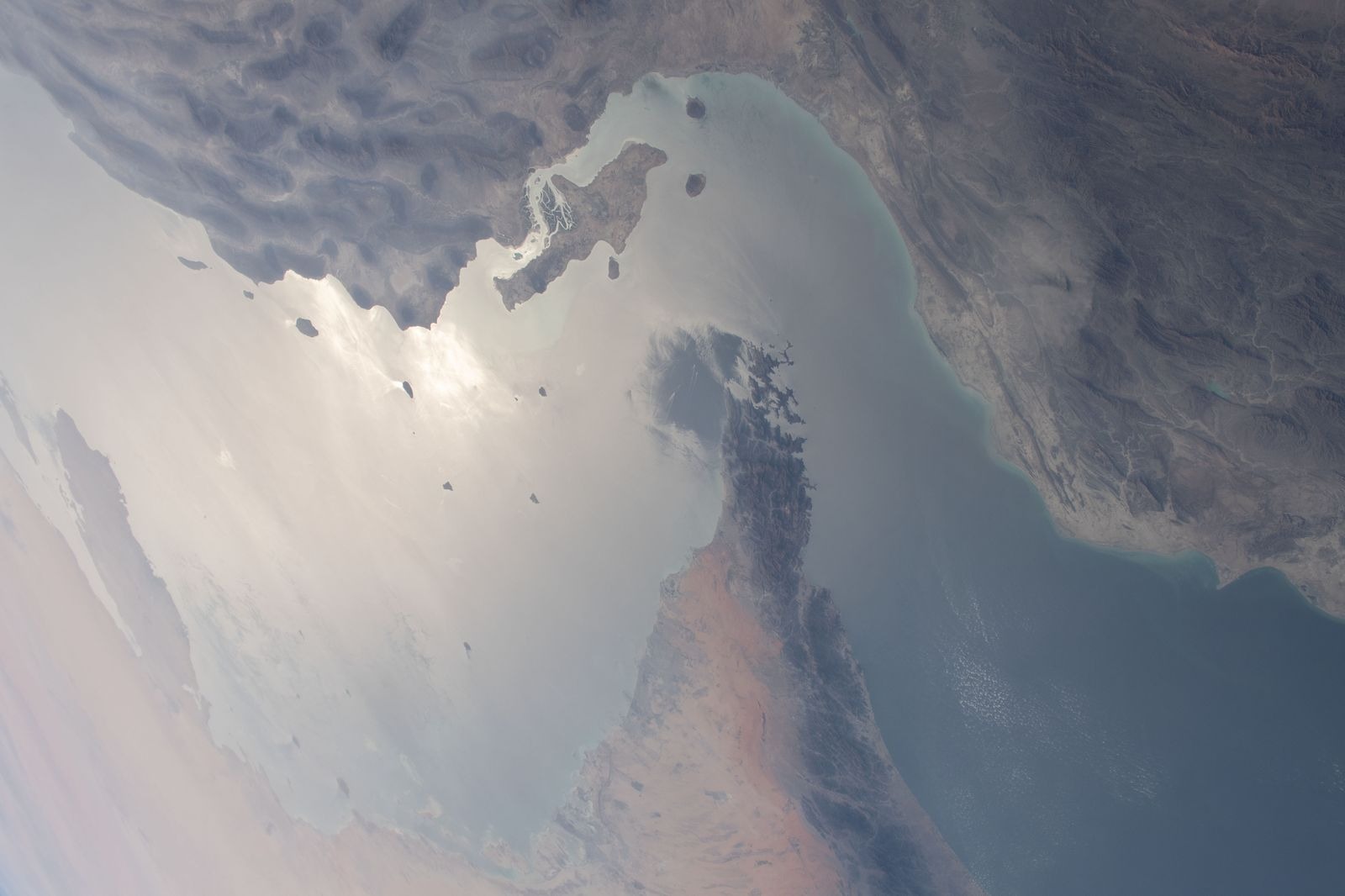
The war began on 28 February 2026, when the United States and Israel launched joint strikes on Iran, and it is now in its ninth month. Trump had spent the weekend softening his line: in a telephone interview with CNN on Sunday 8 November he said new strikes were “highly unlikely” if Tehran signed a “strong agreement”, and in a 60 Minutes interview that aired the same day he said he saw no reason to escalate. The threat has not been withdrawn, only parked. Trump said the United States had identified 38 bridges it could destroy within an hour if fighting resumed, and warned that three American aircraft carriers in the region stood “fully locked and loaded”. Limited American action has in fact continued: at least two strikes against Iranian air defences in the past week, strikes on Qeshm Island in the Strait of Hormuz, and the disabling on Saturday 7 November of a commercial ship the United States said was trying to breach its naval blockade of Iranian ports. That blockade stays in place, and Washington has offered a $20 million reward for information about Iran’s nuclear programme. Saudi Arabia, Qatar and the United Arab Emirates, the Gulf allies Trump cited, have all been hit by Iranian strikes during the war, and the threat of further strikes has repeatedly disrupted air travel across the region.
What is still missing behind the “positive momentum”?
Nothing in the public record yet says what a “strong agreement” would contain, or what Tehran would receive in return. Iran offered Washington a new nuclear and peace proposal through Qatari mediators last Thursday, to be discussed only after the United States meets Tehran’s seven demands; but the full list of those demands has not been independently confirmed, and Al Jazeera’s reporting is the only published summary of them. Secretary of State Marco Rubio has said the negotiations have not made progress, and Foreign Minister Abbas Araghchi has said the talks are at an impasse, blaming political volatility in Washington after the midterm elections. It is also unclear why Trump will not formally declare the war over: asked directly, he pointed to the Gulf allies and said “we have to make sure they’re not hurt”. And the central ambiguity is definitional; whether a war can be “effectively over” while limited strikes continue, a blockade stays enforced and sanctions bite, a question Tehran and Washington answer in opposite ways. Tehran’s seven demands trace back to the plan it announced at the United Nations General Assembly in September, and until its contents are public, the distance between the two sides cannot be measured.
A war the voters have already judged
The timing is electoral before it is diplomatic. In last week’s midterm elections, the Republican Party lost both chambers of Congress to the Democrats, and senior figures including Vice-President JD Vance blamed the result on the Iran war, which voters blame for a surge in fuel prices across the global economy. Trump had hinted for weeks that strikes would resume after the elections; instead, the day after the vote, he began describing escalation as unnecessary. Markets reacted fast: Brent crude fell 70 cents to $91.88 a barrel and US crude fell 78 cents to $86.07 in early trading on Tuesday, with Brent now about 22 per cent below the six-month high of $118 it touched on 30 October. Analysts quoted by CNA warned, however, that prices were unlikely to fall below $90 a barrel for Brent without more durable signs of de-escalation and an actual deal; the pause is priced in, the peace is not. For the Gulf states, the stakes are physical: their ports, their airspace and their shipping lanes sit inside the war’s blast radius, which is why their preference for the status quo now shapes American policy.
De-escalation by election, not by treaty
Read as strategy rather than sentiment, Monday’s remarks are a pivot forced by the ballot box and hedged by firepower. Trump is not conceding the war’s aims, the 38 bridges, the three carriers, the blockade and the $20 million reward all remain in place, he is conceding its domestic price. The language does two jobs at once: “highly unlikely” tells voters, markets and Gulf capitals that the escalation ladder is coming down, while “locked and loaded” tells Tehran that the ladder can go back up in an hour. That is coercive diplomacy in its classic form. The other half of the equation sits in Doha. Qatar has become the indispensable channel: it carried Iran’s proposal, it hosted the mediation, and its prime minister was the first foreign leader in the Oval Office after the vote. But mediation only works if the two sides’ conditions overlap, and on the public record they do not; Tehran demands its seven conditions be met before it discusses its proposal, Washington wants a “strong agreement” first, and Rubio’s assessment is that the talks have not moved. The gap between “positive momentum” and “no progress” is the space in which this story will be decided.
What a pause unlocks; and what it leaves loaded
If the pause holds, the first dividend is economic: cheaper oil, calmer shipping through the Strait of Hormuz and a recovery in Gulf air travel, all of which feed directly into the cost-of-living pressures that punished Republicans at the polls. The second dividend is political. Inside the Republican Party, the war is already producing recriminations: congressman Thomas Massie plans to force a House vote this week to impeach Defence Secretary Pete Hegseth over the conflict, a move Trump has dismissed as a “sham” and Hegseth says he is “not worried” about; but one that Democrats have said they would take up once they control both chambers in January. The third consequence is the one nobody can price: a blockade that stays enforced, carriers that stay stationed and bridges that stay targeted keep the region one miscalculation from a new round, and every limited strike tests Tehran’s warning of a devastating reply. The pause also leaves the nuclear question untouched. Washington’s reward offer and the continuing blockade signal that the intelligence and pressure tracks run on regardless of the rhetoric; a reminder that a war described as “effectively over” can still be fought by other means.
Will the pause hold past this week?
Three dates will tell whether Monday was a turning point or a breather. First, the House vote Massie plans to force this week on impeaching Hegseth, which will show how much of the Republican Party still backs the war’s conduct. Second, the Qatari-mediated examination of Iran’s proposal, and whether Washington answers Tehran’s seven demands or insists on its own sequence. Third, the Strait itself: whether limited strikes and the blockade continue, and whether oil stays below $92 a barrel or climbs back toward its October highs. Beyond the week lies January, when Democrats take control of both chambers and the war’s political arithmetic changes again. Until then, the words to watch are Trump’s own, “highly unlikely” against “locked and loaded”, and which of the two the next week makes true.
The three lenses
West Lens:
The West hears a president stepping back, with one foot still raised Western coverage, led by the BBC, reads Monday as an election-driven retreat wrapped in deterrence: the “effectively over” line is the headline, the “locked and loaded” line is the insurance policy. The focus falls on the domestic politics, the midterm defeat, Vance’s blame for the war, the Massie impeachment push against Hegseth; and on the contradiction of a war declared over while its blockade continues. The Western lens treats the gap between his words and the continuing military facts as the question to keep asking.
East Lens:
Asia counts the barrels and the bridges Coverage from the East, led by The Hindu and CNA, reads the same remarks through energy and exposure. The Hindu’s account centres the concrete military facts, the 38 bridges, the limited strikes, the disabled ship, while CNA’s market reporting tracks the price: Brent at $91.88, 22 per cent off its October high, with analysts warning that durable de-escalation, not a single sentence, is what would push it lower. For Asian economies that buy Gulf oil and ship through Hormuz, the story is not whether Trump sounds conciliatory but whether the strait stays open and the fuel bill stays down.
South Lens:
The South watches the mediators, not the missiles Reporting from the Global South, led by Al Jazeera and TRT World, puts the mediation at the centre and the missiles at the edge. Its framing is Qatar’s: the prime minister’s talks, the proposal carried through Doha, the “positive momentum” both sides claim. Tehran’s voice is present on its own terms, Araghchi’s warning that Iran will “rain down hell” if attacks resume, the seven demands, the insistence that the proposal is discussed only after Washington meets them, and the Gulf states appear as actors with preferences of their own, not as scenery.
The consensus
- What we agree on
- What we agree on: Trump said renewed US strikes on Iran were “highly unlikely”, that “Iran militarily is effectively over” and that there was “positive momentum” toward ending the war; he hosted Qatar’s prime minister on Monday 9 November; and the war began with joint US-Israeli strikes on 28 February 2026.
- What we don't agree on
- What we disagree on: whether the war can be described as over while limited strikes continue and the naval blockade stays enforced; how much weight to give “positive momentum” when Secretary of State Marco Rubio has said the negotiations have not made progress; and whether the pause is a durable turn or a post-election breather.
- What we know
- What we know: the president’s exact words in the briefing room and in his Sunday interviews; the Qatari meeting and its public readouts; the 38 bridges Trump said could be destroyed within an hour; the three aircraft carriers in the region; the midterm result; and the oil prices that followed the remarks.
- What we don't know yet
- What we do not know: what a “strong agreement” would contain; the full contents of Iran’s seven demands or of the proposal Tehran sent through Qatari mediators; whether Washington will meet Tehran’s conditions; whether the limited strikes and the blockade will stop; and whether the vote to impeach Pete Hegseth will succeed.
- What we expect
- What we expect: the Qatar-mediated talks to continue through the week; oil prices to stay sensitive to Trump’s tone; the Hegseth vote to be forced in the House; and no formal declaration that the war is over, with the “locked and loaded” warning kept in reserve.
Questions, answered
What exactly did Trump say about new strikes on Iran?
In remarks at the White House press briefing room on Monday 9 November, Trump said renewed US strikes on Iran were “highly unlikely” and that “Iran militarily is effectively over”. He added that the United States was keeping “the status quo” at the request of neighbouring countries, but that American forces remained “locked and loaded” if circumstances changed.
Why is Trump talking about de-escalation now?
The midterm elections last week cost the Republican Party both chambers of Congress, and senior figures including Vice-President JD Vance blamed the defeat on the Iran war and the fuel-price surge it brought. Trump had hinted strikes would resume after the vote; instead, he began describing escalation as unnecessary the day after it, a shift the markets read immediately in falling oil prices.
Is the war actually over?
Not on the facts available. Trump calls it “effectively over”, but limited US strikes have continued in the past week, the naval blockade of Iranian ports stays enforced, and sanctions remain in place. Tehran says the war continues while those measures do. No ceasefire has been signed and no formal declaration ending the war has been made by either side.
What is Qatar’s role in the talks?
Qatar is the central mediator. It carried Iran’s new nuclear and peace proposal to Washington, and its prime minister, Sheikh Mohammed bin Abdulrahman Al Thani, met Trump and Vice-President JD Vance at the White House on Monday. Both sides described the talks in positive terms, though Secretary of State Marco Rubio has said the negotiations themselves have not yet made progress.
Sources
- BBC (10 Nov 2026); Trump’s briefing-room remarks, “effectively over”, the status quo, the Qatar meeting and the Massie impeachment vote
- The Hindu (10 Nov 2026); the CNN interview, the 38 bridges, the limited strikes and the disabled ship
- Al Jazeera (9 Nov 2026); live coverage, the Qatar talks, Araghchi’s warning and the three carriers
- TRT World (9 Nov 2026); “quite unlikely”, the Gulf preference for the status quo, the 28 February start of the war
- CNA (10 Nov 2026); the oil-market reaction, Brent and WTI prices, the naval blockade