Trump told budget director Russell Vought to find taxpayer money for TV spots praising him, launching a $20 million contract drawn from homeland security funds, the Times reported.
Published 4 October 2026 · 18:00 GMT
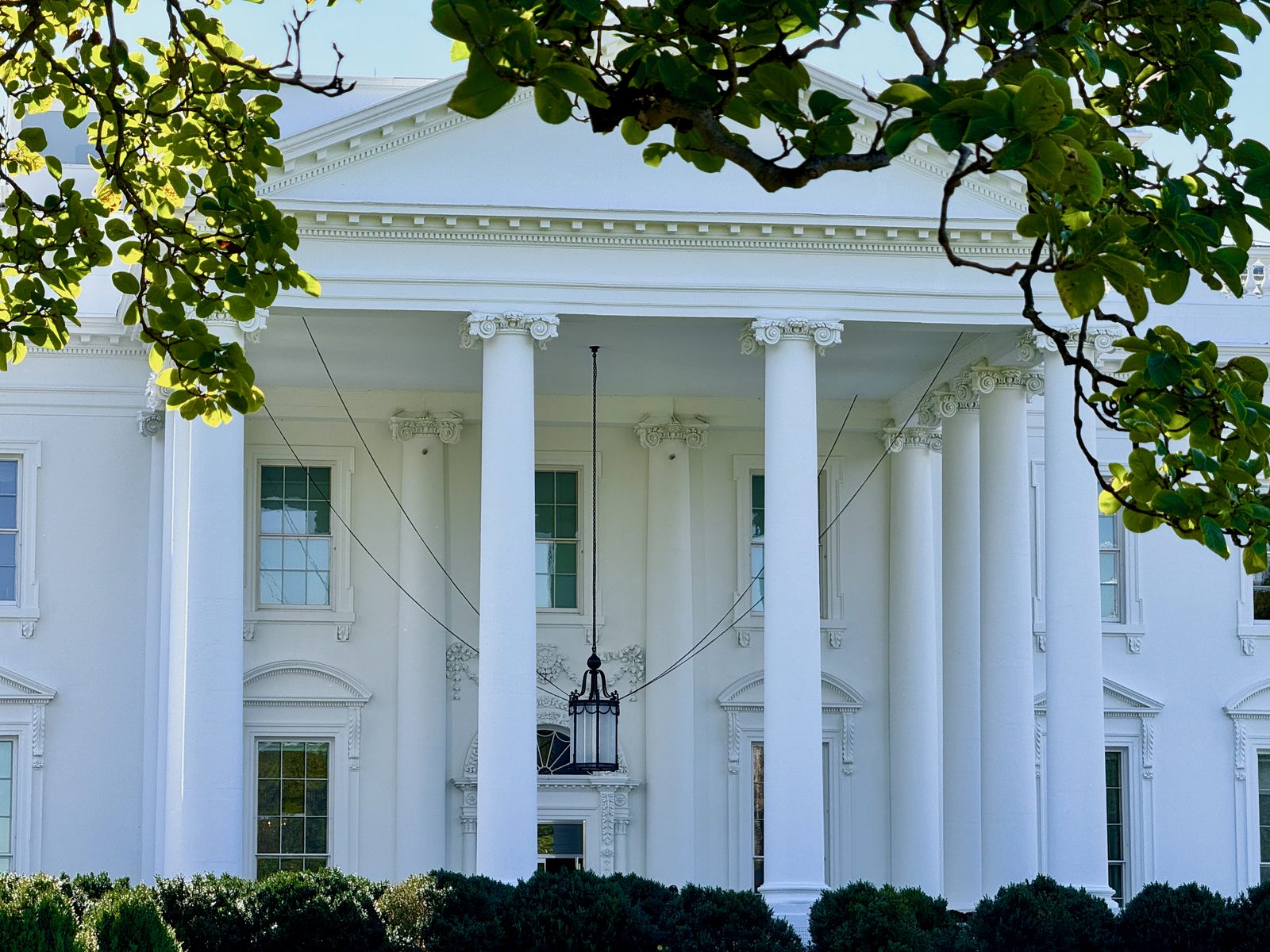
President Donald Trump personally instructed his budget director, Russell T. Vought, to use taxpayer money for television advertisements praising him and his presidency, setting in motion a $20 million contract drawn from Department of Homeland Security funds, The New York Times reported Friday, citing people familiar with the matter in an account built on interviews with a dozen sources.
President Donald Trump personally instructed his budget director, Russell T. Vought, to use taxpayer money for television advertisements praising him and his presidency, setting in motion a $20 million contract that used funds from the Department of Homeland Security, The New York Times reported on Friday. The account, based on interviews with 12 people familiar with the president’s interest in the ads and how they came to be, described an effort driven by the president himself, who was eager to see the laudatory spots on the air and told Mr. Vought to come up with the money from within the government. All of the sources spoke on condition of anonymity to describe what one characterized as a direct demand from the president.
The money moved through the federal budget in a way that has drawn intense scrutiny. Earlier in September, the White House Office of Management and Budget, led by Mr. Vought, allocated $20 million to Customs and Border Protection — an agency within the Department of Homeland Security — for what it called “OBBBA commemorative events,” referring to the One Big Beautiful Bill Act that Mr. Trump signed into law in 2025. That budget line was originally meant for line-of-duty death memorials, agency anniversaries and commendation ceremonies, not a national advertising buy. Shortly after the money was allocated, CBP contracted the advertising firm LMD Agency Inc., a Maryland marketing company, for a national media campaign in the same dollar amount. On Sept. 20, federal records show, CBP formally awarded the $20 million contract, and within days the ads began appearing on national television, produced in-house by the White House video team.
The president was eager to see the laudatory ads on the air — and told his budget director to come up with the money from within the government.
The advertisements themselves are unmistakable in their subject. CNN obtained clips of at least a dozen of the spots, several of which end with the on-screen label “Paid for by the U.S. Government.” At least one, titled “Final Battle,” is nearly identical to a 2024 Trump campaign video, featuring the president walking down a hallway while promising supporters a final confrontation with his political enemies. Another ad, called “The Country He Loves,” shows Mr. Trump urging Americans to “defeat communism” while touting his economic record and personal resilience, as a choir in the background recites the verse “Love me.” The unreleased ads reportedly include titles such as “God Made Trump” and footage tied to a White House UFC event. According to Axios, Mr. Trump has personally selected which spots air ahead of the November midterm elections.
The spots have run broadly across the American television landscape — on Fox News, CNN and MS Now, during football games on Fox, and alongside national newscasts on CBS, ABC and NBC, including “Meet the Press,” which Mr. Trump is known to watch. The political ad-tracking firm AdImpact told CNN that the airtime for the ads has cost taxpayers at least $2.5 million to date, and the actual cost of the campaign is higher but cannot be fully ascertained. CNN’s analysis found that for two of the three advertisements in the campaign, the administration bought space on CNN and MS Now in local markets, with the “Final Battle” ad airing for viewers in Los Angeles, New York, Philadelphia and Washington. The sheer breadth of the buy — spanning friendly and hostile outlets alike — is part of what has made the campaign so visible, and so controversial.
The White House has rejected the characterization of the spots as political advertising. It has called them public service announcements, arguing that they are appropriate because they carry no call to action to vote for any candidate, and aides have noted that Mr. Trump is not himself running for office in the midterms. Mark Paoletta, the budget office’s general counsel, and Will Scharf, the White House counsel, both said it would be legal to use Department of Homeland Security funds, and the president and his chief of staff, Susie Wiles, both spoke with the homeland security secretary, Markwayne Mullin, about the ads. Mr. Trump addressed the controversy publicly for the first time on Sept. 30, insisting the ads were “for the country,” not to boost himself. “If somebody said that that’s wrong, I’ll gladly pay the money,” he told a reporter. “I’m not promoting myself, because I’m not running for office. I’m promoting the country.”
The response from Congress has been sharply critical, and notably bipartisan in places. “I like the message, but it shouldn’t be paid for with taxpayer dollars,” Senate Majority Leader John Thune told reporters of the most recent ad. Senator Susan Collins, the Republican chair of the Appropriations Committee, confirmed that the funds came out of money intended for Customs and Border Protection in the 2025 budget reconciliation bill, adding that her committee had no role in the spending — and that the administration had used the reconciliation account precisely because appropriations bills typically bar shifting money between accounts. Senator Thom Tillis summed up his reaction bluntly: “It feels like Viktor Orbán talking to the Hungarian people.” On the Democratic side, Senators Patty Murray and Chris Murphy sent a letter to Secretary Mullin accusing the department of “a shockingly corrupt misuse of taxpayer dollars,” and Representatives Jamie Raskin and George Whitesides asked the Government Accountability Office to investigate potential violations of the Hatch Act, the Antideficiency Act and laws against misuse of public funds.
The legal questions center on a long-standing federal prohibition against using appropriated funds for “publicity or propaganda” purposes. Watchdog groups have deemed the campaign illegal: Public Citizen filed a fresh challenge, and complaints to the Government Accountability Office and the Office of Special Counsel could lead to audits, agency reviews or litigation that would unfold over months. Federal Communications Commission Chair Brendan Carr, who is close to the president, said he saw no basis for action, describing the spots as a “regular, normal” public service announcement and saying there was nothing in them to merit an FCC review or any liability for broadcasters. CBP leaders, for their part, have said they were not informed about the funding shift that put the $20 million into their budget line — a gap that investigators are likely to probe.
The campaign has generated friction beyond the budget ledgers. Attorneys for the musician JMSN, whose song “Love me” is featured in one of the ads, sent a cease-and-desist letter to the White House on Sept. 28 demanding that the administration stop using his song. And the episode has unfolded alongside a parallel, privately funded effort: the president is also directing spending from his super PAC, MAGA Inc., which entered the fall with $400 million and has been raising money since his 2024 re-election victory. The Times reported that it was not clear why taxpayer funds, rather than money from the super PAC, were used for the television spots. Whether the advertising effort expands, shrinks, or is curtailed by investigators will shape the closing weeks of the midterm campaign: one administration official told Axios last month that, as far as the ads were concerned, “this is just the beginning,” even as congressional Democrats press for audits of exactly how the $20 million was routed and the oversight complaints work their way through a process that could take months — well past the November elections.
In Western capitals and newsrooms, the story has landed as a textbook test of constitutional guardrails: a president rerouting appropriated money — shifted through an OMB reclassification into a border-security budget line his own Congress never authorized for advertising — to buy airtime praising himself weeks before midterm elections. The federal ban on using public funds for “publicity or propaganda” is one of the oldest lines in the American appropriations playbook, and the involvement of the White House counsel and OMB lawyers in blessing the maneuver has turned a spending scandal into a separation-of-powers question. The bipartisan sting — a Republican majority leader saying the message is fine but the money isn’t — is being read as the moment the story escaped partisan framing, and as the clearest signal yet that Congress’s power of the purse is being tested in public.
For Western commentators, the deeper signal is institutional: appropriations are Congress’s primary lever over the executive, and Senator Collins’s account — that the White House deliberately used a reconciliation account precisely because regular appropriations would have blocked the transfer — describes an end-run around the power of the purse. That is why the GAO referral, the Antideficiency Act questions, and the Office of Special Counsel complaints matter more than the dollar figures: the mechanism, if it survives challenge, becomes a template for any future president. The FCC chair’s refusal to review the spots as broadcast content adds a media-regulatory dimension, while the JMSN cease-and-desist turns the saga into a copyright footnote. Whether auditors or courts halt the campaign, the precedent now sits on the table — and with the midterms weeks away, the clock favors the spender, not the auditor.
From Moscow to Beijing, the story is being absorbed less as an American scandal than as a mirror held up to Washington’s own sermons on clean governance. State media across the East have a practiced appetite for tales of Western leaders spending public money on self-glorification, and the details here — a $20 million contract, ads signed “Paid for by the U.S. Government,” a president personally picking his own laudatory spots — fit the genre perfectly. The irony that American law explicitly bans taxpayer-funded “publicity or propaganda” while the White House’s own lawyers certified the maneuver is the kind of contradiction Eastern commentators collect, file, and redeploy the next time Washington lectures about transparency or lectures their own governments about the misuse of state funds and official self-promotion — the very charge Washington routinely aims at rivals.
Strategists in Eastern capitals read the mechanics, not just the optics. The use of a budget reconciliation account to bypass the Appropriations Committee — confirmed by a Republican committee chair — suggests to them that the executive’s fiscal room for maneuver is wider than American civics textbooks admit, and that congressional oversight is slower than the news cycle. Senator Tillis’s comparison of the ads to Viktor Orbán’s Hungary gives the story a European bridge: it lets Eastern audiences frame the episode as part of a broader Western drift toward personalist media politics rather than an American aberration. For these observers, the likely audits and lawsuits are the point — proof that the system argues with itself in public, and that American power radiates noise as much as discipline, a spectacle to be studied, quoted, and replayed whenever the occasion suits the home audience.
Across the Global South, the first arithmetic is visceral: $20 million routed from a border-security budget to buy a president television praise, with $2.5 million in airtime already burned, in a world where that money could have funded clinics, classrooms, or disaster relief across entire provinces. The episode resonates because the pattern is familiar — from Latin America to West Africa to South Asia, citizens have watched leaders divert public coffers into self-congratulatory airtime and call it public information. The White House’s defense — that the spots are “public service announcements” because they carry no call to vote — lands in the South as a legalism of exactly the kind local strongmen have always deployed, right down to the lawyers certifying the paperwork and the euphemism on the budget line that made the whole diversion look like ordinary administration.
The second reading is geopolitical. For governments and publics that have endured decades of American lectures on corruption, good governance, and the misuse of state resources, the sight of a U.S. president signing taxpayer-funded praise ads with “Paid for by the U.S. Government” is a kind of leveling — not schadenfreude exactly, but evidence that the superpower’s institutions wrestle with the same temptations. That the pushback is bipartisan and that watchdogs are filing complaints will be noted by democracy advocates in the South as the part of the story worth emulating: the scandal is not that a leader tried it, but whether the system’s antibodies — auditors, courts, a free press — actually bite when the money is already spent and the ads are already on the air — that is the accountability test, and in capitals across the South it is being watched with unusual interest.
Trump told his budget director, Russell T. Vought, to find taxpayer money for television spots praising him and his presidency, the Times reported, citing 12 sources. The White House routed a 20 million dollar contract through Department of Homeland Security funds to LMD Agency Inc. on Sept. 20. The ads carry the label Paid for by the U.S. Government and have aired on Fox News, CNN, MS Now, Fox football and the CBS, ABC and NBC newscasts.
The answer is contested. The White House calls the spots public service announcements with no call to vote, and its lawyers, Mark Paoletta and Will Scharf, say using Homeland Security funds is lawful, since Trump is not running in the midterms. Critics cite the long standing federal ban on publicity or propaganda bought with appropriated funds. Watchdog Public Citizen has challenged the campaign, and Reps. Raskin and Whitesides asked the GAO to investigate.
Taxpayers. In September, the Office of Management and Budget moved 20 million dollars into a Customs and Border Protection line labeled OBBBA commemorative events, money originally meant for memorials and agency anniversaries, then awarded the same amount to LMD Agency Inc. on Sept. 20. Ad tracking firm AdImpact says at least 2.5 million dollars in airtime has already been spent. The White House says Trump will gladly pay the money himself if told it was wrong.
Congress reacted sharply. Majority Leader John Thune said the ads should not be paid for with taxpayer dollars, while Senator Thom Tillis likened them to Viktor Orban talking to the Hungarian people. Senators Patty Murray and Chris Murphy called it a shockingly corrupt misuse of taxpayer dollars. Reps. Jamie Raskin and George Whitesides asked the GAO to investigate possible Hatch Act, Antideficiency Act and public funds violations, a process that could take months.
