A draft 1040 forces every taxpayer to certify citizenship or work authorization under penalty of law. Washington promises $2 billion saved. Critics see an immigration dragnet in a tax form.
Published 3 October 2026 · 18:00 GMT
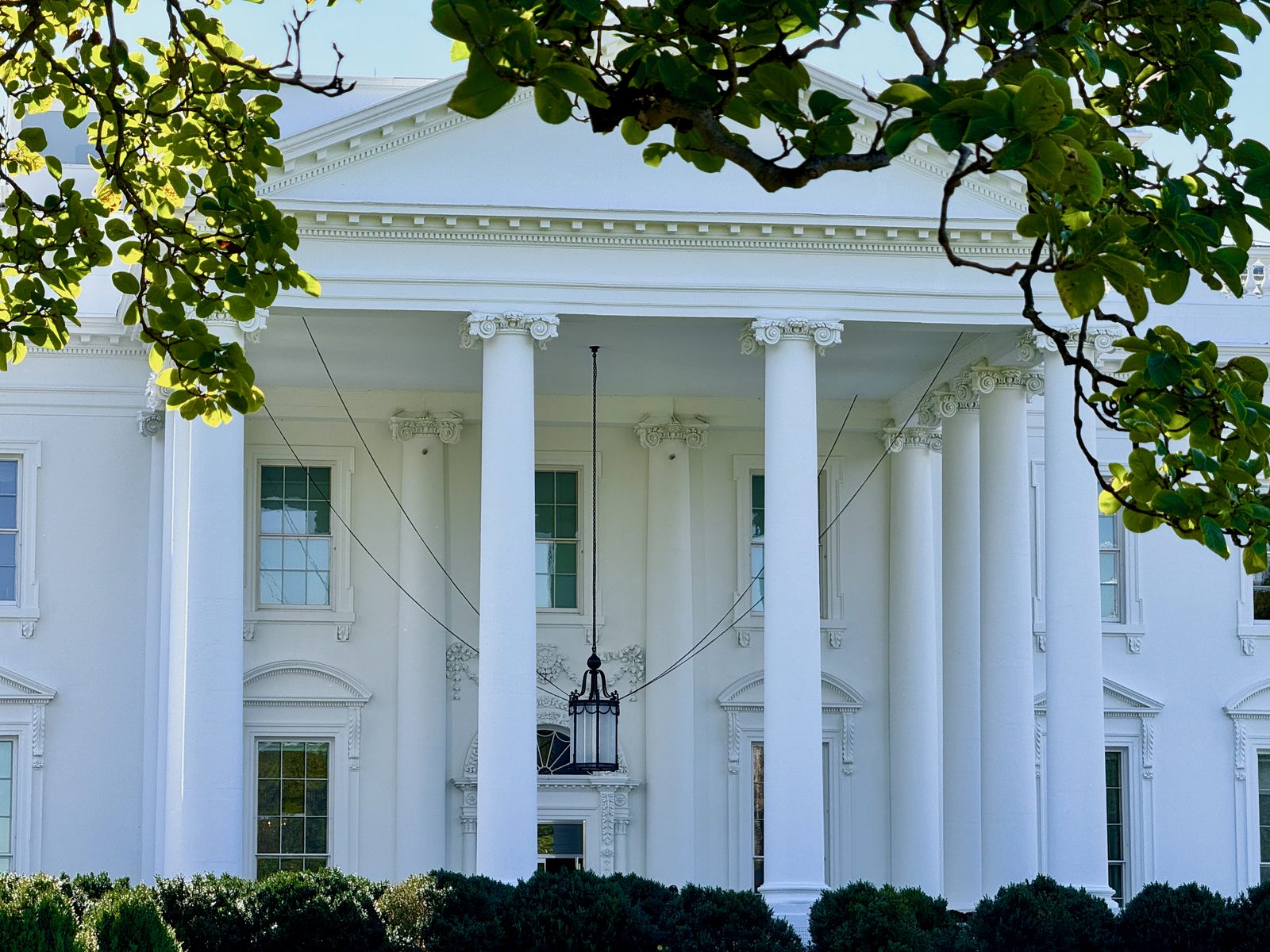
It will sit between the lines about your income and your dependents, a small question with very large consequences. On the draft 2026 Form 1040, the IRS asks every taxpayer: are you — and your spouse, if you file together — a U.S. citizen, a U.S. national, or an alien lawfully authorized to work in America? You must answer. Under penalty of law.
It will sit between the lines about your income and your dependents, a small question with very large consequences. The draft 2026 Form 1040, posted by the IRS in late August, asks every American taxpayer — nearly all workers file this form each year: 'At the time you file your return, are you, and your spouse if filing jointly, a U.S. citizen, U.S. national, or an alien lawfully authorized to work in the U.S.?' Two checkboxes — Yes and No — for the filer and for the spouse. A second draft, Schedule 3-A, the form used to claim refundable tax credits, carries a similar question. And the question is not optional. Every tax filer must certify their immigration or citizenship status to the IRS under penalty of law in order to file a return. Most Americans will see it as one more box to tick, one more line in the annual spring ritual of the 1040. For the millions of people living in the United States without authorization, it reads like a door with two exits: tell the federal government your status, or lie on a federal form — which is a felony. There is no third checkbox for 'I would rather not say,' and that, of course, is the entire point. The form that nearly every American worker files each year is about to become one of the most consequential documents in the immigration system — and almost nobody, in any legislature, voted for that. The question arrives not as legislation debated in Congress but as a line on a draft form, posted quietly on a Friday in August — which is, of course, exactly how the most consequential changes usually arrive.
The administration's stated purpose is straightforward, and the number attached to it is large. Treasury says the change will keep illegal immigrants from collecting refundable tax credits — the Earned Income Tax Credit, the Additional Child Tax Credit, the refunds that low- and middle-income working families often qualify for — that they are not eligible to receive. The estimated savings: up to $2 billion a year. The legal groundwork was laid in August, when Treasury and the IRS proposed regulations declaring the refundable portions of certain individual tax credits to be federal public benefits, subject to the eligibility restrictions of the 1996 welfare-reform law. Treasury Secretary Scott Bessent said the administration intends to ensure that benefits do not go to people barred by law from receiving them. On paper, this is a story about the integrity of the tax code — the government paying benefits only to those the law says may receive them, closing a loophole that, in the administration's telling, has been exploited at scale. In practice, the paper has a second reader, and the second reader is holding a very different magnifying glass. The $2 billion figure, meanwhile, deserves its own moment in the light. It is the administration’s number, produced by the administration’s method, measuring what the administration has defined as the problem. What it does not measure — cannot measure, by construction — is the cost of the cure: the filers who vanish, the credits forfeited by eligible families too frightened to claim them, the trust withdrawn from a system that depends on it.
One checkbox. Two exits: tell the government your immigration status, or lie on a federal form — which is a felony.
That second reader is the one privacy and taxpayer-rights advocates cannot stop talking about. If every taxpayer must declare their immigration status to the IRS, then the IRS — the most comprehensive database of where people live, work, and bank in America — becomes, at a stroke, a map of who is removable. 'It could be used as an immigration enforcement tool and that is probably the reason why they are doing this,' said David Bier, director of immigration studies at the libertarian-leaning Cato Institute. The Treasury official who announced the proposal said the information collected would be 'subject to a variety of privacy, disclosure and other legal protections' — and declined to say whether it would be shared with federal immigration enforcement to target a person for arrest and deportation. The sentence hangs there, refusing to resolve itself. Meanwhile, an appeals court has upheld an order blocking the IRS from sharing taxpayer data with ICE, which means the legal system has already smelled where this is going and tried to wall it off in advance. 'It's dragging the IRS into this administration's immigration policies,' said Nina Olson, executive director for the Center for Taxpayer Rights. The government's answer, for now, is a silence wrapped in a legal phrase — and silences like that have a way of being filled by events. Consider what the silence contains. If the data were never to be shared with immigration enforcement, saying so would cost the administration nothing and buy it considerable goodwill; the refusal to say so is, in its own way, an answer. The appeals court that blocked IRS-to-ICE sharing understood this arithmetic before the rest of us did. Courts rarely build walls in advance unless they have seen the flood coming.
Beneath the surface, the mechanics are more complicated than either slogan admits. Illegal immigrants already do pay taxes — they file, often with individual taxpayer identification numbers created precisely for people ineligible for Social Security numbers, and they pay into Social Security from which they generally cannot collect benefits unless they later become eligible under federal law. The Social Security Administration has long counted their contributions among the quietly structural props of the system's finances: billions paid in each year by workers who will never draw a pension. The Earned Income Tax Credit, meanwhile, already requires a valid Social Security number, and the IRS checks those numbers against Social Security Administration records; undocumented workers are already, in practice, shut out of it. So what does the new question actually catch? The administration's broader interpretation of federal-benefit restrictions could also affect people who currently have lawful permission to work in the United States — including certain holders of temporary protected status, DACA recipients, and some temporary visa holders. The net, in other words, is cast wider than its name suggests, and some of the fish it catches will be people the government itself told were allowed to work. That is the kind of detail that turns a fraud-prevention story into a bait-and-switch story. The ITIN — the individual taxpayer identification number — was created by the IRS in the 1990s precisely so that people ineligible for Social Security numbers could pay taxes anyway. It was, in other words, the system’s own invitation to comply: pay your share, stay in the light, and the machinery will not ask who you are. The new question tears up that invitation. A state that first builds a door for the undocumented to enter through, then stations an officer behind it, should not be surprised when nobody knocks anymore.
The timing matters, because the IRS is not just any agency. The confidentiality of tax returns — Section 6103 of the tax code — has been close to sacred in American public life, a taboo hardened by the memory of the Nixon years, when tax data was treated as a political weapon and the country learned, the hard way, what happens when the filing cabinet becomes an arsenal. That is precisely why the proposal lands with such force: it asks the tax agency to do something it has spent half a century refusing to do, which is to know, officially and universally, the immigration status of the people it taxes. The number attached to the policy — $2 billion in claimed savings — tells its own story about what the government thinks the fraud is worth. But the more interesting number is the one nobody has produced: how many people, faced with a choice between self-declaration and a felony, will simply stop filing. The American tax code runs on voluntary compliance — the great gamble that citizens will honestly report what the state cannot independently verify — and compliance runs on trust. Trust, once converted into a surveillance instrument, is very hard to get back, and the revenue lost from returns never filed would quietly dwarf the credits saved. There is a reason the confidentiality of tax data became sacred, and the reason has a name: Richard Nixon. The abuses of the early 1970s — enemies lists, targeted audits, the tax system wielded as a political weapon — produced Section 6103’s near-absolute wall as a deliberate act of national repentance. Every generation since has been asked, in one form or another, whether the wall should come down a little. The answer has always been no, because the wall was never really about taxes. It was about the state’s promise to its people: tell us everything, and we will tell no one.
Geopolitics. On the international stage, the proposal fits a pattern the rest of the world has been watching with narrowed eyes: the American state's steady fusion of domestic administration with immigration enforcement. Other democracies police their tax systems; few have tried to conscript the tax return into the border apparatus. Allies will note it as another data point in the transatlantic argument over surveillance norms — Europe's privacy regulators have already spent years fighting American data practices in courtrooms from Luxembourg to Dublin, and they will not miss this one. The timing is awkward for Washington's digital diplomacy: every American lecture on data protection now arrives with a footnote about the checkbox. Rivals will note it differently: Moscow and Beijing, which run their own far more intrusive systems, will brandish the question as proof that the American sermons on privacy were always theater — and this time they will be quoting the Treasury Department, not inventing the line. Meanwhile the macroeconomic ledger is genuinely double-sided. If the $2 billion in claimed savings materialized, it would be real money — roughly the annual budget of a mid-sized federal agency program, the kind of figure that gets cited in budget hearings for years. But economists who study the informal economy have a standing warning: every barrier between workers and the tax system shrinks the tax base. Undocumented immigrants pay billions into Social Security they cannot draw on; the system, in effect, subsidizes itself on their compliance. A question designed to catch a few thousand fraudulent credit claims could, as a side effect, push hundreds of thousands of filers back into the shadows — and the revenue lost from unfiled returns would dwarf the credits saved. The ledger balances only if you refuse to look at the other page. The transatlantic dimension deserves underlining. European privacy law — the GDPR, the Schrems rulings, the years of litigation over American data practices — was built on the premise that the United States could be trusted with personal data because its domestic law restrained the state. The checkbox weakens that premise at exactly the moment Washington needs it most, as artificial intelligence and cloud computing make cross-border data flows the economy’s central nervous system. Brussels will file this one away. Brussels always files things away.
Demographics. The human material of this story is enormous and mostly invisible: the United States is home to well over 150 million tax filers, and within that crowd are millions of mixed-status households — families in which some members are citizens, some are legal residents, and some are not. The proposal does not merely ask the undocumented to declare themselves; it asks citizen spouses, citizen children, and legal residents to certify the status of the people they live with, under penalty of law, on a form their family cannot function without. That is a design choice with demographic consequences. When filing becomes a legal risk, eligible families forgo credits they are owed — and the EITC is, by most measures, the most effective anti-poverty program in the federal arsenal, lifting millions of children above the poverty line each year. Historical patterns. There is a precedent for what happens next, and it is not encouraging: every time a government has tied a social benefit or a bureaucratic procedure to immigration status — the public-charge rule expansions, the census citizenship question fight — the chilling effect has reached far beyond the intended target, deterring citizens and legal residents who feared being entangled. The pattern is so consistent it has a name in the literature: the chilling effect does not discriminate; it freezes everyone near the water. Structural trends. And beneath it all runs the deeper current — the digitization of the border, the slow migration of immigration control out of the border zone and into the databases of everyday life: the employer form, the driver's license, the school enrollment, and now the tax return. The physical wall was always the least interesting part of the project. The wall, it turns out, was never really a wall. It was a questionnaire. The demographics sharpen the cruelty of the design. Mixed-status households are not an edge case; they are the modal immigrant family — the citizen child, the legal-resident parent, the undocumented aunt, all under one roof, all on one return. The form asks the citizen to certify the status of the people she loves, under penalty of law, as the price of the family’s refund. It is a loyalty test administered by arithmetic, and the poorest families will pay the most to take it.
What happens next is procedural, and procedures are where this story will be decided. The draft forms are drafts; the proposed regulations must survive a public comment period in which every taxpayer-rights group, privacy organization, and immigrant advocacy coalition in the country will file its objections; and the lawsuits are already being drafted — the plaintiffs' bar has a deep bench of constitutional and statutory arguments, starting with the confidentiality tradition of Section 6103 and running through the Administrative Procedure Act. Courts will also have to weigh the August reclassification itself: are the refundable portions of tax credits really 'federal public benefits' under the 1996 welfare law, or is that a legal fiction constructed to unlock the immigration machinery? For now, the form sits on the IRS website, a quiet PDF with one loud question. The government says it is about fraud. The critics say it is about enforcement. The honest answer is that it is about both — which is precisely why the fight over a checkbox will be fought as if the whole architecture of the tax system were at stake. It is. Watch the comment period: that is where the real arguments will surface, in the dry language of administrative law, from people who have been fighting over Section 6103 since before most of today’s filers were born. Watch the lawsuits, which will ask whether a checkbox can survive strict scrutiny and whether ‘federal public benefits’ can be stretched to cover tax credits without breaking. And watch the filing numbers next spring — the quietest statistic in American public life, and the one that will tell us whether the trust survived. The form is a draft. The question is real. The answer, as always, is us.
From the Western perspective, this is a story about the integrity of the public purse — and the line between administering benefits and building a dragnet. The administration's reading is legible to anyone who has watched European welfare states wrestle with benefit fraud: a government that cannot verify eligibility cannot defend its social spending, and $2 billion a year is not a rounding error. On that view, the checkbox is overdue hygiene — every serious welfare system eventually asks who its beneficiaries are. The Western lens, however, does not stay there. It lingers on the mechanism, and on what the mechanism teaches citizens about the state. The confidentiality of tax returns was not a technicality; it was the bargain that made a voluntary-compliance tax system possible in a free society. Trade that bargain for $2 billion in claimed savings, and the state has told its people something new about itself: that the database you trusted with your whole financial life is also, now, the database the state can use against you. Which is why even many who agree with the fraud argument flinch at the method.
The Western lens also dwells on the collateral population — the legal ones. Temporary protected status holders, DACA recipients, temporary visa holders: people the United States itself invited to work legally may find themselves reclassified by a regulation into benefit-cheats. That is the part of the story that will dominate courtrooms and congressional hearings, because it is where the policy's logic eats its own tail. A state that tells workers they may legally work, taxes their wages, and then denies them the refundable credits attached to those wages is not fighting fraud; it is running a fiscal bait-and-switch. The honest Western debate is not fraud versus open borders — it is whether the tax system should be an instrument of the immigration system at all, or whether the two sovereignties must remain, as they were for fifty years, deliberately blind to each other.
From the Eastern perspective, the checkbox is a gift — and it arrived gift-wrapped by Washington itself. Russian and Chinese state media will run this story on a loop: the country that lectures the world about privacy and the rule of law now demands that every taxpayer declare their immigration status under penalty of law, on a form whose data may or may not end up with the deportation police. The Eastern lens does not need to invent the hypocrisy charge; it simply has to quote the Treasury official's refusal to say where the data goes. Every American lecture on digital authoritarianism, every sanction justified in the name of civil liberties, gets replayed with the new soundtrack. And beneath the propaganda value, the Eastern reading contains a serious analytical point: the American state is converging, by its own choice, toward the administrative model its critics describe — the state that sees everything and files it away. The difference, the Eastern lens notes with satisfaction, is that America is doing it in the name of a tax code.
The Eastern lens also sees the domestic consequence clearly, and reads it as structural rather than partisan. The confidentiality bargain of Section 6103 was one of the quiet stabilizers of American governance; its erosion does not depend on who wins the next election, because databases do not un-build themselves. Whoever inherits the IRS in four years inherits the checkbox. That is how the Eastern reading differs from the Western one: where the West debates the policy, the East studies the trajectory — and the trajectory, it says, is a one-way ratchet toward the state that knows everything, filed under a drier name.
From the Global South perspective, the checkbox is not an American story at all — it is a Latin American, Caribbean, African and Asian story that happens to be filed in Washington. The households that will feel it are the ones whose remittances keep entire economies afloat: the Salvadoran, Guatemalan, Honduran, Mexican, Haitian, Filipino and West African families whose wages flow homeward as a share of national GDP. A taxpayer who stops filing does not only disappear from the IRS; in many cases, the formal financial footprint that made remittances cheap and safe disappears with him. Governments in the region will read the proposal as another pressure valve on migration routes they cannot control — and as a tax, in effect, levied on the poorest workers of the hemisphere, payable in fear. The $2 billion Washington claims it will save is a fraction of what those same workers already pay into Social Security they will never draw.
The Global South lens also reserves its sharpest attention for the asymmetry. The United States built its postwar prosperity, in part, on the labor of people it declined to document, and it built its tax base, in part, on their compliance. To ask those workers to declare themselves on the same form that records their wages is to ask the state to eat the hand that files its returns. The South has watched this movie in other capitals — the Gulf's sponsorship systems, Europe's databases — and knows how it ends: not with fraud defeated, but with a larger informal economy, a smaller tax base, and a state that congratulates itself on the neatness of a form nobody fills in anymore.
Beijing just wrote the biggest liquidity check of the year — and changed nothing else.
The People's Bank of China will offer banks up to one trillion yuan a day — about $149 billion — in overnight funds from September 28 through October 8, covering the Golden Week holiday. It is the largest such cap since the tool's introduction in June 2026, up from 600 billion yuan in mid-September.
The calendar explains the timing. Golden Week sends hundreds of millions of Chinese traveling and spending; banks need cash the way airports need runways. The central bank is making sure the plumbing holds.
The scale, though, is the story. One trillion yuan a day is not holiday housekeeping. It is a backstop — a signal that whatever the holiday throws at the financial system, the PBoC has already covered.
And then, the other hand: nothing. Chinese banks left the one-year and five-year loan prime rates unchanged at 3.00% and 3.50% — the 16th consecutive month without a move.
Sixteen months of stillness in the price of credit, alongside the largest liquidity flood of the year. Beijing is watering the garden and refusing to lower the fence — liquidity yes, cheaper credit no.
Governor Pan Gongsheng gave the doctrine a name: slower loan growth is becoming "the new normal." Property and local-government borrowing are shrinking faster than emerging industries can borrow. The credit engine is being rebuilt mid-flight.
Liquidity is Beijing's answer to everything except the one question markets keep asking: where is the growth?
The PBoC is not idle elsewhere. It stepped up support with a net 200-billion-yuan injection through medium-term lending facility operations, reiterated its "moderately loose" stance, and kept its grip on the yuan.
The yuan, for its part, cooperated — rebounding after briefly dipping below 6.70 per dollar as US Treasury yields rose and the PBoC's grip eased.
The diplomacy helped. A US–China summit extended the trade truce to January — without new tariff cuts, but without new tariffs either. A truce, not a peace; markets will take it.
Step back and the contrast is the story. In Washington, yields cross 5% and traders bet on another hike. In Beijing, the central bank floods the system with cash and leaves rates untouched for a 16th month. Two central banks, two planets.
The logic is not mysterious. China's problem is not hot demand — it is cold credit. Pumping liquidity keeps the system liquid; cutting rates into weak demand would be pushing on the proverbial string.
The risk is the one Beijing knows best: banks awash in cash, with nowhere productive to lend it. Liquidity without lending becomes asset froth — the 2015 lesson, still fresh in institutional memory.
For the region, the signal matters more than the mechanics. A stable yuan and a liquid Chinese banking system through Golden Week is the foundation under Asia's supply chains. When Beijing sneezes, the region's exporters reach for tissues.
Watch what happens after October 8. If the trillion-yuan window closes quietly, it was holiday plumbing. If support lingers, it was something else — a central bank telling you, without saying it, that the economy needs the help.
Western coverage — Reuters and the financial wires — emphasizes the restraint: Beijing holding rates while flooding liquidity, a central bank running out of its favorite tools.
In this telling, 16 months of unchanged loan prime rates is the real headline — evidence of a policymaker boxed in by a hawkish world, a weak property sector, and the fear that rate cuts would only weaken the yuan. Liquidity is what you do when you've decided rates can't move.
Pan's "new normal" gets a skeptical hearing: an elegant phrase for a credit engine that no longer transmits. The question in Western commentary is whether "moderately loose" is a stance or a shrug.
Eastern coverage — Xinhua and Chinese outlets — emphasizes the calibration: targeted, seasonal, and exactly as doctrine prescribes.
In this telling, the trillion-yuan facility is textbook PBoC: precise, time-bound, and aimed at a known seasonal need. The unchanged rates are not paralysis but prudence — "moderately loose" means loose where it counts, steady where it matters, with the yuan's stability as the binding constraint.
The summit's truce extension gets equal billing: diplomacy buying the central bank room to maneuver, and the maneuver working — the yuan's rebound presented as policy competence, not luck.
Global South coverage — Malaysia's business press among it — emphasizes the neighborhood: what Beijing's plumbing means for everyone downstream.
The read from Kuala Lumpur: a liquid China through Golden Week is good news for ASEAN exporters, supply chains, and the region's own central banks. Yuan stability is a public good in Asia, and the PBoC just underwrote another week of it.
The caution in this coverage is borrowed from experience: when the region's biggest economy needs record liquidity to get through a holiday, the "new normal" of slower credit is everyone's normal too.
To read Beijing's move properly, you need the toolkit. Start with the overnight reverse repo — the instrument at the center of the trillion-yuan headline. In a reverse repo operation, the central bank lends cash to commercial banks overnight, taking bonds as collateral; the banks get the liquidity they need, the central bank gets the bonds back the next morning plus a sliver of interest. It is plumbing, not policy: the money created exists for a day, maybe rolled over, and its purpose is to keep the interbank market — the market where banks lend to each other — from seizing. The cap is the message. A trillion yuan a day says: whatever the holiday throws at the system, the PBoC has already covered.
The tool itself is young — introduced only in June 2026 — which makes the record cap more interesting. A new instrument's ceiling is normally discovered cautiously; jumping from 600 billion yuan in mid-September to a full trillion two weeks later is not calibration but declaration. It tells the banks, and through them the market, that the central bank will not be outbid by seasonal stress. The facility runs September 28 to October 8, covering Golden Week exactly. Time-bound, enormous, and explicitly temporary: the PBoC is writing a check it intends to tear up on the 9th. The question the article ends on — what happens after October 8 — is the only one that matters, because a backstop that lingers stops being a backstop and starts being a subsidy.
Then the medium-term lending facility — the MLF — through which the PBoC added a net 200 billion yuan. If reverse repos are the overnight overdraft, the MLF is the term loan: banks borrow for months, not hours, pledging collateral, at a rate the central bank sets. The MLF rate is the PBoC's quiet policy lever — it guides the loan prime rates without the drama of changing them. And the loan prime rates, the LPRs, are the number the article keeps returning to: 3.00 percent for one year, 3.50 percent for five, unchanged for the sixteenth consecutive month. The LPR is the benchmark for most new lending in China; holding it still while flooding the system with cash is the whole doctrine in one gesture. Liquidity yes. Cheaper credit no.
The sixteen months of stillness deserve their own reading, because stillness is also a decision — sixteen times over. In a world where Washington is hiking and yields cross 5 percent, cutting Chinese rates would narrow the already thin cushion against capital outflow and yuan depreciation; every basis point of easing is a basis point of incentive for money to leave. The PBoC's box, as the Western lens describes it, is real: a property sector that no longer transmits stimulus, local governments deleveraging rather than borrowing, and a currency whose stability is the binding constraint on everything else. Holding the LPR is not paralysis. It is the recognition that the price of credit is no longer the economy's binding constraint — and that moving it would cost more in currency stress than it buys in growth.
The calendar explains the timing, as the article says — but the calendar deserves its scale stated plainly. Golden Week is the largest annual human migration on earth compressed into seven days: hundreds of millions of Chinese traveling, spending, withdrawing cash, settling bills. The banking system's cash demand does not rise. It detonates. ATMs must be stocked, merchants' settlement accounts funded, the interbank market supplied with enough reserves to clear a week's worth of the world's second-largest economy changing hands. In normal years, the PBoC manages this with routine open-market operations. This year it wrote the biggest check in the tool's short history.
The scale, though, is the story — the article's line, and worth pressing. One trillion yuan a day is not holiday housekeeping; it is a backstop sized for something the PBoC sees and the market does not yet. Seasonal demand explains the facility's existence. It does not fully explain its size. Either the central bank is being theatrically cautious — signaling strength by oversupplying safety — or its internal read on holiday-season financial stress is darker than the public data. Both readings are consistent with "moderately loose." Only one of them is reassuring. The banks will take the cash either way; the signal is in the surplus.
There is also the consumption angle, which is where the liquidity meets the real economy. Golden Week is China's great annual test of consumer confidence: the week when households vote with their wallets on whether the economy feels safe. A banking system visibly backstopped — cash available, payments clearing, no friction — is the precondition for the spending the state wants to see. The PBoC cannot make households spend; it can only ensure that nothing in the plumbing stops them. In an economy where the consumer has been the missing piece and property wealth no longer does the spending's work, the holiday's cash registers matter more than the interbank rate. The trillion yuan is, among other things, a bet on the tills.
And the regional read — the Global South lens from Kuala Lumpur — captures what the holiday means beyond China's borders. A liquid China through Golden Week is the foundation under Asia's supply chains: exporters paid, importers funded, the region's own central banks spared the volatility of a yuan under holiday stress. Yuan stability, as the article notes, is a public good in Asia, and the PBoC just underwrote another week of it. When the region's biggest economy needs record liquidity to get through a holiday, the "new normal" of slower credit becomes everyone's normal — but a stable holiday is still a stable holiday, and Asia's exporters will take it.
Central bankers choose their phrases the way diplomats choose communiqués — every word weighed, every ambiguity intentional. When Governor Pan Gongsheng said slower loan growth is becoming "the new normal," he was not describing a statistic. He was retiring an expectation. For two decades, China's credit engine ran on a simple formula: property developers borrowed, local governments borrowed against land, and the resulting construction carried GDP. That engine is being dismantled mid-flight — property deleveraging, local-government debt discipline — faster than emerging industries can borrow to replace it. "New normal" is the doctrine that says: stop waiting for the old credit cycle to return. It is not returning.
The doctrine has a logic, and it is worth steelmanning before doubting. Credit-fueled growth bought China two decades of expansion and left it with the property crisis, the local-government debt pile, and the demographic headwinds now arriving together. Pumping cheap credit into that structure — the old playbook — would reflate the very imbalances the state is trying to defuse. Slower, cleaner credit growth, directed at manufacturing upgrades and strategic industries rather than concrete, is the quality-over-quantity bet. The PBoC is not refusing to stimulate. It is refusing to stimulate the old economy. The distinction is the entire policy.
The risk, as the article notes, is the one Beijing knows best: banks awash in cash with nowhere productive to lend it. Liquidity without lending becomes asset froth — the 2015 lesson, still fresh in institutional memory, when stimulus leaked into equity speculation rather than productive investment. The trillion-yuan facility, the 200-billion MLF injection, the "moderately loose" stance — all of it presupposes transmission channels that the "new normal" itself describes as weakened. Watering the garden, to use the article's image, works only if the soil still absorbs water. If property and local governments no longer drink, and emerging industries cannot drink fast enough, the water pools. Pooled liquidity has a history in China. It is called a bubble.
Step back and the contrast the article closes on — two central banks, two planets — is the frame that will define the autumn. Washington hikes into data it may not have, fighting inflation with the South's interest bills. Beijing floods with cash it cannot lend, defending a currency it cannot afford to let slip, waiting for a credit engine it is rebuilding mid-flight. Neither has a clean instrument. Both are improvising inside doctrines — data-dependence, the new normal — that describe the world they wish they governed. Watch October 8: if the trillion-yuan window closes quietly, it was holiday plumbing, and the doctrine holds. If support lingers, the PBoC will have told you, without saying it, that the new normal needs more help than the old vocabulary admits.
Monetary policy does not happen in a diplomatic vacuum, and the PBoC's autumn maneuver owes more to the summit than the communiqués admit. The US–China meeting extended the trade truce to January — no new tariff cuts, but no new tariffs either — and that pause is worth more to Beijing's central bank than any single instrument in its toolkit. Tariff escalation would have meant a weaker yuan, imported inflation, and capital flight arriving together; the truce removes the worst tail from the PBoC's planning. "A truce, not a peace; markets will take it," as the article says. So will central bankers.
The yuan's rebound — recovering after briefly dipping below 6.70 per dollar — is the truce's signature in the currency market. With US Treasury yields rising and the PBoC's grip easing, the currency found its footing not through intervention but through the removal of a threat. That distinction matters: a yuan steadied by diplomacy is cheaper to defend than a yuan steadied by reserves. Every week the truce holds is a week the PBoC does not have to choose between growth and the exchange rate — the choice that has boxed in Chinese policy for the better part of a decade.
But truces expire, and January is closer than it looks. The extension without tariff cuts is a freeze, not a thaw: the existing duties remain, the structural disputes untouched, the next escalation one headline away. The PBoC is therefore managing a window, not a settlement — using the diplomatic calm to get through Golden Week, to steady the currency, to buy the "new normal" time to prove itself. If January brings escalation, the trillion-yuan plumbing will look like the prelude to a harder season. Diplomacy bought the central bank room to maneuver, as the Eastern lens notes. Room is not resolution. It is rented, monthly, and the rent comes due in January.
