Trump told budget chief Russell Vought to find the money "from within the government." The result: $20 million of homeland-security funds for TV ads glorifying the president.
Published 5 October 2026 · 06:00 GMT
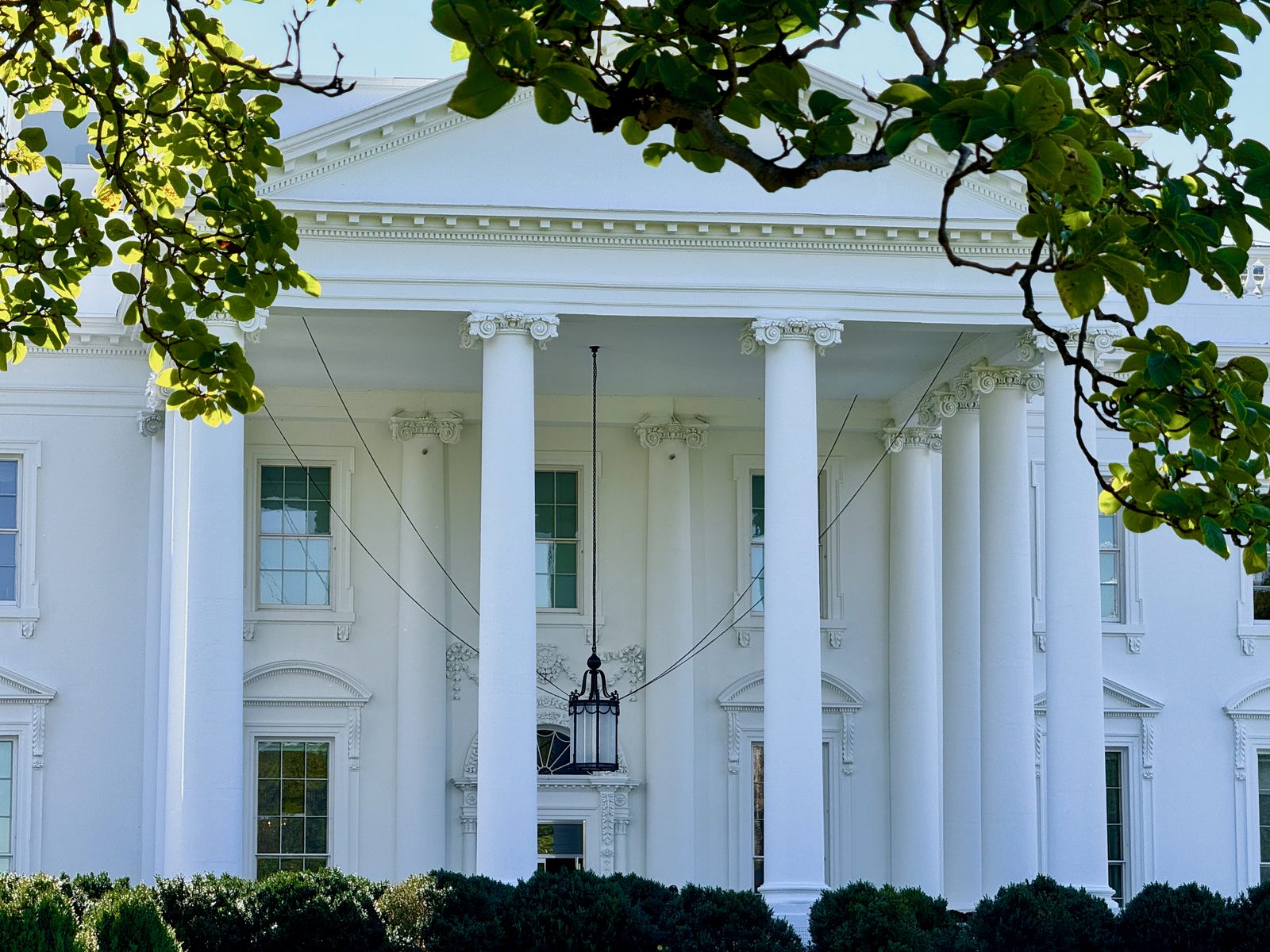
WASHINGTON — President Trump personally instructed his budget director to use taxpayer money for television ads praising him and his presidency, setting in motion a $20 million contract funded through the Department of Homeland Security, The New York Times reported on Friday. The ads — at least four have aired so far, at a cost of about $5.5 million — have run across cable and network television: on Fox News, CNN and MS Now, with football games on Fox and with national newscasts on CBS, ABC and NBC, including "Meet the Press," which Mr. Trump is known to watch. The Times, citing interviews with 12 people familiar with the matter who spoke on condition of anonymity, reported that Mr. Trump was eager to see the laudatory ads on the air and told Russell T. Vought, the director of the Office of Management and Budget, to come up with the money from within the government. The White House has called the spots public service announcements. Democrats — and even some Republicans — call them a possible violation of federal laws against using taxpayer dollars for "publicity or propaganda purposes."
The story, as the Times reconstructed it from a dozen interviews, begins not in a studio but in the Oval Office. At an August 7 meeting convened to discuss how the president’s super PAC should spend money on struggling Republican candidates, Mr. Trump was, according to the reporting, far more interested in something else: he had his assistant, Natalie Harp, show the group videos of himself. She pulled up White House footage on her tablet — the president in crowds, descending from Marine One, flanked by military hardware. The midterm candidates could wait. The imagery could not.
The mechanics followed quickly. Mr. Trump told Russell T. Vought, his budget director, to come up with the money from within the government — taxpayer money, the Times emphasized, not campaign money. The budget office’s counsel, Mark Paoletta, and the White House counsel, Will Scharf, both said it would be legal to use Department of Homeland Security funds. The president and his chief of staff, Susie Wiles, both spoke with Markwayne Mullin, the homeland security secretary, about the ads. Nobody, in the Times’s telling, said stop.
Twelve people told the Times the same story: the president did not ask whether the ads were legal — he asked when they would air.
On September 19, the Office of Management and Budget shifted $20 million in Customs and Border Protection money into a D.H.S. budget line labeled for "commemorative events." The next day, CBP — which falls under the department — awarded a $20 million contract for a national media campaign to LMD, a Maryland marketing firm, according to federal records. The ads began airing in September. According to the media tracker AdImpact and people familiar with the spending, at least four spots have run so far at a cost of about $5.5 million — and that is expected to grow.
The money’s original purpose is what gives the story its sting. It came from funds Congress set aside for border security, anti-drug trafficking efforts, and memorials for officers killed in the line of duty. The Washington Post reported that the law allowed the CBP money to be used only for purposes like port inspection equipment, border surveillance, and screening unaccompanied children — while the "commemorative events" line was meant for line-of-duty death memorials and commendation ceremonies. CBP’s own leaders, it has been reported, were not informed about the funding shift.
The ads themselves are campaign-style productions made in-house by the White House video team — CNN obtained clips from a contractor file-sharing folder showing at least 12 or 13 of them, several unreleased. They ran on Fox News, CNN and MS Now, alongside Fox football games and the national newscasts of CBS, ABC and NBC, including "Meet the Press," which the president is known to watch; they also turned up on "Good Morning America," "Jimmy Kimmel Live!" and NFL broadcasts. One unreleased spot is titled "God Made Trump." Another shows the president over a choir singing the refrain "love me." A new weekend spot, in black and white, closely resembles a 2024 campaign video: Mr. Trump walking down a hallway, warning of a "final battle" against "globalists" and "warmongers," staring into the camera. Each ends with the same on-screen disclaimer: "Paid for by the U.S. Government."
When pressed by reporters this week, Mr. Trump did not dispute the arrangement. "If somebody said that that’s wrong, I’ll gladly pay the money," he said. "But these are ads for the country," he added. "You have to understand. I’m not promoting a candidate. I’m not promoting myself because I’m not running for office. I’m promoting the country." The White House has called the spots public service announcements — "clearly not political," in its formulation — arguing they are appropriate because there is no "call to action" to vote for any candidate, and noting that the president is not on any ballot.
The defense did not hold the president’s own party. "I like the message," Senate Majority Leader John Thune of South Dakota told reporters this week, "but it shouldn’t be paid for with taxpayer dollars." Senator Thom Tillis of North Carolina went further: "It feels like Viktor Orbán talking to the Hungarian people." And Senator Susan Collins of Maine, who chairs the Appropriations Committee, confirmed the account of where the money came from: it was taken out of funding meant for Customs and Border Protection in the president’s "big, beautiful bill," passed along party lines in 2025. Her committee, she said, had no role in it. Appropriations bills typically bar moving money between accounts, she noted — "that’s why the administration went around the appropriations process and used an account that was part of the reconciliation bill."
Since the 1950s, Congress has banned spending federal money on "publicity or propaganda." The Government Accountability Office has found violations under Presidents Obama and Bush — but those involved policy campaigns, not advertisements glorifying the president himself. There is, by every account, no precedent for using government money to air political-style ads in an election season. Citizens for Responsibility and Ethics in Washington has filed a complaint with the Department of Homeland Security’s inspector general, arguing the arrangement likely violated appropriations laws; lawmakers and watchdogs have separately asked the GAO and the Office of Special Counsel to review the spending. Asked for comment on a letter from senators pressing the matter, Homeland Security referred reporters to the earlier White House response.
The contrast the Times drew is financial as much as legal. Mr. Trump is separately directing spending from his super PAC, MAGA Inc., which entered the fall with $400 million — money he has been raising since winning re-election in 2024. "It was not clear why taxpayer funds, and not money from the super PAC, were used for the spots," the Times wrote. The watchdog group noted the ads have already aired more than 2,000 times on local and cable networks. And the White House says the campaign will expand — meaning the $5.5 million spent so far is the beginning, not the end, of the $20 million commitment.
Geopolitics. The spending lands weeks before midterm elections that will decide control of the United States House and Senate — and with them, the fate of the president’s agenda. A taxpayer-funded national ad campaign that burnishes the incumbent party’s leader in that window is, whatever its legal label, a structural advantage no rival can match. America’s adversaries will read it too: the footage of a superpower’s government buying airtime to praise its own president is catnip for state media from Moscow to Beijing, which have long argued that American democracy lectures come with asterisks.
Macroeconomics. Twenty million dollars is a rounding error in a federal budget — and that is precisely the point. The controversy is not the sum but the source: border-security money, anti-drug funds, memorials for fallen officers, repurposed through a reconciliation account that bypassed the normal appropriations process. Senator Collins’s charge — that the administration "went around" the committee that writes the checks — is ultimately about who controls the purse, and the Constitution is unambiguous about the answer.
Demographics. The ad buy is engineered for maximum reach across the electorate the midterms will mobilize: football audiences, morning shows, late-night comedy, Sunday political programming. The "Meet the Press" placement is the tell — the president is known to watch it himself, and the audience it delivers is the engaged, high-turnout slice that decides close races. This is not persuasion aimed at the margins; it is saturation aimed at everyone.
Historical patterns. Every modern presidency has blurred the line between governing and campaigning, and the GAO has caught both parties at it. But the historical record draws a bright line the Times could not find crossed before: never ads that glorify the sitting president himself, paid for by the government, in an election season. The precedents under Obama and Bush involved policy campaigns — selling a law, not a leader. That distinction is the entire case.
Structural. The mechanism matters more than the message. An OMB director who "comes up with the money from within the government" on presidential order, a counsel’s office that blesses it, a budget line relabeled "commemorative events" — each step is a small, defensible administrative act. Stacked together, they convert a department built for border security into a media buyer for the presidency. Oversight institutions — the GAO, the inspector general, the Office of Special Counsel — were designed for exactly this kind of stacked discretion. The question is whether they can move faster than the ad buy.
The $20 million is committed; roughly a quarter of it is spent. The White House says the campaign will expand, and the unreleased spots — at least eight more, by CNN’s count — suggest the loudest phase is ahead. On the other side, the reviews are queuing up: a DHS inspector-general complaint, requests for GAO and Office of Special Counsel scrutiny, and senators demanding answers the department has so far deflected to the White House. Mr. Trump has offered the simplest resolution available — "I’ll gladly pay the money" — without indicating he intends to. With the midterms weeks away, the ads will keep running on the country’s biggest stages while the lawyers decide, after the fact, whether the public was ever supposed to pay for them.
In Western capitals and newsrooms, the story lands as an accountability scandal: a president caught on the record directing public money toward his own image, weeks before midterms. The Republican pushback — Thune, Tillis, Collins — matters more than the Democratic outrage, because it signals the guardrails of party loyalty straining under something even loyalists cannot defend. The Orbán comparison, voiced by a sitting Republican senator, is the tell: the frame is no longer policy disagreement but democratic norms.
The Western press will now chase the paper trail — the OMB memo, the CBP contract, the 12 sources — and the legal question will dominate: can a 1950s-era propaganda ban reach ads that never say "vote for me"? The precedent cases under Obama and Bush involved policy campaigns, so the courts and the GAO are in uncharted territory. Expect the story to be litigated as much in op-eds as in oversight hearings.
In Moscow and Beijing, the story is not a scandal to be solved but a exhibit to be displayed. State media in both capitals have long argued that American sermons on democracy and good governance come with asterisks; footage of a U.S. government buying prime-time airtime to praise its own president will be replayed, subtitled and archived as Exhibit A. The irony is not lost on Eastern analysts: Washington sanctions foreign "malign influence" operations while its own treasury funds domestic ones.
The deeper Eastern reading is structural, not moral. Analysts there will note the mechanism — a budget director "finding" money inside the government on presidential order — as confirmation of a thesis they have pushed for years: that American institutional checks are norms, not laws, and norms bend under a determined executive. Whether the GAO or the courts push back will be watched closely as the real test.
Across the Global South, the detail that stings is the source of the money. Border-security and anti-drug funds — the same accounts Washington invokes when demanding cooperation from Mexico, Colombia and West Africa on migration and narcotics — were diverted to buy television praise for the president. For governments routinely lectured on fiscal discipline and anti-corruption by Washington, the symmetry is hard to miss: the funds earmarked to police the border were spent polishing the man who polices it.
The second Southern reading is about power, not hypocrisy. Many leaders in the region will quietly take notes on the method: a "commemorative events" budget line, a friendly legal opinion, a contract awarded the next day. The playbook of repurposing state resources for personal image is familiar across the South — what is new is watching it demonstrated, with receipts, by the world’s oldest democracy.
From Customs and Border Protection funds. On Sept. 19 the Office of Management and Budget moved $20 million of CBP money into a D.H.S. line for "commemorative events," and on Sept. 20 CBP awarded a $20 million media contract to the Maryland firm LMD. The Times and the Washington Post report the underlying funds were appropriated for border security, anti-drug trafficking and memorials for fallen officers.
That is the fight. The White House says yes: the spots are public service announcements with no "call to action" to vote for any candidate, and Trump is not on a ballot. Critics — including the watchdog group CREW, which has filed a complaint with the DHS inspector general — cite the ban in place since the 1950s on spending federal money for "publicity or propaganda," and note there is no precedent for government-funded ads glorifying the president himself .
When pressed by reporters, he did not dispute the arrangement: "If somebody said that that’s wrong, I’ll gladly pay the money." He added: "But these are ads for the country. You have to understand. I’m not promoting a candidate. I’m not promoting myself because I’m not running for office. I’m promoting the country." He has not indicated he intends to pay.
With unusual public discomfort. Senate Majority Leader John Thune said the ads "shouldn’t be paid for with taxpayer dollars." Senator Thom Tillis said it "feels like Viktor Orbán talking to the Hungarian people." Senator Susan Collins confirmed the money came from CBP funds in the 2025 reconciliation bill and said the Appropriations Committee she chairs had no role in it.
That is the question the Times itself raised. MAGA Inc., Trump’s super PAC, entered the fall with $400 million that he has been raising since his 2024 re-election. "It was not clear why taxpayer funds, and not money from the super PAC, were used for the spots," the Times wrote.
The White House says the campaign will expand — only about $5.5 million of the $20 million is spent, and at least eight more spots are unreleased. Meanwhile a DHS inspector-general complaint is filed, GAO and Office of Special Counsel reviews have been requested, and senators are pressing for answers — all unfolding weeks before the midterm elections.
