The bond market just re-priced the world: 5.36% on the 10-year, a 24-year high. Wednesday's U.S. CPI decides whether that was the warning or the warm-up.
Published 11 October 2026 · 06:00 GMT
Just after dawn on Wednesday, on a trading floor a few blocks from the New York Fed, the screens flashed a number no bond trader under forty had ever seen in a career: 5.36% on the 10-year U.S. Treasury note. No bell rang. But somewhere in Ohio, a mortgage broker quietly updated her rate sheet upward, and somewhere in Jakarta, a finance minister did the math on what American money now costs the world.
Just after dawn on Wednesday, on a trading floor a few blocks from the New York Fed, the screens flashed a number no bond trader under forty had ever seen in a career: 5.36% on the 10-year U.S. Treasury note. There was no bell, no headline siren — just the quiet arithmetic of a market deciding, in real time, that lending money to the United States government for a decade should cost more than at any moment since 2002.
By Friday the fever had eased a touch — the yield retreated to about 5.24% — and the 30-year bond, which had also punched to a multi-year high, settled back with it. But the message had been delivered, and it was not really about the Federal Reserve. This week, the bond market stopped waiting for the Fed and started setting the terms itself.
The Fed sets short-term rates; the bond market sets the price of time.
Start with the plumbing. A bond yield is simply the return you earn for lending money: when a bond's price falls, its yield rises, because the fixed coupon payments now come cheaper relative to what you paid. This week, buyers walked away from long-dated Treasuries — prices fell, yields climbed — and the 10-year note, the benchmark against which the world's mortgages, corporate loans and government debts are priced, reached 5.36% on Wednesday, its highest since the dot-com bust era.
The trigger was a pile-up, not a single event. Wednesday brought the September FOMC minutes, which showed officials worried that higher energy prices are squeezing low- and moderate-income households — and that most officials still expect one more rate hike before year-end. The market did the math: energy costs flowing through to households, a Fed still leaning hawkish, and an ocean of new Treasury supply to absorb. Each alone is manageable. Together, they pushed the long end of the curve to a two-decade extreme.
And here is the detail that makes this week genuinely strange: stocks rose anyway. The S&P 500 gained 1.15% on the week to close near 7,811, the Dow added 0.93%, the Nasdaq-100 edged up 0.24% — only the small-cap Russell 2000 fell, down 0.91%. The VIX, Wall Street's fear gauge, sank below 15. Equities, in other words, are pricing a world that is fine. The bond market is pricing a world that is not. One of them is wrong, and the bond market has the longer memory.
Economists split a long-term yield into two parts: what investors expect short-term rates to average over the life of the bond, plus a little extra called the term premium — the compensation investors demand for locking their money up for ten or thirty years while inflation, politics and war do whatever they please. Think of it as the market's uncertainty surcharge. One basis point, by the way, is one-hundredth of a percentage point — the unit in which bond people measure their anxieties.
For most of the 2010s, the term premium was near zero or even negative: investors were so desperate for safety that they practically paid for the privilege of lending to Washington. That world is gone. The surge toward 5.36% is overwhelmingly a term-premium story — investors now demand real payment for duration risk. Why? Because the United States is issuing debt at a historic clip to fund persistent deficits, because inflation has proven stickier than the textbooks promised, and because the buyers who once absorbed everything on autopilot are no longer buying on autopilot.
This is the distinction the headlines miss. The Fed sets short-term rates; the bond market sets the price of time. When the 10-year yield climbs while the Fed stands still, it is the market — not the central bank — tightening financial conditions for every household and government on earth. The Fed can cut or hike; it cannot order investors to feel safe.
Every Treasury auction is a roll call of the world's savers: American pension funds and banks, foreign central banks, sovereign wealth funds, insurers, and increasingly, leveraged funds playing the basis trade. For decades the system worked because the marginal buyers — the Federal Reserve itself through quantitative easing, then foreign central banks recycling trade surpluses — showed up rain or shine.
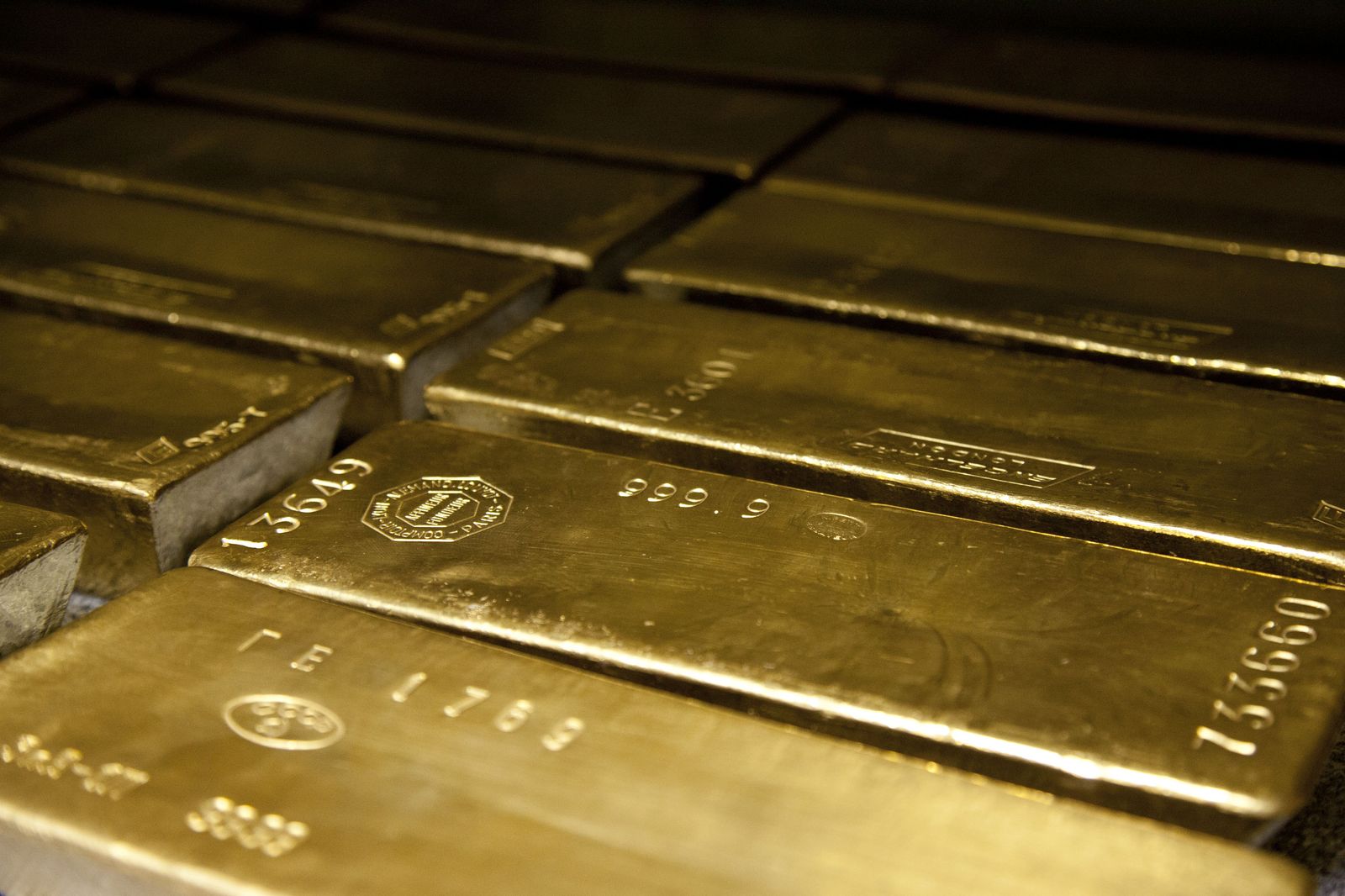
That bid is thinner now. The Fed is still shrinking its balance sheet. And the most telling buyer behavior of the week came not in bonds but in gold: China's central bank reported its largest increase in gold reserves in three years, even as gold ETF holdings hit a four-year high and bullion rebounded from about $4,066 to $4,194 an ounce by Friday. When the world's biggest official-sector buyer prefers bars to bonds, the Treasury market notices — and charges more.
Then there is the currency tell. The Chinese yuan touched a four-year high against the dollar this week, even as the greenback stayed broadly firm — a signal that Beijing is comfortable letting its currency strengthen while it diversifies reserves away from dollar debt. In Frankfurt, the euro slipped on weak Italian industrial output, its steepest monthly decline in a year — a reminder that Europe cannot decouple from American rates either. Who buys the debt matters, because when the reliable buyers step back, the price of borrowing rises for everyone, everywhere, all at once.
Follow the yield downstream. The 10-year Treasury is the anchor for the 30-year fixed mortgage: when it rises, American homebuyers pay more within days. It reprices corporate debt, which is why Thursday brought a shiver through the market's favorite trade — the AI buildout. Samsung forecast a record quarterly profit of about $80.2 billion and its shares fell anyway; Nvidia slipped 0.6%, Broadcom 1.4%, Micron 1.2%. The proximate cause: a Wall Street Journal report that Broadcom is lining up $50 billion in financing for OpenAI — whose revenue run rate was separately put at about $50 billion — with Oracle said to be seeking a large sum of its own. Investors suddenly confronted the prospect of a wave of mega-cap tech debt issuance competing with the Treasury itself for the world's savings. There is only so much capital, and everybody wants it at once.
Then add oil. Brent crude settled near $104 a barrel and WTI near $91.67, after WTI spiked above $93 on Thursday — then retreated when President Trump said the United States would not strike Iran before the November midterms and that talks continue. Flows through the Strait of Hormuz are running roughly 30% below pre-war levels, so every headline out of the Gulf still moves the inflation math. Energy is the tax the bond market fears most, because it hits growth and prices at the same time — the one combination no central bank can fix.
For the developing world, the arithmetic is brutal and simple: when the American 10-year pays 5.36%, capital that might have financed a factory in Jakarta or a port in Mombasa stays home earning a risk-free five percent in dollars. Emerging-market borrowing costs ratchet higher, currencies wobble, and finance ministers who borrow in dollars watch their debt service swell. The Gulf states, sitting on oil near $104, are among the few with cash to spare — which is precisely why their sovereign funds are now among the marginal buyers the Treasury market watches.
Everything now funnels into one number: the September consumer price index, due Wednesday, October 14, at 12:30 GMT (08:30 ET). Consensus expects a hot headline — about 0.6% month-on-month, 3.6% year-on-year — with core inflation, which strips out food and energy, near 0.2% on the month and 2.4–2.5% on the year, according to Capital Street FX. A hot print validates the bond market's surcharge: inflation is not done, the Fed's December meeting is live, and 5.36% was a preview. A cool print — especially a soft core number — would argue the term premium overshot, and could trigger a sharp relief rally in bonds.
The Fed's own posture keeps both doors open. The September minutes showed a committee genuinely torn: worried about energy prices landing hardest on lower-income households, yet with most officials still penciling in one more hike this year. Fed funds futures on Friday priced roughly a 70% chance of a quarter-point hike at the December 9 meeting, and only about 17% for October 28. The market, in other words, expects the Fed to wait — and the bond market has decided not to wait with it.
The consumer is already voting. The University of Michigan's sentiment survey fell to a five-month low, with inflation expectations at five-month highs — households feel the squeeze the FOMC minutes described. That is the loop to watch: energy prices feed inflation expectations, expectations feed the term premium, the premium feeds borrowing costs, and borrowing costs feed back into the economy the Fed is trying to read.
So watch Wednesday, but watch the right thing. The headline number will move markets for an hour; the core number, and what it implies for December, will move them for a month. If core comes in soft, the 5.36% print becomes the top — the market's warning shot, fired and heard. If it comes in hot, the bond market will do what stern adults do when ignored: repeat itself, louder. The Fed may set the policy rate. But this week proved, at 5.36%, who really sets the price of money.
The Western read is that the bond market is doing the Fed's job — and doing it without asking permission. Wall Street's framing this week was almost admiring: a 24-year high in the 10-year is the market imposing discipline on a government that issues debt like the buyers are infinite. The term premium is the bill for fiscal incontinence, and the market just presented it.
The risk in this lens is complacency about equities. If the bond market is right that money must cost 5%+, then stocks priced for perfection — the S&P near 7,811, the VIX below 15 — are living on borrowed time, literally. The West's question for Wednesday: does the CPI confirm the bond market's verdict, or expose it as an overshoot?
The Eastern read starts with the buyer, not the borrower. Beijing's central bank just posted its largest gold-reserve increase in three years while the yuan touched a four-year high against the dollar — the unmistakable signature of a great power diversifying away from dollar debt. China is not dumping Treasuries theatrically; it is simply, quietly, buying fewer of them and more of everything else.
From this angle, 5.36% is not an American accident but a structural repricing of who finances America. The East's lesson is older than this week: when the marginal buyer of your debt would rather hold bars in a vault, the price of your borrowing is no longer yours to set. Wednesday's CPI is American data; the bid behind it is increasingly decided in Beijing, Tokyo and Riyadh.
The Global South reads 5.36% as a tax. When the American 10-year pays over five percent risk-free, capital that might have built a factory in Jakarta or a port in Mombasa stays in dollars — and every emerging-market finance minister who borrows in greenbacks watches debt service swell. For the South, the term premium is not an abstraction; it is the reason the next hospital, road or power plant costs more.
There is one partial hedge: oil near $104 a barrel keeps petrodollar surpluses flowing, and Gulf sovereign funds are now among the marginal buyers the Treasury market courts. The South's question for Wednesday is the cruelest of the three: a hot CPI print means the tax goes up — and the countries least responsible for American deficits pay the most for them.
A bond pays fixed coupons, so its yield is those payments divided by the price you paid. When investors sell and the price drops, the same fixed payments represent a bigger return on the lower price — the yield rises. This week, buyers walked away from long Treasuries, prices fell, and the 10-year yield climbed to 5.36%, its highest since 2002.
It is the extra yield investors demand for locking money up for ten or thirty years instead of rolling short-term loans. Think of it as an uncertainty surcharge for inflation, political and war risk over the bond's life. Most of this week's surge to 5.36% was term premium widening — investors charging real money for duration risk, not just expecting higher short rates.
A pile-up: the September FOMC minutes showed officials worried about energy prices squeezing lower-income households while most still expect one more hike this year; markets priced sticky inflation; and a flood of new Treasury supply met thinner demand, with the Fed shrinking its balance sheet and big foreign buyers diversifying into gold. Together they pushed the benchmark to a 24-year high.
The 10-year Treasury anchors the 30-year fixed mortgage rate, so American homebuyers feel it within days through higher monthly payments. It also reprices corporate bonds, auto loans and credit cards, and sets the global risk-free rate — meaning governments and companies in emerging markets pay more to borrow in dollars. Five-percent money tightens financial conditions everywhere, with or without the Fed.
The September CPI, due October 14 at 12:30 GMT, is the week's verdict on the bond market's warning. Consensus expects about +0.6% month-on-month headline and +0.2% core. A hot core number validates the 5.36% surge and hardens bets on a December Fed hike; a soft one argues the term premium overshot and could trigger a sharp relief rally in bonds.
