Softer US jobs data has crushed bets on an October Fed rate hike to about 22 percent, lifting gold and giving emerging-market currencies brief relief.
Published 5 October 2026 · 06:00 GMT
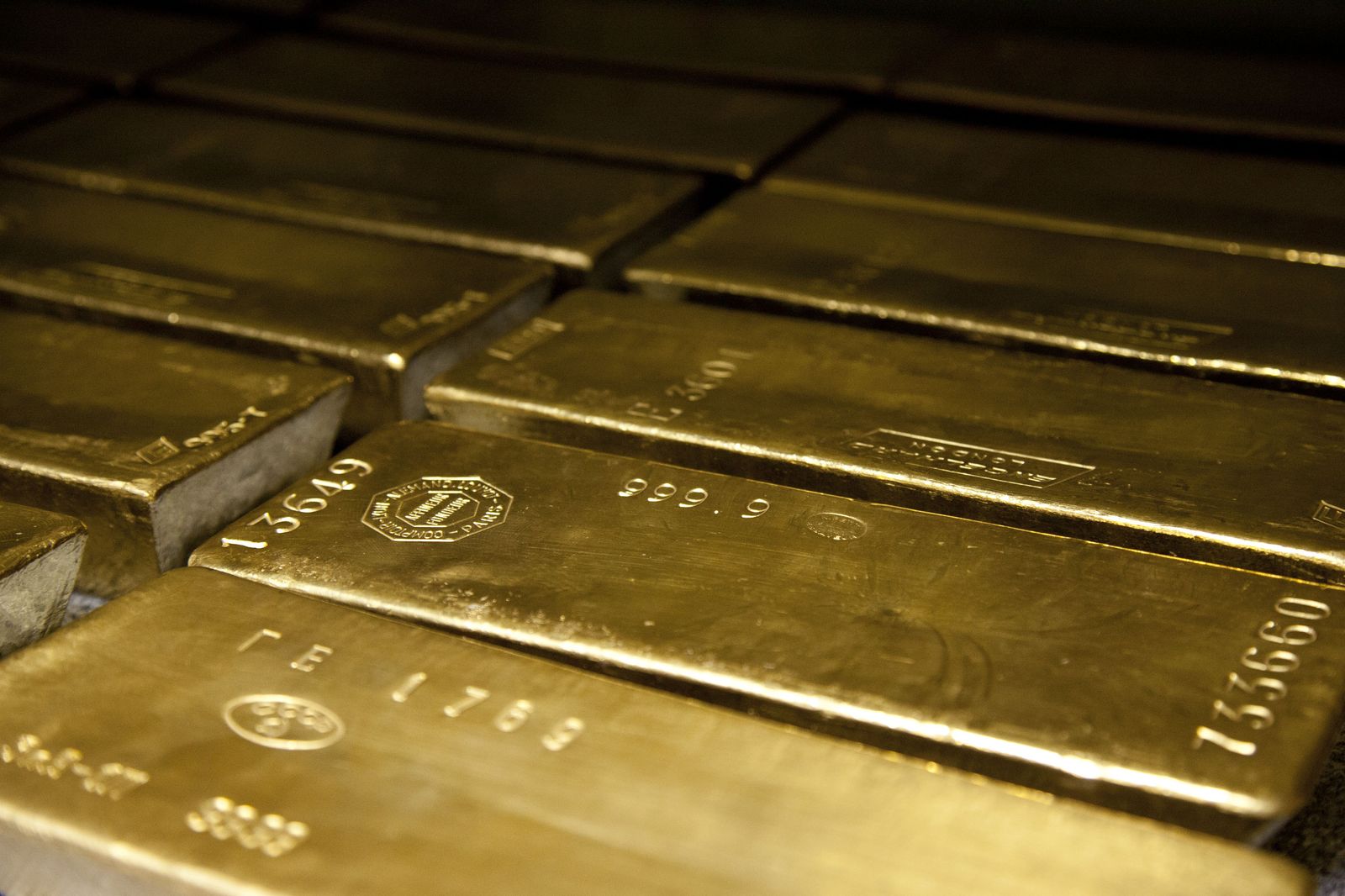
SYDNEY — Gold climbed on Monday as a soft September US jobs report collapsed bets on an October interest-rate hike from the Federal Reserve, lifting the appeal of the non-yielding metal just as war and oil volatility keep the broader outlook on edge. Spot gold rose 0.4 percent to $4,158.17 an ounce by 0150 GMT, Reuters reported, while US gold futures for December delivery gained 0.6 percent to $4,186.40 — a recovery after the metal slid 0.8 percent to $4,141.2 an ounce on Friday. The trigger was Friday’s payrolls data: the US economy added just 29,000 jobs in September, far below the 90,000 consensus, and the two prior months were revised sharply lower. Traders now see only a 22 percent probability of a Fed hike at the October meeting, down from 64 percent a week ago, though December remains firmly on the table at 87 percent, according to the CME FedWatch Tool. For gold, which earns nothing and pays for nothing, the repricing was enough: every basis point of expected tightening that falls out of the curve is another bid for the metal.
The Friday data was unambiguous in its weakness. Nonfarm payrolls rose just 29,000 in September against a consensus of 90,000, while net revisions subtracted 60,000 from the prior two months, according to the ANZ Bank extract carried in FNArena’s Monday report. The three-month moving average of hiring sat at 51,000. The unemployment rate ticked up 0.1 percentage point to 4.2 percent as labour-force participation rose to 61.8 percent, and average hourly earnings growth eased to 3.0 percent year on year — its weakest pace since May 2021. This was not one soft number; it was a labour market cooling on every measurable margin.
The Federal Reserve only last month raised its benchmark overnight rate by 25 basis points to the 3.75–4.00 percent range — its first increase in three years. Before Friday, traders had the October meeting priced at a 64 percent chance of a further hike; they now see 22 percent, according to the CME FedWatch Tool. Financial markets judged the softer report as buying the Federal Open Market Committee more time to assess conditions, FNArena’s report noted, with senior Fed officials signalling there is no need for urgency. Yet December is still alive: traders price an 87 percent chance of an increase then.
The market is betting October is not the month — a pause, not a pivot. That narrow bet is the whole trade in gold right now.
“The softer labour market data has helped dial back October Fed hike expectations, which is providing gold some support. But the market is still treating the Fed’s broader hiking cycle as intact even if a pause occurs in October,” said Tim Waterer, chief market analyst at KCM Trade.
The bond market refused to celebrate cleanly. Investors bought Treasuries in the first response to the jobs data, then sold them again — the 10-year yield ended Friday up 3 basis points at 5.27 percent, a 12-basis-point turnaround from the session low, and it sits near its highest level since 2002. “Investors appeared reluctant to extrapolate a single soft employment print while inflation risks remained high,” Morgan Stanley said in a note quoted by Reuters, and euro-area inflation gave them reason: headline HICP accelerated to 3.8 percent year on year in September, above consensus. For gold, yields are the weather — the metal pays no interest, so every rise in real yields is a tax on holding it.
The move was broad across the complex. Spot silver gained 1.7 percent to $61.40 an ounce, platinum rose 0.6 percent to $1,708.48 and palladium firmed 0.6 percent to $1,175.04, Reuters reported. Silver’s outperformance is typical when rate-pause expectations meet industrial demand: the white metal is both a haven and a factory input, and its 1.7 percent jump outpaced gold’s 0.4. All three moves were orderly, however — no panic buying, no disorderly rush into metals.
On the geopolitical front, Yemen’s Saudi-backed, internationally recognised government said on Sunday it was launching a major military campaign to recapture all areas controlled by the Iran-backed Houthis. The move deepens a Middle East risk premium already stretched by the Iran war and fears of damage to Gulf oil infrastructure. Yet oil slipped: rising crude exports from the Middle East and a G7 agreement to release up to 100 million barrels of diesel and oil over the next four months eased supply concerns. The active WTI future fell 1.9 percent to $91.1 a barrel. French President Emmanuel Macron said the coordinated release was designed to “send a clear signal to markets”, while President Trump had asked Europe to release strategic diesel reserves to avoid any need for a US diesel-export ban. Lower oil means cooler headline inflation — and cooler inflation is precisely what lets the Fed sit on its hands.
“Middle East developments will continue to matter for gold, particularly through their impact on oil prices and the broader inflation outlook. Volatility is likely to remain elevated while oil, yields and Fed expectations stay in flux,” said Waterer.
The repricing rippled straight through Asia. The Indian rupee is expected to open Monday in the 96.22–96.26 range per dollar, per traders quoted by Reuters, having settled at 96.3150 on Thursday with Indian markets shut on Friday for a holiday. The currency has slipped past the closely watched 96-per-dollar level to a fresh two-month low, battered by the surge in US Treasury yields that lifted the dollar and by persistent high oil prices. The Reserve Bank of India has remained a steady presence in the market, slowing the decline, but traders caution that the relief is fragile: with 96 decisively breached, the odds of further rupee weakness have increased, one private-bank currency trader said.
Geopolitics. Gold is a war asset first and a rates asset second, and this weekend it was both. The Yemeni offensive adds a new front to the Iran war’s risk map — Red Sea shipping, Gulf infrastructure and oil-price spikes all flow through it. Oil’s slip on G7 stock releases trimmed the inflation tail, but Waterer’s warning holds: while oil, yields and Fed expectations stay in flux, volatility stays elevated. In a hiking cycle that runs on data, every barrel counts twice — once for inflation, once for the policy response.
Macroeconomics. The mechanics are simple and they are intact: the Fed raised to 3.75–4.00 percent last month, its first hike in three years, and markets still treat the broader hiking cycle as alive — 87 percent for December even as October collapses to 22 percent. Gold’s 0.4 percent bounce is a repricing of timing, not of terminal rates. The metal thrives when the expected path of real yields falls; it suffers when Treasuries offer 5.27 percent on the 10-year, near the highest since 2002. That is the ceiling on every gold rally until the cycle genuinely turns.
Demographics. Société Générale’s note, via the Wall Street Journal, frames the real contest as a tug of war between structural buyers — central banks and exchange-traded-fund flows — and macro headwinds like the strong dollar and higher rates. The structural bid is the demography of gold demand: official-sector buyers accumulating steadily through cycles, ETF holders who bought the inflation scare and never sold. That bid put a floor under last week’s sharp intraday slide to $4,111, the weakest since August 5; the macro headwind is what has kept gold from running away since.
Historical patterns. Fed hiking cycles have a known choreography with gold: the metal suffers into the first hikes, then performs as the cycle peaks and real yields roll over. This one is unusual — the first hike in three years landed at 3.75–4.00 percent in September 2026, and traders are already gaming October and December separately. History’s lesson is that the turn is dated by data, not by speeches: Friday’s 29,000 print is exactly the kind of number that has, in past cycles, marked the moment the market starts front-running the pause. Morgan Stanley’s caution — don’t extrapolate one print — is also the historical lesson, in reverse: single prints have faked the turn before.
Structural. The deeper structure is the one SocGen named: gold is being remade as an institutional asset class. Central-bank buying is no longer the cyclical garnish of a bull market but the baseline; ETF flows now swing the marginal price the way futures funds once did. Against that, the plumbing of 2026 — a 5.27 percent 10-year, a dollar lifted by yield differentials, G7 strategic releases capping oil — is the macro ceiling. The trade of the autumn is the spread between those two forces, and Monday’s 0.4 percent was the structural side winning a round.
The calendar now does the talking. The October FOMC decision is the first waypoint: with the hike probability at 22 percent and December at 87 percent, the market’s message is delay, not cancellation. Every data print between now and December — jobs, wages, the euro-area inflation that surprised at 3.8 percent — re-prices that split. In the Gulf, the Yemeni campaign’s progress and the Iran war’s course will decide whether the oil premium returns or the G7’s 100 million barrels keep it capped. And in Asia, the rupee’s traders have said their piece: relief is real, but with 96 breached, the next payrolls print matters more than the last.
For now, gold has done what it does when the Fed’s timetable slips: drifted higher, orderly, without euphoria. The metal’s traders are not betting the hiking cycle is over — Tim Waterer said as much, and the December odds agree. They are betting only that October is not the month. In a market where the 10-year sits near a quarter-century high and a Yemeni offensive shares the tape with payrolls revisions, that narrow bet — pause, not pivot — is the whole trade. Volatility, Waterer warned, is likely to remain elevated while oil, yields and Fed expectations stay in flux. There is nothing in Monday’s price action to argue with him.
The Western market reading is delay, not deliverance. The Fed’s September hike to 3.75–4.00 percent was its first in three years, and futures still price an 87 percent chance of a December increase — the October collapse from 64 to 22 percent is a repricing of timing. Morgan Stanley’s warning against extrapolating a single soft print, echoed by the bond market’s refusal to rally cleanly, says the institutional West is not pricing a pivot: gold’s 0.4 percent is a tactical bid, capped by a 10-year near 5.27 percent, its highest since 2002.
The Western policy reading is coordination as market management. The G7’s agreement to release up to 100 million barrels of diesel and oil over four months — “send a clear signal to markets”, in Macron’s phrase — plus Trump’s push for European strategic diesel releases, is the West using its stockpiles to buy the Fed room: cheaper oil cools headline inflation, and cooler inflation lets October stay a pause. The Yemeni offensive is the counterweight — a new front in the Iran war that could take the oil premium right back.
The Eastern reading is relief through the dollar. When October hike odds fall, the dollar’s yield advantage narrows, and that is the transmission belt to Asia: the rupee’s expected 96.22–96.26 open is only the most visible case. A softer dollar also makes gold cheaper in yuan, yen and rupees, widening the bid from the region that buys the most physical metal. The structural backdrop Société Générale named — central banks as steady official-sector accumulators — has its heaviest weight in the East, where reserves diversification is policy, not fashion.
The Eastern caution is that the relief is borrowed. TradingView notes the 10-year near its highest since 2002 is still weighing on precious metals, and the rupee’s traders say the same about their currency: with 96 decisively breached and December still priced at 87 percent, Asia’s breathing room lasts exactly as long as the next US data print allows. The region’s importers — of oil, of dollars — remain hostage to a hiking cycle that is delayed, not dead.
The Global South reading is the currency channel. For India — the world’s great oil importer and gold buyer — the weekend’s repricing is double relief: softer oil via the G7 releases plus a weaker dollar via faded hike bets, both easing the import bill that has been crushing the rupee to a two-month low. The Reserve Bank of India’s steady intervention shows the playbook: defend the line at 96 while the Fed gives you room, because the room is temporary.
The Global South risk is asymmetry. Lower oil helps importers but the Yemeni offensive and the Iran war threaten Gulf infrastructure that the South’s energy security runs through; a single escalation reprices everything. And gold itself is the South’s paradox — the metal rallies on the same Fed hesitation that relieves its currencies, so the hedge gets more expensive exactly when it is most wanted.
Gold pays no interest, so its appeal rises whenever the expected path of interest rates falls: the “opportunity cost” of holding it drops. Lower hike odds also tend to soften the dollar, making gold cheaper for buyers in other currencies. Friday’s 29,000 payrolls print did both at once.
The market’s answer is: pause in October, hike in December. October hike odds collapsed from 64 to 22 percent, but December is still priced at 87 percent via the CME FedWatch Tool. As KCM Trade’s Tim Waterer put it, the market still treats the broader hiking cycle as intact.
Nonfarm payrolls rose 29,000 in September versus a 90,000 consensus; net revisions cut 60,000 from the prior two months; the three-month hiring average sat at 51,000; unemployment rose to 4.2 percent with participation at 61.8 percent; and average hourly earnings growth eased to 3.0 percent year on year — its weakest since May 2021.
Two offsets: rising crude exports from the Middle East and a G7 agreement to release up to 100 million barrels of diesel and oil over four months, designed — in Macron’s words — to “send a clear signal to markets”. The active WTI future fell 1.9 percent to $91.1 a barrel despite the Yemeni offensive and Iran-war risks to Gulf infrastructure.
It is expected to open Monday at 96.22–96.26 per dollar after settling at 96.3150 on Thursday, with Indian markets shut Friday for a holiday — a fresh two-month low past the closely watched 96 level. The Reserve Bank of India has been intervening steadily to slow the slide, but traders say the relief could prove fleeting with 96 decisively breached.
The October FOMC decision first, then every jobs, wage and inflation print that re-prices the October-versus-December split; the course of the Yemeni campaign and the Iran war for the oil-inflation channel; and the 10-year Treasury yield, near 5.27 percent — the ceiling on every gold rally until real yields genuinely roll over.
