Treasury yields hit their highest since 2002, the dollar reached a 17-month peak, and Europe’s bond markets buckled under France’s fiscal mess — all in a single day.
Published 2 October 2026 · 06:00 GMT
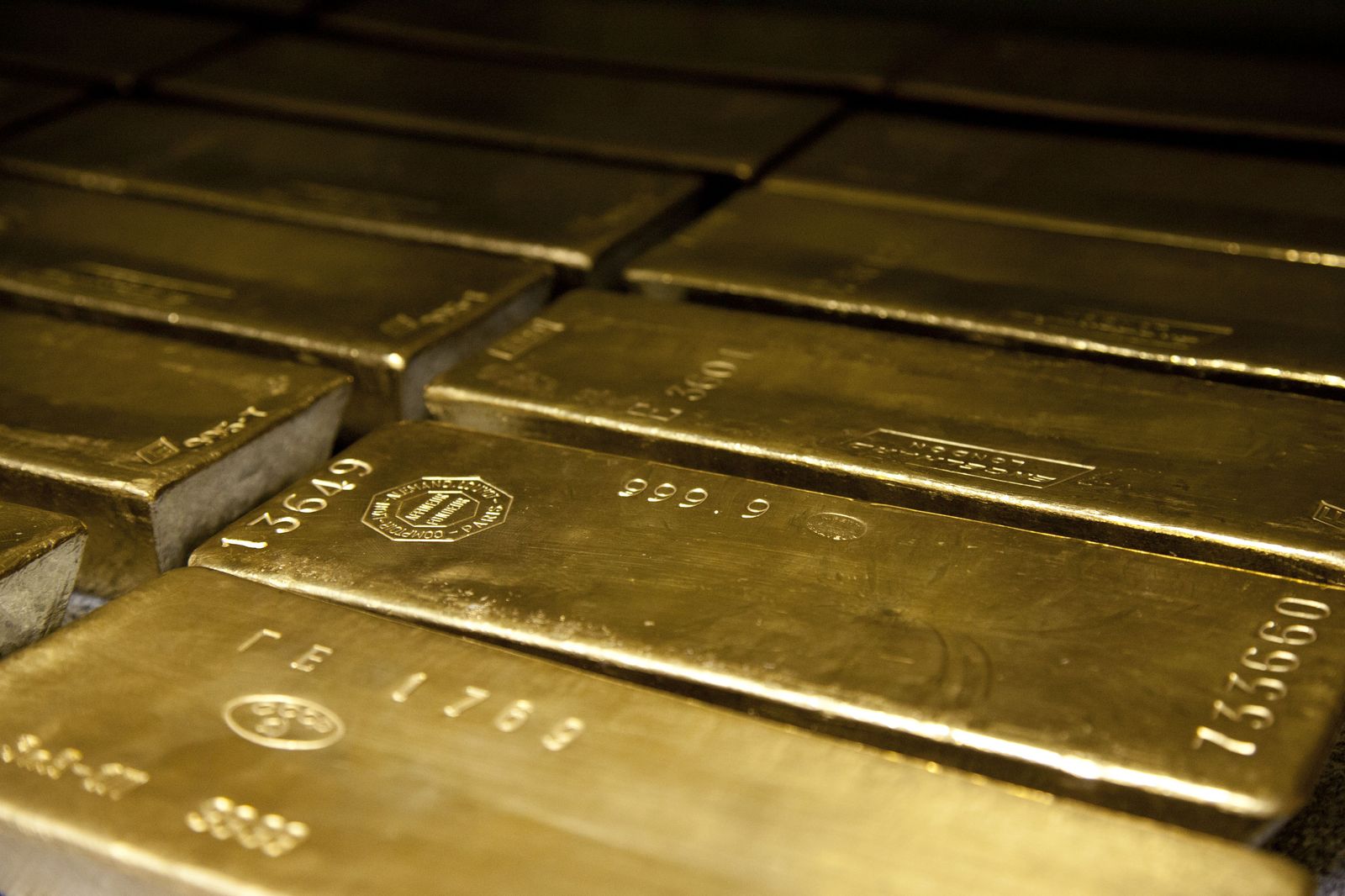
The world did not reprice inflation on Thursday. It repriced the state itself. From Washington to Paris to Tokyo, the bond vigilantes served governments a bill for decades of borrowing — and the dollar collected the tip.
Thursday’s sell-off was not a tremor; it was a global margin call on the world’s safest borrowers. The yield on the benchmark 10-year US Treasury ripped to 5.344 percent — a level not seen since 2002, when flip phones were cutting-edge and the euro was a toddler. It cooled to about 5.249 percent in Friday’s early trading, and the 30-year bond was parked near 5.61 percent. But the damage was never just American. Germany’s 10-year yield topped 3.6 percent, its highest since 2008, when Lehman was still a going concern. France’s 10-year hit a 2002-era high near 4.96 percent. Britain’s 30-year gilt briefly breached 6 percent for the first time since 1998, back when the Spice Girls were a news item. And Japan’s 10-year traded at 3.13 percent, its highest since the mid-1990s — in a country that spent three decades teaching the world that yields could only fall. Meanwhile the dollar index, measuring the greenback against six rivals, stood at 102.08, on course for a 1 percent weekly gain and a third straight weekly rise, a run last seen in May 2025, and its highest perch in 17 months. The euro hugged $1.1237, its lowest since May 2025, dragged down by worries about France’s fiscal health. The yen held steady at 158 per dollar after Tokyo’s annual core inflation accelerated in September at its fastest pace in ten months. In other words: no major sovereign was spared, and no major central bank looked like it was in charge. When every government’s borrowing costs hit multi-decade highs on the same afternoon, the market is no longer asking what the Fed will do next month. It is asking what treasuries can keep affording — full stop.
Charu Chanana, chief investment strategist at Saxo, put it with the precision of a surgeon: “The fact that long-end yields are pushing higher even as expectations for an immediate Fed hike have eased suggests this is increasingly about the term premium and fiscal risk, not just the next Fed decision.” Translation: the extra yield investors demand to lock their money up for ten or thirty years is swelling, and it is swelling because buyers are no longer sure they will be paid back in money worth anything. The term premium — the foggy, hard-to-measure surcharge that compensates lenders for the risk that the future turns out worse than expected — is the market’s way of billing governments for heavy borrowing and relentless bond supply. This is what economists call fiscal dominance: the moment when bond markets start pricing the solvency of the state rather than the policy rate of the central bank. And it is the nightmare scenario for every finance minister on earth, because it means the central bank can cut rates until the cows come home and borrowing costs will keep rising anyway. Washington learned the lesson first. The United States keeps issuing paper to fund a deficit that no administration treats as an emergency, the Federal Reserve is still shrinking its balance sheet — quantitative tightening, draining a buyer from the market — and foreign central banks are no longer the automatic, bottomless bid they once were. The buyers of last resort are gone; the buyers of first resort are haggling. That is why Thursday’s rout is about more than a number on a screen. A 10-year Treasury at 5.34 percent becomes the floor under every mortgage, every corporate loan, every emerging-market dollar bond on the planet. The Indian rupee slid to a two-month low of 96.31 per dollar on Thursday, its sharpest one-day fall in more than two months, even as state-run banks sold dollars to cushion the blow. When the benchmark moves, the periphery pays — and the periphery, this time, includes France.
The bond market is no longer trading the Fed. It is trading the Treasury — and the invoice has arrived.
France is the subplot that makes this week’s story genuinely dangerous. The spread between French and German 10-year bond yields has widened beyond 140 basis points, its highest since 2012 — the euro crisis years, when the survival of the single currency was an open question. French borrowing costs have climbed to 14-year highs. Investors are not pricing a recession in France; they are pricing a state that has spent itself into a corner, with a political system seemingly incapable of climbing back out. That is why the euro sank to its weakest since May 2025 even as the European Central Bank’s policy stance is, if anything, less hawkish than the Fed’s. Currency traders read the same script the bond vigilantes read: when fiscal credibility cracks inside the euro area, there is no national central bank that can print its way out — there is only the euro, and everyone else’s faith in it. So capital flows to the one currency that benefits from global fear — the dollar — even though the dollar’s own issuer is running the largest peacetime deficits in history. This is the great irony of a bond rout in 2026: the United States is both the arsonist and the fire station. Its borrowing fuels the supply glut that pushes yields up; its currency and its Treasuries remain the world’s panic room. The safe-haven bid and the fiscal-risk premium are now fighting inside the same asset, and the dollar is winning the currency leg while bonds lose the yield leg. The Swiss franc strengthened as investors sought relatively safer European assets — a tell that even inside Europe, money is discriminating, fleeing to the one jurisdiction that never learned to spend what it doesn’t have.
The fuse was lit on the energy side. The ISM manufacturing prices index surged to 77.9, near its March peak at the onset of the Iran conflict — a reading that screams input-cost pressure through American factories. Brent crude reclaimed the $100-a-barrel mark after China suspended oil products exports, potentially tightening fuel markets already coping with global supply shortages, and US military deployments to the Middle East kept a war premium in the price. “Iran, however, appeared to have loaded no crude oil onto tankers in September,” a sign of how effectively the US naval blockade has severed Tehran’s access to energy markets — while Capital Economics’ Hamad Hussain warned that recovering regional flows remain “highly vulnerable to escalation.” Oil above $100 is a tax on everything and a gift to no one except producers; it feeds directly into the inflationary fears that drove Thursday’s sell-off. Then came the data that split the story in two. Wednesday’s figures showed US consumer prices — the Fed’s preferred PCE gauge — rose 3.4 percent in August, below the 3.7 percent expected, with downward revisions to July. Cooler inflation should have calmed bonds. Instead, the long end sold off harder — the tell, as Chanana noted, that the repricing is about governments, not the next rate decision. Fed officials spent the week drawing a careful distinction the market refuses to honor. New York Fed President John Williams said there was “no urgency” to consider another hike after September’s increase. Fed Vice Chair Philip Jefferson said it may take more time to judge whether further rate increases are needed to slow inflation — a remark that helped spark Thursday’s late bond-market bounce, with the 10-year snapping back to close at 5.24 percent, down 6 basis points on the day, and the 2-year falling 10 basis points in its biggest daily drop since August 2025. Minneapolis Fed President Neel Kashkari said he was “unsure” whether the next hike should come this month. Only Dallas Fed President Lorie Logan held the hawkish line, arguing the central bank must continue raising rates to fully cool inflation. Traders got the message on the near term: CME FedWatch odds of an October hike collapsed from 69 percent a week ago to below 28 percent, with a December increase still priced. But the bond market’s answer was a shrug and a sale. If the Fed is on hold and yields still scream higher, the Fed is no longer the marginal price-setter. The Treasury’s borrowing schedule is.
That distinction — between the price of money and the price of the state’s credit — is the thread that runs through every market this week. Canada’s 10-year yield climbed to 3.99 percent, near its highest since 2023, and its main stock index snapped a five-month winning streak. In the US, equities whipsawed: the S&P 500 erased a 0.5 percent decline to finish up 0.2 percent at 7,666, with energy the only sector genuinely happy, up 1.9 percent, because $100 oil flatters drillers even as it strangles everyone else. Rate-sensitive real estate lagged, as it always does when the 10-year runs away. Gold was little changed — helped by Wednesday’s cooler inflation print, capped by rising real yields and the firmer dollar, the eternal tug-of-war of the inflation-hedge trade. The IMF, for its part, stated that global bond markets were still “functioning as they should” despite the selloff — the kind of reassurance that calms nobody, because markets always function right up until they don’t. Asia’s session added its own chapter. Tokyo’s underlying inflation accelerated to 2.7 percent in September, its fastest in ten months, strengthening the case for further Bank of Japan rate increases — in an economy where the 10-year government bond already yields more than it has since the mid-1990s. Japan is the world’s great laboratory for what happens when a central bank loses control of the long end after decades of yield-curve control: the answer, so far, is that the market takes the controls and charges a premium for the turbulence. Europe’s bounce-back in US bonds on Thursday afternoon was itself revealing: concern around France’s fiscal and political situation pushed euro-area risk premiums higher, and some of that fear money washed into Treasuries as the relative haven. Even in a global rout, hierarchy matters. The question haunting every trading desk is what happens when the haven itself is the source of the supply glut — when the fire station is also the arsonist, and the hose is connected to the Treasury’s printing press.
Geopolitics first: the bond rout is the financial shadow of the war economy. Oil above $100 is not an accident of supply and demand; it is the price of a Middle East where the Strait of Hormuz is contested, Iran is under naval blockade, and the Pentagon is reportedly preparing to deploy another aircraft carrier with 10,000 sailors and marines to the Persian Gulf. China’s suspension of oil products exports adds a second geopolitical layer — Beijing using energy as leverage in a world of tightening fuel markets. Every barrel at these prices re-ignites the inflation the central banks thought they had buried, which is precisely why bond markets are pricing governments: the deficits of 2026 are, to a large degree, war and energy-transition deficits, and they do not shrink when the Fed hikes. Macroeconomics second: strip out the geopolitics and the arithmetic is brutal on its own. Heavy government borrowing plus large bond supply plus quantitative tightening plus sticky inflation equals a term premium that has to rise until buyers return — and buyers return only at prices that punish borrowers. The mechanics are remorseless: the US Treasury must refinance trillions at these yields, France must fund a deficit its politics cannot shrink, Japan must discover what its debt costs when the central bank stops buying most of it. Demographics third, the dimension markets never discuss and always obey: the world’s great pool of patient duration buyers — aging savers in Japan, Germany, and increasingly China — is shrinking as retirees spend and workforces age. The marginal buyer of a 30-year bond is no longer a pension fund that must hold it; it is a hedge fund that will hold it only if the price is right. Structural demand for duration is in secular decline, which means every new supply wave lands on a thinner book. Historical patterns fourth: the last time the 10-year Treasury yielded 5.34 percent, in 2002, the Fed funds rate was 1.25 percent and falling, the dot-com bust was fresh, and nobody had heard of quantitative easing. Yields that high used to mean a central bank was slamming the brakes. Today they mean the market is slamming the brakes on the central bank’s credibility — the 1994 bond massacre and the 2013 taper tantrum are the closer ancestors, both episodes where the long end revolted against official guidance. The UK 30-year gilt at 6 percent, unseen since 1998, is the ghost of the Truss mini-budget walking again: proof that fiscal adventurism gets priced in days, not years. Structural trends fifth: the dedollarization debate misses the point this week proves. The dollar index at a 17-month high is not a vote of confidence in American finances; it is a vote of no confidence in everyone else’s. The global financial system still runs on dollars, still settles in dollars, still panics into dollars — which gives Washington the exorbitant privilege of being repriced last. But privilege is not immunity. The term premium is the market’s polite way of saying the privilege now carries a fee, and the fee is rising.
What makes this episode genuinely novel — the thing the 5D prism keeps circling back to — is the decoupling of the short end from the long end. For two years, every market conversation was about the Fed: hike, hold, cut, repeat. The 2-year Treasury, the purest bet on the next twelve months of policy, behaved accordingly this week, falling 10 basis points on dovish Fedspeak. The 10-year and 30-year refused to follow. That divergence is the market’s verdict on the limits of monetary policy in an age of fiscal excess: central banks can set the overnight price of money, but they cannot legislate the solvency premium on thirty years of government promises. Jefferson’s dovish turn rescued equities — the S&P’s recovery from red to green was pure relief that October is probably off the table — but it could not rescue bonds, because bonds are no longer trading the Fed. They are trading the Treasury, the Assemblée Nationale, the Bundestag, the Diet. Evercore’s Krishna Guha captured the consensus baseline: the Fed remains oriented toward “a limited two or three hike mini-cycle,” and does not see demand strong enough to create obvious overheating risk. Read that carefully: the Fed itself thinks the economy is fine. The bond market thinks the governments are not. Both can be true. In fact, both being true is exactly what fiscal dominance looks like — a healthy private economy funding an unhealthy public balance sheet, with the long end of the curve as the collection agency. The demographic dimension sharpens the point: an aging developed world needs its governments to borrow for pensions and healthcare while its savers, the natural buyers of that borrowing, dwindle. The math only works if someone else buys — and the “someone else” is demanding 5.34 percent for the privilege. There is a dark joke doing the rounds on trading desks that the bond vigilantes of the 1990s have been replaced by something worse: bond accountants, who do not threaten to throw you out of office, they simply send the invoice. Thursday was the invoice.
Today’s September jobs report is the first tripwire. It lands hours after a week in which markets decided the Fed is on hold — a hot payrolls number would detonate that assumption and send the short end screaming back up, while a soft number would confirm the hold and leave the long end to wrestle with fiscal arithmetic alone. Either way, the report decides whether the decoupling of short and long ends survives the weekend or snaps back into the old regime where the Fed runs everything. Second tripwire: the Fed’s October 27–28 meeting. With hike odds below 28 percent and Williams preaching patience, the base case is a hold — but Logan’s dissent-in-spirit and Kashkari’s uncertainty mean the statement and the press conference will be parsed like scripture for any hint that the “mini-cycle” has further to run. Watch Chair Warsh’s framing above all: he inherited Powell’s chair in May, and this is the first genuine bond-market revolt of his tenure. Third: France. The 140-basis-point spread over Bunds is the euro area’s canary, and canaries that wide usually mean the mine is filling with gas. Any credible fiscal consolidation plan from Paris — or any credible political crisis — moves the euro and every European bond market within hours. Fourth: Japan. Tokyo’s 2.7 percent core inflation print strengthens the Bank of Japan’s case for further hikes, and the yen at 158 is one hot inflation report away from forcing the BOJ’s hand in a way that would ripple through every carry trade on earth. Fifth: oil. Brent above $100 with Hormuz contested and China withholding product exports is the variable that can turn a fiscal repricing into an inflationary spiral — the one outcome that would force central banks and bond markets back into the same panicked trade. And beneath all of it, the slow variable that never makes headlines: the Treasury’s auction calendar. Every week brings another slug of supply, and every auction is now a referendum on the term premium. The vigilantes — pardon, the accountants — will be watching the bid-to-cover ratios the way hawks watch prey. The market has stopped asking what central banks will do. It is asking what governments can afford. Until the borrowing slows, the answer reprices every single day.
From Washington and London, the diagnosis is fiscal before it is monetary. The American right reads Thursday as vindication: deficits have consequences, the Treasury’s borrowing binge was always going to collide with quantitative tightening, and the bond market is simply doing the disciplinary job Congress refuses to do. The center-left version differs only in tone — the spending was necessary, the argument goes, but the refinancing wall is real, and no amount of Fed patience changes the arithmetic of trillions rolling over at 5 percent. Both camps agree on the prescription’s direction, if not its dosage: the United States must show bond buyers a credible path to smaller deficits, or the term premium keeps charging rent. The political sting is that neither party has a plan that survives contact with an election year — so the market plans for them.
Europe’s western capitals read the same tape with colder comfort. For Berlin and the Hague, France’s 140-basis-point spread is the bill for a decade of lecturing others on discipline while Paris spent freely — schadenfreude tempered by the knowledge that a French fiscal crisis becomes a euro crisis within days. London, meanwhile, studies its own 30-year gilt at 6 percent and remembers the Truss episode as a live warning: markets now price fiscal credibility in hours. The western consensus forming this week is uncomfortable but clear — the era in which rich democracies could borrow as if the bill would never come due has ended, and the repricing will be done by traders, not voters.
From Moscow and Beijing, Thursday’s rout is Exhibit A in a decade-long argument: the Western fiscal model is eating itself, and the dollar’s strength is the strength of the last helicopter out of Saigon — impressive until you ask where it is flying. Russian commentators note the symmetry with undisguised satisfaction: Washington lectures the world on economic stewardship while refinancing its empire at 5.34 percent, and the “rules-based” financial order turns out to be priced by the same fear it exports. Beijing’s take is cooler and more strategic — China’s suspension of oil products exports, which helped push Brent back above $100, is read in Chinese media as legitimate supply management, not leverage, even as it tightens the inflationary vise on Western consumers. The eastern lens does not celebrate the chaos; it prices the transition it believes the chaos confirms.
Tokyo offers the eastern perspective’s most instructive mirror. Japan’s 10-year at 3.13 percent — its highest since the mid-1990s — with core Tokyo inflation at 2.7 percent and the yen pinned at 158, is what the end of financial repression looks like in the world’s most indebted developed economy. Japanese policymakers spent thirty years proving that a central bank could suppress the long end indefinitely; the market is now writing the rebuttal in real time. For Beijing and Moscow, the lesson drawn is that no amount of central-bank engineering permanently defeats the arithmetic of debt — a conclusion they apply, with selective amnesia, rather less rigorously to their own balance sheets. But the analytical point stands regardless of the messenger: when the Bank of Japan loses the long end, the era of costless government borrowing is over everywhere.
From Mumbai, Jakarta, and Lagos, the bond rout is not an abstraction — it is a tax collected at the border. The rupee’s slide to 96.31 per dollar, its sharpest one-day fall in more than two months, is the local translation of a 5.34 percent 10-year Treasury: capital that once chased yield in emerging markets now finds it at home in Washington, and it leaves without saying goodbye. India’s government warned on Thursday that supply disruptions, volatile energy prices, and global uncertainty pose near-term risks to inflation, the rupee, and capital flows — the polite bureaucratic phrasing for a familiar dread. Every basis point added to US yields is a basis point added to the borrowing costs of developing sovereigns, and unlike Washington, they cannot print the world’s reserve currency to soften the blow.
The southern lens also reads the energy chapter as the crueler half of the story. Brent above $100, with China suspending oil products exports and Hormuz contested, hits fuel-importing developing economies twice — once through the import bill, once through the inflation that forces their own central banks to keep rates punishingly high. There is bitter historical memory here: the Global South has lived through every Western rate cycle as someone else’s collateral damage, from the Volcker shock to the taper tantrum. This week’s novelty is that the damage is no longer even about US monetary policy — it is about US fiscal incontinence, which developing nations can neither vote on nor hedge against. The demand from southern capitals is not for sympathy; it is for a global financial architecture in which the borrowing habits of one treasury do not dictate the price of bread in another hemisphere.
Beijing just wrote the biggest liquidity check of the year — and changed nothing else.
The People's Bank of China will offer banks up to one trillion yuan a day — about $149 billion — in overnight funds from September 28 through October 8, covering the Golden Week holiday. It is the largest such cap since the tool's introduction in June 2026, up from 600 billion yuan in mid-September.
The calendar explains the timing. Golden Week sends hundreds of millions of Chinese traveling and spending; banks need cash the way airports need runways. The central bank is making sure the plumbing holds.
The scale, though, is the story. One trillion yuan a day is not holiday housekeeping. It is a backstop — a signal that whatever the holiday throws at the financial system, the PBoC has already covered.
And then, the other hand: nothing. Chinese banks left the one-year and five-year loan prime rates unchanged at 3.00% and 3.50% — the 16th consecutive month without a move.
Sixteen months of stillness in the price of credit, alongside the largest liquidity flood of the year. Beijing is watering the garden and refusing to lower the fence — liquidity yes, cheaper credit no.
Governor Pan Gongsheng gave the doctrine a name: slower loan growth is becoming "the new normal." Property and local-government borrowing are shrinking faster than emerging industries can borrow. The credit engine is being rebuilt mid-flight.
Liquidity is Beijing's answer to everything except the one question markets keep asking: where is the growth?
The PBoC is not idle elsewhere. It stepped up support with a net 200-billion-yuan injection through medium-term lending facility operations, reiterated its "moderately loose" stance, and kept its grip on the yuan.
The yuan, for its part, cooperated — rebounding after briefly dipping below 6.70 per dollar as US Treasury yields rose and the PBoC's grip eased.
The diplomacy helped. A US–China summit extended the trade truce to January — without new tariff cuts, but without new tariffs either. A truce, not a peace; markets will take it.
Step back and the contrast is the story. In Washington, yields cross 5% and traders bet on another hike. In Beijing, the central bank floods the system with cash and leaves rates untouched for a 16th month. Two central banks, two planets.
The logic is not mysterious. China's problem is not hot demand — it is cold credit. Pumping liquidity keeps the system liquid; cutting rates into weak demand would be pushing on the proverbial string.
The risk is the one Beijing knows best: banks awash in cash, with nowhere productive to lend it. Liquidity without lending becomes asset froth — the 2015 lesson, still fresh in institutional memory.
For the region, the signal matters more than the mechanics. A stable yuan and a liquid Chinese banking system through Golden Week is the foundation under Asia's supply chains. When Beijing sneezes, the region's exporters reach for tissues.
Watch what happens after October 8. If the trillion-yuan window closes quietly, it was holiday plumbing. If support lingers, it was something else — a central bank telling you, without saying it, that the economy needs the help.
Western coverage — Reuters and the financial wires — emphasizes the restraint: Beijing holding rates while flooding liquidity, a central bank running out of its favorite tools.
In this telling, 16 months of unchanged loan prime rates is the real headline — evidence of a policymaker boxed in by a hawkish world, a weak property sector, and the fear that rate cuts would only weaken the yuan. Liquidity is what you do when you've decided rates can't move.
Pan's "new normal" gets a skeptical hearing: an elegant phrase for a credit engine that no longer transmits. The question in Western commentary is whether "moderately loose" is a stance or a shrug.
Eastern coverage — Xinhua and Chinese outlets — emphasizes the calibration: targeted, seasonal, and exactly as doctrine prescribes.
In this telling, the trillion-yuan facility is textbook PBoC: precise, time-bound, and aimed at a known seasonal need. The unchanged rates are not paralysis but prudence — "moderately loose" means loose where it counts, steady where it matters, with the yuan's stability as the binding constraint.
The summit's truce extension gets equal billing: diplomacy buying the central bank room to maneuver, and the maneuver working — the yuan's rebound presented as policy competence, not luck.
Global South coverage — Malaysia's business press among it — emphasizes the neighborhood: what Beijing's plumbing means for everyone downstream.
The read from Kuala Lumpur: a liquid China through Golden Week is good news for ASEAN exporters, supply chains, and the region's own central banks. Yuan stability is a public good in Asia, and the PBoC just underwrote another week of it.
The caution in this coverage is borrowed from experience: when the region's biggest economy needs record liquidity to get through a holiday, the "new normal" of slower credit is everyone's normal too.
To read Beijing's move properly, you need the toolkit. Start with the overnight reverse repo — the instrument at the center of the trillion-yuan headline. In a reverse repo operation, the central bank lends cash to commercial banks overnight, taking bonds as collateral; the banks get the liquidity they need, the central bank gets the bonds back the next morning plus a sliver of interest. It is plumbing, not policy: the money created exists for a day, maybe rolled over, and its purpose is to keep the interbank market — the market where banks lend to each other — from seizing. The cap is the message. A trillion yuan a day says: whatever the holiday throws at the system, the PBoC has already covered.
The tool itself is young — introduced only in June 2026 — which makes the record cap more interesting. A new instrument's ceiling is normally discovered cautiously; jumping from 600 billion yuan in mid-September to a full trillion two weeks later is not calibration but declaration. It tells the banks, and through them the market, that the central bank will not be outbid by seasonal stress. The facility runs September 28 to October 8, covering Golden Week exactly. Time-bound, enormous, and explicitly temporary: the PBoC is writing a check it intends to tear up on the 9th. The question the article ends on — what happens after October 8 — is the only one that matters, because a backstop that lingers stops being a backstop and starts being a subsidy.
Then the medium-term lending facility — the MLF — through which the PBoC added a net 200 billion yuan. If reverse repos are the overnight overdraft, the MLF is the term loan: banks borrow for months, not hours, pledging collateral, at a rate the central bank sets. The MLF rate is the PBoC's quiet policy lever — it guides the loan prime rates without the drama of changing them. And the loan prime rates, the LPRs, are the number the article keeps returning to: 3.00 percent for one year, 3.50 percent for five, unchanged for the sixteenth consecutive month. The LPR is the benchmark for most new lending in China; holding it still while flooding the system with cash is the whole doctrine in one gesture. Liquidity yes. Cheaper credit no.
The sixteen months of stillness deserve their own reading, because stillness is also a decision — sixteen times over. In a world where Washington is hiking and yields cross 5 percent, cutting Chinese rates would narrow the already thin cushion against capital outflow and yuan depreciation; every basis point of easing is a basis point of incentive for money to leave. The PBoC's box, as the Western lens describes it, is real: a property sector that no longer transmits stimulus, local governments deleveraging rather than borrowing, and a currency whose stability is the binding constraint on everything else. Holding the LPR is not paralysis. It is the recognition that the price of credit is no longer the economy's binding constraint — and that moving it would cost more in currency stress than it buys in growth.
The calendar explains the timing, as the article says — but the calendar deserves its scale stated plainly. Golden Week is the largest annual human migration on earth compressed into seven days: hundreds of millions of Chinese traveling, spending, withdrawing cash, settling bills. The banking system's cash demand does not rise. It detonates. ATMs must be stocked, merchants' settlement accounts funded, the interbank market supplied with enough reserves to clear a week's worth of the world's second-largest economy changing hands. In normal years, the PBoC manages this with routine open-market operations. This year it wrote the biggest check in the tool's short history.
The scale, though, is the story — the article's line, and worth pressing. One trillion yuan a day is not holiday housekeeping; it is a backstop sized for something the PBoC sees and the market does not yet. Seasonal demand explains the facility's existence. It does not fully explain its size. Either the central bank is being theatrically cautious — signaling strength by oversupplying safety — or its internal read on holiday-season financial stress is darker than the public data. Both readings are consistent with "moderately loose." Only one of them is reassuring. The banks will take the cash either way; the signal is in the surplus.
There is also the consumption angle, which is where the liquidity meets the real economy. Golden Week is China's great annual test of consumer confidence: the week when households vote with their wallets on whether the economy feels safe. A banking system visibly backstopped — cash available, payments clearing, no friction — is the precondition for the spending the state wants to see. The PBoC cannot make households spend; it can only ensure that nothing in the plumbing stops them. In an economy where the consumer has been the missing piece and property wealth no longer does the spending's work, the holiday's cash registers matter more than the interbank rate. The trillion yuan is, among other things, a bet on the tills.
And the regional read — the Global South lens from Kuala Lumpur — captures what the holiday means beyond China's borders. A liquid China through Golden Week is the foundation under Asia's supply chains: exporters paid, importers funded, the region's own central banks spared the volatility of a yuan under holiday stress. Yuan stability, as the article notes, is a public good in Asia, and the PBoC just underwrote another week of it. When the region's biggest economy needs record liquidity to get through a holiday, the "new normal" of slower credit becomes everyone's normal — but a stable holiday is still a stable holiday, and Asia's exporters will take it.
Central bankers choose their phrases the way diplomats choose communiqués — every word weighed, every ambiguity intentional. When Governor Pan Gongsheng said slower loan growth is becoming "the new normal," he was not describing a statistic. He was retiring an expectation. For two decades, China's credit engine ran on a simple formula: property developers borrowed, local governments borrowed against land, and the resulting construction carried GDP. That engine is being dismantled mid-flight — property deleveraging, local-government debt discipline — faster than emerging industries can borrow to replace it. "New normal" is the doctrine that says: stop waiting for the old credit cycle to return. It is not returning.
The doctrine has a logic, and it is worth steelmanning before doubting. Credit-fueled growth bought China two decades of expansion and left it with the property crisis, the local-government debt pile, and the demographic headwinds now arriving together. Pumping cheap credit into that structure — the old playbook — would reflate the very imbalances the state is trying to defuse. Slower, cleaner credit growth, directed at manufacturing upgrades and strategic industries rather than concrete, is the quality-over-quantity bet. The PBoC is not refusing to stimulate. It is refusing to stimulate the old economy. The distinction is the entire policy.
The risk, as the article notes, is the one Beijing knows best: banks awash in cash with nowhere productive to lend it. Liquidity without lending becomes asset froth — the 2015 lesson, still fresh in institutional memory, when stimulus leaked into equity speculation rather than productive investment. The trillion-yuan facility, the 200-billion MLF injection, the "moderately loose" stance — all of it presupposes transmission channels that the "new normal" itself describes as weakened. Watering the garden, to use the article's image, works only if the soil still absorbs water. If property and local governments no longer drink, and emerging industries cannot drink fast enough, the water pools. Pooled liquidity has a history in China. It is called a bubble.
Step back and the contrast the article closes on — two central banks, two planets — is the frame that will define the autumn. Washington hikes into data it may not have, fighting inflation with the South's interest bills. Beijing floods with cash it cannot lend, defending a currency it cannot afford to let slip, waiting for a credit engine it is rebuilding mid-flight. Neither has a clean instrument. Both are improvising inside doctrines — data-dependence, the new normal — that describe the world they wish they governed. Watch October 8: if the trillion-yuan window closes quietly, it was holiday plumbing, and the doctrine holds. If support lingers, the PBoC will have told you, without saying it, that the new normal needs more help than the old vocabulary admits.
Monetary policy does not happen in a diplomatic vacuum, and the PBoC's autumn maneuver owes more to the summit than the communiqués admit. The US–China meeting extended the trade truce to January — no new tariff cuts, but no new tariffs either — and that pause is worth more to Beijing's central bank than any single instrument in its toolkit. Tariff escalation would have meant a weaker yuan, imported inflation, and capital flight arriving together; the truce removes the worst tail from the PBoC's planning. "A truce, not a peace; markets will take it," as the article says. So will central bankers.
The yuan's rebound — recovering after briefly dipping below 6.70 per dollar — is the truce's signature in the currency market. With US Treasury yields rising and the PBoC's grip easing, the currency found its footing not through intervention but through the removal of a threat. That distinction matters: a yuan steadied by diplomacy is cheaper to defend than a yuan steadied by reserves. Every week the truce holds is a week the PBoC does not have to choose between growth and the exchange rate — the choice that has boxed in Chinese policy for the better part of a decade.
But truces expire, and January is closer than it looks. The extension without tariff cuts is a freeze, not a thaw: the existing duties remain, the structural disputes untouched, the next escalation one headline away. The PBoC is therefore managing a window, not a settlement — using the diplomatic calm to get through Golden Week, to steady the currency, to buy the "new normal" time to prove itself. If January brings escalation, the trillion-yuan plumbing will look like the prelude to a harder season. Diplomacy bought the central bank room to maneuver, as the Eastern lens notes. Room is not resolution. It is rented, monthly, and the rent comes due in January.
