Gold broke above $4,200 as two Fed voices promised more rate hikes and China logged its 23rd straight month of gold buying.
Published 10 October 2026 · 06:00 GMT
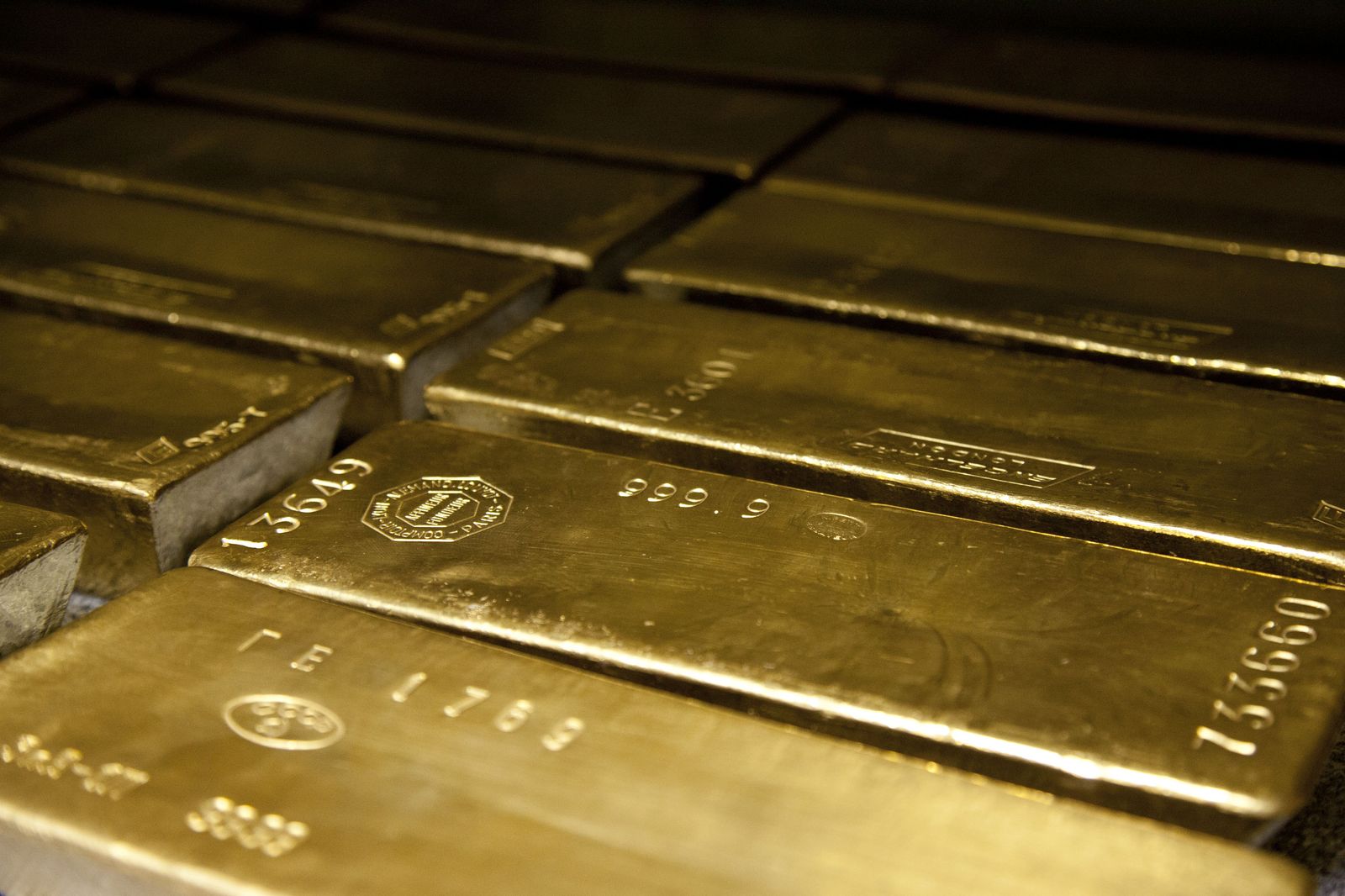
Gold broke above $4,200 an ounce on Friday, October 9, barely three weeks after the Federal Reserve raised rates for the first time since 2023. On Thursday, October 8, two central bankers drove the point home: Fed Governor Christopher Waller said he expects further rate hikes if data confirm the trajectory, while St. Louis Fed President Alberto Musalem judged that additional tightening will be needed to bring inflation back to the 2 percent target. At the same time, the People's Bank of China disclosed its 23rd consecutive month of gold purchases, adding 740,000 ounces in September. The signal is unmistakable: inflation is not letting go, and nobody, neither in Washington nor in Beijing, is betting on easing any time soon.
On Thursday in Istanbul, addressing an economic forum hosted by Turkey's central bank, Christopher Waller delivered the line markets both expected and dreaded: if data evolve as anticipated, additional rate hikes will be implemented to return inflation to 2 percent in a timely manner. The caveat matters as much as the promise: those hikes need not come at consecutive meetings, he added, as long as they arrive within an acceptable period. The trading-floor translation: the Fed can skip the October 27-28 meeting and strike in December.
The context for that speech sits in the minutes of the September 15-16 meeting, released Wednesday, October 7. Most participants judged another hike likely appropriate before year-end; 16 of 18 officials expect at least one further increase in 2026. September's vote itself was unanimous, 12-0, for 25 basis points taking the policy range to 3.75-4.00 percent, the first hike since 2023. The minutes add that several participants view current policy as barely restrictive, or not restrictive at all.
Gold does not rise because investors love gold. It rises because they stop trusting the paper around it.
Alberto Musalem put numbers on the calendar. Speaking Thursday in New York at a Bloomberg event, the St. Louis Fed president said more monetary policy firming will be required to bring inflation back to target in a timely manner. If 'timely' means roughly 18 months, he specified, then rates should keep rising over the next six to nine months. Musalem does not vote this year on the policy committee, but his diagnosis sets the tone: the price trajectory demands thinking about more tightening, not about pausing.
What tipped the Fed was months of stubborn inflation. Core PCE prices rose 3.0 percent year-on-year in August, and underlying inflation has run around 2.5 to 3.0 percent since spring 2024, far above the 2 percent target. The minutes name three sources of pressure: geopolitical developments that pushed up crude oil and refined fuel prices, the frenzy of artificial-intelligence investment, and the threat of further tariff increases. The labor market, meanwhile, sits near full employment: 29,000 jobs added in September, a disappointment against the 84,000 expected, but an unemployment rate signaling no emergency.
Markets absorbed the message. On Thursday the S&P 500 shed 0.47 percent to close at 7,765.36 and the Nasdaq Composite 1.25 percent to 27,193.34, the Nasdaq 100 losing 1.4 percent, while the Dow Jones edged up 0.1 percent to 51,231.64. The 10-year US Treasury yield touched 5.29 percent, its highest since 2002, before easing toward 5.23 percent after a well-received 30-year auction. Brent crude jumped 4.2 percent to top $104 a barrel, amid attacks on shipping in the Gulf and the Strait of Hormuz.
The trigger for the tech selloff came from OpenAI: according to financial documents cited in the press, its annualized revenue falls some $20 billion short of previously signaled levels. Nvidia shed nearly 3 percent, Oracle more than 5 percent, AMD and Broadcom around 4 percent. The paradox is striking: the same massive AI investments fueling growth worry the Fed, which sees demand that could durably outrun supply, and frighten markets, which doubt their profitability.
And that is where gold enters the scene. Long yields at 5.29 percent should crush an asset that pays no income. Instead, spot gold broke above $4,200 on Friday, up more than 1 percent on the session, extending a rebound from a two-month low. December futures touched $4,216.30. The explanation runs on two engines: central banks buy relentlessly, and fear buys too, caught between $104 oil and expectations of tighter money.
China leads the charge. The People's Bank of China added 740,000 ounces to its reserves in September, lifting the total to 77.47 million ounces, about 2,409 tonnes. It is the 23rd consecutive month of buying since the cycle began in November 2024, and the largest monthly increase in roughly three years. Remarkably, Beijing bought as gold slid more than 6 percent in September. Buying the dip, methodically, month after month, unbothered by short-term noise.
Diversification has a price, though. The book value of China's gold reserves melted to $323.5 billion at end-September from $350.1 billion a month earlier, a casualty of the price correction. Total foreign-exchange reserves fell $38.1 billion, or 1.11 percent, to $3.4003 trillion, under a strong dollar and falling global asset prices. Per the World Gold Council, China has accumulated about 103 tonnes since January 2026, the year's second-largest sovereign buyer behind Poland. Central banks together bought 39 tonnes net in August alone.
Because the arithmetic of inflation changed sides. After more than five years of inflation above 2 percent, the minutes say it plainly: persistently elevated rates could start contaminating expectations. New York Fed President John Williams preached no urgency last week; Vice Chair Philip Jefferson saw no imminent need for a hike. The majority did not follow: the direction is tightening, and only the timetable is in question. And Donald Trump, publicly demanding lower rates, gives the Federal Reserve one more reason to demonstrate its independence by holding firm.
Because the bond market is already doing part of the work. At 5.29 percent on the 10-year, the tightening of financial conditions is real without the committee lifting a finger: companies borrow dearer, housing freezes, and the term premium swells as buyers demand to be paid for fiscal risk. That is precisely what lets Waller preach flexibility on timing: the Fed can wait out October without losing its bite, because long yields are already doing the squeezing in its place.
Because the nature of inflation has changed. The minutes name AI as a structural inflation risk: if data-center and semiconductor construction pushes demand above supply over the medium term, inflation will not fall on its own. Add $104 oil, tariffs that have not finished rising, and a labor market that refuses to crack: the 2026 Fed faces supply inflation as much as demand inflation, the hardest kind to treat with the policy rate alone. The September minutes confirm it line by line.
Beijing watches the dollar as a weapon, not a currency. Every ounce bought since November 2024 is a vote against concentration: fewer US Treasury bonds, more of an asset nobody can freeze by decree. At 77.47 million ounces, gold remains a modest share of China's $3.4 trillion reserves, but the direction has held for twenty-three months. Washington sees a rate cycle; Beijing sees a confidence cycle. Our Factbook's China file traces that pivot.
Geopolitics vindicates the gold buyers. Attacks on shipping around the Gulf and the Strait of Hormuz propelled Brent above $104, and Donald Trump said he would refrain from striking Iran before the November 3 midterm elections: a reprieve, not a resolution. Every $104 barrel is a tax on global growth and fuel for US inflation. It is exactly the cocktail that pushed the Fed to hike in September.
Macroeconomics tells a risk-premium story. The United States borrows at 5.29 percent on the 10-year with public debt beyond 115 percent of GDP; Musalem himself denounced an unsustainable fiscal path. When the world's most creditworthy state pays top dollar to borrow, gold, which depends on nobody's promise, becomes the asset of last resort again. Record September inflows into gold ETFs confirm that institutional portfolios have absorbed the lesson.
History warns against easy comparisons. The last time the Fed resumed a hiking cycle after a pause, inflation eventually subsided; this time it is re-accelerating with long yields already at twenty-four-year highs. The gold rush recalls 1979-1980, but the mechanics differ: it is no longer households rushing for coins, it is central banks accumulating tonnes, month after month, for reasons of state.
The structural trend is the most durable of the five dimensions. Central-bank gold demand is no longer an episode, it is a regime: 170 tonnes bought net over the first eight months of 2026, China and Poland in the lead, Uzbekistan lurking. As long as the dollar's share of world reserves keeps shrinking and real rates stay hostage to deficits, the floor under the metal stays thick.
What to watch first: the Fed's October 27-28 meeting. Futures price an 82.8 percent chance of a hold, and the market has moved its bet to December, whose December 8-9 meeting is now the expected venue for the next hike, with odds near 83 percent. October inflation prints and the jobs data will decide: one upside surprise, and October becomes an option again.
What to watch next: the People's Bank of China's October data, due in early November. A 24th month of buying would confirm the floor under gold is institutional, not speculative. Local premiums on physical gold as Chinese markets reopen after Golden Week will give the pulse of household demand.
Finally, oil and politics. If Brent holds above $100, year-end US inflation will carry its mark, and the Fed will not have the luxury of waiting. The November 3 midterms add a constraint: no central bank likes moving a week before an election, but Waller warned that hikes need not be consecutive, only timely. The countdown has begun.
The Western read is about credibility, and the market is grading the Fed on a curve. After five years of above-target inflation, Waller's Istanbul speech was less a forecast than a contract: hike when the data say so, skip when they don't, but never let the market doubt the destination. The 82.8 percent October-hold pricing shows traders believe the choreography, not the hesitation.
The deeper Western anxiety is fiscal, not monetary. Musalem's 'unsustainable fiscal path' line, a 10-year at 5.29 percent, and a term premium swelling on deficit fears mean the bond market is tightening policy on Washington's behalf. Gold at $4,200 is the receipt: when the safest borrower pays crisis-era yields, investors buy the one asset that owes them nothing.
The Eastern read starts in Beijing, where the PBOC's 740,000-ounce September purchase was the largest in roughly three years and the 23rd in a row. Buying into a 6 percent price slide is not trading, it is policy: every ounce trims exposure to a dollar system that Washington has repeatedly weaponized. Shanghai premiums and Golden Week reopening will show whether households are following the state.
Tokyo and Seoul read the same screen with cooler eyes. A 10-year JGB at multi-decade highs and Korean exporters squeezed between $104 oil and a strong dollar make the Fed's tightening an imported tax. For East Asia, the question is not whether the Fed hikes in December but how much room its own central banks have left to diverge.
The Southern read is about who pays for Washington's medicine. India's Sensex fell 1.64 percent to a 32-month low as foreign investors pulled a record $30.4 billion this year, crushed between high oil, rising global rates, and a sliding rupee. For oil-importing emerging markets, every Fed hike reprices their debt and every $104 barrel widens the import bill.
That is why the South watches gold differently: not as a trade but as a shield. Central banks from Warsaw to Beijing to Tashkent are rebuilding reserves in metal precisely because dollar funding gets dearer when the Fed tightens. The 23-month Chinese buying streak is the loudest version of a strategy many smaller central banks are quietly copying.
Probably not. Futures price an 82.8% chance of a hold at the October 27-28 meeting, and the September minutes signal no urgency. Waller explicitly opened the door to skipping October: hikes need not come at consecutive meetings. The market has moved its bet to the December 8-9 meeting, now the expected venue for the next increase.
Because two buyers ignore rates: central banks and fear. China accumulates 740,000 ounces a month while $104 oil and Strait of Hormuz tensions feed safe-haven demand. Record September inflows into gold ETFs show institutional portfolios paying an insurance premium against inflation and fiscal risk.
Beijing has methodically reduced its concentration in dollar-denominated assets since November 2024, twenty-three months running. At 77.47 million ounces, gold stays modest against $3.4 trillion in reserves, but the direction is constant. It is a structural vote of no confidence, not speculation: an asset nobody can freeze by decree, against US Treasury bonds.
The Fed's October 27-28 meeting, then December 8-9, where the market expects the next hike at near-83% odds. In between: October inflation and jobs prints, which will decide. In early November, the People's Bank of China data will show whether a 24th month of gold buying confirms the institutional floor under the metal.
