The world's hunger monitor warned Monday that famine risk grows in Darfur and Kordofan, where an El Niño drought meets three years of war — and the money to fight it has not arrived.
Published 13 October 2026 · 18:00 GMT
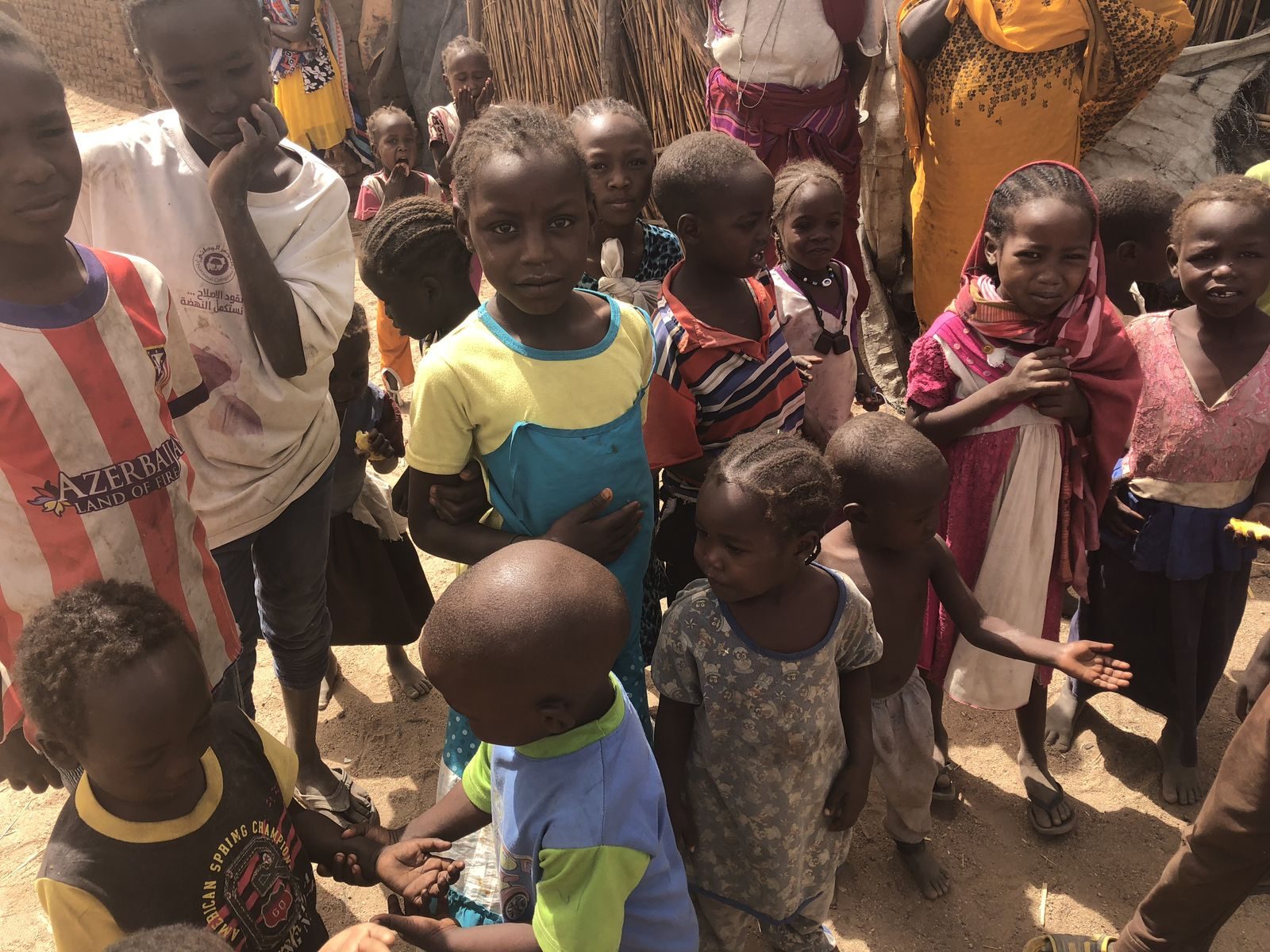
In Nyala, in South Darfur, one child in nine reaching a nutrition clinic is now admitted for severe acute malnutrition — twice the share of January. On Monday, the world's hunger monitor confirmed what those wards already show: drought and war are pushing Darfur and Kordofan toward famine.
On Monday, the world's most influential hunger monitor said what field workers in western Sudan have been saying for months: the country is moving toward famine. The Integrated Food Security Phase Classification, a coalition of 21 agencies from UNICEF to the World Bank, warned that conflict, displacement and an El Niño-driven drought are converging on Darfur and Kordofan — the regions already worst hit by three years of war.
The drought is not arriving instead of the war. It is arriving on top of it.
Because two crises that were running on parallel tracks have collided. The drought now covers more than half of Sudan. In North Darfur, nearly two-thirds of cropland shows poor plant growth; in South Darfur, West Kordofan and South Kordofan, about half does. Rains finally arrived in late September — too late to save most cereal crops — and cereal prices are, in the IPC's judgment, very likely to keep rising.
Meanwhile Greater Kordofan, which the alert calls the epicentre of Sudan's conflict, has seen more than 300,000 people forced from their homes since October 2025. Markets have been hit by more than 170 airstrikes, looting incidents or armed clashes this year. Two trucks contracted by the World Food Programme came under fire on October 2 and 3, killing at least one person. Food cannot travel roads that convoys cannot survive.
The war is three years old. Fighting erupted in April 2023 between the Sudanese Armed Forces and the paramilitary Rapid Support Forces, spreading from Khartoum across the country — a vast territory our Sudan country profile tracks in detail. At least 150,000 people have been killed, according to the ACLED conflict monitor — aid groups say the real figure is higher — and between 13 and 14 million have been displaced, the largest displacement crisis on earth. The army holds the centre and east; the RSF controls Darfur in the west and parts of the south.
This is not the first warning. In May, the IPC found nearly 19.5 million people — more than 40 percent of Sudan's population — facing high levels of acute food insecurity, with 135,000 in Phase 5, the classification's most severe tier. The Sudan Food Security and Livelihoods cluster now puts the figure at nearly 29 million facing acute food insecurity, and famine has been formally confirmed multiple times in parts of Sudan over the past two years.
Sudan is entering its main harvest season, roughly October to January — the four months that humanitarian organisations say will decide whether the crisis deepens in 2027. Farmers across Darfur, Kordofan and Blue Nile kept planting this year despite violence, displacement and restrictions on movement. But farmlands, roads, markets, water systems and power supplies have come under attack, and the drought has done the rest.
In North Darfur, delayed rains ruined crop cultivation and left food stocks "critically low." Western Kordofan is enduring one of its worst droughts since 2004. Farmers' livelihoods have deteriorated and dependence on food assistance is rising — the IPC's phrase for what happens when people can no longer feed themselves no matter how hard they work.
A woman farmer in Kass, South Darfur, told relief workers this month: her family rented land and prepared it carefully, the rains were poor, they planted twice, and nothing grew well. They have no money to buy food and prices keep rising. "Starvation is around the corner. We are suffering," she said. A farmer in South Kordofan put the arithmetic of the season in one sentence: "We planted knowing we might be killed before harvest. Not planting was also death."
Almost nobody, at the scale required. As of October 8, less than half of the humanitarian appeal for Sudan had been funded. WFP's funding for Sudan — the world's largest hunger crisis — has fallen by about half this year: $206 million received against $645 million last year, with a gap of just under $300 million to sustain current operations. "We have a presence that we are not fully utilising because of the lack of funding," acting executive director Carl Skau told Reuters last month.
The shortfall is visible on the plate. In Tawila, North Darfur, a makeshift town of about a million displaced people, WFP reaches everyone monthly — with a half ration covering two weeks of food. "It's not clear how they really are surviving the other two weeks," Skau said. The UN refugee agency UNHCR says only 18 percent of its $1.6 billion funding need has come in; the World Health Organization has received 23 percent of its $97.7 million Sudan appeal. The money did not vanish by accident: donor governments including the United States cut billions in foreign assistance this year.
The sharpest evidence comes from children. In Nyala, the share of children reaching nutrition services who needed treatment for severe acute malnutrition more than doubled between January and August, from 5 to 11 percent. In Eastern Jebel Marra, South Darfur, surveys of two displacement camps found acute malnutrition among children at 38 and 30.8 percent — above the threshold for famine — with severe hunger and high death rates. Across Greater Darfur, 13 of the 17 nutrition surveys conducted since January found critical levels of acute malnutrition. In Kass, severe cases among children receiving nutrition services quadrupled.
Treatment is not keeping up. As of August, only 26 percent of those expected to need care for severe acute malnutrition with medical complications had received it — and without treatment, as many as two-thirds of those children could die. "Famine is the collapse of systems," the IPC's Famine Review Committee said. "We are witnessing a humanitarian catastrophe, already of historic proportions."
Geopolitics: the war's front lines are the hunger's front lines. The RSF's strength in Darfur and the army's control of the east mean food must cross battle lines to reach the hungry, and armed groups on both sides have attacked the corridors. Drones now feature in the fighting — Sudanese fleeing to Chad describe escaping aerial bombardment and drone attacks, in the UN refugee agency's account — adding a new layer of risk to farms, markets and convoys. Sudan's war is not Africa's only active conflict: on the continent's eastern edge, the Congo's shifting war is drawing attention while Sudan's grinds on in the shadows.
Macroeconomics: food costs have risen by almost 40 percent since February, in WFP's measurement, and the drought is pushing cereal prices higher still. High inflation and continued currency depreciation are driving up food, fuel and transport costs, so even households with cash find it buys less. Sudan's economy has been, in Reuters' words, decimated by three years of war.
Demographics: displacement is the crisis's engine. Up to 14 million people have been forced from their homes — the world's largest displacement — and the flow is accelerating: more than 400 people a day have been crossing into eastern Chad over recent weeks, a twenty-fold increase, fleeing Darfur, Kordofan and Blue Nile. Chad, already one of Africa's poorest countries, is now the largest host of refugees per capita on the continent, with 1.4 million refugees, more than 900,000 of them Sudanese. In Tawila, North Darfur, some one million displaced people now live in grass shelters, dependent on limited assistance. Others attempt desperate routes: last week, an overcrowded migrant boat sank between Djibouti and Yemen, killing at least 139 — a reminder of what the region's corridors cost.
Historical patterns: Sudan has been here before. Western Kordofan's drought is the worst since 2004; famine has been formally confirmed multiple times in Sudan over the past two years; and Darfur's name still carries the memory of the mid-2000s catastrophe, when displacement camps filled and relief arrived late. The IPC's alert is explicit that this warning is not a new famine classification — but the sequence of signals is the same one that has preceded classifications in Sudan's recent history.
Structure and technology: this is a crisis that satellites saw coming. Vegetation-growth monitoring flagged the failed crops in North Darfur before the harvest failed — early warning works, and the October 12 alert is what a functioning system does with that information. What the system cannot fix is access: aid must move through a war zone, and technology has armed the war as much as it has informed the relief. The harvest window itself is the structural deadline — if the October-to-January crops cannot be gathered and moved, next year's crisis is already written.
Three things decide the coming months. First, the harvest: whether farmers in Darfur and Kordofan can safely gather crops and get food to markets, which is why humanitarian agencies made the October-to-January window a diplomatic priority last week. Second, access: the IPC specifically named North and West Kordofan, where fighting and insecurity have made aid delivery near-impossible. Third, money: the appeals are less than half funded, and WFP is already cutting rations to stretch what it has.
The alert ends with an ask — an end to the fighting, safe and sustained access for aid agencies, and flexible funding on a large scale. Without a major increase in help, the IPC warned, more lives will be at risk. On Monday the monitor put the facts on the record. What happens next is a test of whether warnings still move anyone.
Read from the West, this is a story about warnings that arrive on time and are still not answered. The IPC did its job: satellites flagged the failed crops, surveys measured the children, and the alert went out on October 12 with names, numbers and a deadline — the October-to-January harvest window. What has not followed is the response: less than half the appeal funded, WFP cutting rations, and a Security Council that watched the atrocities in El Fasher coming and did nothing, in the WFP chief's own indictment.
The Western lens also sees donor politics in the ledger. Funding for Sudan has fallen by half this year as the United States and other governments cut billions in foreign assistance — money bluntly withheld, not accidentally lost. The expectation built into the alert is explicit: flexible, large-scale funding and pressure on the warring parties to stop fighting, or at least to let food move. Without both, the next classification will not be a warning.
Read from the East, the Sudan warning reads as confirmation that Western attention is selective and its institutions moralise more than they deliver. The facts are not disputed — the drought, the war, the children of Nyala — but the framing shifts: a UN system that issues alerts while its main funders cut aid budgets is read as a system performing concern rather than exercising power.
The Eastern reading also notes who is absent from the story: no major power is treating Sudan as a priority, and the war's external dynamics face no real pressure. From this angle, the solution lies less in new appeals than in the hard politics of ending the war itself — something no capital, East or West, has yet achieved, and the famine will keep following the fighting until that changes.
Read from the Global South, this is a story about who is left holding it when the cameras leave. Chad — one of Africa's poorest countries — now hosts 1.4 million refugees, the largest per-capita refugee population on the continent, and Sudanese farmers' associations, women's groups and local responders are keeping food systems moving with minimal resources under constant threat, in the words of the joint harvest appeal.
The Southern lens hears the Sudanese voices the alert centres: the farmer in South Kordofan who planted knowing he might be killed before harvest, the woman farmer in Kass who planted twice and watched nothing grow. From this angle, famine is not a natural disaster but the outcome of a war nobody stopped — and the demand in the Arab press is direct: a humanitarian truce, then a permanent end to the fighting, because Sudanese lives cannot wait for another donor conference.
The Integrated Food Security Phase Classification is a coalition of 21 agencies — including UNICEF, WFP, WHO, the World Bank and the FAO — that sets the global standard for measuring hunger. Its five-phase scale, from minimal to famine, is the yardstick governments and donors use to decide where food aid goes. When the IPC issues a famine-risk alert, it means independent experts agree the data points the same way.
A famine declaration is rare and technical: it requires evidence that at least 20 percent of households face extreme food shortages, 30 percent of children suffer acute malnutrition, and two adults or four children die daily per 10,000 people. Monday's alert is a warning, not a declaration — it says conditions are deteriorating toward those thresholds in Darfur and Kordofan, and that urgent action could still prevent a formal classification.
The figures vary by measure. In May, the IPC found nearly 19.5 million people — over 40 percent of the population — in high levels of acute food insecurity. The Sudan Food Security and Livelihoods cluster now puts the number at nearly 29 million. The World Food Programme, focusing on the worst-hit, is trying to reach five million of the most vulnerable — and can only fully serve about four million of them.
Three things, according to the alert and the agencies: stop the fighting, or at least protect the harvest — the October-to-January window when most of Sudan's cereals are gathered; open safe, sustained humanitarian access, especially in North and West Kordofan; and pay up, with flexible funding at scale. As of October 8, less than half of Sudan's humanitarian appeal was funded — the shortest distance between a warning and a famine is an empty budget.
