The buses finally came: how a four-day truce opened the road out of Oleshky
For four days the guns fell silent around a ruined town on the Dnipro's eastern bank, and on Friday buses carried out residents who had survived months without food, water or medicine; some toward Russia, some on a long road back to Ukraine. Both sides call it a success. Neither calls it a precedent.
Published 30 October 2026 · 18:20 GMT
The summary
On Friday, October 30, 2026, buses began evacuating stranded residents from Oleshky, a Russian-occupied town in Ukraine's Kherson region, under a localized ceasefire now in its fourth day; the longest pause in fighting anywhere on the front line since 2022. The ceasefire took effect at 3:00 a.m. on Tuesday, October 27, and is scheduled to run until 10:59 p.m. on Sunday, November 1.
The three lenses
- WestThe West: a humanitarian breakthrough, read through American mediation Seen from Western newsrooms, Oleshky is first and foremost a story about an extraordinary American intervention.
- EastThe East: mechanics over miracle; Japan and Singapore count the hours, the mines and the buses Eastern coverage is notably procedural.
- Global SouthThe Global South: relief for Oleshky, war for everyone else Southern coverage leads with the human catastrophe and refuses to let the diplomacy launder it.
Key facts
- On Friday, October 30, 2026, buses began evacuating stranded residents from Oleshky, a Russian-occupied town in Ukraine's Kherson region, under a localized ceasefire now in its fourth day; the longest pause in fighting anywhere on the front line since 2022. CNN (Oct 30, 2026)
- The ceasefire took effect at 3:00 a.m. on Tuesday, October 27, and is scheduled to run until 10:59 p.m. on Sunday, November 1. Both sides say neither has violated it. Ukrainska Pravda (Oct 30, 2026)
- About 2,000 of the town's pre-war 24,000 residents remained by early October, according to the UN human rights office; including 35 children. Ukraine says 527 of them will return to Ukrainian-held territory. NHK World-Japan (Oct 27, 2026)
- Twenty-five buses with 750 seats, nine ambulances and special transport for some 30 bedridden residents were assembled for the evacuation; registration closed at 2:00 p.m., with aid distribution starting afterwards. Kyiv Post (Oct 30, 2026)
- Evacuees bound for Ukraine are travelling a circuitous route: Oleshky to Armyansk in Crimea, then to Anapa in Russia, then by Russian defence ministry plane to Gomel, Belarus, and on by bus to the Chernihiv region; expected to reach the Ukrainian border on Saturday. Al Jazeera (Oct 30, 2026)
- Demining of the designated routes, launched after the truce took effect, was completed on Thursday. Two people, including a Russian sapper, were killed in the demining operation, according to Russia's human rights commissioner. Devdiscourse (Oct 30, 2026)
What finally got the buses moving in Oleshky?
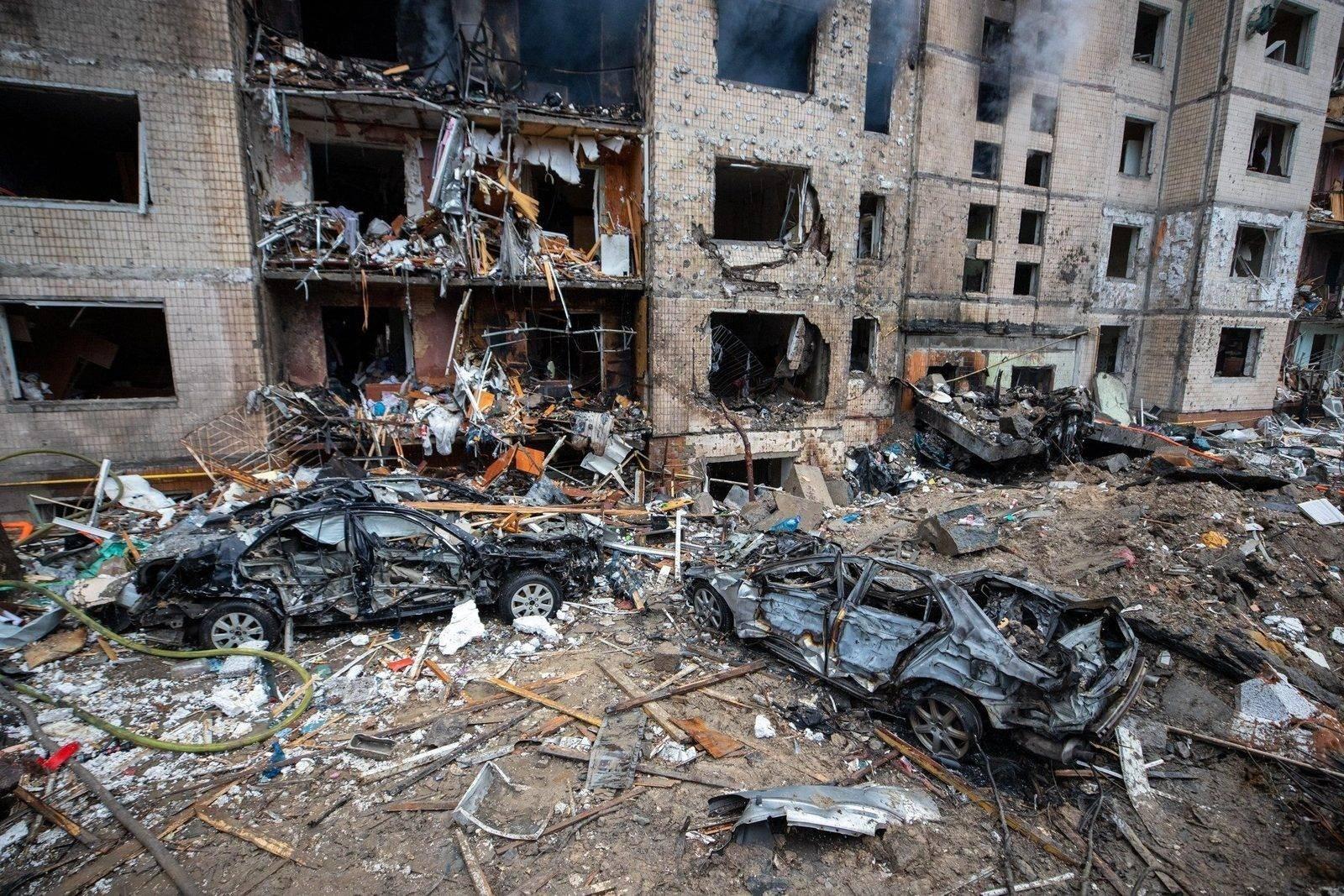
On Friday morning, buses rolled into Oleshky, a ruined town on the eastern bank of the Dnipro river in Ukraine's Kherson region; the first time in nearly five years of war that Russia and Ukraine have mounted a joint humanitarian operation. Residents who had survived months without food, water, medicine, electricity or gas boarded the buses with bags of belongings; some were bound for Russia, others for Ukrainian-held territory. The evacuation is taking place under a localized ceasefire that took effect at 3 a.m. on Tuesday, October 27, now in its fourth day; the longest pause in fighting anywhere on the front line since Russia launched its full-scale invasion in 2022.
Oleshky was seized by Russian troops in the first days of the invasion. Of roughly 24,000 residents before the war, about 2,000 remained by early October, according to the UN human rights office; trapped by mined roads and drone-patrolled approaches, with no electricity, heat or running water as winter approached. Former residents told Agence France-Presse that some of those left behind had been reduced to hunting and eating pigeons. Ukrainian authorities say the town ran out of food and other supplies in September.
The truce, which both sides confirmed, expires on Sunday evening. On Friday, Ukrainian negotiator Davyd Arakhamia said "evacuation and distribution of humanitarian aid have begun," while Russia's human rights commissioner Yana Lantratova posted video of residents gathering at the evacuation point.
What do both sides actually agree happened on Friday?
Unusually for this war, the mechanics of the day are undisputed. Twenty-five buses with a total capacity of 750 seats, nine ambulances, and special transport for some 30 bedridden residents were assembled; registration for those who decided to leave closed at 2 p.m., with humanitarian aid distribution beginning afterwards. Demining of the designated routes, launched after the ceasefire took effect, was completed on Thursday; though Russia's human rights commissioner said two people, including a Russian sapper, were killed during the demining operation.
The route for evacuees bound for Ukraine is deliberately circuitous: from Oleshky to Armyansk in northern Crimea, then to the Russian city of Anapa, then by a Russian defence ministry military transport plane to Gomel in Belarus, and finally by bus into Ukraine's Chernihiv region. The first evacuees are expected to reach the Ukrainian border on Saturday. Ukraine's prime minister, Serhiy Koretskyi, said 527 residents would return to Ukrainian-held territory, and preliminary medical assessments were being organized for them.
The numbers tell the scale of the siege: the UN human rights office estimated about 2,000 people remained as of early October, 35 of them children; Ukrainian authorities put the number of children at 50. Ukraine's human rights commissioner Dmytro Lubinets said the ceasefire had held for more than 80 hours, "neither side has violated the ceasefire even once", and called it the first time since 2022 that a ceasefire had been established across such an extensive stretch of the front line and held this long. All of this unfolded while G20 foreign ministers meeting in Atlanta kept the war's wider diplomacy moving; the contrast between the two tracks could hardly be sharper.
What is still missing from the picture?
The most basic figure, how many people actually left on Friday, remained unclear on Friday evening. Al Jazeera reported that the number was still unknown; the BBC said hundreds were evacuated and hundreds chose to stay. Nor is it established that aid will reliably reach everyone who stays: Lubinets promised that "everyone in need of help would get it," but the town has no electricity, heat or running water, and winter is approaching. Most fragile of all is what happens after Sunday evening: Al Jazeera, reporting from Kyiv, said residents near Oleshky were seeing signs of military resupply on both sides, suggesting they "may possibly be bracing for the fighting to continue."
Why does a town of 2,000 matter to a war of millions?
Oleshky matters because it is a proof of concept: a local ceasefire that actually held, joint demining by two armies that are still killing each other elsewhere, and a humanitarian corridor administered in person by the human rights commissioners of both countries. The sight of Lubinets and Lantratova side by side, a first for a senior Ukrainian official in occupied territory, per CNN, is itself a political event.
It also matters because of who mediated it. The White House says the ceasefire was brokered by US First Lady Melania Trump, and Ukraine's negotiators describe the deal as reached in coordination with her. That makes Oleshky a test case for a distinctive American mediation style, personal, informal, and operating outside the foreign-ministry machinery, at a moment when Russia and Ukraine have agreed to meet at technical level in Abu Dhabi in the first half of November. Whether a first lady's phone calls can scale into a peace process is now an open question in three capitals.
The third reason is winter. Oleshky's suffering, starvation reports, freezing temperatures, a flooded town with no utilities, is a preview of what the coming months hold wherever the fighting continues. Even Pope Leo telephoned Vladimir Putin on October 16 to press for a ceasefire to get food into the town, and followed up with Volodymyr Zelenskyy three days later. And the war has not stopped elsewhere for a moment: the fragility of previous US-brokered understandings is well documented, and a Russian drone strike killed 14 people at a Dnipro railway station on Thursday; the day before the buses moved. A truce for one town is relief for one town; the scale of the gap is the story.
How did a first lady end up negotiating a ceasefire?
The answer is the channel, not the person. The Oleshky operation was coordinated by the two countries' human rights commissioners, Lubinets for Ukraine, Lantratova for Russia, a technical line of contact working daily since the humanitarian mission was effectively launched on October 23. Ombudsmen are among the few officials on either side with a mandate legible and tolerable to the other: their business is civilians, not territory.
The American role is real but carefully staged. The White House says Melania Trump mediated the ceasefire; Russian state media showed the convoy accompanied by journalists from France, Italy, Russia, Ukraine and the United States; and Fox News published the Lantratova-signed document laying out the Anapa–Gomel air bridge. The staging serves both sides: Moscow demonstrates it can be a constructive humanitarian partner on camera, Kyiv gets its citizens out. Eighty hours without a single reported violation is the statistic that made the buses possible; and the only currency in which further local truces can be bought.
What does Oleshky change; and what does it leave unchanged?
What changes is the precedent file. The Oleshky model, joint demining, ombudsmen-led coordination, evacuation through third countries, aid distributed to those who stay, now exists as a tested procedure that the Abu Dhabi technical talks can reference. It validates the human-rights-commissioner channel as the most functional bilateral line between Moscow and Kyiv. And it puts 527 Ukrainians on the road home through Anapa and Gomel, which is a concrete outcome no communiqué can match.
What it does not change is the war. The Kremlin's spokesman Dmitry Peskov called the operation an "isolated situation" that is "difficult to extrapolate to the entire settlement process"; a framing Moscow will defend at every future negotiation. Russian state television showed aid boxes destined for Oleshky decorated with the Russian flag: the humanitarian operation is also a public-relations operation, and both sides know it.
Nor does it change the economics of escalation. The same week the buses moved, Russia and Ukraine kept striking each other everywhere else, Kyiv's Southern Bridge and subway infrastructure on Tuesday, a Dnipro railway station on Thursday, and both sides visibly resupplied near Oleshky itself. the earlier US-brokered energy ceasefire held a different line, but the front line did not move. A four-day truce is a humanitarian fact; it is not yet a strategic one.
What happens when the truce expires on Sunday?
The ceasefire is scheduled to end at 10:59 p.m. on Sunday, November 1, and the first evacuees should reach the Ukrainian border on Saturday. Zelenskyy has said the truce will likely last "several days," and 80-plus hours of perfect compliance gives both sides a reason to extend it; but residents near Oleshky report military resupply on both sides, and the Kremlin calls the operation an "isolated case." The Abu Dhabi technical-level meeting in the first half of November will be the first forum where both sides argue over what Oleshky proved. Watch two indicators above all: whether demining of the remaining routes continues after Sunday, and whether a second town gets a truce. One truce is an exception. Two is a pattern; and patterns are what end winters.
The three lenses
West Lens:
The West: a humanitarian breakthrough, read through American mediation Seen from Western newsrooms, Oleshky is first and foremost a story about an extraordinary American intervention. CNN's account centers on Lubinets' unprecedented journey into occupied territory and the striking logistics of the Anapa–Gomel air bridge; France 24 frames it as the first joint Russia–Ukraine humanitarian operation of the war. The Western reading is cautiously hopeful but institutional: the question is whether a first lady's mediation can be converted into a durable diplomatic instrument.
East Lens:
The East: mechanics over miracle, Japan and Singapore count the hours, the mines and the buses Eastern coverage is notably procedural. NHK World-Japan led with the UN human rights office's figures, 2,000 remaining, 35 of them children; and Zelenskyy's careful formulation that the ceasefire would "likely last several days"; its follow-up noted that Russia had halted attacks while strikes continued elsewhere, including on a Kyiv park with a connection to Japan. Singapore's Channel NewsAsia foregrounded the mechanics: the 4 a.m. halt, the Southern Bridge strikes, the Abu Dhabi talks set for November.
South Lens:
The Global South: relief for Oleshky, war for everyone else Southern coverage leads with the human catastrophe and refuses to let the diplomacy launder it. Al Jazeera calls the operation "the first of its kind in four years and eight months of war" and keeps the camera on the residents queuing with bags; Al Arabiya details the buses bound in both directions and Pope Leo's October 16 call to Putin; Free Malaysia Today's AFP-sourced account dwells on the pigeons, the crying residents in Lubinets' videos, and the flooded town facing winter. The southern reading is the most skeptical of extrapolation: one town's truce does not feed the rest of the front, and the resupply both sides are conducting near Oleshky suggests the guns are being cleaned, not retired.
The consensus
- What we agree on
- We agree: the evacuation of Oleshky's stranded residents began on Friday, October 30, under the first local Russia–Ukraine ceasefire of the war's fourth year; buses left for both Russia and Ukrainian-held territory, aid flowed in, and no incidents were reported on day one.
- What we don't agree on
- We disagree: whether the Trump-brokered truce is a template for wider de-escalation, as Kyiv hopes, or a one-off humanitarian performance that lets both sides resupply, as Moscow's 'isolated case' framing, and the visible rearmament near Oleshky, suggests.
- What we know
- What we know: the mechanics are settled; 25 buses with 750 seats, aid after the 2 p.m. registration deadline, a circuitous route via Anapa, Gomel and Belarus to Chernihiv, demining completed Thursday, the ceasefire running 3:00 a.m. October 27 to 10:59 p.m. November 1, some 2,000 residents remaining, 527 expected back in Ukraine.
- What we don't know yet
- What we do not know: how many people actually left on Friday; whether aid reliably reaches those who stay; and what happens when the truce expires on Sunday evening; extension, lapse, or a return to the mines.
- What we expect
- What we expect: the Abu Dhabi technical-level talks in the first half of November will cite Oleshky as precedent; the fighting will continue everywhere else in the meantime; and the approaching winter will deepen the humanitarian crisis wherever no truce reaches.
Questions, answered
Who brokered the Oleshky ceasefire?
The deal was reached by Ukraine's human rights commissioner Dmytro Lubinets and Russia's Yana Lantratova, in coordination with US First Lady Melania Trump; the White House says she mediated it. The Russian defence ministry confirmed the ceasefire, which took effect at 3:00 a.m. on October 27 and is scheduled to run until 10:59 p.m. on November 1.
How do evacuees get from Oleshky back to Ukraine?
Through a circuitous route agreed by both sides: buses from Oleshky to Armyansk in Crimea, then to Anapa in Russia, then a Russian defence ministry military transport plane to Gomel, Belarus, and finally buses into Ukraine's Chernihiv region. The first evacuees are expected to reach the Ukrainian border on Saturday.
How many people are still in Oleshky?
About 2,000 of the pre-war 24,000 residents remained as of early October, per the UN human rights office; 35 of them children, though Ukrainian authorities say 50. Hundreds were evacuated on Friday and hundreds chose to stay, according to the BBC; aid distribution continues for those who remain.
Will the ceasefire be extended past Sunday?
It is scheduled to end Sunday evening, November 1. President Zelenskyy has said it will likely last 'several days,' and it has held for more than 80 hours without a reported violation. But both sides show signs of military resupply near Oleshky, and the Kremlin calls the operation an 'isolated case'; so an extension is possible, not promised.
Sources
- CNN (Oct 30, 2026)
- Ukrainska Pravda (Oct 30, 2026)
- NHK World-Japan (Oct 27, 2026)
- Kyiv Post (Oct 30, 2026)
- Al Jazeera (Oct 30, 2026)
- Devdiscourse (Oct 30, 2026)