Ethiopia's border clashes push up to 50,000 into Kenya; and Moyale's camps are running dry
Fighting between Oromia and Somali regional forces in the border town of Moyale has displaced tens of thousands into Kenya's Marsabit County, where food, water and medicine are running short and the UN warns more crossings are coming.
Published 30 October 2026 · 02:29 GMT
The summary
Fighting between forces of Ethiopia's Oromia and Somali regional states broke out in Moyale, the border town on the Kenya frontier, on 18 October, in a dispute over the raising of a Somali regional flag in a zone administered by Oromia; the killing of a 13-year-old girl the same day sharpened the tensions. At least nine people have been killed, per a hospital official on the Ethiopian side cited by Reuters on 23 October; at least eight people in Kenya have been injured by stray bullets linked to the fighting.
The three lenses
- WestWest; From the West, this is a story told in racing numbers and humanitarian alarm.
- EastEast; From the East, this is a story told through the United Nations.
- Global SouthSouth; From the Global South, this is a story told from inside the camps.
Key facts
- Fighting between forces of Ethiopia's Oromia and Somali regional states broke out in Moyale, the border town on the Kenya frontier, on 18 October, in a dispute over the raising of a Somali regional flag in a zone administered by Oromia; the killing of a 13-year-old girl the same day sharpened the tensions. Reuters (via Abay Times) (Oct 28, 2026)
- At least nine people have been killed, per a hospital official on the Ethiopian side cited by Reuters on 23 October; at least eight people in Kenya have been injured by stray bullets linked to the fighting. Reuters (via Abay Times) (Oct 28, 2026)
- Up to an estimated 50,000 people had crossed into Kenya by 28 October, UNHCR's representative in Kenya said, citing local authorities; up from about 36,000 a day earlier; most are women and children and the figure remains fluid. Agence France-Presse (via Daily Sabah) (Oct 28, 2026)
- More than 15,000 displaced people are staying in eight temporary shelters in Kenyan Moyale, while over 20,000 others are hosted by relatives and local families; about 200 more are sheltering at a police station in Mandera. Kenya National Commission on Human Rights (press statement, 27 Oct 2026)
- The OCHA flash update of 28 October reported three suspected measles cases isolated in one camp, rising diarrhoeal illness in another, exhausted malnutrition supplies in Marsabit County, and a need for about 100 metric tons of dry rations for two months. Xinhua (via Free Malaysia Today) (Oct 29, 2026)
- The Kenya Red Cross is operating six health service points and plans to assist more than 15,000 people over two months, while UNHCR has sent an emergency team; Kenya has deployed more troops and police to the area. PNTV Africa (Oct 29, 2026)
A flag dispute turns a border town into a battlefield
Fighting broke out in Moyale, the Ethiopian town split by the Kenya border, on 18 October, when a dispute over the raising of a Somali regional flag at an administrative office in an Oromia-administered zone escalated into gun battles between forces of Ethiopia's Oromia and Somali regional states. The killing of a 13-year-old girl in gunfire that day sharpened tensions; by 21 October the clashes were heavy, sustained exchanges between the two regions' forces and armed community members. A hospital official told Reuters on 23 October that at least nine people had been killed.
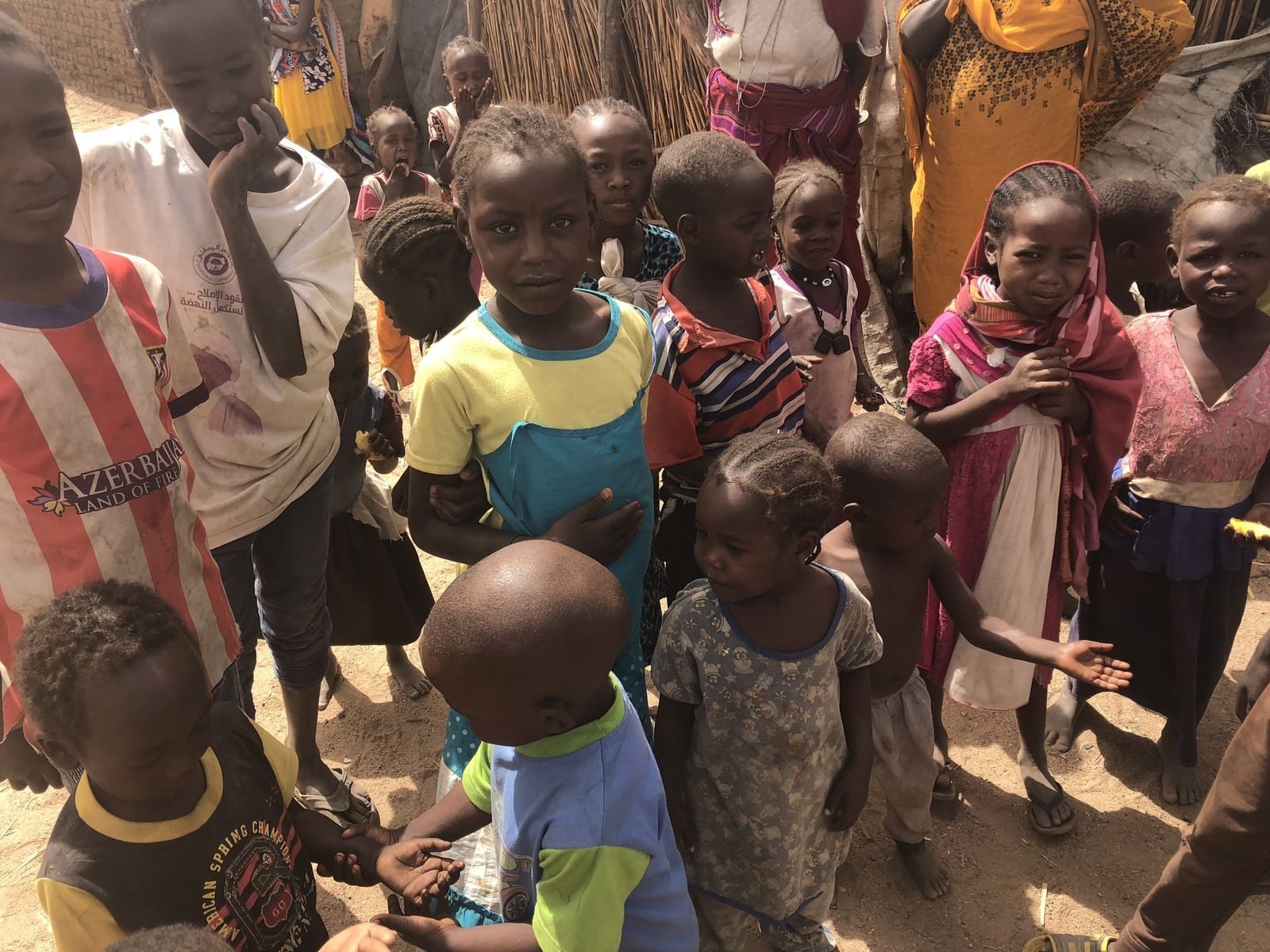
Thousands fled into Kenyan Moyale, in Marsabit County: about 2,500 on 23 October, roughly 35,000 by 26 October, and up to an estimated 50,000 by 28 October, UNHCR's Kenya representative said, citing local authorities; most of them women and children. Kenya has deployed more troops and police to the area.
How many have fled; and where are they now?
More than 15,000 people are in eight temporary shelters on the Kenyan side, St Mary's Catholic Church, Harhosha Secondary School, Manyatta Burji, Sessi and Lanzi Mosque Hospital among them, while over 20,000 are hosted by relatives and local families, the Kenya National Commission on Human Rights and county officials say. About 200 more shelter at a police station in Mandera after localised attacks linked to the conflict. The Kenya Red Cross, which has used up much of its prepositioned emergency stock, runs six health service points and plans to assist more than 15,000 people over two months.
The UN's 28 October flash update reported three suspected measles cases isolated in one camp, rising diarrhoeal illness in another, exhausted malnutrition supplies in Marsabit County, and a need for about 100 metric tons of dry rations for two months. Transport is cut in both directions; trucks cannot cross.
The casualties nobody has counted yet
The full human cost is missing. No verified death toll exists beyond the nine reported on 23 October; the number of civilians killed or hurt by stray bullets is unverified, though Moyale Sub-County Hospital's chief executive said eight people in Kenya were hurt by stray bullets, and Reuters reported a Kenyan woman struck and hospitalised in stable condition. No authority has published a verified count on either side of the border.
The timeline is also disputed: the UN's humanitarians date the eruption to 18 October, Agence France-Presse to 20 October, Kenyan outlets describe the heaviest fighting from 21 to 26 October; and residents reported an easing on 26 October while a Kenyan official said on 28 October that clashes were continuing. Unknown too: the measles lab results, and how many are displaced inside Ethiopia itself.
Why does a flag in one small town displace 50,000 people?
Moyale is jointly administered by the Oromia and Somali regions, making it the physical embodiment of one of Ethiopian federalism's most volatile fault lines: a regional flag on contested ground is a claim of authority, and both regions read it that way. This is why the town keeps erupting; the UN notes violence drove an estimated 20,000 people into Kenya in 2012 and about 20,000 again in 2018, making this the largest exodus in at least eight years and part of a recurring cycle.
It matters because of where the displaced land. Marsabit is one of Kenya's arid counties, already food-insecure before the arrivals; the extra demand for food, water, shelter and services threatens vulnerable households. And the severed Moyale crossing, the main road artery between Ethiopia and Kenya, turns the crisis into a trade and supply shock for the Horn of Africa as well.
The Ethiopian centre's border bargain is failing at Moyale
Ethiopian federalism was designed to give regions self-rule, but where two regions claim the same ground, the design produces a vacuum of authority that regional flags, police and militias rush to fill. The flag-raising was the latest iteration of a dispute over who administers Moyale that has simmered for years; the girl's killing turned a political dispute into a communal one, and Addis Ababa became a distant spectator to a war between its own sub-units.
The pattern is the point: displacement waves of 20,000 in 2012, 20,000 in 2018 and up to 50,000 now mean the underlying dispute has never been settled, only paused. Until the joint-administration question is resolved, which flag flies where, whose police patrol which street, Moyale remains what it has been for a decade: a fuse, waiting for the next spark.
What 50,000 arrivals do to an already-hungry county
The first second-order effect lands on the stomach. Marsabit was food-insecure before a single Ethiopian crossed the border; the 100 metric tons of dry rations the UN says are needed for two months measures how thin the margin was. Poor host communities now feed tens of thousands of guests; and the humanitarian updates warn this crisis can create a second crisis among the Kenyans hosting the displaced.
The second effect is health: overcrowded camps, persistent rain, poor sanitation and suspected measles are the classic ingredients of an outbreak. The third is economic: the severed corridor idles trucks and closes shops on both sides. The fourth is political; inside Kenya, where MPs' inflammatory remarks drew a cohesion-commission complaint, and inside Ethiopia, where fighting is reported spreading beyond one town. A dispute over a flag now strains food, health, trade and politics in two countries.
Will the next rain, or the next flag, bring the next wave?
Three things decide what happens next. First, the gunfire: residents reported an easing on 26 October, but a Kenyan official said on 28 October that clashes were continuing and more people were crossing. Second, the food pipeline: with Red Cross stocks depleted and measles results pending, the coming weeks will show whether the response can match a displacement that tripled in five days. The Kenya National Commission on Human Rights has demanded a coordinated, rights-based response from both governments.
Third, the structural question: who governs Moyale? Watch whether the cohesion commission in Nairobi acts on the complaint against the two MPs, and whether Addis Ababa moves beyond spectator status. The African Union's quiet will also be telling: the Horn's institutions have watched this town burn three times in fourteen years.
The three lenses
West Lens:
West, From the West, this is a story told in racing numbers and humanitarian alarm. Reuters, Agence France-Presse and the Associated Press centre the escalation curve, 36,000 on Tuesday, up to 50,000 on Wednesday; and frame Moyale as a test of regional stability: a Kenyan official warning the fighting has not stopped, Kenya deploying more troops, the UN's emergency machinery spinning up. The Western lens asks whether the violence spills across the border.
East Lens:
East; From the East, this is a story told through the United Nations. Xinhua's reporting carries the UN humanitarian office's voice: deep concern over intercommunal violence, displacement in the thousands, and the disruption of transport, markets and cross-border trade in the Oromia and Somali regions. The Eastern lens frames the crisis as a development and governance failure and measures it by what the displaced are losing.
South Lens:
South; From the Global South, this is a story told from inside the camps. Kenyan outlets carry the county commissioner's appeals, the Red Cross's depleted stocks, the measles scare, women giving birth on camp floors, and the Ethiopian Addis Standard's reporting that fighting spread to Gumi Eldallo, Wachile and Arero. The Southern lens also carries the politics: a Borana elders' council asking Kenya's cohesion commission to investigate two MPs over inflammatory remarks.
The consensus
- What we agree on
- What we agree on: since mid-October 2026, forces of Ethiopia's Oromia and Somali regional states have been fighting in and around Moyale, the border town on the Kenya frontier, after a dispute over the raising of a Somali regional flag and the killing of a 13-year-old girl sharpened tensions; tens of thousands have fled into Kenya, with the UN putting the figure at up to 50,000 on 28 October; most are women and children; and the urgent needs are food, water, shelter, sanitation and healthcare.
- What we don't agree on
- What we disagree on: the precise date the sustained fighting began, 18 October per the UN humanitarians reported by Xinhua, 20 October per Agence France-Presse, 21–22 October per Kenyan outlets, and whether the gunfire has stopped, with residents reporting an easing on 26 October while a Kenyan official said on 28 October that clashes were continuing and more people were crossing. Displacement totals also differ by source and day, from 35,000 to 50,000, and every figure is flagged as preliminary or fluid.
- What we know
- What we know: at least nine people have been killed, per a hospital official cited by Reuters on 23 October; more than 15,000 displaced people are in eight temporary shelters on the Kenyan side and over 20,000 with host families; the Kenya Red Cross and UNHCR are running an emergency response; at least eight people in Kenya have been injured by stray bullets; and Kenya has deployed more troops and police to the area.
- What we don't know yet
- What we do not know yet: the full death toll on either side of the border; the results of the pending measles laboratory tests; how many people have been displaced inside Ethiopia itself; whether the reported easing of gunfire will hold; and whether the Kenyan residents near Sesi who have begun moving for safety will themselves need assistance.
- What we expect
- What we expect: further crossings while the fighting continues; the food pipeline, about 100 metric tons of dry rations for two months, to be the binding constraint; sustained Kenya–Ethiopia humanitarian coordination, including the rights-based response demanded by the Kenya National Commission on Human Rights; and renewed pressure to settle the joint-administration dispute behind the third displacement wave in fourteen years.
Questions, answered
What triggered the fighting in Moyale?
The immediate trigger was a dispute over the raising of a Somali regional flag at an administrative office in a zone of Moyale administered by the Oromia region; in a town the two regions administer jointly. The killing of a 13-year-old girl in gunfire on 18 October sharpened tensions, and the dispute escalated into sustained fighting between the two regions' forces from 21 October. Accounts differ on the precise date the heaviest fighting began.
How many people have fled into Kenya?
The figures have risen daily: about 2,500 on 23 October, roughly 35,000 on 26 October per the Marsabit County commissioner, about 36,000 per UNHCR on 27 October, and up to an estimated 50,000 by 28 October, UNHCR's Kenya representative said, citing local authorities. Most are women and children; more than 20,000 stay with host families rather than in camps.
What do the displaced families need most?
Food is the most urgent need, alongside safe drinking water, emergency shelter, sanitation and healthcare, according to UNHCR and the Kenya National Commission on Human Rights. The UN says about 100 metric tons of dry rations are needed for two months; Marsabit County has run out of supplies to treat moderate acute malnutrition; and three suspected measles cases were isolated in one camp with laboratory results pending. The Kenya Red Cross has used up much of its prepositioned emergency stock.
Is the violence spreading into Kenya?
Kenyan territory has already been hit: at least eight people in Kenya were injured by stray bullets, including a hospital staff member, and a Kenyan woman was struck and hospitalised in stable condition. Kenyan residents near Sesi have begun moving for safety. Kenya has deployed more troops and police, including the Kenya Defence Forces and border patrol units. A Borana elders' council has also asked Kenya's cohesion commission to investigate two MPs over inflammatory remarks on the conflict.
Why does Moyale keep erupting?
Moyale is jointly administered by Ethiopia's Oromia and Somali regions, and the dispute over who governs the town has never been settled; it is a structural feature of Ethiopian federalism in contested towns. Violence drove about 20,000 people into Kenya in 2012 and another 20,000 in 2018, making the current exodus the third wave in fourteen years. Each wave ends with the same wreckage and the same unresolved question: which flag flies where, and whose police patrol which street.
Sources
- Reuters (via Abay Times) (Oct 28, 2026)
- Agence France-Presse (via Daily Sabah) (Oct 28, 2026)
- Kenya National Commission on Human Rights (press statement, 27 Oct 2026)
- Xinhua (via Free Malaysia Today) (Oct 29, 2026)
- PNTV Africa (Oct 29, 2026)