Elon Musk's SpaceX posted a $4.4 billion third-quarter profit on revenue of $14.58 billion, beating Wall Street estimates across the board. Its renamed 'Super Intelligence' unit — renting out data-center computing capacity to Anthropic, Google and others — generated $7.6 billion, becoming the company's biggest business for the first time at 52% of sales, while capital spending nearly tripled to $19.6 billion.
Published 20 October 2026 · 21:52 GMT
On Tuesday, October 20, 2026, SpaceX reported third-quarter results that redraw what Elon Musk's company actually is. Revenue for the three months ended September 30 jumped 161 percent to $14.58 billion, well ahead of the $12.72 billion analysts expected (LSEG data). Net profit was $4.4 billion against $1.57 billion expected — the first quarterly profit since the June stock-market debut.
The real story is artificial intelligence. The renamed "Super Intelligence" unit generated $7.6 billion, about 52 percent of the total: the first quarter in which AI, not rockets or satellite internet, was SpaceX's biggest business. Shares rose about 2.5 percent after hours. Executives presented the numbers on the company's first-ever video earnings call, livestreamed on X, where Musk declared: "We are in an inflection moment for SpaceX across launch, connectivity and superintelligence."
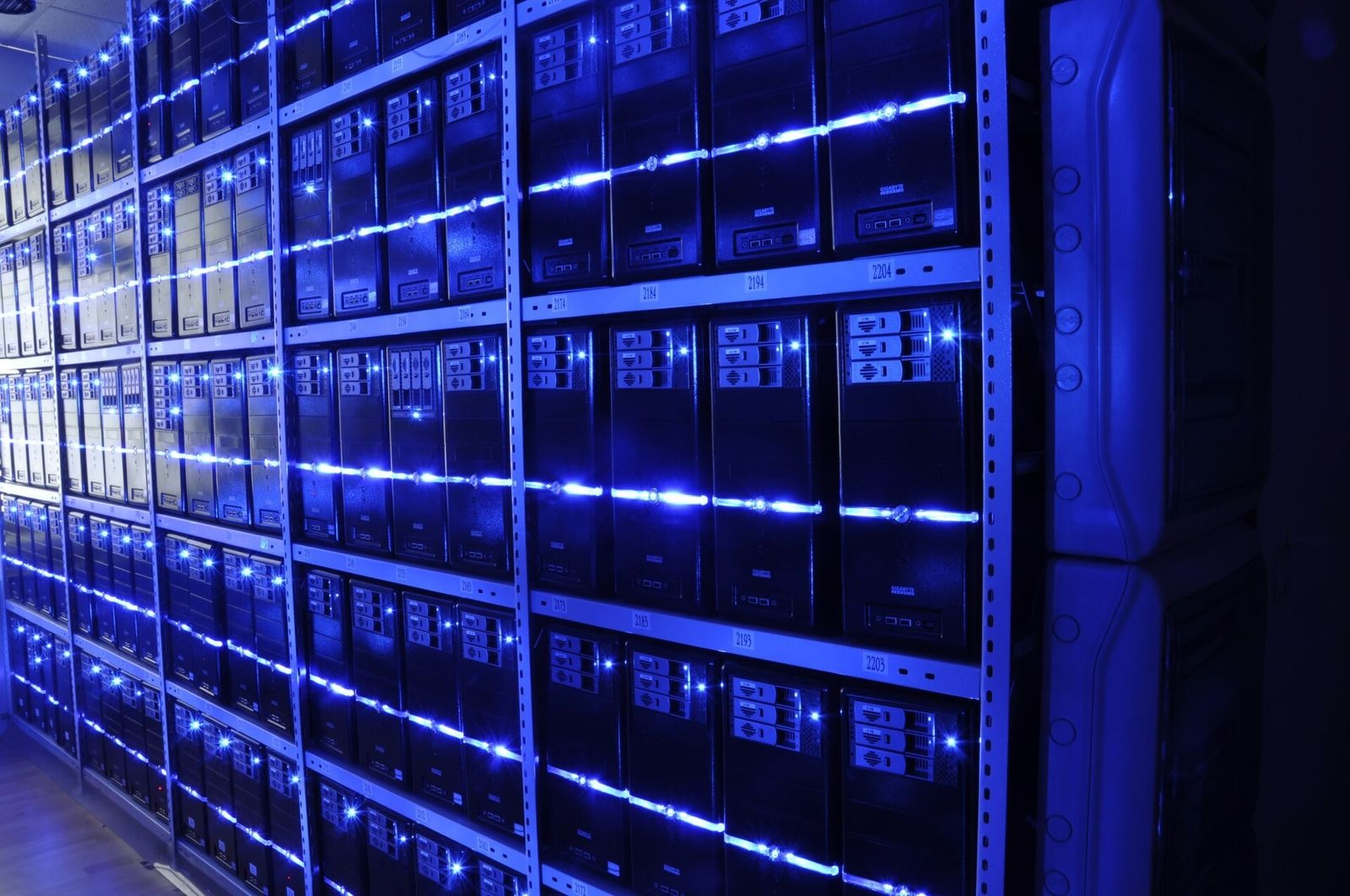
What does the $7.6 billion actually tell us? AI revenue grew roughly ninefold from a year earlier and beat the ~$6.3 billion analysts expected. But the money is not from Grok, the company's chatbot, which Reuters notes trails OpenAI, Anthropic and Google. It comes overwhelmingly from renting data-center computing capacity — including to Anthropic and Google themselves, plus Reflection AI. As Reuters put it, SpaceX earns its AI money "closer to a cloud provider's than an AI lab's." Compute capacity hit 1.7 gigawatts (from 0.6 a year ago), fed by February's xAI acquisition and August's closing of the $60 billion all-stock purchase of Cursor, the AI coding tool now folded into the division.
The second engine is connectivity. Starlink reached 13.6 million subscribers, up from 12 million last quarter and 7.2 million a year ago, beating the ~12.2 million expected. Connectivity revenue was about $5.2 billion, up nearly 70 percent. The cost: average monthly revenue per subscriber has slid to $69 from $99 in 2023 as cheaper plans spread to lower-income markets — a dynamic our reporting on Starlink's fraught entanglement in Ukraine showed carries geopolitical as well as commercial weight.
Launches are now the smallest of the three businesses: the space segment made about $1.8 billion, up 6 percent. Starship — meant to enable higher-bandwidth satellites and even orbital data centers — is still not in commercial service; its first orbital test flight last month ended early after an engine issue. See our earlier coverage of the Artemis–Starship space race for the stakes. And the bill: capex nearly tripled to $19.6 billion, with $16.4 billion (84 percent) poured into AI infrastructure including the Colossus II data-center project. The AI unit remains loss-making operationally; the company warns it needs sustained investment before consistent profits. The cushion: roughly $90 billion in cash.
How real is the Tesla merger talk? It dominated pre-earnings chatter. Barclays suggested a deal could be announced before Tesla's annual meeting, with SpaceX the likelier acquirer; Futurum's Daniel Newman said the quarter's diversification "makes a merger with Tesla feel imminent." But neither company nor Musk has committed to anything, and Tesla reports its own Q3 on Wednesday, October 21 — where Musk faces the question directly.
What are the terms of the AI contracts? Duration, pricing and renewal clauses of the compute deals with Anthropic, Google and Reflection AI are undisclosed — as is customer concentration within the $7.6 billion. That opacity matters: the revenue looks cloud-like, but cloud businesses live on contract visibility.
When does Starship pay for itself? Development costs mount with no commercial revenue yet. Investors also cannot parse how much of the beat came from the roughly $1 billion in bitcoin-recovery and related-party income flagged by TechCrunch. And the launch cadence slipped: 35 launches against a 41 target.
Why is the market cheering a company that spends more than it earns? Because the $7.6 billion answers the question hanging over the entire AI-infrastructure trade: is compute spending converting to revenue faster than feared? For SpaceX, yes — arriving the same week as fresh evidence of the broader AI boom driving chip stocks and the Nasdaq to records. Adjusted EBITDA of about $8.8 billion, up 306 percent, gives the bulls a profit line even as quarterly capex exceeds revenue.
It matters beyond one ticker. SpaceX is now customer, competitor and landlord to the biggest AI labs at once — renting GPUs to Anthropic and Google while its own Grok lags them. That triangle will define compute pricing power for years. And the reckoning over who funds the AI build-out just gained its strangest data point: a rocket company out-earning its launches with server racks. Four months after its IPO, SpaceX has posted its first profit — the open question is whether the conversion survives a downturn in compute pricing.
Strip the quarter to its skeleton and the business has inverted. A decade ago the moat was reusable rockets; today the P&L is a neocloud. The parallel is Amazon: AWS once subsidized retail; here connectivity once subsidized launches, and now compute subsidizes everything. The difference: Amazon's cloud sold to neutral customers, while SpaceX's sells to its direct AI rivals — Anthropic and Google pay for the GPUs they need to beat Grok. Either the most elegant hedge in tech, or a contradiction waiting for a pricing war.
The 5D view: geopolitically, Starlink's cheap-market expansion collides with the sovereignty anxieties the Ukraine episode exposed. Economically, this is the purest test yet of AI-capex-to-revenue conversion — with ~$67 billion in capex expected this year (FactSet), the $90B cash pile is a two-year runway, not a fortress. Demographically, the ARPU slide is the price of going global: the next ten million subscribers will be poorer than the last. Historically, every platform that rented spare capacity — railroads, telecoms, AWS — faced the landlord-vs-tenant margin question. Structurally, the Tesla chatter is about demand integration: Tesla's Terafab chip effort would give SpaceX a captive customer for its gigawatts. The bull case: compute revenue is stickier than launch revenue. The bear case: it is rented revenue — quarterly-priced, concentrated, and exposed the moment hyperscalers decide a rocket company shouldn't be their landlord.
First, the hyperscalers. Google and Anthropic now fund the capex of a company building a rival AI stack. Expect renegotiation pressure — or quiet supplier diversification — the moment contracts allow.
Second, satellite broadband. Starlink at 13.6M subscribers and falling ARPU re-prices every rival: Viasat, SES and the rest now compete against a player whose AI business can absorb connectivity margin compression.
Third, the AI infrastructure trade. If $16.4B of quarterly AI capex becomes $7.6B of revenue within a year, the "GPU bubble" narrative weakens — but only for operators with contracted demand. The funding reckoning splits the market into the contracted and the speculative.
Fourth, energy. 1.7 gigawatts climbing toward Colossus II is a power-grid story; who pays for the electrons becomes local politics in every host jurisdiction.
Fifth, Cursor. A $60 billion coding tool folded into the AI unit bets that developer tooling, not chatbots, is AI's monetizable layer. If Cursor compounds inside SpaceX's distribution, "Super Intelligence" starts to look like strategy, not branding.
Wednesday, October 21: Tesla reports. Musk faces the merger question hours after SpaceX's beat, with Barclays' pre-annual-meeting suggestion giving the chatter a deadline. Watch whether he commits, deflects, or lets the Terafab chip partnership talk.
Q4: does capex stay near $19.6 billion? Management guided spending near current levels. With $90B in cash and ~$67B in expected annual capex, the market will grade each quarter on one metric: does revenue keep outrunning the build?
Starship's commercial debut — and the orbital data-center question. Last month's truncated test flight showed the program still proving itself. The first revenue-generating Starship mission, flagged in the quarter's disclosures, would turn the rocket story from cost center back into growth engine — and unlocks Musk's most audacious idea: data centers in orbit. Until then, the company to watch is not the one that launches rockets. It is the one that rents out the machines that think.
How the West read the beat: the first-profit story Western coverage framed it as a coming-of-age. The Wall Street Journal led with "first profit as a public company" on the first-ever video call, tracing the AI surge to the xAI and Cursor deals. Barron's went forensic — revenue $14.6B vs ~$12.9B expected, AI sales $7.6B vs $813M a year ago, 1.7 GW of compute — but named the weakest metric too: Starlink at 13.6M subscribers against hopes of ~14M.
How the East read the beat: Singapore's wire, Bengaluru's byline The East carried the story through CNA in Singapore , publishing the Reuters wire in full — itself a small East–West study, bylined from Bengaluru and Washington . The substance traveled intact: $14.58B, the $4.4B profit, the ninefold AI surge, 13.6M Starlink subscribers, the ARPU slide from $99 to $69. What the East adds is the context Western coverage hurries past: the cheaper-plan push across Asian and lower-income markets diluting per-user revenue even as subscribers grow, and the region's own hyperscaler ambitions now facing a competitor that launches its own satellites.
Where the South appears: in the customer map, not the newsroom Honesty first: no independent Global South coverage of these results was found this cycle — not in the Al Jazeera or Daily Maverick digests fetched this hour, nor in wider search. The South's presence is as market and terrain, not narrator : the cheaper-plan frontier where Starlink's average revenue is falling from $99 to $69, the lower-income countries SpaceX says it must win at prices those markets can pay. And potentially the ground beneath the build-out: 1.7 gigawatts of data centers is an energy-and-materials story as much as a software one, and Musk's orbital-data-center ambitions would put Southern skies to commercial work.
Revenue of $14.58 billion, up 161% from a year earlier and well above the roughly $12.7 billion consensus, with net profit of $4.4 billion against about $1.6 billion expected. It was the first quarterly profit since the June IPO. The AI ('Super Intelligence') unit generated $7.6 billion — 52% of sales — while Starlink reached 13.6 million subscribers and capital spending nearly tripled to $19.6 billion.
The renamed AI division, built from February's xAI acquisition and August's $60 billion purchase of the Cursor coding tool, plus Grok and the X platform. Crucially, most revenue comes not from AI software but from renting data-center computing capacity — 1.7 gigawatts of it — to developers including Anthropic, Google and Reflection AI, making SpaceX operate more like a cloud provider than an AI lab.
Nothing is decided. Barclays suggested a deal could be announced before Tesla's annual meeting with SpaceX as the likelier acquirer, and analyst Daniel Newman said the quarter's diversification 'makes a merger with Tesla feel imminent.' But neither company nor Elon Musk has committed to any transaction, and Tesla reports its own third-quarter results on October 21, when Musk faces the question directly.
Because $16.4 billion of the $19.6 billion quarterly capex — 84% — went into AI infrastructure: data centers, computing hardware and the Colossus II project. Management says spending stays near this level to build capacity for internal AI work and external compute customers. The AI unit is still loss-making operationally, so the bet is that today's concrete becomes tomorrow's contracted revenue.
