Nearly a year after a November 2025 offensive shattered the town of Jamaame, survivors are still living with shrapnel, paralysis and unanswered questions — as US air strikes in Somalia run at nearly four times the Biden-era pace and AFRICOM's own review clears the military of civilian harm.
Published 20 October 2026 · 04:30 GMT
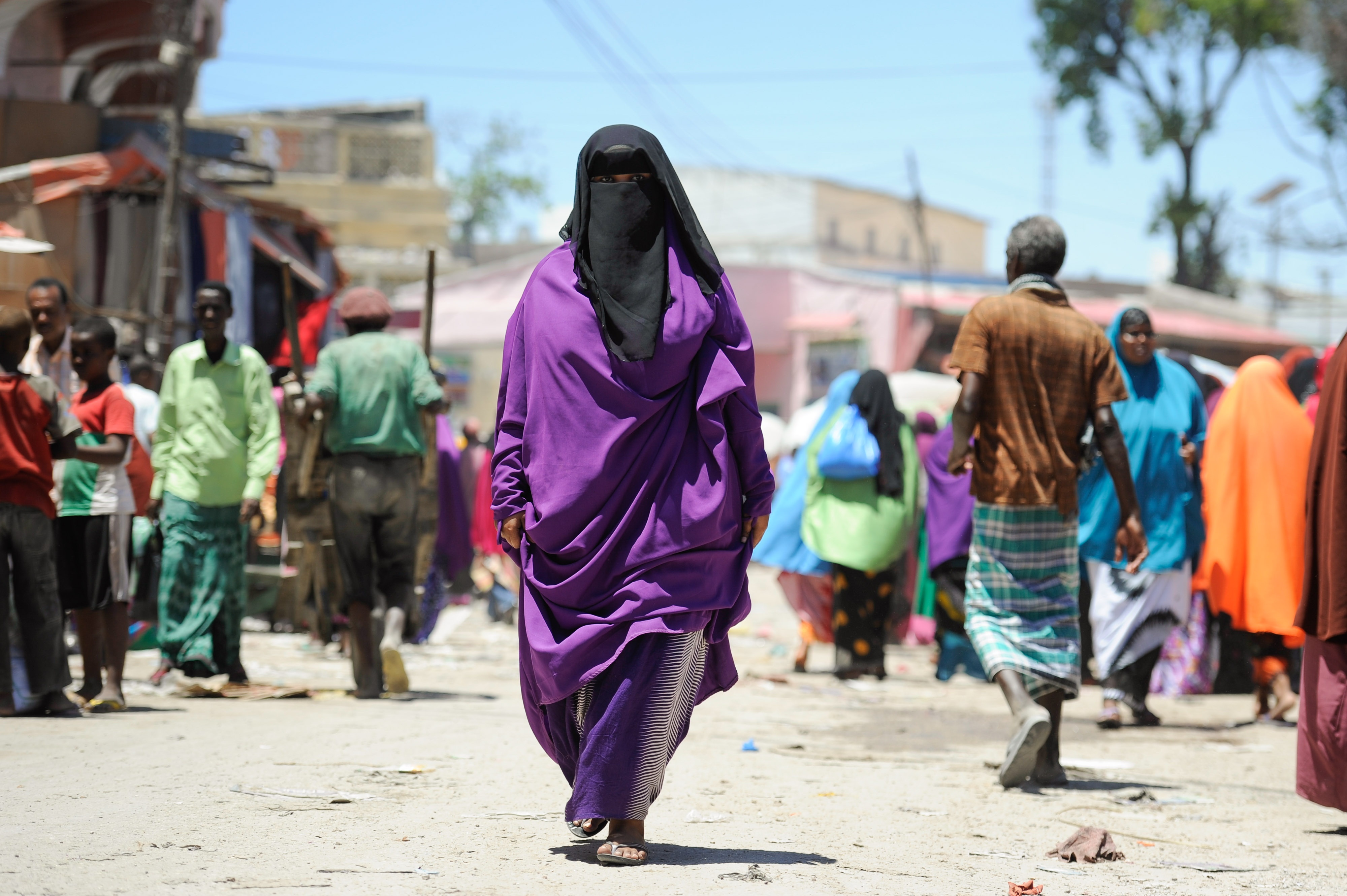
On 20 October 2026, Al Jazeera published the accounts of families still living with a November 2025 offensive around Jamaame, in Somalia's southern Jubaland state, where US air strikes supported Somali ground forces against al-Shabab. Maryam Haji Abdi Guled told its reporters that her seven-year-old son Abdiqadir still carries shrapnel near his hip — doctors warn removing it could paralyse him — and that she walks him to school daily, afraid another child might disturb the fragment. Three of her six children were wounded that morning. She is one of several survivors who described deaths, displacement and lost livelihoods from an offensive whose air strikes the US military acknowledges — it confirmed strikes in the Jamaame area on 14 and 15 November 2025 — while disputing that its aircraft caused civilian casualties. The testimonies arrive as Washington's air campaign in Somalia runs at a pace not seen since the first Trump administration, after an internal AFRICOM review concluded the reports of civilian deaths did not meet the military's threshold for attribution.
AFRICOM's public records list 84 strikes in Somalia through September 2026; the New America Foundation, which independently tracks the campaign, counted 88 over the same period. The Foundation for Defense of Democracies' Long War Journal puts the 2026 total near 86 after late-September strikes in the Lower Juba region. The trajectory is unambiguous: AFRICOM carried out 124 strikes in Somalia in 2025 — a record, up from 10 in 2024 and above the previous high of 63 in 2019 — and Airwars data cited by Al Jazeera shows the second Trump administration already nearing its first-term total at roughly four times the rate recorded under Joe Biden.
Shortly after 9am on 15 November 2025, explosions tore through Jamaame's Burburka neighbourhood, a Guardian investigation found, killing at least 12 civilians — eight of them children — and destroying at least 18 homes and a Qur'anic school: the deadliest US operation for civilians in Somalia in 18 years. Airwars logged the incident (USSOM535) with 21–25 civilians reported killed and nine injured. A UNHCR-led monitoring network documented 12 civilian deaths around Jamaame between 16 and 18 November and 22,800 people fleeing in "rapid and widespread" displacement. Jubaland authorities claimed at least 56 al-Shabab fighters killed and 20 captured; Al Jazeera could not verify those figures.
AFRICOM told Al Jazeera it had assessed reports that US operations killed 10 to 12 civilians and destroyed homes and businesses in Jamaame, concluding the evidence did not meet its "more likely than not" threshold for attributing the harm to US strikes. The command would not say whether investigators had spoken to survivors, but said the assessment could be reopened if new information emerged. In July 2026, AFRICOM commander General Dagvin Anderson acknowledged in Mogadishu that US forces had made mistakes and "provided reparations," and said the command investigates all credible reports of civilian harm. Since early 2025, AFRICOM has largely stopped disclosing the number of fighters killed or injured in individual strike announcements.
On 13 September 2025, AFRICOM carried out a strike near Badhan in northern Somalia that killed Omar Abdullahi, a clan elder travelling in a convoy; the command later identified him as an al-Shabab arms dealer. Puntland's Criminal Investigation Department said Abdullahi had no criminal record, and Somalia's defence minister Ahmed Moallim Fiqi contested the killing in parliament, saying the elder could have been questioned rather than targeted. AFRICOM's civilian-harm assessment of that strike also failed to meet its attribution threshold, and the command never disclosed what evidence supported the arms-dealer designation.
The precise civilian toll at Jamaame is still disputed — 12 dead per the Guardian and UNHCR-led monitors, up to 25 per Airwars' incident log — and no one has established which munitions struck which homes, or who the intended targets were. It is not known whether AFRICOM's assessment drew on testimony from the families Al Jazeera interviewed, whether it will be reopened, or whether any compensation has reached survivors: US legislation makes up to $3 million available annually for discretionary payments to civilians harmed in American operations, but no payment connected to Jamaame has been confirmed. The Badhan case leaves a parallel question unanswered — what intelligence justified designating a clan elder an arms dealer.
Jamaame is the sharpest test yet of an air campaign expanding faster than its accountability structures. The strike tempo under the second Trump administration — on pace with a first term that set the previous record — now operates under loosened authorization rules: the administration's 2026 counterterrorism strategy returned greater strike-approval authority to military commanders, reversing the more centralized Biden-era procedures, a change General Anderson has publicly welcomed. When the threshold for launching a strike falls while the threshold for admitting harm stays at "more likely than not," the gap between what happens in a Somali town and what is officially acknowledged widens — and Somali civilians live in that gap. The Guardian found no investigation had been opened six months after the attack; that silence, more than any single strike, is what the survivors' testimonies challenge. The accountability divide — who answers for state violence and who does not — runs straight through this story.
The Jamaame record exposes three structural features of the current campaign. First, authorization has moved closer to the trigger: the 2026 strategy returned approval authority to commanders, while AFRICOM's post-2025 practice of withholding casualty figures from announcements lengthens the distance between a strike and any public accounting. Second, the "more likely than not" standard is an institutional shield: the military need not prove no harm occurred — only find the evidence insufficient — and with the underlying intelligence classified, the finding is effectively unappealable. Third, the information environment is asymmetric by design. Al-Shabab inflates civilian claims — Anderson warned the group fabricates them "almost every single time" — yet the independent record (UNHCR monitors, Airwars, the Guardian's X-rays, PAX's Jubaland research) converges on documented harm the official account cannot absorb. The side with the least transparency sets the terms of doubt.
There is a longer ledger too. Airwars has documented 102 incidents of civilian harm in Somalia and estimates 85 to 162 civilians killed, including 23 to 26 children; the ARIJ investigation puts the documented floor at 216 killed or wounded since 2007. Each incident compounds: PAX found that in Jubaland, alleged strikes left broken livelihoods, displacement and trauma — costs that can include the clinics and roads the wounded need, as Airwars' Anna Zahn notes. A campaign that measures success in strikes conducted will keep producing Jamaames; a campaign measured in civilians protected would have to count them first. The air war is one front of a broader American posture — Trump's "complete and total endorsement" of Netanyahu and the pressure campaign on Iran show the same preference for force over diplomacy.
The second-order effects are already visible. Civilian deaths are al-Shabab's most reliable recruiting asset: every disputed strike feeds the group's claim that the Somali government and its American partners wage war on ordinary people. In Mogadishu, the Badhan dispute has strained the partnership Washington depends on. There is also a legal shadow: the unused $3 million annual compensation fund, the unreopened assessments and the classified evidence base are raw material for future litigation and for the transnational accountability campaigns that Washington's campaign against the ICC is designed to pre-empt. And there is the precedent for the next theatre: a targeting rulebook rewritten for speed in Somalia will not stay in Somalia.
Three things to watch. First, AFRICOM's quarterly civilian-harm assessments: whether the Jamaame finding is reopened, and whether the command resumes disclosing casualty figures it stopped publishing in early 2025. Second, the 2026 strike tally — already near 90 by October — against the 2025 record of 124, and whether the tempo survives the scrutiny the survivors' accounts now attract. Third, Mogadishu's posture: the defence minister's challenge over Badhan suggests the federal government's patience with unacknowledged civilian harm has limits, and the next disputed strike will test them.
In Washington, the campaign is framed as counterterrorism at necessary tempo. AFRICOM presents the strikes as coordinated with Somalia's federal government and aimed at degrading al-Shabab — which the US calls al-Qaeda's largest and most lethal affiliate — and the Islamic State's Somali branch. Asked about the Guardian's findings, the White House dismissed the investigation and rejected any link between presidential rhetoric about Somalis and military decisions.
In Jakarta, the Indonesian outlet asatunews carried the Guardian's findings to an Asian audience with its own reporting, quoting a former US Army intelligence analyst on the MQ-9 Reaper's high-resolution optics — "you can read licence plates" — and the Danish Institute for International Studies' Jethro Norman on the relaxed rules of engagement: commanders, he said, "got the green light for high-tempo operations with minimal oversight," and flawed local intelligence can turn clan rivalries into targeting data. For East newsrooms, Somalia is a secondary theatre, but the pattern is legible: an expanding air war with shrinking transparency. Jamaame reads less as an aberration than as a preview of what looser authorization buys.
Al Jazeera, reporting from Doha, gave the survivors their names back — Maryam, Ali, Nuur — and pressed AFRICOM on whether its investigators had spoken to any of them. Somali outlets have covered the story as a sovereignty question as much as a humanitarian one: the Somali Guardian and Kaab TV have tracked both the Jamaame toll and the Badhan elder's killing, while the defence minister's parliamentary challenge to the Badhan strike marked a rare public break between Mogadishu and Washington. The September 2026 investigation by Arab Reporters for Investigative Journalism, built on Airwars data, counted at least 216 civilians killed or wounded by US strikes in Somalia between 2007 and May 2025 — a floor, not a ceiling.
During a November 2025 offensive involving US air strikes and Somali ground forces against al-Shabab, the town of Jamaame in southern Somalia's Jubaland state was bombarded. A Guardian investigation found that on the morning of 15 November, explosions killed at least 12 civilians — including eight children — and destroyed at least 18 homes and a Qur'anic school. The US military acknowledges strikes in the area on 14–15 November but disputes that its aircraft caused civilian casualties.
The figures are disputed. Airwars has documented 102 incidents of civilian harm and estimates 85 to 162 civilians killed, including 23 to 26 children. A September 2026 investigation by Arab Reporters for Investigative Journalism, using Airwars data, put the documented floor at 216 civilians killed or wounded between 2007 and May 2025 — a minimum covering only cases researchers could verify. AFRICOM acknowledges far fewer, applying a “more likely than not” threshold before attributing harm to US operations.
Under the second Trump administration, Washington loosened the rules governing air strikes: the 2026 counterterrorism strategy returned greater strike-approval authority to military commanders, reversing the more centralized procedures of the Biden years. AFRICOM carried out a record 124 strikes in 2025, up from 10 in 2024, and is on pace for a similar tempo in 2026. AFRICOM commander General Dagvin Anderson has publicly welcomed the increased operational flexibility.
US legislation makes up to $3 million available each year for discretionary payments to civilians killed or injured, or whose property was damaged, in American military operations. AFRICOM says such responses — acknowledgement, apology or compensation — are considered when its assessments establish that US operations more likely than not caused harm. No payment connected to the Jamaame offensive has been confirmed, and survivors told Al Jazeera they had received little outside assistance.
On 13 September 2025, a US strike near Badhan in northern Somalia killed Omar Abdullahi, a clan elder travelling in a convoy. AFRICOM later identified him as an al-Shabab arms dealer, but Puntland's Criminal Investigation Department said he had no criminal record, and Somalia's defence minister contested the killing in parliament. AFRICOM's civilian-harm assessment did not meet its attribution threshold, and the command never disclosed what evidence supported the arms-dealer designation.
