Record chip demand met a funding scare on Thursday: TSMC posted its best quarter ever while semiconductor stocks cratered on rate fears and the cost of the AI buildout.
Published 15 October 2026 · 18:00 GMT
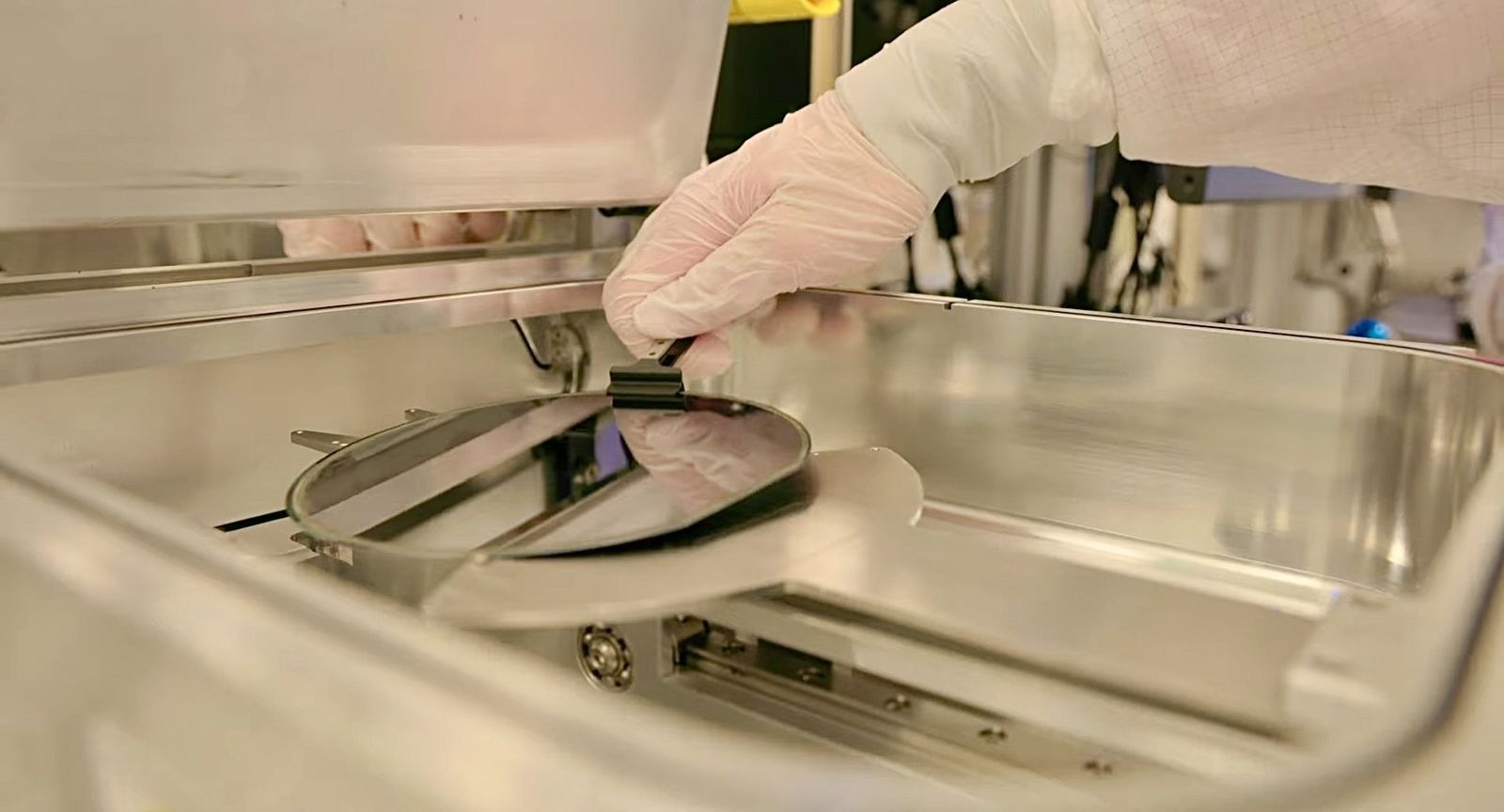
TSMC just posted the best quarter in its history — and its shares fell anyway. That contradiction is the whole story of Thursday: record demand for AI chips collided with a market terrified of the bill, wiping out roughly $2 trillion in semiconductor value in a single day — demand roaring, financing wobbling.
By Thursday afternoon, semiconductor stocks in the United States were on track to erase about $2 trillion in market value in a single trading session, as investors dumped chip shares over the rising cost of money and the rising cost of the artificial-intelligence buildout. The Philadelphia Semiconductor Index, the sector's benchmark, fell 3.3 percent on the day — on top of a cumulative $1.64 trillion wiped out over the previous six sessions, according to Reuters.
The selloff was not about demand disappearing. It was about financing: the heavy spending on data centers, computing capacity and advanced semiconductors that the AI boom requires, colliding with expectations of further interest-rate increases from the United States Federal Reserve. Higher borrowing costs make giant infrastructure projects more expensive — and they make highly valued technology stocks less attractive to hold. Money, in short, is the story.
The market is repricing the cost of the AI buildout — not the demand for it.
That financing anxiety has a simple engine. Training and running AI models consumes enormous amounts of electricity and computing hardware, and the companies building that capacity have been borrowing aggressively to do it. When interest rates rise, every data center, every chip fab and every server rack costs more to finance. Thursday was the day the market decided to price that risk all at once.
The trigger was sticky American inflation. Consumer prices rose 3.7 percent in September from a year earlier, above the 3.6 percent forecast, with core inflation also hotter than expected at 2.6 percent, according to overnight data reported by Reuters. The numbers revived bets that the Federal Reserve could raise rates again — a prospect that lands hardest on the companies borrowing the most to build the fastest.
The poster child of the funding scare is CoreWeave, the AI infrastructure company whose business is renting out computing power. Its shares fell more than 15 percent on Wednesday and more than 6 percent further on Thursday morning. Its 9.625 percent bonds due in 2032 were yielding about 14.8 percent and trading below 80 cents on the dollar — distressed levels that signal the bond market is doubting the company's ability to refinance, the SP Angel market view noted.
The rout went global overnight. Asian semiconductor stocks were among the hardest hit: Japan's Nikkei 225 fell 4.90 percent to 64,426, and South Korea's KOSPI tumbled 7.57 percent to 5,554.22, triggering a circuit breaker that halted trading for 20 minutes for the first time since July 29. Samsung Electronics fell 9.5 percent and SK Hynix lost 11.1 percent as foreign investors sold 3.63 trillion won of Korean shares, extending their selling streak to eight sessions, per Aju Press and Reuters.
This is a familiar rhythm with an unfamiliar scale. Chip cycles have always swung between shortage and glut, and the 2021 supply crunch taught buyers to over-order and suppliers to over-build. What is new is the amount of borrowed money riding on the upswing — and how fast a rate scare can reprice it.
The credit market is where funding scares turn into real damage. When a company’s bonds trade below 80 cents on the dollar, lenders start demanding their money back or charging far more to roll the debt over. CoreWeave is not the only AI builder leaning on borrowed money — the whole data-center boom has been financed on the assumption that rates would stay friendly. Thursday repriced that assumption in public.
Here is the split screen that defines the day. TSMC, the Taiwanese foundry that makes the world's most advanced AI chips, reported a record third quarter: net profit of NT$763.1 billion, up 68.7 percent from a year earlier, on revenue of NT$1.49 trillion — AI chip demand doing the heavy lifting, as Pluang reported. The company is also expanding its American manufacturing footprint with a $265 billion Arizona investment plan. And yet TSMC shares fell about 2 percent on the day anyway, swept along in a broad AI chip earnings season selloff.
The demand signal is not a one-company story. VAT Group, the Swiss maker of vacuum valves used in chipmaking equipment, announced record third-quarter order intake of 697 million Swiss francs, up 193 percent year on year, on sales of 376 million francs, up 46 percent. Its book-to-bill ratio stood at 1.9 — nearly two francs of new orders for every franc billed — and its order backlog hit a record 980 million francs, up 279 percent. The company expects the demand-supply imbalance in advanced chips to persist into 2027.
Semtech, the California chipmaker whose chips move data between AI servers, spent the morning securing its own supply: it reserved dedicated silicon-germanium manufacturing capacity at Tower Semiconductor fabs in the United States, Israel and Japan — disclosing neither a dollar amount nor a wafer count — the morning after its shares fell 10.15 percent to $168.28 on October 13. Chief executive Hong Hou and chief financial officer Mark Lin presented long-term financial objectives at the company's analyst day on Thursday, theinference.org reported.
In Shenzhen, Samsung used the Global Memory Innovation Forum to show where the demand is heading: NAND flash memory stacked more than 400 layers high, the BM1773 — billed as the world's smallest enterprise solid-state drive at 256 terabytes — and the PCIe Gen6 PM1763, sampling late in 2026. "With these two SSDs, we will drive both the performance and capacity markets," said Kevin Yoon, the company's memory chief for China, outlining Samsung's memory roadmap for the AI era.
Follow the money one step further and the demand looks just as real. Anthropic reported third-quarter revenue of $16.8 billion, up about 50 percent from the previous quarter and positive on an adjusted basis, according to the SP Angel market view citing company figures — with SemiAnalysis projecting an annualized run rate near $74 billion. Someone is paying real money for AI compute. The market's question is whether that money can keep flowing at today's interest rates.
Valuations were stretched long before Thursday. Chip stocks had priced in years of uninterrupted AI growth, and the concentration was extreme: a handful of semiconductor names carried entire indexes. When the rate outlook shifted, there was no cushion — crowded trades unwind fastest when everyone heads for the same exit.
That distinction matters. As the Reuters reporting noted, concerns about financing costs and valuations do not necessarily mean demand for AI technology is disappearing. A funding scare is not a demand collapse — it is the market asking who finances the factories, the power and the chips, and at what price.
Put the day’s numbers side by side and the paradox sharpens. Roughly $2 trillion of market value vanished in one session while the companies at the center of the AI economy reported their strongest orders, profits and revenues on record. The market was not voting against artificial intelligence. It was voting against the price of the money building it — a very different, and much more fixable, problem.
Watch three things. First, the Federal Reserve: any signal on rates will move the whole AI funding trade, because the trade is ultimately a bet on cheap capital. Second, the bond market — CoreWeave is the canary; if its yields keep climbing, other debt-funded AI builders will feel it next. Third, capital-expenditure guidance from the big technology companies: the buildout continues only as long as the checks keep clearing.
Geopolitics adds its own premium. TSMC's $265 billion Arizona bet is a hedge against concentration risk in Taiwan, where most of the world's advanced chips are still made. And Samsung chose Shenzhen, in China, to unveil its next memory generation — a reminder that the supply chain is being redrawn at the very moment its financing is being repriced.
Money is the story here, and it is asking a blunt question: can the AI buildout pay for itself at these interest rates? For Younesse Bouziani, Editor-in-Chief of this paper, the discipline is the same as in every chip cycle — separate the demand signal from the financing noise, and never confuse a funding scare with a demand collapse.
From the Western markets' vantage point, Thursday was a long-overdue repricing. Years of cheap capital let AI infrastructure companies borrow their way to scale; sticky inflation and the prospect of further Federal Reserve rate hikes simply removed the subsidy. The bond market, via CoreWeave's distressed yields, is doing the job equity markets avoided: asking whether the AI buildout can survive honest interest rates.
The West also reads this as a governance test for the AI boom's financing model. Debt-funded data centers work when rates fall and demand compounds; they wobble when neither cooperates. Thursday's message is that the next phase of the AI race will be won by balance sheets, not just by breakthroughs.
From the East Asian vantage point, Thursday was a demand story wearing a financing costume. The region makes the chips the world is fighting over: TSMC's record quarter, Samsung's 400-layer memory unveil in Shenzhen and VAT Group's record backlog all describe an industry running hot. The selloff repriced who pays for the factories — not whether the factories are needed.
The East also counts the strategic ledger. TSMC's $265 billion Arizona expansion and Samsung's choice of Shenzhen for its memory showcase show a supply chain being deliberately redrawn across the Pacific. Thursday's volatility changes none of that geography; it only changes the cost of capital along the way.
From the Global South's vantage point, Thursday was a reminder of who absorbs the shocks of other people's rate cycles. When American inflation runs hot, capital flees emerging markets first — foreign investors sold 3.63 trillion won of Korean shares in a single session. The AI boom's financing drama is priced in dollars, but its spillovers land in Seoul, Tokyo and every market downstream of the dollar.
The South also watches the demand side for what it means closer to home. Data centers, power grids and chip supply chains are the infrastructure of the next economy; a funding scare that delays them delays everyone. The question is not whether AI arrives — it is who can afford to build it, and who must wait.
Investors sold chip shares over two linked worries: the rising cost of financing the AI infrastructure boom and expectations of further US Federal Reserve interest-rate increases. The Philadelphia Semiconductor Index fell 3.3% on Thursday, adding to a $1.64 trillion loss over the prior six sessions. Higher borrowing costs make data centers and chip fabs more expensive to build, and they reduce the appeal of highly valued technology stocks.
TSMC reported record Q3 net profit of NT$763.1 billion, up 68.7% year on year, on revenue of NT$1.49 trillion, driven by AI chip demand. Yet its shares fell about 2% because the selloff was about financing, not demand: rising rates reprice every AI-linked stock at once, and even record earnings could not shield the shares from a sector-wide rush for the exit.
The evidence says no. Beyond TSMC's record quarter, VAT Group reported record Q3 order intake of CHF 697 million, up 193% year on year, with a backlog of CHF 980 million, and Anthropic posted Q3 revenue of $16.8 billion, up about 50% quarter on quarter. As Reuters noted, financing and valuation concerns do not necessarily mean demand for AI technology is disappearing.
CoreWeave, an AI infrastructure company that rents out computing power, saw its shares fall more than 15% on Wednesday and more than 6% further on Thursday morning. Its 9.625% bonds due in 2032 were yielding about 14.8% and trading below 80 cents on the dollar — distressed levels suggesting the bond market doubts the company's ability to refinance its debt.
Asian semiconductor stocks were among the hardest hit. Japan's Nikkei 225 fell 4.90% to 64,426, while South Korea's KOSPI tumbled 7.57% to 5,554.22, triggering a circuit breaker that halted trading for 20 minutes for the first time since July 29. Samsung Electronics fell 9.5% and SK Hynix lost 11.1%, as foreign investors sold 3.63 trillion won of Korean shares.
