SK Hynix details a $1 billion plan to carry its chip suppliers into the AI era
The memory-chip maker will spend 1.4 trillion won over five years helping smaller Korean suppliers test, fund and sell their products; and a shared test factory at Yongin, co-funded with the government, opens in May 2027.
Key points
- SK Hynix will spend 1.4 trillion won ($1.05 billion) over five years supporting domestic suppliers of semiconductor materials, parts and equipment. Reuters, 16 Nov 2026
- Trinity Fab, an 874.6 billion won test facility at the Yongin complex, opens in May 2027; full demonstration services begin in the fourth quarter of 2027. Reuters / EDaily, 16 Nov 2026
- Trinity Fab is co-funded: SK Hynix 443.2 billion won, the central government 373.6 billion, local governments 57.7 billion. Reuters, 16 Nov 2026
- The programme covers four stages; research and development, testing, mass production and sales. Reuters, 16 Nov 2026
- The 1.4 trillion won commitment was first agreed on 2 July 2026, at an SK Group shared-growth signing in Seoul. The Elec, 2 Jul 2026
Three readings of the same result
Same facts, different frames. Each reading names its outlets and what it emphasizes.
The story reads as supply-chain strategy in the AI race.
Reuters and Dow Jones led with the money and the motive, a chipmaker strengthening its supply chain as competition intensifies in AI chips, and the Western lens places the announcement inside the wider contest over who controls the hardware artificial intelligence runs on.
Key detail The public money is noted, not questioned: in Washington and Brussels, state support for chip supply is now normal policy, and Seoul’s version looks familiar…
In Asia, the story has a longer tail.
Korean outlets reported the July agreement when it was signed, covered the October loan guarantee, and were shown the Trinity Fab site on 10 November; so the November announcement reads in Seoul as the detailing of a plan already in motion, not a new promise.
Key detail The coverage carries the language of the agreement itself: shared growth, mutual benefit, second- and third-tier firms brought inside the tent.
The story arrived as wire copy, and the wire’s priorities shaped it.
Indian and Malaysian outlets, ET Telecom and Business Today, carried the Reuters account in full, with the numbers forward and the Seoul context intact.
Key detail No independent reporting from the South surfaced: for the countries that buy the chips rather than make them, the story is about dependence; on…
Sources by lens: 2 West, 3 East, 2 Global South. See every source
The story
What did SK Hynix actually announce on Monday?
SK Hynix, South Korea’s second-largest chipmaker and a central supplier of the memory that powers artificial intelligence, set out on Monday a 1.4 trillion won ($1.05 billion) programme to support the smaller domestic companies that supply its factories with materials, parts and equipment. The five-year plan covers four stages, research and development, testing, mass production and sales, and is designed, the company said, to help small firms clear the financing and technology barriers that keep them out of the world’s most demanding supply chain.
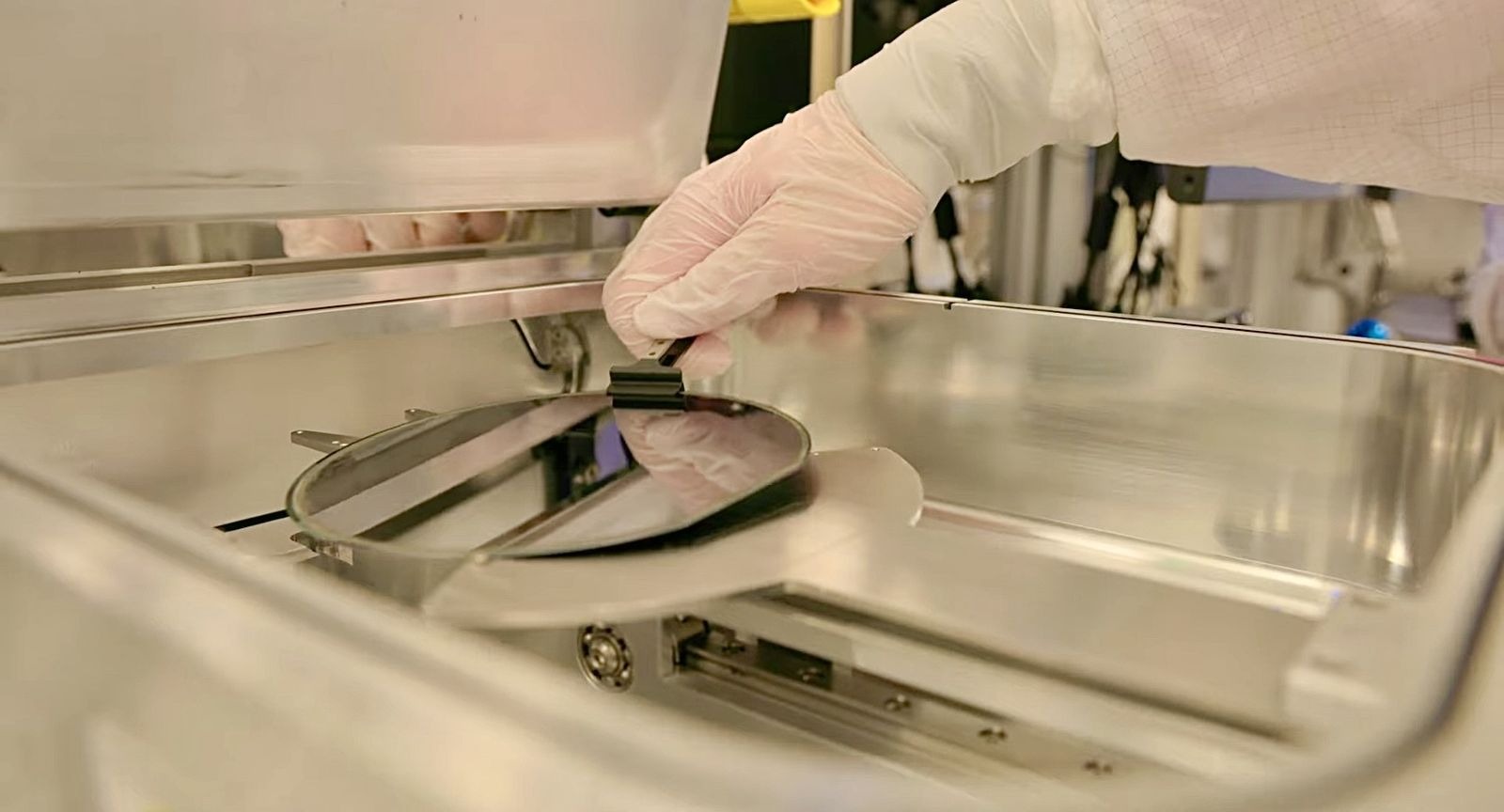
The centrepiece is Trinity Fab, a jointly funded 874.6 billion won testing facility at the company’s semiconductor complex in Yongin, south of Seoul, scheduled to open in May 2027. Smaller suppliers will be able to test their products there under conditions close to those on commercial chip production lines, the step that decides whether a small firm’s product ever reaches a fab floor. The announcement, reported from Seoul on Monday, gave the programme its fullest public airing yet, but the money itself is not new: the 1.4 trillion won commitment was first agreed in July, when SK Group widened its supplier support to second- and third-tier firms.
What does the 1.4 trillion won buy, and who pays for Trinity Fab?
The headline figure is 1.4 trillion won, about $1.05 billion at Monday’s rate of 1,335 won to the dollar, spread over five years and four stages. In research and development, SK Hynix will help fund suppliers’ work; in testing, it opens the doors of Trinity Fab; in mass production and sales, it offers the financing and the purchase orders that turn a proven product into a business. The company has not published how the money divides between the four stages, or which suppliers will be first through the door.
Trinity Fab itself is the most concrete part of the plan. The facility will sit inside the first fabrication plant of SK Hynix’s Yongin cluster, about 40 kilometres south of Seoul, where the company plans to build four chip plants for 600 trillion won. Its cleanroom will cover about 3,305 square metres and hold 55 pieces of equipment; lithography, etching, deposition, cleaning and measurement tools that work with 12-inch wafers, the industry standard. Suppliers will be able to trial materials and tools on production-grade equipment before asking a customer to buy.
The bill for the test facility is shared three ways: SK Hynix contributes 443.2 billion won, the central government 373.6 billion won, and local governments 57.7 billion won. The company’s share comes as cleanroom space, equipment and specialist staff rather than cash, and a dedicated foundation will run the facility under chief executive Lee Ki-jeong. The company describes Trinity Fab as the world’s only public-private testbed of its kind for chip materials, parts and equipment; a claim that rests on the three-way funding, not on the hardware alone.
Two earlier moves complete the picture. On 2 July 2026, SK Group signed a shared-growth agreement at its Seoul tower, widening support from first-tier suppliers to second- and third-tier firms, with seven affiliates and more than 100 suppliers taking part; the 1.4 trillion won commitment, Trinity Fab and the research-compensation scheme were all part of that agreement. Then, on 19 October, SK Hynix signed a 2 trillion won export supply-chain guarantee with four of Korea’s biggest banks and the state-run Korea Trade Insurance Corporation, which will back loans to suppliers it recommends. Reporters were shown the Trinity Fab construction site on 10 November, and the detailed announcement followed six days later.
What has the company not said about the money?
The announcements leave the most practical questions unanswered. SK Hynix has not published how the 1.4 trillion won divides between research, testing, mass production and sales, or which suppliers will be first to use Trinity Fab. The foundation that will run the facility has not set its fees, so what a small firm will actually pay to test there is not yet clear. Nor is it clear how much of the separate 2 trillion won loan guarantee will be drawn, or by whom; a guarantee is not spending until a bank lends against it. The company has also said nothing about whether the programme will reach suppliers it does not already work with, or what happens to the support if AI demand cools.
Why does a supplier programme matter to the AI race?
Because the race for AI hardware is now decided as much by the supply chain as by the chip designs. SK Hynix makes the high-bandwidth memory that sits beside AI accelerators in data centres, and demand for that memory has surged with the AI build-out. One missing material or unproven tool can stall a production line worth billions; and the firms that make those materials are often small, specialised and thinly financed.
That fragility is the programme’s target. A supplier that can prove its product on Trinity Fab’s production-grade equipment arrives at a customer’s door with evidence instead of promises, and a supplier whose research fails is not wiped out by the attempt: under the R&D Challenge Compensation scheme, SK Hynix will advance up to half of a project’s early development costs and pay compensation even when the work fails, judging the outcome on what was learned and contributed. For Seoul, the logic is strategic as well as commercial; a domestic supply chain that can stand on its own is worth public money in a world where chip supply has become a matter of national security. The Bureau has tracked how the same concentration shapes the wider chip market, from TSMC’s grip on advanced production to the fragile geography of chip supply chains.
Why is a chipmaker paying its suppliers to fail?
The most unusual part of the package is the promise to pay for failure. Under the R&D Challenge Compensation programme, worth 100 billion won over five years, SK Hynix advances up to half of a supplier’s early development costs and settles the rest when the project ends; compensating the supplier on the strength of its work even if the project misses its targets or never leads to a purchase. The company’s procurement chief, Lee Hyun-cheol, put the reasoning plainly at the November unveiling: partner firms were left stranded when their development efforts failed, and the company wants them to take on hard problems without betting their survival on each one.
Read one way, this is industrial policy with a corporate face: the state pays almost half of Trinity Fab, and the chipmaker pays to widen the pool of firms it can buy from. Read another way, it is self-protection; SK Hynix cannot afford a supply chain in which only the largest suppliers survive, because the largest suppliers are also the ones its rivals can buy from. The two readings are not in conflict; they are the same bargain, and it is the bargain Seoul has struck across its chip industry, from Samsung’s work with ASML on the machines that print the next generation of memory to the test facility now rising at Yongin.
What changes once the test line opens in 2027?
The first change is practical: a small Korean supplier will be able to prove a product without first winning a customer’s trust, which lowers the cost of entering the world’s most demanding supply chain. The second is competitive: if Trinity Fab works, Samsung, which shares the same suppliers and the same government, will face pressure to match it, and the model could travel to other chipmaking countries. The third is political: public money inside a private fab invites questions about who benefits, and the answer will be measured in purchase orders, not announcements. The AI build-out has already forced a reckoning over how all of this is paid for; the $2 trillion question now hanging over chip stocks.
What should we watch for next?
The dates are fixed: Trinity Fab opens in May 2027, and full demonstration services are scheduled to begin in the fourth quarter of that year. Between now and then, the markers are the foundation’s fee schedule for suppliers, the first companies to book time on the test line, and how much of the 2 trillion won loan guarantee is actually drawn. The deeper test is whether second- and third-tier suppliers, the firms the July agreement was written for, start winning purchase orders they could not have won before. If they do, Seoul will call the model a success; if they do not, the question will be whether 1.4 trillion won bought a stronger supply chain, or only a better-equipped one.
What we agree on, and what remains open
Established
- On Monday 16 November 2026, SK Hynix set out a 1.4 trillion won ($1.05 billion) five-year programme to support domestic suppliers of semiconductor materials, parts and equipment, built around Trinity Fab; an 874.6 billion won test facility at its Yongin complex, co-funded with the central and local governments, opening in May 2027.
Contested
- On whether the money is new; the headlines present it as a fresh commitment, while the Korean record shows the 1.4 trillion won was agreed on 2 July 2026.
- On whether public money should underwrite a profitable chipmaker’s supply chain.
- On whether paying suppliers for failed research will breed bolder firms or softer ones.
Still open
- How the 1.4 trillion won divides between the four stages.
- Which suppliers will use Trinity Fab first.
- What the foundation will charge.
- How much of the 2 trillion won guarantee will be drawn.
- Or whether the programme will reach suppliers SK Hynix does not already work with.
What to watch
Questions, answered
Trinity Fab is a jointly funded semiconductor test facility being built inside the first fabrication plant of SK Hynix’s Yongin complex, about 40 kilometres south of Seoul. It will have a cleanroom of about 3,305 square metres holding 55 pieces of production-grade equipment, and it opens in May 2027. Smaller Korean suppliers will be able to test materials, parts and equipment there on 12-inch wafers before trying to sell them to chipmakers.
The company says it wants to strengthen its supply chain as competition intensifies in the AI chip market. Smaller suppliers often cannot afford the testing and financing needed to prove their products, so SK Hynix is funding research, testing, mass production and sales support over five years. A stronger local supply chain also protects its own production of high-bandwidth memory for AI data centres.
No; and that is the detail the headlines miss. The 1.4 trillion won commitment was first agreed on 2 July 2026, when SK Group signed a shared-growth agreement widening supplier support to second- and third-tier firms. What Monday’s announcement added was the detail: the four stages, the Trinity Fab funding split, and the May 2027 opening date, following a press tour of the site on 10 November.
It is a 100 billion won scheme, running over five years, under which SK Hynix advances up to half of a supplier’s early research costs and pays compensation even if the project fails or never leads to a purchase. Payment is settled when the project ends, based on what the supplier achieved and contributed. The aim is to let small firms attempt difficult development work without risking their survival.