With AQI at 216 and the Marina Bay skyline reduced to a silhouette, Singapore faces its worst haze in years as a super El Nino feeds Indonesian peat fires and the night race looms.
Published 9 October 2026 · 18:00 GMT
Singapore, one of the wealthiest cities on Earth, woke on Friday breathing the most polluted air of any major city on the planet, as thick toxic smog from Indonesian peat fires pushed the air quality index to 216, deep in the "very unhealthy" range. The haze, fed by what forecasters expect to be a "super" El Nino, has shrouded the city-state and neighbouring Malaysia for weeks, and it now hangs over the most glamorous weekend on Singapore's calendar: the Formula One night race at Marina Bay, with concerts, conferences and hundreds of thousands of visitors asking whether the show can go on in air this dirty.
Singapore woke on Friday to a skyline reduced to a smudge. By mid-morning, the Swiss air-quality monitor IQAir put the city-state's air quality index at 216, deep in the "very unhealthy" band, and ranked Singapore the most polluted major city on the planet. Kuala Lumpur, choking on the same smoke, sat at number two. It was the first time since October 2023 that haze had pushed Singapore's AQI into unhealthy territory, a jarring reversal for a city whose annual average PM2.5 last year translated to an AQI of 50, plainly "good". The towers of Marina Bay stood as faint silhouettes behind a milky veil, and a city of 6.21 million people, with an economy worth more than $650 billion a year, confronted a familiar enemy arriving on an unfamiliar scale.
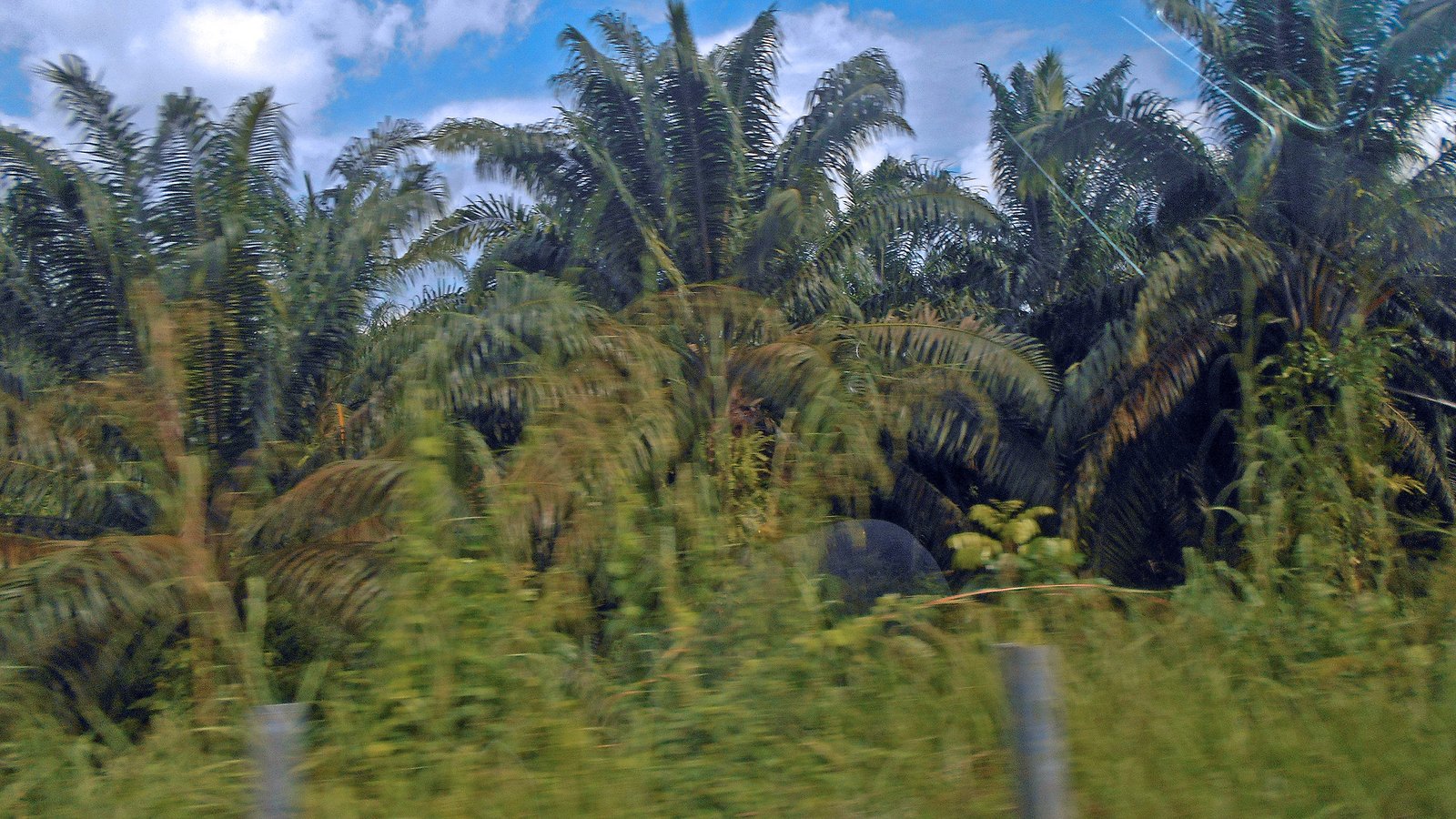
The smoke is coming from Indonesia. In a Thursday update, Singapore's National Environment Agency said moderate to dense smoke plumes from southern and central Sumatra and West Kalimantan were observed drifting toward Singapore, and warned that under the prevailing southeasterly or southerly winds the haze could keep drifting in. The fires have been burning for weeks across Borneo and Sumatra, the two Indonesian islands where the dry-season burning peaks each year. Huge stretches of peatland are cleared and drained for commercial plantations, including the ones that produce palm oil, an ingredient woven through the modern pantry from instant noodles to toothpaste. What is cleared by hand costs money; what is cleared by fire costs only a match.
The skyline is a silhouette, the race goes on, and the peat keeps burning.
The answer is in the Pacific. This year has brought what forecasters expect to be a "super" El Nino, a supercharged version of the natural climate pattern that tends to deliver bone-dry conditions to Indonesia, and the dry has turned an annual nuisance into an unusually intense fire season. The result is a regional blanket: a milky haze has shrouded Singapore and Kuala Lumpur for more than a month, and earlier this month Kuala Lumpur briefly topped IQAir's global ranking with an AQI of 166 while Singapore sat third at 155. Across the border in Malaysia, the education ministry has shut schools across several states this week as conditions worsened, and residents describe a skyline in which the Merdeka 118, the world's second-tallest building, simply disappears into the murk.
All of this is unfolding as Singapore prepares for one of the glitziest weekends on its calendar: the Formula One night race at Marina Bay, wrapped in conferences and concerts. The motorsport's governing body, the FIA, told Reuters on Thursday that outdoor entertainment events at the Grand Prix could be affected but not the race itself. Race organiser Singapore GP told CNN on Friday there were currently no plans to modify the entertainment programme, which this year includes Janet Jackson and The Killers. The Singapore Tourism Board said action plans are in place, calibrated to the intensity of the haze. The drivers, for their part, sound unbothered: Cadillac's Valtteri Bottas, who cycled more than 400 kilometres from Malaysia to Singapore this week, said he did not find it that extreme yet, while Ferrari's Lewis Hamilton said he had much bigger issues to focus on.
History is on the race's side. The 2015 and 2019 editions were both enveloped in thick haze and both went ahead. In September 2019, pollution from the Indonesian fires pushed Singapore's air quality to unhealthy levels for the first time in three years, with the pollutant standards index hitting 112 the weekend before the race, and organisers activated a contingency plan drawn up with government bodies, stocked masks for spectators, and watched the wind. By Friday the skies had largely cleared to a "moderate" reading near 65, and the night race ran under lights as planned. The precedent cuts both ways: the show can go on, but nobody can guarantee what the wind will do between now and lights-out on Sunday.
The reason the haze keeps returning lies in the ground itself. Most haze-producing fires burn in disturbed peat swamps in Kalimantan and Sumatra, and to a lesser extent in Malaysia. Peat swamps are naturally waterlogged, but once they are drained for agriculture the carbon-rich soil dries out quickly and becomes extremely fire-prone. Peat does not just burn, it smoulders: fires can creep underground for weeks, reigniting surface blazes and defeating water-bombing aircraft, which is why these rank among the hardest wildfires on Earth to extinguish. The smoke they produce is not ordinary woodsmoke either: it is thick with PM2.5, particles so small they slip past the lungs' defences and into the bloodstream, and IQAir notes elevated carbon monoxide consistent with combustion from biomass burning.
The benchmark for how bad this can get remains 2015, the year a strong El Nino last supercharged the fire season. About 2.6 million hectares burned. The World Bank put Indonesia's economic losses at no less than $16 billion, equivalent to 1.9 percent of GDP and roughly twice what the country spent rebuilding after the 2004 tsunami. In parts of Sumatra and Kalimantan the pollutant index approached 2,000, against a "hazardous" threshold of 300. Singapore itself recorded a PSI of 401 and absorbed an estimated S$1.2 billion in losses. Researchers at Harvard and Columbia linked the smoke to 100,300 excess deaths across Indonesia and its neighbours. The 2019 episode, judged the worst since 2015, still cost an estimated $5 billion. This year's fires are being measured against those yardsticks, and the early readings are not reassuring.
The haze is also one of Southeast Asia's oldest diplomatic failures. The ASEAN Agreement on Transboundary Haze Pollution was signed in 2002, after the 1997 crisis, yet the fires kept coming and the bloc's vision of a "Haze-Free ASEAN by 2020" was never fully achieved. Singapore responded to the 2013 crisis with the Transboundary Haze Pollution Act, which lets it fine companies up to S$2 million for causing unhealthy haze in Singapore even when the fires burn beyond its borders. After 2015, Indonesia created a peatland restoration agency to rewet drained swamps, and Jakarta now deploys thousands of personnel, water-bombers and cloud-seeding aircraft each season. Yet the structural incentive survives: for smallholders and plantation companies alike, burning remains the cheapest way to clear land, and enforcement across millions of hectares of remote peatland is a task that has defeated every government that has tried it.
The politics of blame are as smoky as the air. Indonesian officials tend to frame the fires as a natural disaster worsened by weather, while Singaporean and Malaysian publics experience them as an imported, man-made assault on their lungs. The truth sits between: the El Nino is natural, the drainage and the ignition are not. What neither side disputes is that the smoke respects no border, that it has now pushed two of Asia's richest capitals to the top of a global pollution ranking nobody wants to lead, and that the region's marquee weekend, floodlit and televised to hundreds of millions, is about to play out inside it.
The immediate forecast offers a sliver of hope. IQAir's hourly model suggests Singapore's AQI could fall significantly by early Saturday morning as winds shift from southerly to easterly, cutting the smoke transport from the Indonesian fire zones, though the same agency warns the haze could persist through October and November while dry conditions and strong El Nino conditions keep wildfire risk high. The NEA's standing advice is blunter: under the prevailing winds, the haze may simply keep drifting in. Health authorities advise limiting strenuous outdoor activity and wearing a well-fitting respirator outdoors, guidance that now applies to racegoers as much as to schoolchildren in Malaysia and Thailand.
For Singapore, the weekend is a stress test of the city-state's favourite self-image: the orderly, engineered oasis that bends nature to its will. Air-conditioning can filter a tower; it cannot filter a street circuit. If the wind turns, the night race will run beneath its famous lights with the skyline glowing through the murk, another hazy edition for the archive alongside 2015 and 2019. If it does not, the city will learn what a "very unhealthy" Grand Prix feels like, and the region will be reminded, again, that the cheapest land-clearing method in the tropics is also the most expensive thing Southeast Asia breathes.
From the Western reading, this is a market failure wearing a climate mask. The smoke that darkens Marina Bay starts in a supply chain that ends in Western supermarkets: palm oil in noodles, toothpaste and cosmetics, timber and paper pulp. Western regulators and consumers therefore read the haze as a traceability problem, one more argument for deforestation-free sourcing rules, satellite monitoring of concessions, and the kind of extraterritorial leverage Singapore already wrote into its 2014 haze law. The super El Nino is real, but in this lens it is an accelerant, not an alibi.
The Western lens also sees a stress test for the showcase economy. Singapore sells itself as the city where everything works, and a Grand Prix staged inside 'very unhealthy' air punctures that brand in front of a global television audience. Expect Western coverage to frame the weekend as a parable of climate risk reaching the VIP box: the air-conditioning works, the circuit does not filter, and the region's growth story now comes with a visible, breathable cost.
From the Eastern reading, this is a sovereignty story first and an environmental one second. Jakarta's position has always been that Indonesia's land is Indonesia's business, and the ASEAN Way of non-interference means neighbours may complain but may not dictate. In this lens, Singapore's extraterritorial haze fines and Western supply-chain rules look like pressure tactics dressed as environmentalism, and the proper forum is the ASEAN agreement and its roadmap, however imperfect, not foreign courts or consumer boycotts.
The Eastern lens also reads the El Nino factor with more sympathy for Jakarta. A supercharged climate pattern dries out even well-managed landscapes, and Indonesia is simultaneously being asked to feed commodity markets, protect carbon-rich peatlands, and police millions of hectares of remote terrain with limited state capacity. The emphasis here falls on technical cooperation: cloud seeding, hotspot satellites, peatland rewetting, the restoration agency built after 2015, and the argument that the region should fund the firefighting rather than fine the firefighters.
From the Global South reading, this is an inequality story told in smoke. The people who breathe the worst of it are not the Grand Prix VIPs in filtered hospitality suites but schoolchildren in Riau and Central Kalimantan, smallholders with no air purifiers, and the urban poor of Kuala Lumpur and Singapore who work outdoors. The 2015 toll of 100,300 excess deaths is the number that matters here, not the AQI ranking, and the demand is for health-centred accountability: clinics, masks, school protections, and honest counting of who gets sick.
There is also a harder Southern edge that questions the whole commodity bargain. The palm oil, pulp and timber that drive the clearing flow overwhelmingly to richer markets, while the smoke stays in the region's lungs; the profits are exported and the particulates are not. In this lens, the haze is what unequal development looks like when the wind blows the wrong way, and the fix is not only better firefighting but a fairer price for keeping peatlands wet, paid by those who benefit from the dry-season harvest.
No. The FIA said on Thursday that outdoor entertainment events at the Grand Prix could be affected, but not the race itself, and organiser Singapore GP said there were no plans to modify entertainment activities. The 2015 and 2019 races both went ahead in thick haze, and organisers have a contingency plan with government bodies that includes masks for spectators.
An AQI of 216 falls in the 'very unhealthy' band, well above the 'unhealthy' threshold of 150. At these levels, health authorities advise everyone to limit strenuous outdoor activity, and sensitive groups in particular to stay indoors. The haze is rich in PM2.5, particles small enough to enter the lungs and bloodstream, plus elevated carbon monoxide from biomass burning.
Burning is the cheapest way to clear land, used by smallholders and plantation companies to prepare ground for crops including palm oil. The fires concentrate in drained peat swamps in Sumatra and Kalimantan: peat is carbon-rich, dries out once drained, and smoulders underground for weeks, making the fires exceptionally hard to extinguish.
El Nino is a natural Pacific climate pattern that tends to bring dry conditions to Indonesia. A 'super' El Nino is an unusually strong version of it, producing bone-dry conditions that turn the annual burning season into far more intense blazes. The last comparably strong episode helped drive the catastrophic 2015 haze crisis.
IQAir's hourly forecast suggests Singapore's AQI could improve by early Saturday as winds shift from southerly to easterly, but warns the haze could persist through October and November while dry, strong El Nino conditions keep wildfire risk high. Singapore's NEA says that under the prevailing southeasterly or southerly winds, smoke haze may simply continue drifting toward the city.
