With 2.3 gigawatt-peak installed and a new goal of 4 by 2035, Singapore is turning carports, facades, vacant land and heritage roofs into power stations, while conceding solar alone will never light the island.
Published 27 October 2026 · 03:10 GMT
With 2.3 gigawatt-peak installed and a new goal of 4 by 2035, Singapore is turning carports, facades, vacant land and heritage roofs into power stations, while conceding solar alone will never light the island. Singapore has set a new solar deployment target of 4 gigawatt-peak (GWp) by 2035, announced on Monday, 26 October 2026 at Singapore International Energy Week, up from 3 GWp by 2030; the country has achieved 2.3 GWp to date.
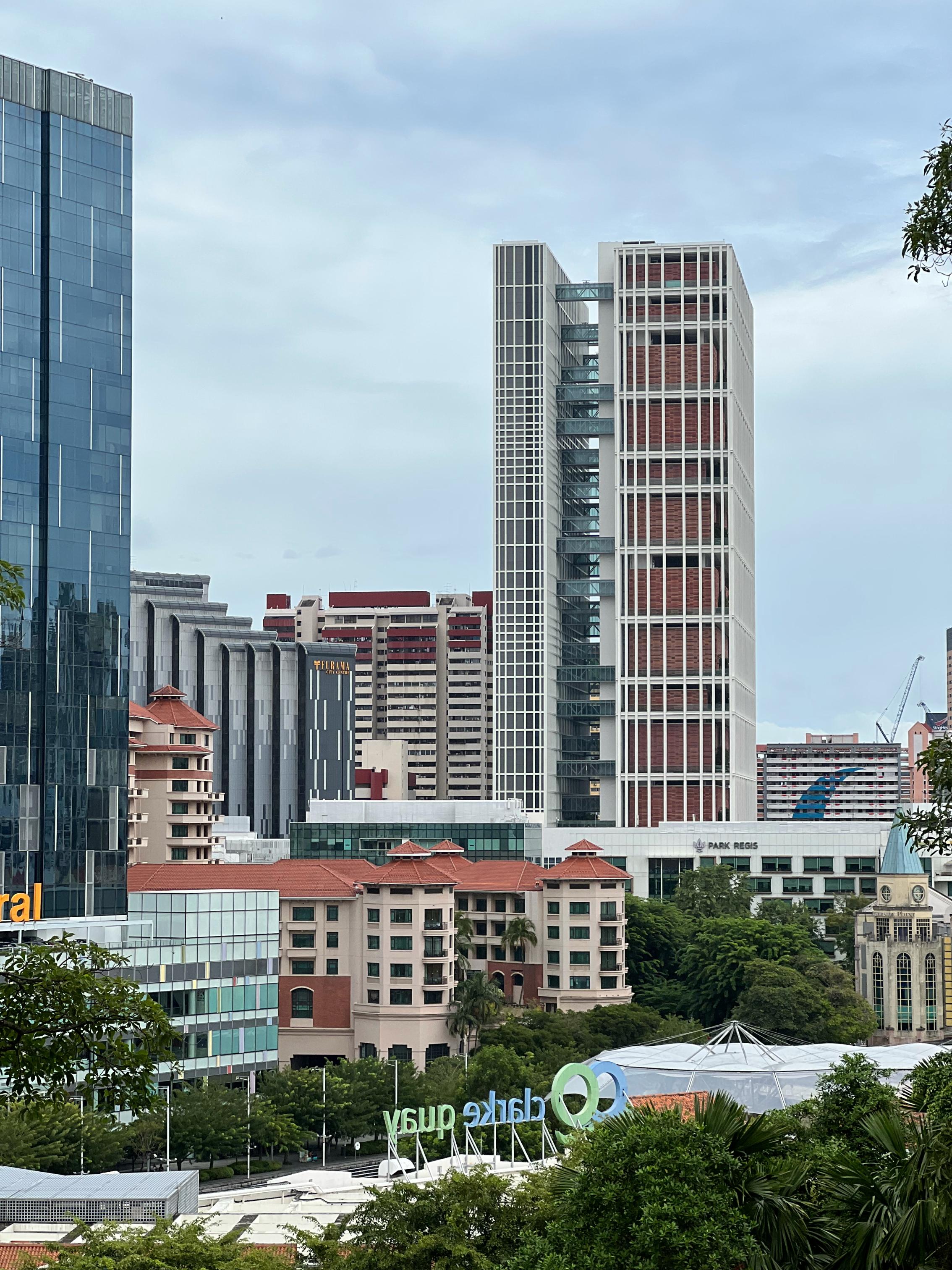
Singapore has raised its solar ambition. At Singapore International Energy Week on Monday, 26 October 2026, Minister for Energy, Trade and Industry Tan See Leng announced a new deployment target of 4 gigawatt-peak (GWp) by 2035, up from 3 GWp by 2030. The city-state has already installed 2.3 GWp, and officials say the 2030 goal is well within reach. A day later, at the Asia Clean Energy Summit, Minister of State Gan Siow Huang set out how the extra capacity is to be found: not on empty fields Singapore does not have, but on carports, building facades, vacant plots and even heritage roofs.
The announcement sits inside a larger energy build-out. Peak electricity demand reached 8.6 gigawatts in August 2026 and could climb to between 9.9 and 13 gigawatts by 2031, driven by semiconductor plants, data centres and electric transport. The five-year infrastructure plan answers with five new gas-fired stations, up to S$5.3 billion of grid spending between 2025 and 2029, seven new transmission substations by 2031, and storage rising from about 350 megawatt-hours today to just over 1 gigawatt-hour by 2030. Solar is the most visible piece of that plan, but far from the whole of it.
The Energy Market Authority (EMA) is launching a tender for solarising public premises, with new surfaces written into it: solar carports, building-integrated photovoltaics and building-applied photovoltaics. Under a demand-aggregation framework, a panel of installers will help agencies assess their buildings and draw up tailored proposals, pooling public-sector demand so sites with different tenures and operating needs can be served together.
Industrial landlord JTC has launched two innovation challenges. One seeks solar systems mounted directly onto facades, harder than rooftops because of design, orientation, structure, maintenance and cost; the winner will be tested over at least 200 square metres at JTC's YS-ONE building in Yishun for twelve months. The other pairs containerised solar panels with mobile battery storage for worksites with little or no grid access that now run on diesel generators. JTC has also awarded its first overhang-solar project, panels suspended between two buildings, at 15 Woodlands Loop to EDP Apac, with fifteen months of testing from October and ten years feeding the grid. For households, EMA and the Sustainable Energy Association of Singapore are building a one-stop portal so owners of landed homes can compare options, find installers and join group purchases. And for heritage state buildings, where clay-tile roofs rule out conventional panels, EMA has signed an agreement with Swiss centre CSEM to pilot solar roof tiles that preserve the architecture.
What has not been published is a price tag for the solar push, a breakdown of how much of the extra 1.7 GWp should come from carports, facades, vacant land or reservoirs, or a launch date for the household portal. Facade solar, overhang structures and solar roof tiles are proven in principle and unproven at Singapore scale; the Yishun and Woodlands trials exist precisely because nobody yet knows how they will perform, cost and weather in tropical conditions year after year. The framework's promise, that pooled public demand creates scale, will be tested by procurement realities: which agencies join, how fast installers are appointed, and whether awkward buildings can host panels at all.
Nor is the 2035 target self-executing. Singapore must still secure the low-carbon electricity imports meant to carry the larger share of decarbonisation, a goal of 6 gigawatts by 2035, while the regional rules that make those imports bankable are still being written. The portal assumes landed-home owners want panels enough to act once information is aggregated; no uptake figure has been offered.
Singapore is one of the hardest places on earth to build a solar fleet. It has almost no spare land, no rivers to dam and no wind resource worth the name, and solar is, in the government's own words, its most viable indigenous renewable source. When rooftops, which already supply more than 80 per cent of installed capacity, are nearly exhausted as a growth engine, the next megawatt has to come from a car park roof, a wall, a gap between buildings or a reservoir. The surface hunt is not a gimmick; it is what a land constraint looks like once the easy surfaces are taken.
The stakes are set by dependence. Natural gas supplies about 95 per cent of Singapore's electricity, almost all of it imported, and Tan warned that the island cannot insulate itself from supply shocks, citing the risk of a crisis in the Strait of Hormuz and a wider turn toward resource nationalism. Demand is rising fast: the same data centres and chip plants that power the economy are pushing peak demand toward 13 gigawatts within five years. Every domestically generated kilowatt-hour is thus a small hedge against a fuel market Singapore does not control. Readers following Indonesia's gas curb for Singapore will recognise the pattern: Singapore's energy security is negotiated one contract and one interconnector at a time.
Because the target was never about replacing gas. Even at 4 GWp by 2035, officials concede solar will meet at most 10 per cent of the country's electricity needs in 2050. The honest reading is not a green revolution but a portfolio adjustment: solar does what it can on the island, gas plants keep the lights on through the transition, storage smooths the daily swings of sun and demand, and imports, if the regional plumbing arrives, do the heavy lifting on carbon.
The more interesting signal is institutional rather than technological. Demand aggregation, a one-stop household portal, a revised renewable-energy-certificate standard tying certificates to power actually delivered to the local grid: these are market-design moves, not panel-counting moves. They suggest Singapore has concluded that its binding constraint is no longer panel prices, which have fallen for a decade, but coordination: getting hundreds of public landlords, homeowners and installers to move together. If the framework works, its export value may exceed its megawatts, because every dense Asian city faces the same problem. If it stalls in procurement, the target will be remembered as a conference number, and the debate over how long the global energy crunch lasts will go on without it.
For neighbours, the announcement arrives with a regional subplot. Singapore is building a second interconnector with Peninsular Malaysia, worth up to 2 gigawatts by 2030 alongside the existing 1-gigawatt link, and as incoming ASEAN chair it plans to push for endorsement in 2027 of the bloc's new regulatory guidelines for submarine power cables, covering surveys, laying, maintenance, repair and protection. Submarine cables are the unglamorous infrastructure on which any Southeast Asian clean-power trade depends, and Singapore is positioning itself as rule-writer as much as buyer.
For the wider Global South, the lesson cuts both ways. Singapore shows that demand aggregation and public leadership can push solar into unlikely places, a template dense cities from Lagos to Jakarta could adapt. Pakistan's recent rooftop boom shows the opposite risk: when households adopt solar faster than the grid and its utilities adapt, cheaper bills for consumers can strain the stations and finances that keep the whole system running. A solar transition is not just a count of panels; it is a redesign of who pays for the grid when the sun does not shine, and countries that plan that redesign early will fare better than those that discover it late. That is also why what the climate summits are really deciding matters far beyond the conference halls where targets are announced.
The near-term tests are concrete and dated. The facade trial at Yishun runs twelve months; the Woodlands overhang project spends fifteen months in testing from October before a decade on the grid; the household portal must actually launch and attract users; and EMA's storage proposals, part of the plan to triple storage by 2030, will show whether industry believes the numbers. The 2030 staging post, 3 GWp, is the first verdict on the programme, and the grid programme, seven substations by 2031 and a transmission network growing from about 7,700 to 9,100 kilometres by 2030, will show whether the wires keep pace with the panels.
The diplomatic calendar matters as much as the construction calendar. Singapore's ASEAN chair year in 2027 is the moment to convert cable guidelines into endorsed rules, and the 6-gigawatt import goal for 2035 needs signed deals, not just feasibility studies, in the years after that. Watch also for the revised certificate standard's effect on corporate buyers: if credible certificates make importers pay more for clean power, import projects become more bankable, and the system tilts a little further from gas.
From Western reporting, this is an energy-system story first and a solar story second. Reuters folds the 4 GWp target into a package with five new gas plants, a 26 per cent rise in generation capacity, grid spending and storage, and reads the programme through demand: data centres, chip plants and electric vehicles pushing a small island's peak load toward 13 gigawatts. Solar, in that telling, is the clean edge of a build-out whose centre of gravity remains gas.
From Singapore itself, the story is told as a national project of ingenuity under constraint. The government's language, echoed across the local press, is deliberately physical: pushing every boundary and surface, literally, to harvest sun on an island with almost no land to spare. Heritage roofs get solar tiles rather than exemptions, worksites get containerised panels rather than diesel, and homeowners get a portal rather than a lecture.
From the Global South, the story reads as both a template and a caution. Neighbours in ASEAN watch the interconnector and cable rules because Singapore's import appetite could become their export opportunity, while cities across Africa and South Asia face the same land and coordination squeeze with far less money to solve it. Pakistan's consumer-led surge, which cut household bills while squeezing utilities, is the counter-example Singapore's planners are implicitly answering: a transition designed from the top, with grid costs accounted for, against one that simply happened.
Singapore aims to deploy 4 gigawatt-peak of solar capacity by 2035, up from its existing target of 3 gigawatt-peak by 2030. The new goal was announced on 26 October 2026 at Singapore International Energy Week. The country has installed 2.3 gigawatt-peak so far and officials say the 2030 goal is on track.
By using surfaces beyond rooftops: solar carports, building facades, building-integrated photovoltaics, vacant land, reservoirs and even heritage roofs. The Energy Market Authority is tendering solar installations for public premises, JTC is trialling facade and overhang systems, and a new portal will help landed-home owners install panels.
Singapore has almost no spare land and no significant wind or hydro resource, so solar is its most viable local renewable source but a limited one. Officials say solar will meet at most 10 per cent of electricity needs in 2050. Natural gas supplies about 95 per cent of power today, so imports, storage and grid upgrades must carry the rest.
The facade solution will be tested for twelve months at JTC's YS-ONE building in Yishun, and the overhang project at 15 Woodlands Loop faces fifteen months of construction and testing before ten years on the grid. The household portal must launch, storage proposals will be assessed, and Singapore will use its 2027 ASEAN chair year to advance regional cable rules.
