From Saturday, 31 million cubic feet a day that flowed to Singapore from Natuna and Sumatra is being redirected to Batam, Bintan and Sumatra, as Jakarta says domestic electricity supply comes first.
Published 24 October 2026 · 09:58 GMT
From Saturday, 31 million cubic feet a day that flowed to Singapore from Natuna and Sumatra is being redirected to Batam, Bintan and Sumatra, as Jakarta says domestic electricity supply comes first. From Saturday, October 24, 2026, Indonesia cut pipeline natural gas exports to Singapore by 31 million standard cubic feet a day — 15 million from Natuna and 16 million from Sumatra — to divert supply to domestic electricity generation.
On Saturday, October 24, 2026, Indonesia began cutting pipeline gas exports to Singapore by 31 million standard cubic feet a day — 15 million from Natuna and 16 million from Sumatra — redirecting the gas to electricity generation in Batam, Bintan and Sumatra, with SKK Migas saying the move safeguards the reliability of domestic supply.
Whether this is a narrow technical reallocation or the first step of a wider resource-nationalist turn — Jakarta frames it as domestic reliability, Singapore-focused coverage stresses the timing after ministerial warnings about respect and non-renewal, and SKK Migas itself did not link the diversion to those remarks.
How long the diversion lasts; whether it will affect Singapore's electricity generation or prices; what it means for existing commercial obligations; whether further cuts follow the promised allocation review; and what Singapore's government will formally say — CNA's queries to Singapore's energy ministry and to Indonesia's presidential palace were still unanswered at publication.
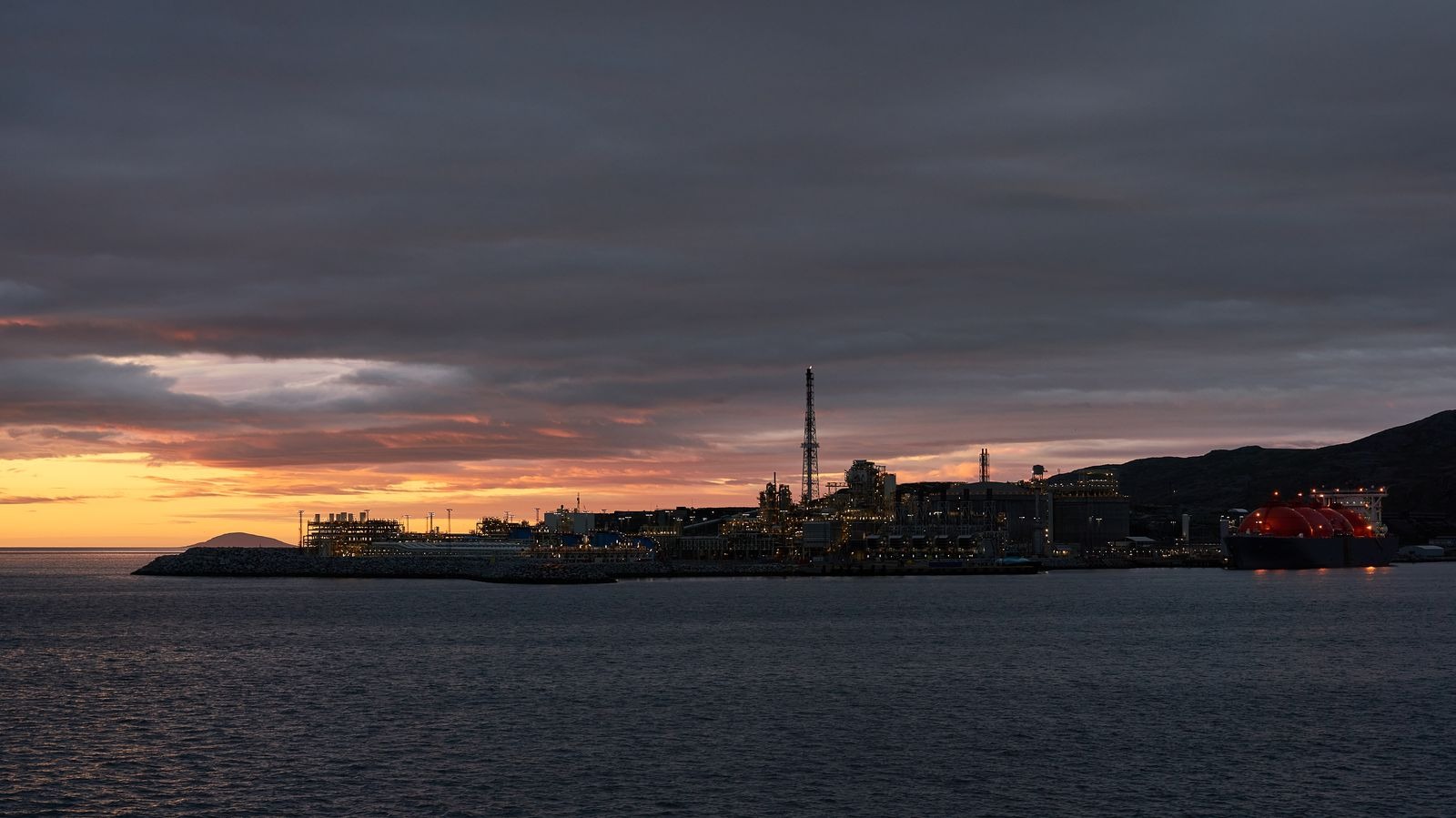
On Saturday, October 24, 2026, Indonesia began turning down the flow of natural gas to Singapore. The country's upstream oil and gas regulator, SKK Migas, cut pipeline exports by 31 million standard cubic feet a day — Indonesian reports give the same volume as 31 billion British thermal units a day — and sent the gas home instead. Fifteen million cubic feet a day came off the Natuna supply, and 16 million off the Sumatra supply, with the Sumatra portion drawn from the Jambi Merang field.
The announcement had come the previous evening. SKK Migas chairman Djoko Siswanto told reporters on the sidelines of the 2026 Subroto Energy Awards in Jakarta that the reduction would start the next day. On Saturday he told Reuters the purpose in one sentence: “In order to safeguard the reliability of domestic gas supplies for electricity generation, effective today, gas supplies previously destined for Singapore are being redirected for domestic use.” The gas, he said, would meet electricity needs in Batam, Bintan and Sumatra.
The plumbing of the decision is unusually well documented, because SKK Migas answered CNA's queries in detail. Gas from Natuna is being diverted to PLN Batam through the West Natuna Transportation System–Pulau Pemping–Batam pipeline. Gas from Sumatra is being redirected through the Transgasindo pipeline to electricity users in Batam, Bintan and Sumatra. The regulator said it would monitor developments daily — a promise that matters, because it implies the diversion is being managed as an operation, not merely announced as a policy.
The legal footing is also stated, not assumed. SKK Migas cited Article 8, Paragraph 1 of Indonesia's Oil and Gas Law as the basis for prioritising natural gas for domestic needs. And the scale is bounded: Reuters reports the cut at around 9% of Indonesia's pipeline gas supply to Singapore, and Djoko stressed that no other country is affected, because the pipelines in question connect directly to Singapore. The context is a 16-hour blackout earlier in October in Batam and several cities in the Riau Islands province — the kind of failure that turns an abstract allocation debate into a political fact.
Almost everything about the future of this cut is undeclared. SKK Migas has not said whether the reduction is temporary or permanent, and it has not publicly detailed how the adjustment affects existing commercial obligations between Indonesian suppliers and Singaporean buyers. That silence is itself the story's centre of gravity: a 9% pipeline cut that lasts a week is a footnote; one that lasts until the contracts expire at the end of 2028 is a restructuring.
Nor is the effect on Singapore yet measurable. CNA notes that it remains unclear what proportion of Singapore's overall gas supply is affected, or whether electricity generation and prices will feel anything at all. Singapore generates about 95% of its electricity from natural gas, and in 2025 piped gas accounted for 43% of its total gas imports against 57% for liquefied natural gas — so the city-state has an alternative channel, but pipelines are the cheaper, steadier leg of the mix. Both governments' formal positions are also still open: CNA had sent queries to Indonesia's presidential palace and to Singapore's energy ministry and had received no response from either at the time of reporting.
Nine percent sounds small until you place it against the structure it cuts into. Singapore is one of the world's most gas-dependent electricity systems: about 95% of its power comes from natural gas. Pipelines from Indonesia and Malaysia, plus LNG shipped in from international suppliers, are not interchangeable at will — pipeline gas arrives continuously and cheaply, while LNG must be bought on spot or term markets, shipped, regasified and stored. A cut to the pipeline leg therefore tests the resilience of the whole system, even before any price effect shows up.
For Indonesia, the stakes run the other way. The country exports about 30% of its natural gas production and consumes 70% at home, according to Bahlil Lahadalia, the coordinating minister for downstreaming and energy transition who also holds the energy and mineral resources portfolio. Every unit kept at home is a unit that can light a city in the Riau Islands or feed a planned petrochemical plant — and every unit kept at home is also a unit not earning export revenue. The cut is thus a deliberate trade, and the fact that Jakarta chose Batam's lights over Singapore's contracts tells you which side of that trade currently weighs heavier in Jakarta.
Read the regulator's statement and the minister's speeches together and two different logics emerge. The first is technical and defensive: a regulator, weeks after a 16-hour blackout in the Riau Islands, moving gas to where the grid failed. Article 8, daily monitoring, named pipelines — this is the language of operations, and it is designed to be boring. A boring reallocation is easy for a neighbour to absorb.
The second logic is political and expansive. On October 21, Bahlil said Indonesia was considering not extending gas exports to neighbouring countries, citing national energy security and the need to survive amid global tensions; on October 22 he warned that Jakarta would review energy export agreements with countries that did not show Indonesia sufficient respect, without naming any country; on October 23 he said the 30/70 export-domestic split would be recalculated to optimise domestic consumption, including feedstock for downstream petrochemical industries. SKK Migas, notably, did not link its diversion to those remarks in its response to CNA. The gap between the two messages is where the uncertainty lives: is the 31-unit cut the technical fix, the first instalment of the political programme, or both at once?
The first ripple runs through Southeast Asia's contract calendar. Indonesia agreed in 2022 to extend gas supplies to Singapore until 2028, but at lower volumes than under the previous contract; in April 2025 Djoko said Indonesia planned to cut Sumatra exports while using Natuna gas to make up the difference, and in May 2025 MedcoEnergi signed a gas-swap agreement with Singapore buyers including Sembcorp Gas, allowing more Sumatra gas to be redirected for domestic use. Saturday's cut breaks that pattern — it takes from both Natuna and Sumatra at once — and every buyer in the region will now read their own renewal date differently.
The second ripple is doctrinal. Indonesia's downstreaming drive — the push to process raw materials at home rather than export them — already shapes its nickel and palm-oil policy, as Indonesia's nickel downstreaming drive and the Morowali nickel cut show; gas is now visibly joining that list, and the wider contest over Southeast Asia's energy map will be fought contract by contract. The third ripple is commercial: if allocation reviews become routine, LNG sellers, pipeline investors and Singapore's power generators all reprice political risk in the region — quietly, in contract clauses, long before any headline.
Five things are worth watching. First, SKK Migas's daily monitoring statements — any sign of extension, deepening or reversal. Second, Singapore's formal response, and any data on generation or prices. Third, the promised allocation review from Bahlil's ministry, and whether it names new domestic volumes. Fourth, whether any other buyer or pipeline is drawn into the review. Fifth, whether the October blackout's causes are published — because the technical case for the diversion stands or falls on what actually failed in Batam.
The Western lens: a measured cut, read as a signal Western coverage, led by Reuters, treats the cut as a precise, bounded event: 31 million cubic feet a day, about 9% of pipeline supply, announced by a named regulator with a stated reason. The emphasis falls on measurement — the split, the percentage, the blackout context — and the political remarks are reported as background, not as the cause. The story, in this telling, is a market event with a policy shadow.
The Eastern lens: the neighbour's arithmetic Singapore's own press — CNA and The Straits Times — reports the cut through the arithmetic of dependence: 95% of electricity from gas, 43% of imports by pipeline, contracts to 2028. The tone is careful rather than alarmed, and the open questions are practical: how much supply is affected, whether prices move, what the ministry says. Jakarta's allocation review is reported as the longer story behind the day's number.
The Southern lens: Jakarta decides for Jakarta Indonesian and Malaysian coverage, led by Antara and Bernama, centres Jakarta's own rationale: domestic needs first, a legal basis in the Oil and Gas Law, and a minister arguing that a country which exports 30% of its gas while building downstream industry must recalculate. In this telling the cut is not a message to Singapore at all — it is Indonesia governing its own resources, and the neighbour's discomfort is incidental.
From Saturday, October 24, 2026, Indonesia cut pipeline natural gas exports to Singapore by 31 million standard cubic feet a day: 15 million from Natuna and 16 million from Sumatra, the Sumatra portion from the Jambi Merang field. The gas is being redirected to electricity generation in Batam, Bintan and Sumatra.
SKK Migas says the move safeguards the reliability of domestic gas supplies for electricity generation, citing Article 8, Paragraph 1 of Indonesia's Oil and Gas Law, which prioritises domestic use. The regulator pointed to electricity needs in Batam, Bintan and Sumatra, weeks after a 16-hour blackout hit Batam and other Riau Islands cities.
Singapore generates about 95% of its electricity from natural gas. In 2025, piped gas made up 43% of its total gas imports and liquefied natural gas 57%. Reuters puts the cut at around 9% of pipeline supply, but it is not yet clear what share of Singapore's overall supply is affected or whether generation or prices will change.
That is the open question. Minister Bahlil Lahadalia has said Indonesia is considering not extending gas exports to neighbours and will review the 30% exported versus 70% domestic split to feed downstream petrochemical industries. But SKK Migas did not link this diversion to those remarks, and no other country is affected by the current cut.
