In a Friday-night executive order, the US president invoked the Graham Act's own waiver clause to suspend the 100 percent tariffs on buyers of Russian oil and most of the law's new sanctions — certifying to Congress that the move is in the national interest, without saying why.
Published 17 October 2026 · 05:08 GMT
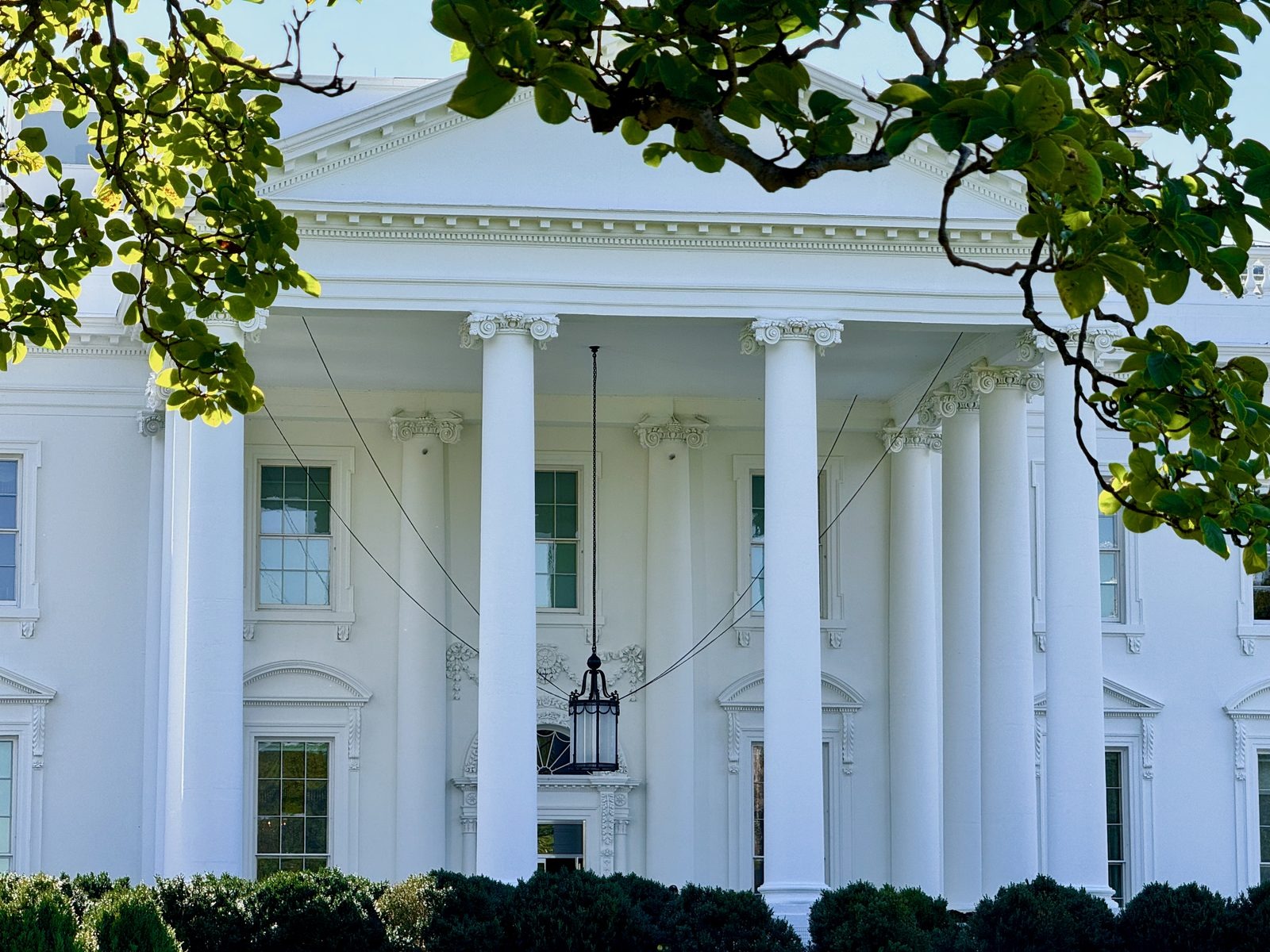
On Friday night, 16 October 2026, President Donald Trump signed an executive order titled "Implementing the Lindsey O. Graham Sanctioning Russia and Iran Act of 2026" — and used it to waive most of the law he had signed a month earlier. The order invokes Section 115, which lets the president suspend any of the Act's sanctions, restrictions or duties after certifying to Congress in writing that the waiver serves the national interest. Trump says he has submitted that certification and an explanatory report. The White House (16 Oct 2026)
The measures were due to take effect on 18 October, thirty days after Trump signed the law on 18 September. Without the waiver, the order would have raised US duties on Russian goods by 500 percent, and by 100 percent on goods from the five largest buyers of Russian crude oil and natural gas that knowingly make new purchases of Russian energy on or after 18 October — with the same 100 percent for the top five facilitators of Russian oil sanctions evasion. Reuters (17 Oct 2026)
Section 4 wipes that machinery away before it ever operates: "I hereby waive the application of any duties provided for in sections 112 and 113 of the Graham Act or this order," Trump wrote. The waiver is open-ended — in force until the president, or the secretary of state with the Treasury secretary and trade representative, decides otherwise. The White House (16 Oct 2026)
The order's text is public and its scope precise. Beyond tariffs, it suspends most of the Act's sanctions on foreign persons — sections 102(a), 102(d), 102(e) and 103 through 111 and 117 — and delegates most presidential powers under the law, including the waiver authority itself, to the secretary of state, the Treasury secretary, the trade representative and the energy secretary. LatestLY / IANS (17 Oct 2026)
What it does not do is equally clear. It names no country. It does not repeal the Act — every suspended measure can be reinstated. And it explicitly preserves all earlier Russia sanctions: nothing in the order affects measures under prior executive orders on the national emergency with respect to Russia, continued in March 2026. The White House (16 Oct 2026)
In place of the suspended penalties, the order builds a monitoring apparatus: the trade representative, with the secretaries of state, Treasury and energy, must track countries' Russian oil and gas purchases, name the top five evasion facilitators, and advise the president on keeping, narrowing or lifting the waivers. The White House (16 Oct 2026)
The central unknown is the reason. The order declares the waiver to be in the national interest but explains nothing — and the report meant to supply the explanation is not public. US outlets attribute the timing to the drive to cut fuel prices before the 3 November midterms, but the White House has not confirmed that in the order itself. CNN (16 Oct 2026)
We do not know how long the waiver lasts, which countries will be designated as the five largest importers or top five evasion facilitators — those lists are unpublished — or what would trigger reinstatement. Nor how Congress will answer: 22 House members have demanded full enforcement by the deadline, but no vote is scheduled. LatestLY / IANS (17 Oct 2026)
And we do not know how Moscow, Beijing or New Delhi will officially respond. No statements from the three capitals most affected had been published at the time of writing.
A president has neutralised his own signature legislation two days before it bites. The Graham Act — passed with broad bipartisan support in September and named for the late Senator Lindsey Graham, the Russia hawk who died in July — was the toughest Russia sanctions package in years. Its secondary tariffs were meant to force the biggest buyers of Russian energy, above all China and India, to choose between discounted Russian barrels and the American market. That choice is now postponed indefinitely. Reuters (17 Oct 2026)
The timing points to domestic politics. The waiver comes as the administration scrambles to lower fuel prices before the midterms — days after the diesel arrangement struck with Vladimir Putin and a Treasury licence for certain Russian diesel transactions. For Kyiv the signal is bleak: open feud with Volodymyr Zelenskyy, pressure to stop striking Russian oil facilities, hints Ukraine needs a new leader — alarming European allies about Washington's commitment. CNN (16 Oct 2026)
For New Delhi, the relief is immediate. India is among the largest buyers of Russian crude, and the 100 percent duty threat hung over its exports just as Secretary of State Marco Rubio was preparing to visit India from 17 to 22 October. The Hindu (17 Oct 2026)
First, the institutional fact: the waiver is not a loophole — it is the law working as designed. Section 115 was built into the Graham Act so no president would sign a statute tying his hands on foreign policy without an exit. Trump did not break the law; he used the exit before the penalties applied.
Because the law was more useful as leverage than as policy. Signed, it gave Trump a loaded weapon to point at Beijing, New Delhi and Moscow — and proof of toughness for Congress. Implemented, it would have meant a trade war with the two largest buyers of Russian oil, higher fuel prices before the midterms, and the end of the diesel channel just opened with Putin. The waiver keeps the weapon on the table — the statute survives, monitoring continues, reinstatement stays explicit — while avoiding the cost of firing it.
The five-dimensional read is stark. Geopolitically, the waiver makes the Trump–Putin channel the operative one and sidelines Congress and Kyiv. Economically, it subordinates sanctions policy to the American pump price — and the wider sanctions architecture around Russian energy now has a visible American pressure valve. Structurally, USTR-led monitoring keeps every buyer of Russia's crude under permanent surveillance: relief that is conditional and revocable by design. The risk is credibility: a shelved threat teaches every future target that American red lines are negotiable.
First, Russia's war financing is untouched: the oil flows, the buyers buy, and the Kremlin revenue the Act was written to choke continues. Second, the precedent travels — every government weighing defiance of future US secondary sanctions now has a live example of the threat shelved for domestic reasons. Third, the congressional–executive rupture deepens: 22 House members already demand answers on the diesel licence and full enforcement, so expect oversight hearings and possibly legislation to narrow the waiver authority. LatestLY / IANS (17 Oct 2026)
Fourth, Ukraine's position hardens the wrong way: pressed to stop hitting Russian refineries while Moscow keeps pounding Ukrainian energy infrastructure, Kyiv faces a Washington visibly prioritising cheap fuel over battlefield logic. CNN (16 Oct 2026) Fifth, oil markets get the signal they wanted — no imminent 100 percent tariff shock.
The 18 October deadline will pass quietly, with waivers instead of tariffs. Watch whether the White House releases the certification and report it says it sent to Congress — sunlight there is the difference between policy and favour. Watch Rubio's 17–22 October swing through Samarkand, Mumbai and Jamnagar: the waiver was timed, deliberately or not, to clear the air before he lands in India. LatestLY / IANS (17 Oct 2026)
Watch the trade representative's monitoring reports — and whether the "top five" lists are ever published, since naming names would re-arm the threat. And watch Congress: the McCaul–Costa letter asked for a waiver "narrow, time-limited, and tied to measurable reductions" in support for Russia's war. If lawmakers judge the open-ended waiver a betrayal of the statute's intent, the next fight will be legislative. The law is still on the books. The weapon is holstered, not melted down.
From Washington and European capitals, the waiver reads as a presidential override of Congress — and Capitol Hill's reaction has been furious and bipartisan. Senator Elizabeth Warren called it "an abject and predictable failure in leadership." Senator Richard Blumenthal, a co-sponsor, said the waivers "have nothing to do with our national security, and everything to do with sucking up to Vladimir Putin." Republican Representative Don Bacon said "the President is prolonging the war, not ending it." CNN (16 Oct 2026)
A day earlier, Republican Michael McCaul and Democrat Jim Costa had jointly urged Trump to implement the law fully and keep any waiver "narrow, time-limited, and tied to measurable reductions in support for Russia's war" — the opposite of the open-ended waiver issued. LatestLY / IANS (17 Oct 2026)
Independent Eastern reporting had not appeared at publication time: Chinese financial outlets carried the news as rewrites of Western market copy, and no original Xinhua, Russian or Japanese reporting was available in the verification window. What is on the record is the two capitals' established position — Beijing has warned it will protect its trade interests against secondary tariffs, Moscow treats Western sanctions as illegitimate pressure — so both will read the waiver as proof the sanctions architecture bends before American domestic politics. Official Russian or Chinese reactions to this order had not been published at press time, and this account will not invent them.
From New Delhi, the waiver is an eleventh-hour reprieve. Indian outlets framed it as direct relief: the order spares India and China the 100 percent duty a day before it was due to bite — as the two sides edge toward finalising the first tranche of a trade agreement, and months after Washington scrapped a February 25 percent duty on Indian goods tied to Russian oil buys, cutting the reciprocal tariff to 18 percent. LatestLY / IANS (17 Oct 2026)
India's press also noted the mechanics: The Hindu recorded the Section 115 escape hatch and the national-interest certification at the order's heart. For the wider Global South, the message is structural — secondary sanctions on Russian energy buyers remain a loaded weapon, but Washington has shown it will holster it when its own fuel prices are at stake, a precedent every energy-importing developing country will note. The Hindu (17 Oct 2026)
The order suspends the tariff machinery in sections 112 and 113 of the Graham Act — the 500 percent duties on Russian goods and the 100 percent duties on goods from the five largest buyers of Russian oil and gas and the top five sanctions-evasion facilitators — plus most of the Act's new sanctions on foreign persons, covering sections 102(a), 102(d) and 102(e) and sections 103 through 111 and 117.
The order itself gives no reason beyond the certification — the explanatory report Trump says he sent to Congress has not been made public. US outlets attribute the timing to the administration's drive to lower fuel prices before the 3 November midterms and to protect the diesel-supply arrangement struck with Vladimir Putin, but the White House has not confirmed that reasoning on the record.
No. The waiver covers only the new Graham Act measures. Every sanction imposed under earlier executive orders — including the national emergency on Russia's harmful foreign activities, renewed in March 2026 — remains fully in force, the order states explicitly. And the Act itself is not repealed: the administration can reinstate the waived measures at any time.
Immediate relief. Both are among the largest buyers of Russian crude and faced 100 percent US duties on their goods from 18 October. The threat is now suspended indefinitely — though not removed: the trade representative keeps monitoring their Russian energy purchases and can recommend reinstating penalties. The timing also clears the air ahead of Secretary of State Rubio's 17–22 October visit to India.
