The Supreme Court opened its October 2026 term with ExxonMobil and Suncor's bid to kill Boulder's climate lawsuit, a ruling that could decide the fate of nearly 60 similar suits nationwide.
Published 5 October 2026 · 18:00 GMT
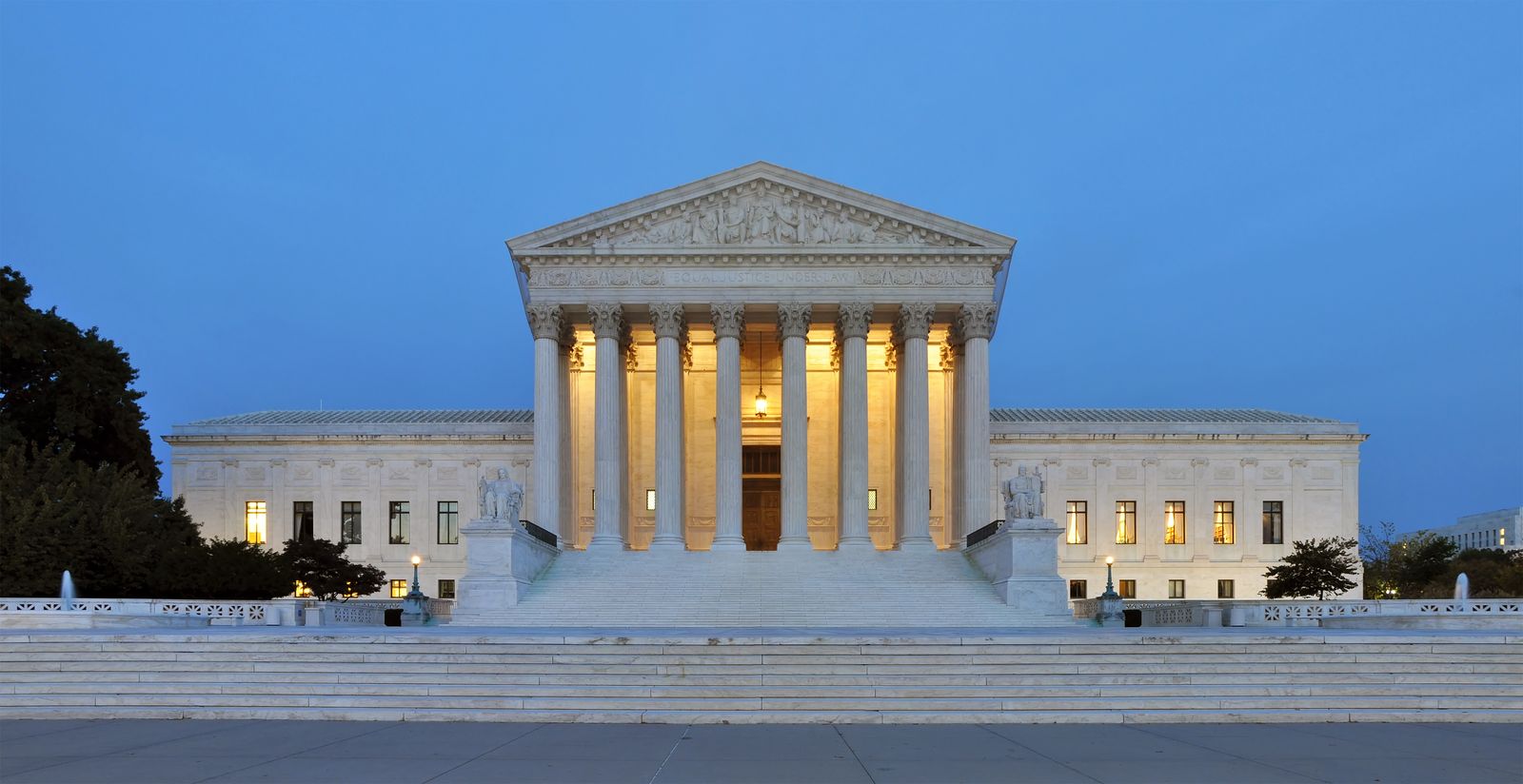
WASHINGTON — The Supreme Court opened its October 2026 term on Monday with nearly two hours of oral argument in the most consequential climate-liability case it has taken up. At issue: whether Boulder County, Colorado, can use state law to force ExxonMobil and Suncor to help pay for the wildfires, floods and heat its communities now endure. With Justice Samuel Alito recused and the Trump administration siding with the industry, the eight remaining justices must decide who gets to price a warming planet — a Colorado jury, or Washington.
For nearly two hours on October 5, the first day of the court's October 2026 term, the justices wrestled with Suncor Energy (U.S.A.) Inc., et al. v. County Commissioners of Boulder County, et al., docket No. 25-170. The central question is whether federal law bars state-law claims seeking relief for injuries allegedly caused by interstate and international greenhouse-gas emissions on the global climate. The court also asked the parties to address whether it even has jurisdiction to hear the case at this stage, before any trial has taken place. The dispute reached Washington after the Colorado Supreme Court ruled, five to two, in May 2025 that Boulder's lawsuit could proceed in state court. ExxonMobil and Suncor petitioned the Supreme Court, and the Trump administration filed a rare unsolicited brief urging the justices to take the case. They agreed in February 2026. With Justice Samuel Alito recused, only eight justices heard the argument, raising the real prospect of a four-to-four split that would leave the Colorado ruling standing.
Boulder County, the City of Boulder and San Miguel County filed their suit in 2018, accusing ExxonMobil and Suncor of a decades-long deception: the companies, the plaintiffs say, understood the climate risks of fossil fuels yet misled the public about them while continuing to profit. The bill for that deception, Boulder argues, keeps landing on local government. The communities say they face the costs of wildfires, severe storms, extreme heat and flooding — emergency response, infrastructure repair, environmental damage and harms to public health. Boulder expects its communities to spend upward of one hundred million dollars in the coming decades adapting to a changing climate, and it wants the companies to pay their share. The December 2021 Marshall Fire, which swept across Boulder County, has become the human emblem of those costs. The case has never reached a trial. In eight years it has survived every effort by the companies to move it to federal court or have it thrown out, and in May 2025 the Colorado Supreme Court ruled, five to two, that it could proceed.
The argument was never about whether the climate is changing. It was about who gets to price the damage: a Colorado jury, or Washington itself.
Kannon Shanmugam, arguing for the oil companies, opened with the line that framed the industry's case: "This case involves an unprecedented effort to use state law to regulate global conduct." His chain of reasoning ran from Boulder's courtroom to the whole planet — the county is suing under Colorado law, he said, on the theory that the companies' global conduct increased global fossil fuel use, which increased global emissions, which changed the global climate, which caused global harms. "Our constitutional system does not permit state law to be used in that manner," he told the justices. "The Constitution bars the application of state law to certain inherently federal areas." Because air and water are ambient and states have conflicting rights, he argued, the court has held for over a century that federal law governs interstate pollution claims — a principle he said applies with even greater force to climate change. And he warned of the stakes: if Boulder's claims survive, some 90,000 municipalities could ask juries to set national and international energy policy through catastrophic damage awards, producing a patchwork of climate rules across the nation.
The Trump administration is fighting alongside the companies, and it made its position unusually clear. In September 2025 it filed a rare unsolicited brief urging the Supreme Court to take the case, arguing that federal law — specifically the federal government's authority to regulate air pollution under the Clean Air Act — precludes Boulder's claims. The administration's lawyers sought time at the lectern to argue in person, with the Solicitor General's office contending that no single state should dictate how the entire country addresses a global problem. A deputy solicitor general told the court that suits like Boulder's severely interfere with the federal government's constitutional and statutory responsibilities. The posture fits the administration's broader alignment with the fossil fuel industry: energy production is treated as a national economic and security asset, and in this view it cannot be governed by a patchwork of state-court verdicts. For Boulder, that federal backing is the heaviest weight on the other side of the scale — the full authority of Washington, placed behind the industry's reading of the Constitution.
The reason this single Colorado case matters nationally is arithmetic. Nearly 60 state and local governments have brought similar suits seeking billions of dollars from fossil fuel companies, and more keep being filed. A ruling for ExxonMobil and Suncor could lead to many of those cases being dismissed before they ever reach a jury. A ruling for Boulder would send the cases the other way — toward discovery, where internal company documents become public, and toward trials where juries price the damage. Justice Elena Kagan gave the plaintiffs' theory its historical frame during argument, comparing Boulder's suit to the state lawsuits against tobacco companies in the 1990s and the more recent opioid litigation, which accused companies of misrepresentations that led people to overuse their products. "This is Chapter Three," she said. "So, if this is Chapter Three, were Chapters One and Two also preempted?" The industry's answer is that energy is different — and that the resulting costs land on every American who fills a gas tank or pays a power bill.
One empty chair shaped the entire argument. Justice Samuel Alito recused himself from the case, with the court's clerk, Scott Harris, informing the parties in a one-sentence letter that offered no rationale. Alito holds stock in several oil and gas companies — though not in ExxonMobil or Suncor — and he had stepped aside from the same litigation at an earlier stage in 2023 after initially resisting calls to do so. Watchdog groups had also pressed for the recusal of Justice Elena Kagan over an introduction she wrote for a judicial science manual; that did not happen. The practical consequence is stark: only eight justices will decide. A four-to-four split would affirm the Colorado Supreme Court's ruling and let Boulder's case proceed — but it would set no national precedent, leaving every other pending lawsuit to fight the same battle on its own. With the court ideologically divided, the tie is not a remote technicality. It is one of the most likely outcomes in the room.
American climate litigation has been building toward this moment for years. Boulder's 2018 filing was among the first wave of cases modeled, quite deliberately, on the tobacco and opioid suits — the theory being that courts can price deception even when legislatures will not regulate. The companies have fought on procedure ever since: they tried to move the cases to federal court, where corporate defendants historically fare better, and the Supreme Court turned those appeals away in 2023. They sought dismissal in state court and lost, including the Colorado Supreme Court's five-to-two decision in May 2025. Until now the justices had also declined to take up the merits — passing on a similar case pressed by Honolulu and on an unusual bid by nineteen Republican-led states to sue five Democratic-led states directly at the high court. Granting review in February 2026 broke that pattern. Whatever the justices decide, they are deciding it for the first time at the top of the system — which is why the briefing drew dozens of friend-of-the-court filings from both camps, and why the outcome will be read as the judiciary's answer to a decade of unanswered questions.
No ruling came on Monday, and none will come soon. The court's decisions in cases argued this term are expected by the end of June 2027, which means months of opinion drafting, vote counting and, quite possibly, fractured separate writings. Three broad paths lie ahead. If the companies win outright, the legal theory behind dozens of pending climate suits collapses and many are dismissed. If the court ties four to four, Boulder goes back to Colorado for a trial while the rest of the country waits for the next case to settle the law. If Boulder wins, the cases move toward discovery and trial, and the industry faces the prospect of juries — and settlements — on a national scale. Congress could still intervene; lawmakers have floated bills to shorten the filing windows for such suits. But the deeper fact survives any ruling: the adaptation costs are real, they are growing, and someone will pay them — taxpayers, or the companies that sold the fuel.
In Western legal and media circles, the case reads as a federalism stress test, not a climate verdict. The language of the argument — state law, preemption, the Constitution — frames a question of governance: a patchwork of local juries, or a single national regulator. American commentators see less an ecological battle than an arbitration over who decides — Washington or Colorado — and whether courts should price carbon where parliaments have refused to act.
A ruling for the companies would be read in Washington and Brussels as deference to legislatures; a ruling for Boulder as the judiciary doing the pricing work elected bodies avoided. Either way, Europe's own climate-liability experiments — the Dutch courts, the Shell litigation — make the American outcome a transatlantic reference point. The West is watching less the fire than the argument over who pays the firefighters.
From Moscow and Beijing, the case reads as an American contradiction: Washington lectures the world on climate responsibility while its highest court is asked to shield its own majors from paying for it. State-owned producers face no such lawsuits anywhere, so whatever the justices decide, the competitive gap between private Western majors and state-backed producers only widens.
The notable signal is the silence: the big Russian and Chinese state outlets appear to have given the argument no prominent coverage, filing it under American domestic litigation rather than global climate politics. That framing is itself the Eastern reading — the empire, billing itself, in a courtroom of its own making.
From the Global South, the geography of the case is the story. A wealthy Colorado county can haul oil majors into court, while Karachi, Lagos and Dhaka — which face incomparably heavier climate bills — have no comparable forum. The one hundred million dollars Boulder fears spending is a rounding error against the adaptation costs of the South, and the South's bill grows whether or not Washington's courts ever open their doors to it.
A Boulder victory would at least prove that liability is possible somewhere, and hand poorer jurisdictions a precedent to cite. A defeat would confirm what many in the South already assume: that the courts of the powerful protect the powerful, and that the bill stays everywhere with the taxpayer. Either way, the decision is made in Washington and the consequences are paid everywhere else.
No. Monday brought only oral argument — nearly two hours of questions from the justices. A decision is expected by the end of June 2027, when the court's term concludes. Boulder's case is the first of nearly 60 similar climate liability suits to reach the high court, which is why the outcome matters nationally.
Alito recused himself days before the argument. The court's clerk announced it in a one-sentence letter that gave no rationale. He holds stock in several oil and gas companies — though not ExxonMobil or Suncor — and had stepped aside from the same litigation at an earlier stage in 2023.
A tie affirms the Colorado Supreme Court's ruling without setting a national precedent. Boulder's lawsuit would proceed in state court, but the decision would resolve nothing for the dozens of similar cases elsewhere. The tie scenario is real because Justice Alito recused himself, leaving eight justices to decide.
It could end many of them. Nearly 60 state and local governments have filed similar suits seeking billions of dollars, and the companies told the justices that a favorable ruling could lead to dismissals across the board. A ruling for Boulder would instead open the floodgates, letting state courts hear climate damages claims nationwide.
