Iran says Hormuz stays shut until seven June conditions are met — but Monday's oil markets shrugged: Brent slipped as G7 stock releases and rising Middle East exports eased supply fears.
Published 5 October 2026 · 06:00 GMT
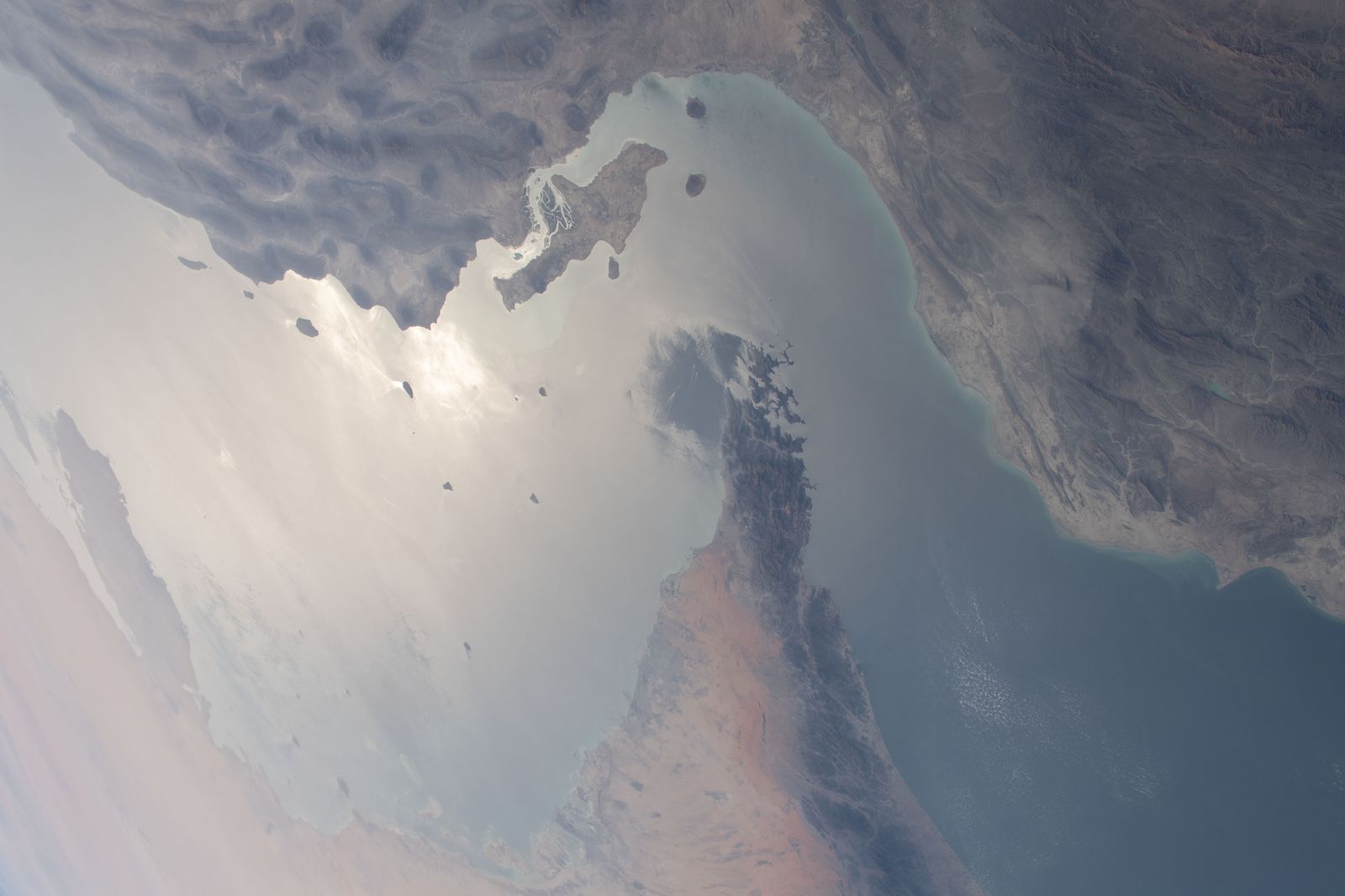
DUBAI — Iran drew a red line through the world's most important oil artery on Sunday, declaring the Strait of Hormuz will not reopen until the United States meets seven conditions Tehran says were agreed in a June interim deal. The message, delivered by parliament speaker and top negotiator Mohammad Baqer Qalibaf through the state-linked Nournews agency and carried by Reuters, landed days after Tehran received Washington's reply to its diplomatic proposal — a reply that travelled through Qatari intermediaries. "The position of the Islamic Republic of Iran is completely clear and firm," Qalibaf said, "and the Strait of Hormuz will not be opened until our seven conditions, based on the Islamabad Memorandum of Understanding, are met." On Monday, the oil market's answer was a shrug: Brent crude slipped about 0.6 percent to around $101.60 a barrel as rising Middle East exports and the G7's emergency stock releases eased near-term supply concerns — though attacks on tankers around the waterway kept traders watching every headline.
On Sunday, Iran's parliament speaker and top negotiator Mohammad Baqer Qalibaf drew what he called a clear and firm line through the world's most important oil artery: the Strait of Hormuz will not reopen until the United States meets seven conditions Tehran says are written into a June interim agreement. Quoted by the state-linked Nournews agency and carried by Reuters, Qalibaf spoke days after Tehran received Washington's reply to a diplomatic proposal Iran tabled at the UN General Assembly in September — a reply that travelled through Qatari intermediaries. "The position of the Islamic Republic of Iran is completely clear and firm," he said, "and the Strait of Hormuz will not be opened until our seven conditions, based on the Islamabad Memorandum of Understanding, are met."
The message carried a sharp elbow: "The Americans, who say something different in the media, have recently put forward proposals through a mediator," Qalibaf said. "But they must understand that the period of dragging out the process and dictating one-sided demands is over." It confirms the two sides are talking again, even as they fight.
The market heard Iran's red line and read it as a bargaining position — not as a siege.
The seven conditions have not been published in full, but Iran-linked reporting says they centre on lifting sanctions and releasing frozen Iranian assets, removing the American naval blockade, a durable end to hostilities, and guarantees of Iranian sovereignty and security. Baghaei said Tehran had returned its positions to the Americans through mediators — and denied offering UN watchdog inspections of its sites for sanctions relief. "Our focus in this stage is the Strait of Hormuz," he said.
Alongside the hard line came a carrot. Abbas Araqchi told foreign ambassadors in Tehran that Iran's seven-day roadmap could reopen the strait within a week if Washington accepts it.
Baghaei's verdict on Washington's reply was chilly: the Americans' propositions were "more or less in line with their previous positions, specifically on the nuclear issue." That gap — Hormuz for Tehran, the bomb for Washington — is the chasm the Qatari shuttle is trying to bridge.
On Monday the market read Tehran's red line and barely blinked. Brent crude slipped about 0.6 percent to around $101.60 a barrel, Reuters reported, as rising Middle East crude exports and the G7's coordinated stock releases eased near-term supply concerns. In early Asian trading, WTI sat nearly unchanged at $91.15 a barrel while Brent ticked 0.4 percent higher to $102.66, per the Wall Street Journal — both near Friday's settlements. For all the threats and strikes, the physical market has found a workable, if expensive, equilibrium.
Three forces are holding the lid on. First, the G7's October 2 decision to release up to 100 million barrels of crude and diesel from emergency stocks over four months — announced under French President Emmanuel Macron, who holds the G7 presidency — signalled the big consumers will not wait for diplomacy. The group also agreed to coordinate refinery maintenance, boost diesel output, and demand navigational rights in Hormuz; the IEA must report on the release within 20 days. Hours after the deal, President Donald Trump said the United States would not ban diesel exports — defusing a fear that had stalked markets for weeks. The crude-versus-diesel split was not disclosed.
Second, Middle East crude is finding its way out anyway. Reuters reported rising regional exports on Monday, and shipping data tells the workaround story: tankers sailing with transponders dark, and ship-to-ship transfers off Fujairah — the VLCC Pinios offloading two million barrels of Iraqi Basrah crude to the New Constant, bound for China — as the strait's shadow plumbing. Third, soft US jobs data slashed the odds of an October Fed rate hike.
Visible traffic through the strait remains a trickle. The latest Kpler snapshots showed 17 commodity vessels transiting over a recent weekend, down from 37 the week before — against a pre-war rhythm of about 125 large vessels a day carrying roughly a fifth of the world's crude oil and liquefied natural gas. None capture the dark fleet: exports with identification systems switched off are, by design, uncountable — which is why Tehran's restriction bites insurers and law-abiding shipowners harder than the barrels themselves.
The danger is real even so. Britain's Maritime Trade Operations body reported seven strikes on vessels around the waterway since September 28, logging another on Sunday. Days earlier, shipping intelligence firm Marisks reported three Liberian-flagged tankers hit by unknown projectiles on October 1 — the Al Ruwais, the Mersin Prosperity and the Sinbad — while the LR Stephanie and the LPG carrier Al Maryah were struck in September. Responsibility for most incidents is unconfirmed or merely claimed; mines, speed boats, missiles and drones are all in play, and satellite spoofing makes navigation harder. Each unanswered strike pushes insurance costs higher — the quiet mechanism by which a "restricted" strait becomes effectively closed for anyone but the boldest.
While Tehran talked about reopening Hormuz, the energy war spread on land. On October 3, fires and large smoke plumes rose from a Saudi Aramco refinery in Riyadh, Reuters reported — an attack the Institute for the Study of War assesses was likely a Houthi missile-and-drone strike, part of the group's campaign against Saudi oil infrastructure. The Houthis say they are retaliating for Saudi airstrikes on Sanaa — and Yemen's Saudi-backed government answered on Sunday by announcing a major campaign to retake all Houthi-held territory. The Red Sea route, the main alternative while Hormuz is constrained, is caught in the same fire.
Earlier scars are still being repaired. About a third of the Gulf's refining capacity has been damaged at some point, and JPMorgan's commodities team estimates eight key facilities — including Qatar's Ras Laffan complex, where Iranian strikes knocked out roughly 17 percent of capacity at one of the world's largest gas plants, and Bahrain's Sitra refinery, where Bapco Energies declared force majeure — face multi-month repair timelines; in the UAE, the giant Ruwais refinery has taken repeated hits to its West unit, half the site's capacity. Physical markets are exceptionally tight, with diesel near record highs — which is why the G7's release is weighted toward diesel.
The Pentagon is sending a third aircraft-carrier strike group and an extra Marine expeditionary unit to the Middle East — 9,000 to 10,000 more troops by end-November, the Wall Street Journal reported. The US-Iran conflict is in its eighth month. OPEC and its allies chose stillness: the seven OPEC+ producers held output steady and reconvene on November 1 to set December levels — a holding pattern that could be tested if producers compete for market share once flows normalize.
Geopolitics. Hormuz is leverage, not just geography. Tehran is converting a waterway it cannot legally close into a toll booth of conditionality — seven conditions it wrote itself, a seven-day plan it named itself — while Washington's reply arrives through Qataris and reads, per Baghaei, like old positions on new stationery. The game: make the strait's reopening a deliverable America must buy, pricing every week of delay into crude.
Macroeconomics. Brent near $102 is the war's arithmetic: up from $72 before the conflict, but well below the spring spike above $119 that followed the strikes on Qatar's gas plant. The G7's 100-million-barrel release is modest beside the eight-million-barrel-a-day shortfall the market absorbed in March — but it is diesel-weighted, aimed at the tightest product market. The spring's stagflation risk has not vanished; soft US jobs data merely pushed the Fed's next move off the agenda.
Demographics. The bill arrives at filling stations in Asia and Africa first. India, the world's third-largest oil importer, saw shares rebound on Monday partly because oil eased — a reminder that every dollar on Brent is a tax on the Global South's importers. Europe's diesel drivers pay the same tax in euros. Whoever wins the Hormuz standoff, the world's poorest energy consumers lose every week it continues.
Historical patterns. Iran has played the strait card for decades — the 1980s Tanker War, the 2019 limpet-mine attacks, the 2024 seizures — but never as stated policy tied to a written list of conditions. The novelty is the legalism: an Islamabad memorandum, seven numbered demands, a seven-day plan. That is the language of a regime that wants the restriction to look reversible on demand — a negotiating instrument rather than an act of war.
Structural and technological. The shadow system is this war's plumbing: dark transponders, ship-to-ship transfers off Fujairah and Sohar, satellite spoofing and GPS jamming as standard weather. Sanctions-busting techniques once reserved for Iran's own exports are now the Gulf's operating manual — and the longer the restriction lasts, the harder it gets to audit, insure or sanction the oil moving through it.
Watch the water: UKMTO strike reports are the real-time read on whether Iran's "restricted" strait is tightening or just talking. Watch Doha: if Qatar's shuttle produces anything beyond "more or less in line with previous positions," the seven conditions start being negotiated in earnest. Watch Vienna: OPEC+'s November 1 meeting tests whether the stillness survives December. And watch the IEA's 20-day check on the G7 release. From Frankfurt, the European angle is diesel — the G7 release exists largely because Europe asked. The market's Monday shrug was confidence or complacency; the next strike report will tell which.
From Western capitals, this is Tehran monetising a chokepoint: seven self-written conditions, a seven-day plan with Tehran's name on it, and a strait that reopens the moment Washington pays. The G7's 100-million-barrel release and the third carrier group are the answer — steady supply and steady deterrence until the leverage runs out.
Europe reads it through diesel. The continent's trucks, tractors and factories run on the fuel the G7 release is weighted toward, and every week of restriction is a tax on European industry that no stockpile can absorb forever.
From Tehran's vantage, Hormuz is the one card Washington cannot print: seven conditions anchored in a written memorandum, a seven-day reopening offer that puts the onus on the Americans, and a strait that proves Iran's reach every day it stays restricted. The Qatari shuttle confirms the other side is listening.
For Beijing and Moscow, the stalemate is useful arithmetic. China keeps buying discounted crude through the shadow fleet; Russia watches Gulf diesel tightness prop up the products it still sells. Neither has any reason to hurry a reopening.
For the Global South, the standoff is a levy with no vote attached. India, Pakistan, Bangladesh and much of Africa buy their energy at Brent-plus-insurance, and every week of restriction widens the transfer from poor importers to the war's profiteers. Monday's price dip was a small mercy; the tax itself remains.
Gulf exporters walk the narrowest line: Saudi Arabia, the UAE and Iraq need the barrels flowing and the prices high, the refineries intact and the Americans committed. Each strike report narrows that line a little more.
Tehran says the strait will not reopen until the United States meets seven conditions it claims were agreed in a June interim deal — reportedly covering sanctions relief, frozen assets, the US naval blockade, an end to hostilities and security guarantees. Iran is using the waterway as diplomatic leverage while its seven-day reopening offer sits on the table.
Parliament speaker Mohammad Baqer Qalibaf, Iran's top negotiator, said "the Strait of Hormuz will not be opened until our seven conditions, based on the Islamabad Memorandum of Understanding, are met" — via the state-linked Nournews agency, carried by Reuters. Foreign Minister Araqchi separately said the strait could reopen within seven days if Washington accepts Iran's plan.
Three buffers: rising crude exports from the Middle East, the G7's decision to release up to 100 million barrels of crude and diesel from emergency stocks over four months, and weaker-than-expected US jobs data that cooled expectations of a Fed rate hike. Brent slipped about 0.6% to around $101.60.
The latest Kpler snapshots showed 17 commodity vessels transiting over a recent weekend, down from 37 the week before — against about 125 large vessels a day before the war, carrying a fifth of the world's crude and LNG. That excludes tankers sailing with transponders off, which are uncounted.
On October 2 the G7 agreed to release up to 100 million barrels of crude and diesel from emergency stocks over four months, coordinate refinery maintenance, push refiners to produce more diesel, and demand the restoration of navigational rights in Hormuz. The IEA must report on implementation within 20 days.
Watch UKMTO strike reports for whether the restriction is tightening, Qatar's shuttle diplomacy for any movement in the seven-conditions talks, OPEC+'s November 1 meeting on December output, and the IEA's 20-day check on the G7 stock release, due later this month.
