Lavrov lands in Atlanta as the G20 tests whether diplomacy still outruns war
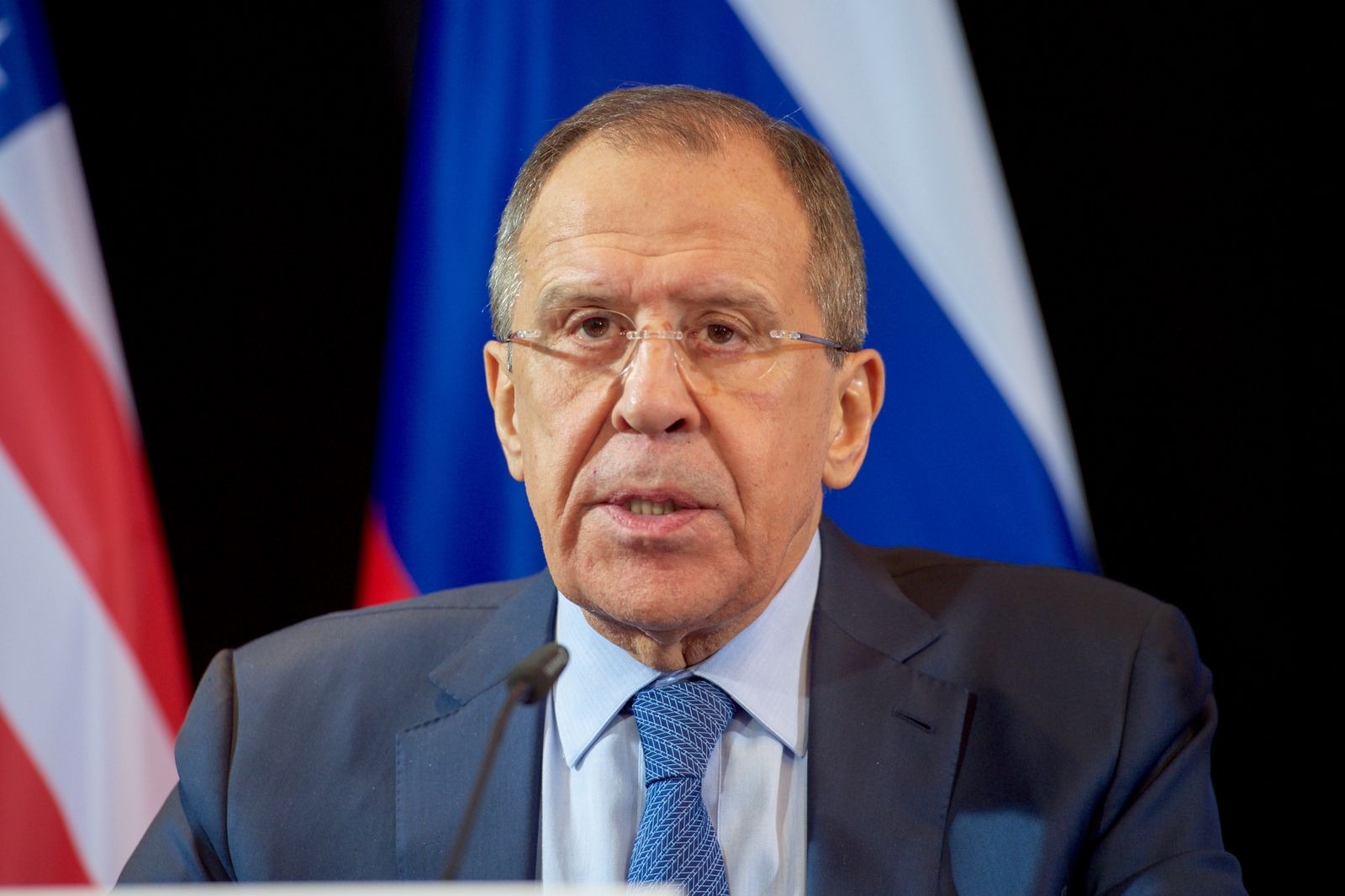
Russia's sanctioned foreign minister arrived in Atlanta on Friday for the two-day G20 foreign ministers' meeting, seating Lavrov opposite Marco Rubio for the first US-hosted G20 ministerial; with the Ukraine war, the US-Iran war, high oil prices, and a midterm election all pressing on the same room.
Published 30 October 2026 · 06:03 GMT
The summary
Russian Foreign Minister Sergey Lavrov arrived in Atlanta, Georgia, on Friday, October 30, 2026, to attend the G20 Foreign Ministers' meeting of October 30–31, Russia's state-owned TASS news agency reported. The meeting is chaired by US Secretary of State Marco Rubio under the US G20 presidency; attendees include EU foreign policy chief Kaja Kallas, India's S. Jaishankar, and the foreign ministers of Germany, France, Poland, Canada, Turkey, Britain, Australia, and Japan, with China represented by Executive Vice FM Ma Zhaoxu.
The three lenses
- WestWestern coverage treats the visit as contested by definition.
- EastRussian and Asian reporting reads the arrival as routine multilateralism: the minister flies in, the wires confirm it, and Zakharova's framing, an assessment of 'destructive trends' in geopolitics, gets equal billing with Washington's agenda.
- Global SouthThe Global South press keeps its eyes on the material ledger.
Key facts
- Russian Foreign Minister Sergey Lavrov arrived in Atlanta, Georgia, on Friday, October 30, 2026, to attend the G20 Foreign Ministers' meeting of October 30–31, Russia's state-owned TASS news agency reported. Tribune India, citing Russia's state-owned TASS news agency (Oct 30, 2026)
- The meeting is chaired by US Secretary of State Marco Rubio under the US G20 presidency; attendees include EU foreign policy chief Kaja Kallas, India's S. Jaishankar, and the foreign ministers of Germany, France, Poland, Canada, Turkey, Britain, Australia, and Japan, with China represented by Executive Vice FM Ma Zhaoxu. Kyiv Post (Oct 30, 2026)
- Moscow said on October 29 that Lavrov would use his speech to argue against international sanctions and other trade restrictions, portraying them as instruments of pressure, and to promote a multipolar world order. Ukrainian News, citing Bloomberg (Oct 30, 2026)
- The US State Department agenda centers on the global economy and crises feeding global economic shocks: threats to freedom of navigation, energy and food security, and supply chains; with the US-Iran war putting energy security at the meeting's center. The National (Oct 30, 2026)
- Trump has issued sanctions waivers allowing Russia to export diesel to tame fuel prices ahead of the midterm elections; Russian Finance Minister Anton Siluanov attended a G20 meeting in North Carolina in September and held sideline talks with Treasury Secretary Scott Bessent. The National (Oct 30, 2026)
- The ministerial precedes the G20 leaders' summit in Miami on December 14–15, where Trump expects to meet Russian President Vladimir Putin; Putin has been invited but his attendance remains unconfirmed, and no joint declaration is expected from Atlanta. Kyiv Post (Oct 30, 2026)
A sanctioned foreign minister lands in Georgia, on Washington's invitation
Russian Foreign Minister Sergey Lavrov arrived in Atlanta, Georgia, on Friday, October 30, 2026, to attend the two-day meeting of G20 foreign ministers, state-owned TASS news agency reported. Russian wire Sputnik confirmed the arrival independently, noting that Lavrov will sit at the table with US Secretary of State Marco Rubio, who hosts the meeting as the United States holds the G20 presidency, European Union foreign policy chief Kaja Kallas, and representatives from China and the other member states. Tribune India, citing Russia's state-owned TASS news agency (Oct 30, 2026)
Lavrov, under US sanctions since Russia's full-scale invasion of Ukraine in 2022, leads the Russian delegation to the October 30–31 ministerial. The State Department's delegation list places Germany's Johann Wadephul, France's Jean-Noël Barrot, Poland's Radosław Sikorski, Canada's Anita Anand, Turkey's Hakan Fidan, Britain's Ed Miliband, Australia's Penny Wong, India's S. Jaishankar, and Japan's Toshimitsu Motegi around the same table; China sends Executive Vice Foreign Minister Ma Zhaoxu. Kyiv Post (Oct 30, 2026)
The visit carries visible friction in Washington: Republican Representative Don Bacon publicly condemned the trip and urged that Lavrov be barred from the country while Moscow continues its attacks on Ukrainian cities, after days of Russian strikes including an attack on a Dnipro railway station where 14 civilians were reported killed. Kyiv Post (Oct 30, 2026)
The chair, the dates, and what the two agendas actually say
The meeting is chaired by Secretary Rubio and runs October 30–31 on the United States' invitation. India's Ministry of External Affairs confirmed on October 28 that External Affairs Minister S. Jaishankar is attending, and will join a QUAD foreign ministers' meeting and bilateral engagements on the sidelines. Tribune India, citing Russian news agency Sputnik (Oct 30, 2026) Vietnam.vn, citing the Russian Foreign Ministry (Oct 29, 2026)
The published agendas describe two different meetings attended by the same people. The US State Department says the talks will focus on the global economy and crises feeding global economic shocks: threats to freedom of navigation, energy and food security, and supply chains. Moscow's framing, delivered by Foreign Ministry spokeswoman Maria Zakharova, centers on what she called "destructive trends" in geopolitics and an assessment of the global economy through them. The National (Oct 30, 2026) Tribune India, citing Russian news agency Sputnik (Oct 30, 2026)
Moscow said Thursday that Lavrov will use his speech to argue against international sanctions and trade restrictions as instruments of pressure, and to promote a multipolar world order. On logistics, Zakharova said on October 28 that most organizational issues around the Russian delegation's stay had been resolved, though US visas for Russian diplomats remained a complication. Ukrainian News, citing Bloomberg (Oct 30, 2026) Ukrainska Pravda, citing Interfax and spokeswoman Maria Zakharova (Oct 28, 2026)
What remains unconfirmed behind the handshakes
No joint declaration is expected from Atlanta, according to French diplomatic sources; a measure of how far apart the delegations are. Whether that holds, or a chairman's summary emerges with Lavrov's dissent on the record, will only be known when the gavel falls on October 31. The National (Oct 30, 2026)
The December summit casts the longest shadow: Russian President Vladimir Putin has been invited to the G20 leaders' summit in Miami on December 14–15, where President Donald Trump expects to meet him; but his attendance remains unconfirmed, and that question now shapes every bilateral exchange in Atlanta. Kyiv Post (Oct 30, 2026)
It is also unclear what the Ukraine track produces. Fresh talks between officials from Moscow, Kyiv, and Washington aimed at brokering an end to the war are expected around the meeting; but participants, format, and agenda have not been disclosed. The Times of Israel, citing TASS (Oct 30, 2026)
Three wars, one ballot box, and a table built for none of them
The G20 was built as an economic crisis committee; Atlanta asks it to perform diplomacy across simultaneous conflicts, Ukraine, the US-Iran war, high oil prices, with energy and supply chains explicitly on the agenda. The Hindu (Oct 30, 2026)
The timing is political as well as geopolitical. The ministerial is taking place days before the US midterm elections, and Trump has issued sanctions waivers allowing Russia to export diesel to tame fuel prices ahead of the vote. Lavrov in Georgia, sanctioned in Washington, invited by Washington, is the election-season signal made flesh: the administration wants cheaper fuel and a diplomatic channel at the same time. The National (Oct 30, 2026)
For Moscow the stakes are symmetrical: argue sanctions are instruments of pressure to be dismantled, and use the multilateral stage to insist the world is multipolar; not to win an argument in Atlanta, but to be seen, on US soil, refusing isolation. Ukrainian News, citing Bloomberg (Oct 30, 2026)
Atlanta is the audition; Miami is the exam
The October ministerial and the December leaders' summit must be read as one two-act sequence. Atlanta's job is procedural: agree on who talks to whom, test whether the Ukraine channel between Moscow, Kyiv, and Washington has life in it, and set the terms of reference for December. The substance, sanctions relief, energy flows, a settlement framework, belongs to Miami, where Trump expects to sit across from Putin. Lavrov's Atlanta performance is as much scouting as diplomacy: Moscow will measure how much sanctions relief is on the table before deciding what Putin's attendance buys. The Hindu (Oct 30, 2026) Kyiv Post (Oct 30, 2026)
Washington's agenda language is doing quiet work. "Returning to the core mission" of economic growth, the phrase The National attributes to the US hosts, signals an administration that wants the G20 depoliticized, or at least wants the sanction-and-condemnation machinery of recent summits parked. Russia hears permission to argue sanctions are off-mission. The EU delegation hears something else: a US presidency willing to host a sanctioned Lavrov is not one likely to tighten the pressure campaign. The National (Oct 30, 2026)
The ripple lines from Georgia to the oil market
Energy markets are the first-order audience. High oil prices hang over the Ukraine impasse, the US-Iran war, and the Strait of Hormuz calculus; and the diesel-waiver arrangement already shows how directly the administration links summit diplomacy to the pump price. If Atlanta produces even the appearance of a working US-Russia channel, crude risk premia will price it in before any communiqué exists. The Hindu (Oct 30, 2026)
The second ripple runs through the multilateral calendar. South Africa's disinvitation, Washington excluded Pretoria over its domestic and foreign policies, including its legal action against Israel, means the 2026 G20 runs with a thinner Global South bench. If the ministerial ends without a joint declaration, as French diplomats expect, Miami inherits a process already stripped of its consensus machinery; a bilateral showpiece wearing a multilateral costume. The National (Oct 30, 2026)
What must the next 48 hours produce?
The ministerial closes October 31, and the immediate markers are binary: a joint declaration or a chairman's summary, and whether any Moscow-Kyiv-Washington contact is confirmed or merely rumored. Watch the bilateral readouts, especially any Rubio-Lavrov and Lavrov-Jaishankar meetings, for the language used on sanctions and the Ukraine channel. Kyiv Post (Oct 30, 2026)
Then the clock starts on Miami. Putin's attendance decision will be the single most consequential call of the G20 year, and Atlanta's atmosphere will be part of his evidence file. If the ministerial produces a working Ukraine channel, Moscow will keep the Miami invitation alive; if it produces open dissent, December will be reframed as a bilateral encounter in multilateral dress. Kyiv Post (Oct 30, 2026)
The three lenses
West Lens:
Western coverage treats the visit as contested by definition. US lawmakers call for Lavrov to be barred; the emphasis falls on his sanctioned status, the timing days after deadly Russian strikes in Ukraine, and the awkwardness of a State Department delegation list seating him beside allies. The meeting is read through the Ukraine endgame: will the fresh round of Moscow-Kyiv-Washington talks move the needle?
East Lens:
Russian and Asian reporting reads the arrival as routine multilateralism: the minister flies in, the wires confirm it, and Zakharova's framing, an assessment of 'destructive trends' in geopolitics, gets equal billing with Washington's agenda. Vietnam's coverage stresses institutional facts: the US presidency, Rubio chairing, the dates. Moscow's message is continuity; Russia is at the table because the table cannot claim to be global without it.
South Lens:
The Global South press keeps its eyes on the material ledger. The National centers the Iran war's pull on energy security and maritime routes, and reads the diesel-waiver deal as the real story inside the diplomacy. Indian outlets track Jaishankar's itinerary, Atlanta plus the Caribbean, the QUAD on the sidelines, and treat the ministerial as a working meeting where the South's leverage is what every bloc needs: markets, fuel, and shipping lanes.
The consensus
- What we agree on
- We agree: Sergey Lavrov arrived in Atlanta on October 30, 2026, to lead the Russian delegation at the two-day G20 foreign ministers' meeting, as reported by Russia's TASS and Sputnik agencies and confirmed by US, Indian, and Israeli outlets.
- What we don't agree on
- We agree: the meeting, chaired by US Secretary of State Marco Rubio under the US G20 presidency, is officially about the global economy, energy and food security, freedom of navigation, and supply chains; while Moscow says Lavrov will use it to argue against sanctions and for a multipolar order.
- What we know
- We disagree on: what Lavrov's presence means. Moscow and parts of the Global South press read it as normal multilateralism; Western critics, including US lawmakers calling for him to be barred, read it as Washington granting legitimacy to a sanctioned war-time foreign minister.
- What we don't know yet
- We do not yet know: whether Vladimir Putin will attend the December 14–15 G20 leaders' summit in Miami; whether the expected Moscow-Kyiv-Washington talks materialize and in what format; and whether the ministerial yields even a chairman's summary, with no joint declaration expected.
- What we expect
- We expect: Lavrov to deliver his anti-sanctions and multipolar-world argument on the Atlanta stage; energy markets to price any sign of a working US-Russia channel; and the December summit's shape to be negotiated, publicly and privately, in the 48 hours of this ministerial.
Questions, answered
Why is Lavrov allowed into the United States if he is under sanctions?
Sanctions restrict assets and transactions; they do not automatically bar entry, and the US government issues visas for multilateral meetings it hosts. The administration invited him as part of the G20 process, and Representative Don Bacon's call to bar him was a protest, not a legal mechanism. Hosting Lavrov signals that Washington values the diplomatic channel more than the optics of exclusion.
What is on the Atlanta agenda?
The US State Department lists the global economy, threats to freedom of navigation, energy and food security, and supply chains. Russia adds its own framing, an assessment of what Moscow calls 'destructive trends' in geopolitics, and Lavrov will argue against sanctions as instruments of pressure. No joint declaration is expected, per French diplomatic sources, so the deliverable is the bilateral readouts, not a communiqué.
What does Atlanta mean for the December summit?
Everything procedural. The Miami G20 leaders' summit on December 14–15, where Trump expects to meet Putin, whose attendance is unconfirmed, will be shaped by what Atlanta establishes: whether a Moscow-Kyiv-Washington channel is alive, how far sanctions relief is discussed, and whether the US-Russia dynamic can be compartmentalized from the election cycle. Atlanta sets the table; Miami decides the menu.
How does the Ukraine war connect to this meeting?
Directly. Reports point to fresh talks between officials from Moscow, Kyiv, and Washington aimed at brokering an end to the war, timed around the ministerial. Lavrov's arrival days after deadly Russian strikes, including 14 reported killed at a Dnipro railway station, is why Western coverage treats his presence as contested. The war is not on the formal agenda; it is the room's gravitational center anyway.
Sources
- Tribune India, citing Russia's state-owned TASS news agency (Oct 30, 2026)
- Kyiv Post (Oct 30, 2026)
- Ukrainian News, citing Bloomberg (Oct 30, 2026)
- The National (Oct 30, 2026)
- Vietnam.vn, citing the Russian Foreign Ministry (Oct 29, 2026)
- Ukrainska Pravda, citing Interfax and spokeswoman Maria Zakharova (Oct 28, 2026)
- The Times of Israel, citing TASS (Oct 30, 2026)
- The Hindu (Oct 30, 2026)