Daria Shipilova, 28, died days after a reported accident at Russia's Irkutsk anti-plague institute. Washington says Moscow is withholding information. Moscow says the media is lying.
Published 7 October 2026 · 18:00 GMT
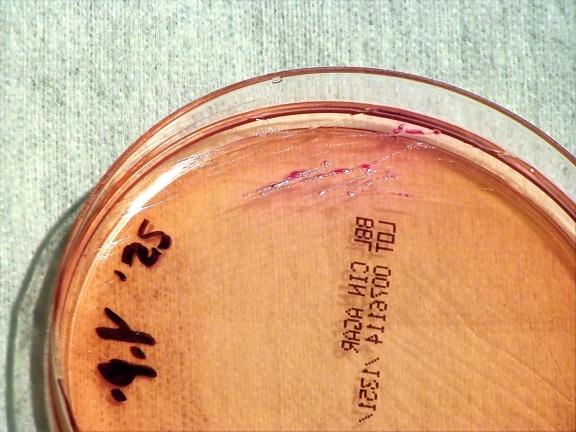
She was 28, a laboratory technician at one of Russia's oldest anti-plague institutes, and she is dead. Daria Shipilova died on October 2 in a hospital in Shelekhov, a satellite town of Irkutsk in southeastern Siberia, after what her employer calls a pneumonia of unknown origin and what unnamed Russian reports call pneumonic plague contracted when she broke a test tube at work. Moscow says tests found no trace of the plague bacterium in her body. Washington says Moscow is not telling everything it knows. On Tuesday, President Donald Trump said he would speak to Vladimir Putin "very soon." The World Health Organization says it is investigating reports of a second employee with the same undiagnosed pneumonia.
Daria Shipilova was 28, a laboratory technician at the Irkutsk Anti-Plague Research Institute of Siberia and the Far East, and she died on Friday, October 2, in a hospital in Shelekhov, a satellite town of Irkutsk roughly 150 miles from Russia's border with Mongolia. According to colleagues cited by Mash, a Russian Telegram channel with links to the country's security services, she accidentally broke a test tube containing the plague pathogen on September 25, developed severe pneumonia, and never recovered. Doctors first suspected the coronavirus. The official cause of death, announced by Russia's health watchdog Rospotrebnadzor, is a "pneumonia of unknown etiology," meaning its origin was never identified.
The institute she worked for studies plague and other dangerous infectious diseases in Siberia and the Russian Far East, where natural plague foci still exist in wildlife. Her death might have stayed a local tragedy if not for what followed: a quarantine of nearly 200 people, reports of a second suspected case, a formal American diplomatic protest, and a promise from the president of the United States to call the president of Russia "very soon."
A 28-year-old technician is dead, two presidents may speak, and between them stands the oldest question in global health: what does Moscow know that it is not saying?
Yet Moscow's own actions have fed the suspicion. Between 189 and 197 of Shipilova's contacts were placed under medical observation, and more than 60 of her colleagues were effectively confined inside the institute for several days, according to independent and regional media in Russia. Hospitals in Irkutsk imposed quarantine restrictions, including on a maternity ward. The head of neighboring Buryatia, Alexei Tsydenov, first wrote that Shipilova had died of plague, then amended it to "maybe" plague and deleted the post. Irkutsk regional authorities told residents not to travel to Shelekhov because of plague, then deleted that message too. Russian state television and other state-controlled national media have largely steered clear of the story, and some state-sponsored outlets quietly withdrew earlier reports. The government-backed network REN TV deleted all five of its posts about the possible outbreak, according to the independent regional outlet People of Baikal.
The harder line came from Secretary of State Marco Rubio, speaking in Reykjavik, Iceland, on Tuesday. "We encourage Russia to be transparent and share more information with the world, so that all of us can react accordingly," Rubio said, calling the information shared so far "quite limited." He added that it would be "irresponsible" to speculate without full information, then held two possibilities in one sentence: "Maybe there's nothing there. Maybe it's bigger than we thought. We don't know." The United States, The Wall Street Journal reported, sent Russia a confidential diplomatic communication, a demarche, warning that a failure to disclose information would amount to a violation of Moscow's international health obligations. A State Department spokesperson confirmed the pressure: "We have officially requested additional information from the Russian government."
Washington has also moved on the ground. The American embassy in Moscow issued a security alert saying it was aware of press reports of suspected pneumonic plague in the Irkutsk region, associated quarantine measures, and hospital closures, and told American citizens: "US citizens currently in Russia should depart immediately." The embassy noted that the American government's ability to help its citizens in Russia, especially outside Moscow, is limited. The Centers for Disease Control and Prevention said Tuesday it was "aware and closely monitoring" the situation, adding that while the circumstances of the reported case remain unconfirmed, there was "no indication of a broader threat to the United States."
Russia's southern neighbors are not waiting for clarity. Kyrgyzstan became the first country in Central Asia to order reinforced sanitary controls at all its border crossings after the reports. Uzbekistan announced measures "to prevent the entry and spread of highly dangerous infections." Kazakhstan intensified sanitary and quarantine controls along its border with Russia, and Mongolia placed its border areas on maximum alert. The European Commission said it was monitoring the alleged outbreak "very closely" and stood ready to coordinate a response among member states if necessary. The European Centre for Disease Prevention and Control said that, as of Tuesday, there were no reports of secondary cases and no evidence of sustained human-to-human transmission.
The episode lands in the shadow of COVID-19, and every side is reading it through that memory. For Washington and much of Europe, the Russian instinct to control the information space looks like the opening move of another cover-up, and the demarche is a legal signal that the International Health Regulations, the treaty requiring countries to report events that may be public health emergencies, will be invoked. For Moscow, the Western drumbeat looks like another pressure campaign dressed up as public health, an excuse to pry into facilities it considers sensitive. The truth of what killed Daria Shipilova sits somewhere between a broken test tube and a deleted Telegram post, and neither side has produced the evidence that would close the gap.
For now, the facts that hold are narrow. One young technician is dead. About two hundred people were put under observation, and most are being released. A second suspected case is reported but not confirmed. A call between Trump and Putin is promised but not scheduled. And a 74-year-old Russian president, on his birthday, may have to explain to an American president what exactly happened inside a Siberian laboratory.
From the Western reading, this is a transparency crisis first and a health scare second. The pattern is familiar: an incident inside a sensitive Russian facility, an official cause of death that explains nothing, mass quarantine measures that contradict the official calm, and a press corps told to ignore what it can see. The confidential demarche reported by The Wall Street Journal is the tell. Washington does not send formal legal warnings about International Health Regulations obligations over a common pneumonia. It sends them when it believes something is being hidden.
At the same time, the more sober Western voices are urging restraint. Secretary Rubio himself said it would be "irresponsible" to speculate, and public-health experts note that a broken test tube is a poor way to contract plague: the infection, if it happened at all, would more likely have come from the lab environment than from a single shattered vial. The honest Western position is uncomfortable: the suspicion of Moscow is earned, and the evidence for the worst theories is still missing.
From Moscow's reading, this is a media hysteria campaign built on an unverified Telegram rumor, now dressed up as international concern. Rospotrebnadzor has published its findings: extensive testing, no work-linked pathogens, no accident at the institute. The quarantine of contacts is standard epidemiological protocol, not an admission of guilt. In this view, the West is exploiting a young woman's death to manufacture a biosecurity scandal and to pry into facilities that Russia, like every major power, considers sovereign and sensitive. Peskov's "false information" charge is aimed at a press that reported plague as fact before any test result existed.
Beijing, watching quietly, is likely to read the episode as another American pressure operation against a partner. China's own experience with Western narratives about laboratory origins during COVID-19 makes it sympathetic to Moscow's information-sovereignty stance, even as Chinese health authorities quietly take note of the quarantine measures. The Eastern reading does not deny that something went wrong in Irkutsk. It denies that Washington gets to be the judge of it.
From the Global South, the dominant feeling is exhaustion with being the last to know. COVID-19 taught countries from Nairobi to Jakarta that opacity in one capital becomes funerals in another, which is why Kazakhstan, Uzbekistan, Kyrgyzstan and Mongolia moved on precaution rather than on proof. These governments did not wait for Moscow's test results or Washington's intelligence. They tightened their borders and let the epidemiology, not the geopolitics, drive the decision.
But there is also skepticism toward both camps. Southern capitals have watched Western powers weaponize health narratives before, and they know that a demarche can be a genuine legal instrument or a diplomatic cudgel. The Global South's interest is narrower and more practical: publish the test results, release the contact data, let the WHO finish its investigation. The WHO's low-risk assessment is taken seriously, but not as a reason to stop asking questions.
The WHO rates the public risk as low, and Europe's disease agency reports no secondary cases and no sustained human-to-human transmission. Pneumonic plague spreads only through close-contact respiratory droplets and is curable with antibiotics when caught early. The real danger is late detection, not the bacterium itself, which is why tracing roughly 200 contacts in Russia was the correct move regardless of the cause.
Three reasons. COVID-19 taught Washington that early opacity kills. The Irkutsk institute belongs to Russia's Soviet-era anti-plague network, which overlaps with the history of biological weapons research, raising biosecurity stakes. And international law, the International Health Regulations, obliges countries to report events that may be public health emergencies, which is what the confidential American demarche to the United States' Russian counterparts was about.
Founded in 1934, the Irkutsk Anti-Plague Research Institute of Siberia and the Far East studies plague and other dangerous pathogens in a region where the disease still circulates naturally among rodents and fleas. Its work is defensive public health surveillance, the same kind many countries do. The secrecy around it, not the science, is what fuels suspicion.
Watch four things: whether the Trump-Putin call actually takes place and what Moscow says afterward; whether the WHO confirms or dismisses the reported second case; whether the remaining quarantined contacts are released without illness; and whether Moscow publishes the full laboratory results. If none of that happens, the suspicion will harden into the default assumption.
