Leaked defence papers point to 90 Russian launchers for Iran as Putin meets Rezaei
A Financial Times investigation based on Russian defence-industry papers says Moscow agreed to supply Tehran with launchers for helicopter-fired guided missiles, and the disclosure landed a day after Vladimir Putin received Iran’s security chief with a letter from the Supreme Leader.
Published 6 November 2026 · 12:05 GMT
The summary
The Financial Times reported on 5 November 2026 that Russia agreed to supply Iran with 90 advanced missile launchers, citing Russian defence-industry documents obtained by Dallas Analytics. A production schedule drawn up in May 2024 by the Russian missile maker Vympel lists an export order for 90 APU-L launchers for a buyer coded “K-10”, identified in separate internal paperwork as Iran.
The three lenses
- WestHow the West reads it In the West, the story is told as a paper trail that catches a public claim in a contradiction.
- EastHow the East reads it In the East, the story is reported as hardware and arithmetic.
- Global SouthHow the Global South reads it In the Global South, the story arrives as a meeting and a letter, not a leak.
Key facts
- The Financial Times reported on 5 November 2026 that Russia agreed to supply Iran with 90 advanced missile launchers, citing Russian defence-industry documents obtained by Dallas Analytics. Financial Times
- A production schedule drawn up in May 2024 by the Russian missile maker Vympel lists an export order for 90 APU-L launchers for a buyer coded “K-10”, identified in separate internal paperwork as Iran. Dallas Analytics
- The launchers are built to carry the LMUR, a light multipurpose guided missile also known as Izdeliye 305, which travels at about 230 metres per second and can strike moving targets at a range of around 14 kilometres. Al Jazeera
- President Vladimir Putin met Mohsen Rezaei, secretary of Iran’s Supreme National Security Council, at the Kremlin on 5 November, and Rezaei delivered a message from Supreme Leader Ayatollah Mojtaba Khamenei. Al Jazeera
- Russia and Iran signed a comprehensive strategic partnership treaty in January 2025, which took effect in October 2025 and covers trade, military cooperation, science, culture and education, but contains no mutual defence clause. Al Jazeera
- The documents do not establish whether the 90 launchers were manufactured and delivered to Iran, and Dallas Analytics says it has seen no operational deployment or photographic evidence of the missiles in Iranian hands. Financial Times
What did the leaked papers actually reveal?
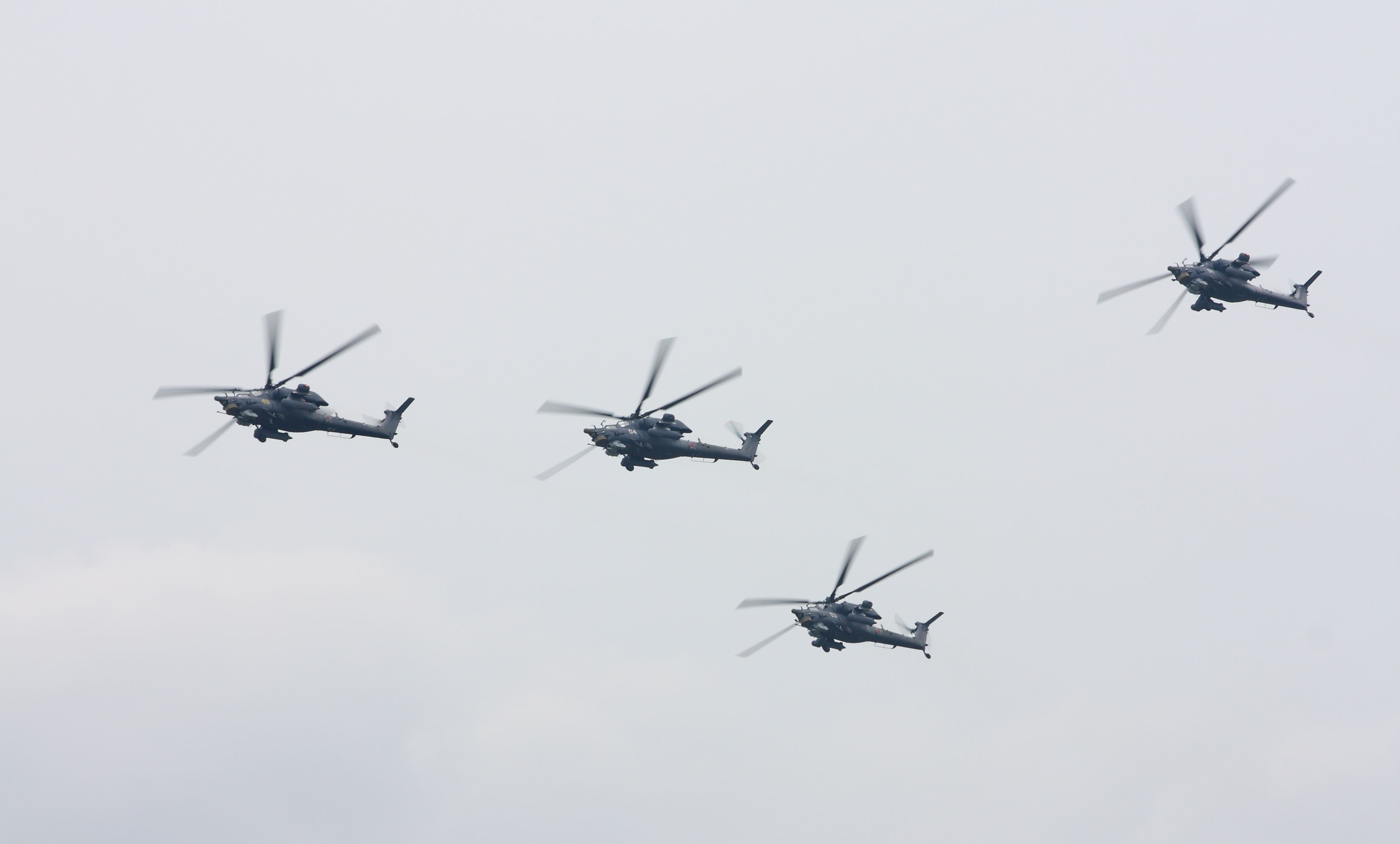
Russia agreed to supply Iran with 90 advanced missile launchers, according to an investigation by the Financial Times published on Thursday 5 November, which drew on Russian defence-industry documents obtained by Dallas Analytics, a Ukrainian private intelligence firm. The launchers are designed for attack helicopters and carry the LMUR, a light multipurpose guided missile also known as Izdeliye 305, which Russian forces have used extensively in Ukraine since the weapon entered service in 2022.
The heart of the evidence is a production schedule drawn up in May 2024 by Vympel, the Russian designer of missiles and launch systems, which lists an export order for 90 APU-L launchers for a foreign buyer identified only by the code “K-10”. Separate internal paperwork identifies K-10 as Iran, and the Financial Times reported that Rosoboronexport, Russia’s state arms exporter, uses the code for Tehran. A Vympel letter to the Kolomna design bureau KBM that month pressed for faster component deliveries, warning delays could jeopardise nine contracts.
The disclosure arrived the day after President Vladimir Putin met Mohsen Rezaei, the secretary of Iran’s Supreme National Security Council, at the Kremlin, where Rezaei delivered a message from Supreme Leader Ayatollah Mojtaba Khamenei. The Kremlin said on Friday that the talks had been aimed at the further development of bilateral cooperation, including the comprehensive strategic partnership treaty the two countries signed in January 2025.
What is established about the deal and the meeting?
The order covers 90 APU-L twin-rail launchers built to carry the LMUR, a precision-guided missile that travels at about 230 metres per second and can strike moving targets at a range of around 14 kilometres, according to Dallas Analytics. Each launcher carries two missiles, and the systems are designed for Russia’s Mi-28 attack helicopters, which Iran already possesses. The same schedule also lists an order for 192 APU-305 launchers for China.
The meeting in Moscow was substantive rather than ceremonial. Rezaei said afterwards that the talks had focused on security arrangements in the region, the post-war period and Russia’s support for ending what Tehran calls American aggression against Iran, and the Kremlin confirmed that the further development of the partnership treaty was on the agenda. Yuri Ushakov and Admiral Igor Kostyukov attended, according to TASS. Energy was on the table as well, since Rezaei said the two sides discussed building a gas pipeline from Russia to Iran.
The treaty that frames all of this was signed on 17 January 2025 and took effect in October of that year, covering trade, military cooperation, science, culture and education over twenty years, but unlike Russia’s pact with North Korea it contains no mutual defence clause. President Masoud Pezeshkian had met Putin in Moscow on 27 October, a little over a week before Rezaei’s visit.
Did the launchers actually reach Iran?
The documents do not establish whether the 90 launchers were manufactured and delivered. The schedule sets deliveries from late 2024 through December 2025, but the paperwork is a production plan rather than a delivery record, and the Financial Times was explicit that delivery could not be confirmed. Dallas Analytics said it had seen no operational deployment or photographic evidence of the missiles in Iranian hands, although Iranian state-linked reporting cited by i24NEWS pointed to deliveries having been confirmed by the Tasnim news agency, so the public record points in two directions at once and neither claim can be treated as settled.
Nor is it clear how many missiles would accompany the launchers, how many Iranian helicopters would carry them, or when any transfer would show up in Iran’s order of battle. Iran’s army said Tehran had bought Russian Su-35 fighter jets, but no delivery timetable was given for those either.
The letter from Khamenei is a third unknown. Rezaei did not disclose its contents, and the Kremlin’s account of the meeting ran to a single sentence about developing cooperation, so what Tehran actually asked Moscow for in writing, and what Putin answered, remains undisclosed, even though the letter was plainly the reason the visit happened when it did.
Why does a 90-launcher order change the picture?
Because it is documentary evidence that the military relationship kept deepening while Russia publicly courted Washington over Ukraine. President Donald Trump recently claimed that Moscow was doing “very little, if anything” to help Iran, and the papers show the opposite: a production schedule, a codename, a delivery window and a manufacturer pressing its suppliers to move faster. The contradiction matters because Washington is weighing its next steps in the war involving the United States, Israel and Iran.
Operationally, LMUR-armed Mi-28 helicopters would give Iran a precision strike tool it does not have today, since the missile has been proven in Ukraine against moving targets at standoff range. For contingencies in the Gulf, around the Strait of Hormuz and in any confrontation with Israel, a helicopter fleet able to hit armour and air defences from 14 kilometres away changes the calculations of every planner in the region.
The timing sharpens the point. Rezaei used his Moscow visit to restate that Tehran will not hold talks with Washington, or discuss reopening the Strait of Hormuz, until the United States meets seven conditions he did not fully spell out.
How is Moscow balancing Tehran against Washington?
Russia is walking a fine line, and the documents show exactly where the line sits. Hanna Notte of the James Martin Center for Nonproliferation Studies told the Financial Times that Russia still has “certain red lines when it comes to its involvement in this war”, and that the support it has provided to Iran is “operationally helpful but is not the game changer in this war”. That reading fits the pattern: Moscow arms Tehran steadily, through deniable production schedules and codenames, while keeping its public posture flexible enough to preserve its relationships with the Gulf states and with Washington.
This is not a one-off transaction but a pipeline that has been running for years. An earlier Financial Times investigation in September 2026 exposed a secret Russian programme to help Iran develop supersonic cruise missiles, and a further report in February 2026 described a 500-million-euro deal for 500 Verba portable air-defence launchers and 2,500 missiles, with deliveries planned for 2027–2029. The launcher order sits between those two disclosures as the middle chapter of a sustained transfer of Russian weapons technology to Iran.
The flow runs in both directions, which is what makes the partnership durable. Since Russia’s full-scale invasion of Ukraine in 2022, Tehran has supplied Moscow with Shahed attack drones, ammunition, artillery shells, short-range ballistic missiles, helmets and flak jackets, and Russia has since begun manufacturing the drones domestically. Both countries live under heavy Western sanctions, and each has become the other’s supplier of last resort. The region is reorganising along similar lines: Türkiye’s parliament ratified the Mecca defence pact binding Ankara to Riyadh and Islamabad, and Moscow’s deepening tie to Tehran is one axis among several being formalised at speed.
What happens next if the launchers are confirmed in Iran?
The first consequence would fall on the region’s air-defence planners. Israel and the Gulf states would read confirmed deliveries as a direct change to the threat picture, and the likely response is accelerated procurement of air defences, more intelligence sharing with Washington, and pressure on the United States for clarity about what it intends to do next. The Gulf is already living with missile fire, as a Saudi-led coalition intercepted a Houthi missile fired towards Medina, and a better-armed Iran would raise the stakes for missile defence across the region.
The second consequence is a verification race. Open-source analysts will now hunt satellite imagery and airbase photographs for Mi-28 helicopters carrying APU-L rails in Iran, and the absence of such evidence so far is itself informative. If the rails appear, the debate about delivery ends overnight; if they do not appear over the coming months, the order will look more like an intention that stalled than a transfer that happened.
The third consequence is diplomatic, and it falls on Moscow. Putin has told the American envoy that an agreement with Tehran is both possible and necessary, and that Russia is ready to act as a mediator, yet the documents show Russia arming one side of the very war it offers to mediate.
What should we watch for in the coming days?
Watch first for any reaction from Moscow or Tehran, since neither government has publicly confirmed or denied the order, and a denial would have to explain away documents that name the manufacturer, the schedule and the codename. Watch too for whether Rezaei’s seven conditions are spelled out in public.
Watch the airbases next, then watch Washington for a sanctions or export-control response aimed at the supply chain behind the launchers. The political context in the United States is also moving, after a night of historic firsts redrew American politics, and the new Congress will shape what the president can do next about Iran, about Russia and about the war that connects them.
The three lenses
West Lens:
How the West reads it In the West, the story is told as a paper trail that catches a public claim in a contradiction. The Financial Times and the Guardian lead with the documents themselves, the Vympel schedule, the K-10 codename and the delivery window, and the question they ask is whether the launchers reached Iran. The Western lens is accountability, and the test it sets is evidence: satellite images of APU-L rails on Iranian Mi-28 helicopters, or the claim collapses into an intention that never arrived.
East Lens:
How the East reads it In the East, the story is reported as hardware and arithmetic. The Economic Times and Firstpost lead with the numbers, 90 launchers for Iran and 192 for China on the same schedule, the missile’s speed and range, and the helicopters that would carry them. The Eastern lens is practical rather than moral: a production plan that also supplies Beijing, a weapon proven in Ukraine, and a military balance in the Gulf that shifts by measurable amounts.
South Lens:
How the Global South reads it In the Global South, the story arrives as a meeting and a letter, not a leak. Al Jazeera, the Egyptian Gazette and the Arab Times lead with Rezaei’s visit to the Kremlin, the message from Khamenei, the partnership treaty and the war that frames everything, and the launcher order is the evidence that the partnership is real rather than ceremonial. The Southern lens is agency: Iran seeking the weapons it needs, Russia supplying them despite its own war.
The consensus
- What we agree on
- What we agree on: the Financial Times reported on 5 November 2026, drawing on Russian defence-industry documents obtained by Dallas Analytics, that Russia agreed to supply Iran with 90 APU-L helicopter missile launchers; President Vladimir Putin met Iran’s security chief Mohsen Rezaei at the Kremlin on the same day and received a message from Supreme Leader Ayatollah Mojtaba Khamenei; and the two countries signed a comprehensive strategic partnership treaty in January 2025, in force since October 2025, which contains no mutual defence clause.
- What we don't agree on
- What we disagree on: whether the launchers were actually delivered, since the documents record an export order rather than a handover, Dallas Analytics has seen no evidence of the missiles in Iranian hands, and Iranian state-linked reporting has pointed the other way; and whether the support changes the military balance, with analysts describing it as operationally helpful but not a game changer while others read it as a decisive deepening of the alliance.
- What we know
- What we know: the May 2024 Vympel schedule and its K-10 code for Iran; the LMUR missile’s range of about 14 kilometres and speed of about 230 metres per second; the Mi-28 helicopters the launchers are built for; the attendees and agenda of the Putin–Rezaei meeting, including the gas pipeline discussion; the terms of the January 2025 treaty; and the earlier Financial Times findings on supersonic cruise missiles and the Verba air-defence deal.
- What we don't know yet
- What we don’t know: whether the 90 launchers were manufactured and delivered, and if so when; how many missiles would accompany them and how many Iranian helicopters would carry them; what the letter from Khamenei actually asked of Moscow; and what Tehran’s seven conditions for talks with Washington contain in full.
- What we expect
- What we expect: silence or denial from Moscow and Tehran on the order itself; open-source analysts hunting for images of Mi-28 helicopters carrying APU-L rails at Iranian airbases; a sanctions or export-control response from Washington aimed at the supply chain; and the launcher question shadowing every discussion of the war involving the United States, Israel and Iran, including the fate of the Strait of Hormuz.
Questions, answered
What did the leaked documents actually show?
A production schedule drawn up in May 2024 by Vympel, the Russian designer of missiles and launch systems, lists an export order for 90 APU-L launchers for a buyer identified only by the code K-10, which separate internal paperwork identifies as Iran. A Vympel letter from the same month pressed the Kolomna design bureau for faster component deliveries. The documents describe an export order, not a confirmed delivery.
Were the 90 launchers delivered to Iran?
The documents do not say. Deliveries were scheduled from late 2024 through December 2025, but the schedule is a production plan rather than a delivery record, and the Financial Times was explicit that delivery could not be confirmed. Dallas Analytics says it has seen no operational deployment or photographic evidence of the missiles in Iranian hands, while Iranian state-linked reporting has pointed to deliveries, so the question stays open.
What is the LMUR missile?
The light multipurpose guided missile, also known as Izdeliye 305 or the Kh-39, entered Russian military service in 2022 and has been used extensively by Russian forces in Ukraine. It flies at about 230 metres per second, can strike moving targets at a range of around 14 kilometres, and is carried on Mi-28 attack helicopters, with two missiles on each APU-L launcher.
What did Putin and Rezaei discuss in Moscow?
Regional security arrangements, the post-war period and Russia’s support for ending what Tehran calls American aggression against Iran, according to Rezaei after the meeting, along with plans for a gas pipeline from Russia to Iran. The Kremlin said the talks also covered the further development of the comprehensive strategic partnership treaty the two countries signed in January 2025.
Sources
- Financial Times
- Dallas Analytics
- Al Jazeera