Gaza turns discarded cooking pots into seawalls
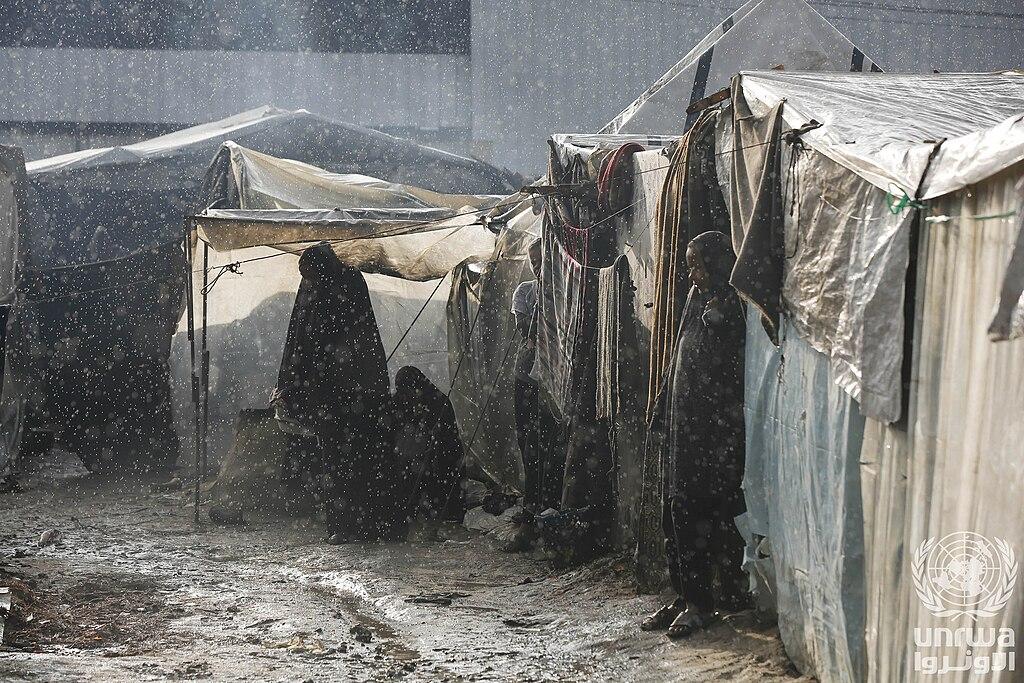
Displaced families on Gaza's coast are filling broken cooking pots with soil and stacking them into makeshift seawalls, as winter approaches and shelter supplies remain blocked at the crossings.
Published 6 November 2026 · 05:10 GMT
The summary
Al Jazeera reported on 6 November 2026 that aid groups in Gaza are turning damaged cooking pots into makeshift seawalls to protect shelters and schools from flooding as winter approaches. Three large pots, donated by World Central Kitchen, are filled with soil and stacked on top of one another, reaching approximately 150 centimetres in height to form the barriers.
The three lenses
- WestHow the West reads it In the West, the story arrives as a rights question.
- EastHow the East reads it In the East, the story is a warning issued in advance.
- Global SouthHow the Global South reads it In the Global South, the story is reported from the ground.
Key facts
- Al Jazeera reported on 6 November 2026 that aid groups in Gaza are turning damaged cooking pots into makeshift seawalls to protect shelters and schools from flooding as winter approaches. Al Jazeera
- Three large pots, donated by World Central Kitchen, are filled with soil and stacked on top of one another, reaching approximately 150 centimetres in height to form the barriers. Al Jazeera
- The Mayasem Association, which works in cooperation with World Central Kitchen, is now producing the pot-barriers for families near al-Qarara port on the Khan Younis coast. Al Jazeera
- Gaza's Winter Emergency Committee counts about 200,000 dilapidated tents sheltering hundreds of thousands of displaced people, with some 7,800 tents in extremely hazardous areas. Gaza Winter Emergency Committee
- The UN humanitarian office reported on 15 October that around 950,000 displaced Palestinians live in areas exposed to moderate or high flood risk, more than 400,000 of them at high risk. UN OCHA
- The International Organization for Migration said on 9 October that around 8,600 emergency shelter kits were ready outside Gaza, but Israeli authorities continue to refuse them entry. International Organization for Migration
What are families on Gaza's coast building out of old cooking pots?
As winter closes in on Gaza, displaced families camped metres from the Mediterranean are turning their broken cooking pots into seawalls. The pots, large vessels rendered useless for cooking by repeated exposure to flame, corrosion and holes, are filled with soil and stacked three high, reaching about 150 centimetres, to form a low wall between the tents and the incoming waves. Al Jazeera reported the practice in a video report published on 6 November 2026, filmed near al-Qarara port on the Khan Younis coast, where families have pitched tents on the beach because they have nowhere else to go. The Mayasem Association, an aid organisation that works with World Central Kitchen, has taken up the idea and is now producing the pot-barriers for families along that stretch of coast, using pots donated by World Central Kitchen. The barriers protect tents and schools alike; a small, improvised defence against a sea that flooded the same tents last winter.
Whose tents are behind the pot walls?
The reporting centres on two families on the sand near al-Qarara port. Anas al-Shami, 33, is trying to keep his family of six warm and dry in a dilapidated tent metres from the sea. He was displaced from Bani Suheila, east of Khan Younis, after the area fell inside what Israel calls its “Yellow Zone”, which Palestinians may not enter. He told Al Jazeera the displacement areas were overcrowded and rents too high, so the beach was the only place left. Last winter, seawater and rain flooded his tent while the family slept; he woke to find his children lying in water, and the repeated cold and damp made them ill. Ibrahim Abu Tair, 47, shares a cramped tent on the same shoreline with his seven children, after fleeing eastern Khan Younis. He has no winter clothes for them, not even a dry mattress, and the wind and rising waves keep him awake. The idea began inside Mayasem itself: it first built barriers to protect its own safe space, which hosts education and cultural programmes, and its emergency response coordinator, Khalil Abu Lahia, says it then grew into protecting the displaced families' tents along the coast.
What can a wall of cooking pots actually hold back?
That is the question the reporting does not answer, and it is the one that matters most. Nobody has said how many families the barriers protect, how many exist, or how long a column of three soil-filled pots survives a winter storm driving waves across the sand. Al Jazeera calls it a temporary measure, and the association a stopgap, not a solution; but no test, storm or season has yet measured what it can withstand. It is also unclear whether World Central Kitchen can keep supplying the large pots, or whether supply depends on kitchens discarding vessels as fast as barrier-building consumes them. And the reporting carries no response from the Israeli authorities to the shelter blockade at the centre of the story: the closures, the refused tents and the fuel shortages are documented by the agencies and the committee, but the reasons given, security restrictions on durable tents, according to reports published on 2 November, have not been tested against the scale of the need. Until the first storm of the season hits the beach at al-Qarara, the pot wall is a promise, not a proof.
Why is a stack of old pots a story about a whole winter?
Because the pot wall measures a shortage that no amount of ingenuity can close. Gaza's Winter Emergency Committee, which launched its 2026–2027 plan on 1 November under the banner “Together Toward a Safe Winter”, counts about 200,000 dilapidated tents sheltering hundreds of thousands of displaced people. Some 7,800 sit in extremely hazardous places, dry riverbeds, rainwater ponds and wave-exposed beaches, and need urgent relocation. About 2,000 cracked buildings are at risk of collapse. The UN humanitarian office reported on 15 October that around 950,000 displaced Palestinians live in areas exposed to moderate or high flood risk, more than 400,000 at high risk, and that 294,250 families need shelter assistance before the rains. The Norwegian Refugee Council put the same figure at around 950,000 on 5 October. A Shelter Cluster assessment from August found that 71 per cent of surveyed households had already experienced flooding in their shelters since the 2025–2026 winter began. This is the fourth winter of the war, and the shelters are worse than a year ago. That scale is why the UN's warning that nearly a million people in Gaza face flooding has become the winter's central fact.
What does the pot seawall say about the aid system around it?
It says the system has narrowed to the width of a cooking pot. The October 2025 ceasefire stopped the bombing, but a year on it has not reopened shelter flows: the International Organization for Migration said on 9 October that around 8,600 shelter kits were ready outside Gaza, and Israeli authorities still refuse them entry. Tents and caravans remain critically short, and the committee says the fuel crisis will soon stop machinery and generators, limiting flood response and rescue. The committee also reports Israeli forces destroyed about 70 per cent of municipalities' essential equipment and 90 per cent of civil defence rescue equipment. Against that, a local association and a food charity improvise with what the war has broken; damaged pots, filled with earth, stacked against the sea. There is dignity in that, and an indictment too: the most inventive shelter solution on the Gaza coast this winter is made from rubbish, because the proper materials sit in warehouses across a closed crossing. A year after the ceasefire, the story is not really about pots: it is about a population left to engineer its own survival from the debris of its own kitchens, while food aid itself is being cut.
What happens if the pot walls work; and what if they fail?
If they hold through the first storm, the idea will travel: the method is cheap, visible and copyable, and every coastal encampment faces the same sea, so a barrier that survives one winter night will be replicated along the shoreline before the next. World Central Kitchen's kitchens produce a steady stream of worn-out pots, and the Mayasem model, its own space first, then its neighbours, is exactly the local adaptation aid agencies praise and rarely fund. But if the walls fail, the failure will be measured in children lying in water again, in the same tents: a 150-centimetre column of soil-filled pots is no match for a storm surge, and failure on camera would harden the argument that improvisation is no substitute for access. Either way, the winter will decide within days: heavy rain and strong winds are expected on Friday, and Gaza's Civil Defense has warned the weather could endanger the tents and damaged buildings alike. The pot wall's first test is already on the calendar, on the same Khan Younis coast where an Israeli strike hit a tent earlier in the war.
What should we watch for in the coming days?
First, the weather: the rain and wind expected on Friday 6 November will show whether the barriers hold or wash away, and whether the 7,800 tents in hazardous areas flood first. Second, the crossings: the committee's plan calls for 200,000 tents and one million tarpaulins, with pledges covering less than a quarter of the requirement, and every week the kits sit outside Gaza is a week the pot walls must do the work of a shelter system. Third, the numbers: the committee, the UN humanitarian office and the aid agencies will update the flood-risk and displacement figures as the season bites, and the gap between what is needed and what is allowed in will be the story of the winter. The Bureau will keep tracking the shelter figures and the crossings, and will return to al-Qarara's beach after the first storm to see what is still standing.
The three lenses
West Lens:
How the West reads it In the West, the story arrives as a rights question. The Euro-Med Human Rights Monitor accuses Israel of depriving Gazans of safe shelter for a fourth consecutive year and calls the continued denial of protective measures part of the destructive conditions imposed on the population; its 5 November press release puts the shelter need at around two million people and notes the 8,600 IOM kits refused entry. That framing, shelter as a legal obligation, measured against the conduct of a state, is the Western lens, and the question in Western capitals is whether a ceasefire that leaves families behind pot walls is a peace at all.
East Lens:
How the East reads it In the East, the story is a warning issued in advance. Türkiye's Anadolu Agency, reporting on 5 November, led with Gaza's Civil Defense: heavy rain and strong winds expected on Friday could endanger displaced Palestinians in tents and shelters, and families in damaged buildings face collapse. The agency carried the UN figures, around 950,000 people in moderate or high flood-risk areas, more than 400,000 at high risk, 44,000 in structurally unsafe buildings, as a factual bulletin.
South Lens:
How the Global South reads it In the Global South, the story is reported from the ground. Al Jazeera's Tareq Abu Azzoum filmed the pot-barriers at al-Qarara, and the network's 5 November feature gave the families their names and the pot wall its measurements. Yemen's Saba news agency carried the committee's statement in full, including the launch of the “Together Toward a Safe Winter” plan and the request for help building a sand barrier along the coast.
The consensus
- What we agree on
- What we agree on: displaced families near al-Qarara port on the Khan Younis coast are filling damaged cooking pots with soil and stacking them three high, about 150 centimetres, as barriers against seawater; the Mayasem Association, working with World Central Kitchen, is producing these barriers; and Gaza's Winter Emergency Committee warns that around 200,000 dilapidated tents shelter hundreds of thousands of people, with some 7,800 tents in extremely hazardous areas.
- What we don't agree on
- What we disagree on: why the shelter is missing. Aid agencies and rights monitors describe Israeli restrictions as a deliberate denial of shelter supplies, with durable tents restricted on security grounds; Israeli authorities have maintained that entry controls are a security matter. The figures are not disputed; the intent behind the blockade is.
- What we know
- What we know: the method, the measurements and the people; Anas al-Shami, 33, and his family of six, and Ibrahim Abu Tair, 47, and his seven children, both displaced from eastern Khan Younis to a beach tent; the pots donated by World Central Kitchen; the committee's figures on tents, buildings and equipment; and the UN estimate of around 950,000 people in flood-risk areas.
- What we don't know yet
- What we do not know: how many families the pot-barriers protect, how many barriers exist, whether they can survive a real winter storm, whether World Central Kitchen can keep supplying the pots, or when the crossings will admit the tents, caravans and building materials waiting outside Gaza.
- What we expect
- What we expect: heavy rain and strong winds on Friday 6 November will give the pot walls their first test; the committee and the aid agencies will update the flood and displacement figures as the season bites; and the gap between the shelter needed and the shelter allowed in will define the winter.
Questions, answered
What are the pot seawalls made of?
Large cooking pots that can no longer be used for cooking, because repeated exposure to flames, corrosion and holes have ruined them. The pots, donated by World Central Kitchen, are filled with soil and stacked three high, reaching about 150 centimetres, to form a low wall between the tents and the sea.
Who is behind the initiative?
The idea began inside the Mayasem Association, an aid organisation that works in cooperation with World Central Kitchen. It first built the pot-barriers to protect its own safe space, which hosts education and cultural programmes, and its emergency response coordinator, Khalil Abu Lahia, says it then grew into protecting displaced families' tents along the coast.
How many people in Gaza face flooding this winter?
The UN humanitarian office reported on 15 October that around 950,000 displaced Palestinians live in areas exposed to moderate or high flood risk, more than 400,000 of them at high risk. Gaza's Winter Emergency Committee counts about 200,000 dilapidated tents, with some 7,800 in extremely hazardous areas and about 2,000 cracked buildings at risk of collapse.
Why can't families get proper tents instead?
Tents, caravans, building materials and fuel remain in critically short supply because Israeli authorities continue to prevent their entry into Gaza, according to the Winter Emergency Committee and the aid agencies. The International Organization for Migration said on 9 October that around 8,600 emergency shelter kits were ready outside Gaza but were refused entry.
Sources
- Al Jazeera
- Gaza Winter Emergency Committee
- UN OCHA
- International Organization for Migration