US Representative Rashida Tlaib has called on Washington to arrest Israeli officer Sean Glass — whom a Brussels-based foundation accuses of commanding the unit that killed five-year-old Hind Rajab — after the group filed an emergency request with the Justice Department.
Published 20 October 2026 · 01:55 GMT
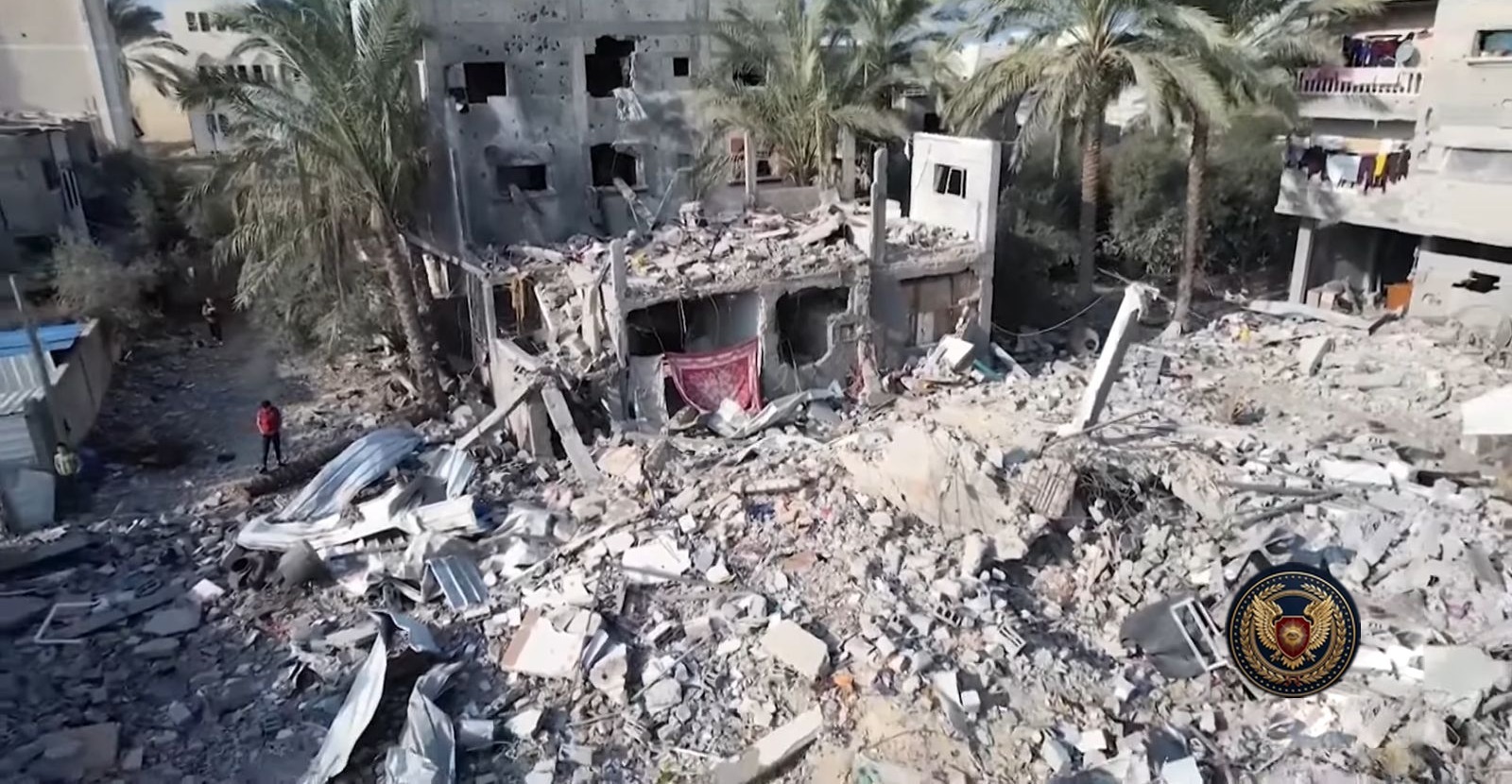
On Monday 19 October 2026, United States Representative Rashida Tlaib publicly demanded that her government arrest an Israeli military officer she says is present on American soil and linked to the killing of five-year-old Hind Rajab in Gaza. In a social media post, Tlaib pointed to reports that Israeli officer Sean Glass — identified by the Hind Rajab Foundation as the commander of the “Vampire Empire” company of the 52nd Armored Battalion — is in the United States, and argued that Washington has a legal duty to act. “As a party to the Genocide Convention and the Geneva Conventions, our government is obligated to arrest and investigate him for these war crimes and acts of genocide,” she wrote. The demand followed an urgent filing by the Brussels-based Hind Rajab Foundation with the US Department of Justice, asking it to investigate, arrest and prosecute Glass under the American War Crimes Act and the federal genocide statute. Hind Rajab’s killing on 29 January 2024 — a five-year-old trapped in a bullet-riddled car, pleading by telephone for rescuers — became one of the defining symbols of the Gaza war. Neither the Justice Department nor Glass had publicly responded to the demand at the time of publication.
According to the Hind Rajab Foundation, a Brussels-based legal advocacy group that tracks Israeli soldiers suspected of war crimes in Gaza, Sean Glass commanded the “Vampire Empire” Company of the 52nd Armored Battalion, part of Israel’s 401st Armored Brigade, during operations in Gaza. In its statement of 19 October, the foundation said its investigation places Glass and his troops “in the direct vicinity” of the vehicle carrying Hind Rajab when it came under fire, and alleged that he “most likely gave the order to open fire.” The accusations go further: the foundation holds Glass responsible for attacks on Al-Shifa Hospital, the destruction of the UNRWA headquarters, the razing of entire neighbourhoods and the destruction of the Rafah crossing — devastation, it says, that he “publicly celebrated” on Instagram, in interviews and in a self-published book. “Glass is not in hiding,” the foundation wrote. “Today, Glass walks free in the United States.”
The group says it filed an urgent request demanding the “immediate investigation, arrest, and prosecution” of Glass. It anchors the case in two federal statutes: the War Crimes Act (18 U.S.C. §2441) and the genocide statute (18 U.S.C. §1091), citing alleged willful killing, torture and inhuman treatment, unlawful transfer, and extensive and wanton destruction of property not justified by military necessity. The filing is the latest move in a worldwide legal campaign: the foundation has pursued cases in Spain, Italy, Germany, the Netherlands and the United Kingdom, secured a criminal investigation in Peru, and in September sued Lithuania before the European Court of Human Rights after Vilnius declined to investigate Glass.
Tlaib shared the foundation’s report and insisted the United States has treaty obligations — under the Genocide Convention and the Geneva Conventions — to arrest and investigate Glass while he is on American soil. Her post puts a sitting member of Congress publicly behind a demand that, until now, had come principally from lawyers and advocacy groups. It also puts the administration in an awkward position: Washington has continued to supply Israel with diplomatic, military and economic backing, and has denounced the International Criminal Court for seeking the arrest of Prime Minister Benjamin Netanyahu and former defence minister Yoav Gallant.
Whether Glass is actually in the United States has not been independently confirmed; the claim rests on the foundation’s investigation and the reports Tlaib cited. The Justice Department has not said whether it will open an investigation, and no charges have been filed against Glass. The legal path is uncertain: American courts have rarely applied war-crimes statutes to foreign nationals for conduct abroad, and the political headwinds are formidable. Glass himself has made no public response to the allegations, and it is not known whether other members of Congress will join Tlaib’s call or condemn it.
The demand sits at the collision point of two American postures that can no longer both be true: the United States as a signatory of the treaties Tlaib invokes, and the United States as Israel’s indispensable backer. Were the Justice Department to act, it would be a rupture — an American prosecution of an allied soldier for a war waged with American weapons and American diplomatic cover. Were it not to act, the episode still advances the accountability campaign’s frontier: the Hind Rajab Foundation has shown it can force the question onto the agenda in capital after capital, and a member of Congress has now carried it into the legislature itself. The timing sharpens the point. In August 2026, Israel’s military admitted its troops fired on Hind’s car and opened a criminal probe, ending more than two years of denial — an admission that makes the “who gave the order” question harder to leave unanswered.
The deeper story is the industrialization of accountability. The Hind Rajab Foundation’s approach — identify soldiers from their own social-media trails, file in every jurisdiction they enter, and let the accumulation do the political work — has turned one NGO in Brussels into a transnational prosecutor’s office. Its evidence base is the accused’s own archive: Glass, the foundation says, “spent two years documenting his own crimes in public,” on Instagram, in interviews and in a self-published book celebrating the destruction of hospitals, UN buildings and the Rafah crossing. That self-documentation is the campaign’s engine — and its vulnerability, since none of it has been tested in court.
The legal terrain shifted on 19 August 2026, when Israel’s military admitted its troops fired on Hind’s car and opened a criminal investigation. Admissions narrow the space for denial but open the question the foundation is now pressing: admitting the act is not attributing responsibility, and a domestic probe that names no names invites exactly the external pressure Tlaib is applying. Under the ICC’s complementarity principle, a genuine national investigation can shield a case from The Hague — which is why the credibility of Israel’s probe, doubted by the family and by rights groups, matters far beyond one child’s death.
If the Justice Department even acknowledged the filing, the diplomatic shockwave would be immediate: Israel would treat any move against Glass as a hostile act, and the administration would face a choice between its treaty rhetoric and its alliance management. More likely in the near term is the slow-burn effect the foundation counts on — Israeli soldiers thinking twice about travel to countries where complaints await, as has already happened in parts of Europe and Latin America — and a widening US domestic fight as pro-Israel groups mobilize against the “lawfare” framing. Each new filing also raises the cost of inaction for the ICC’s prosecutor, who watches national proceedings to decide whether the Court must step in.
Three things to watch. First, any response — or studied silence — from the Justice Department, and whether Glass remains in or leaves the United States. Second, the findings of Israel’s own criminal investigation, and whether it names any officer. Third, the political echo in Congress: whether Tlaib’s demand stays a lone voice or draws cosigners — or a backlash that turns the demand itself into the story. The foundation, meanwhile, has shown its pattern: wherever Glass is reported next, a filing will likely follow.
In Washington, the demand is a political grenade with the pin half-pulled. The administration’s posture — arming Israel while denouncing the ICC — leaves almost no room to entertain Tlaib’s reading of treaty obligations, and pro-Israel voices in US politics are likely to frame the filing as an attack on the alliance itself. A Fox News opinion piece has already denounced the foundation as a “hostile foreign influence operation,” a preview of the domestic counter-fire.
No East newsroom had carried the demand at the time of publication — the story broke in Al Jazeera barely half a day before this edition — but its logic will be legible in Beijing, Delhi and Moscow through the familiar grammar of selective justice. For governments that have long accused Washington of applying international law as a weapon rather than a standard, an American refusal to investigate an allied officer on American soil is one more exhibit. The episode is unlikely to move Eastern policy; it will be filed as further evidence for an argument those capitals already make.
Al Jazeera’s reporting carried the story first, and the resonance across the Global South is immediate: Hind Rajab’s recorded pleas made her a symbol far beyond Gaza, from university campuses to the film The Voice of Hind Rajab . In Yemen, the SABA news agency has tracked the foundation’s legal campaign, including its September case against Lithuania. For much of the South, the question is not whether the allegations are proven — no court has ruled — but whether the law will ever reach the powerful: the foundation’s country-by-country filings are watched as a stress test of universal jurisdiction itself.
Sean Glass is an Israeli officer who, according to the Hind Rajab Foundation, commanded the ‘Vampire Empire’ Company of the 52nd Armored Battalion, part of the 401st Armored Brigade, in Gaza. The foundation alleges he was near Hind Rajab’s vehicle when it came under fire on 29 January 2024 and ‘most likely gave the order to open fire.’ It also accuses him of wider destruction, including attacks on Al-Shifa Hospital and the Rafah crossing. He has not been charged.
The Hind Rajab Foundation is a Brussels-based legal advocacy group founded in 2024 and named after the five-year-old girl killed in Gaza. It tracks Israeli soldiers suspected of war crimes and files criminal complaints in national courts around the world, invoking universal jurisdiction. It has pursued cases in Spain, Italy, Germany, the Netherlands, the United Kingdom and Peru, filed evidence with the International Criminal Court, and sued Lithuania before the European Court of Human Rights.
In principle, yes — that is the argument behind the foundation’s filing. It invokes the US War Crimes Act (18 U.S.C. §2441) and the federal genocide statute (18 U.S.C. §1091), which allow prosecution of suspects found on American soil. In practice, it is untested terrain: US courts have rarely applied these laws to foreign nationals for conduct abroad, and no charges have been filed against Glass. Whether the Justice Department opens an investigation will be the first real test.
On 29 January 2024, five-year-old Hind Rajab was fleeing Gaza City with relatives when their car came under Israeli fire. Her family was killed; she survived and spent hours on the phone with Palestine Red Crescent dispatchers pleading, ‘I’m so scared. Please come!’ An ambulance sent to save her was also struck, killing two paramedics. Her body was found twelve days later; the car bore 335 bullet holes. In August 2026, Israel admitted its troops had fired on the vehicle.
For more than two years, Israel denied its troops were near the car or within firing range. On 19 August 2026, the military reversed course: it acknowledged soldiers had fired on the vehicle and said the Military Advocate General had opened a criminal investigation, also covering the killing of the two paramedics. Rights groups and the family voiced skepticism, noting that Israeli military probes rarely lead to indictments. No officer has been publicly named in the investigation.
