Police fired tear gas in a Tunis suburb and clashed with protesters in two southern towns after disputed deaths in custody — the sharpest unrest in the capital in years, as Tunisia's economic, social and political crisis deepens.
Published 23 October 2026 · 02:09 GMT
Police fired tear gas in a Tunis suburb and clashed with protesters in two southern towns after disputed deaths in custody — the sharpest unrest in the capital in years, as Tunisia's economic, social and political crisis deepens. On Thursday, October 22, 2026, Tunisian police fired tear gas to disperse protesters in Ettadhamen, a suburb of the capital Tunis, after the death of a man detained on suspicion of drug dealing.
On Thursday, October 22, 2026, Tunisian police fired tear gas at protesters in Ettadhamen (a Tunis suburb) and clashed with demonstrators in Jebiniana and Agareb in the Sfax governorate; the immediate triggers were disputed deaths linked to the security forces.
How the Ettadhamen detainee died — his family alleges police violence after his arrest; local media reported he died after swallowing drugs. No official cause of death has been established.
Official casualty and arrest figures from Thursday, the interior ministry's account, and whether these scattered eruptions will coalesce into a sustained protest wave.
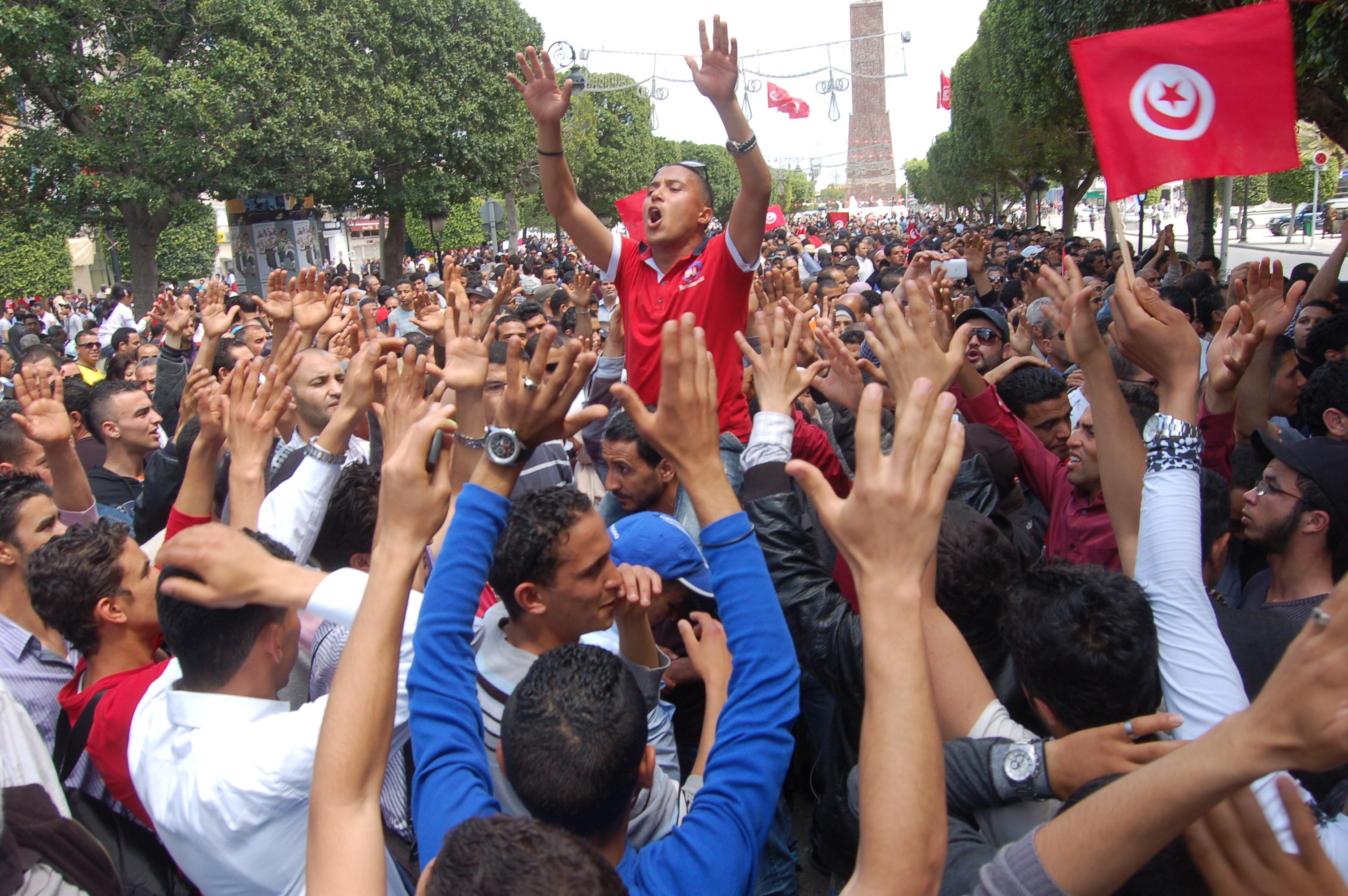
On Thursday, October 22, 2026, Tunisian police fired tear gas to disperse protesters in Ettadhamen, a working-class suburb of the capital Tunis, after the death of a man who had been detained on suspicion of drug dealing. It was rare unrest for the capital: demonstrators blocked roads, burned tyres and threw stones at police, and security forces answered with tear gas while moving to secure a National Guard station in the area.
Earlier the same day, the south flared too. In Jebiniana, in the Sfax governorate, police clashed with protesters following the death of a man whose relatives say died while being chased by security forces. Tunisian media reported that protesters set a vehicle ablaze and burned tyres; police again used tear gas. The nearby city of Agareb, also in the Sfax governorate, witnessed similar clashes.
In the coastal city of Sfax itself, the spark was different but the anger familiar: students protested the death of a female student who suffered a cardiac problem. Her classmates blamed ambulance services for taking too long to arrive, cited a lack of medical facilities, and called for a strike at the university's faculties on Friday.
Three deaths, three competing accounts, one pattern of fury directed at the security forces. In Ettadhamen, the family of the detained man says he died as a result of violence by police officers after his arrest, and is demanding that the circumstances of his death be clarified and those responsible held accountable. Local media, however, reported that he died after swallowing drugs. The interior ministry was not immediately available for comment — a silence that, on a day of tear gas, spoke loudly.
In Jebiniana, relatives of the second man say he died during a chase by security forces; there, too, no official account has been offered. What is documented is the street response: a vehicle set ablaze, tyres burning, tear gas in the air — reported by Tunisian media and carried by both international wires.
In Sfax, the facts are less contested but no less damning in the eyes of the protesters: a young woman suffered a cardiac problem, and the ambulance — her colleagues say — arrived too late. The students' verdict was institutional, not individual: a health system that cannot reach the dying, in a country whose public services are visibly fraying. Their call for a strike at Sfax University's faculties on Friday puts the first organized test of the unrest on the calendar.
What killed the Ettadhamen detainee remains officially unestablished. No autopsy result, no medical statement, no ministry briefing has settled the contradiction between the family's allegation of police violence and local media's account of swallowed drugs. Until that contradiction is resolved by evidence rather than assertion, the death will function as a political fact regardless of the medical one.
We do not know the human toll of Thursday's clashes: no official figures for injuries, hospitalizations or arrests have been released. We do not know whether the Jebiniana chase-death will be acknowledged at all, nor what the interior ministry's first public words — when they come — will concede or deny.
And the largest unknown is trajectory. Were Thursday's eruptions — capital suburb, southern towns, student city — separate sparks from separate grievances, or the first coordinated geography of a wider wave? The answer will be written in the next seventy-two hours.
Thursday did not happen in a vacuum; it detonated at the end of the most volatile week of President Kais Saied's rule. On Saturday, October 17, thousands of Tunisians joined the largest protest against Saied in years in the capital, accusing him of undermining democracy and mishandling the economy — a direct challenge from the street to a presidency built on concentrating power.
On Wednesday, the state's answer came from a military court: opposition politician Olfa Hamdi was sentenced to four years in prison on charges of plotting against state security and inciting the military to disobey orders — the latest in a long sequence of moves against Saied's opponents. Repression and protest are now feeding each other in weekly turns.
Magna Bureau covered Saturday's march in detail — thousands rally for the biggest protest in years against Tunisia's Saied — and our profile of the man at the center of the storm is here: Kais Saied.
The capital is where the regime's authority is supposed to be densest, which is why Ettadhamen matters more than its size. Unrest in the Tunis suburbs breaks the implicit bargain of the Saied years — order in exchange for obedience — and it arrives as the economic and social crisis deepens, with living conditions deteriorating and public services failing in plain sight. The flare-ups coincide with that crisis, and they are heightening fears of a wider wave of violent protests as anger over deteriorating living conditions grows.
Start with history, because Tunis always rhymes. The self-immolation of a street vendor in Sidi Bouzid in late 2010, after an encounter with the police, ignited the revolution that toppled Zine El Abidine Ben Ali and lit the Arab Spring. No one is claiming October 2026 is December 2010 — but the grammar is uncomfortably familiar: a disputed death at the hands of authority, a suburb with nothing left to lose, tyres burning in the street.
Demographically, the actors are the same ones the regime has failed: the young men of the working-class periphery, the students of Sfax, the families who bury their dead and then must fight for the truth of how they died. Economically, the backdrop is a country where the dinar's long slide, persistent unemployment and fraying public services have turned daily life into a slow emergency. Geopolitically, Tunis sits at the hinge of the Mediterranean: Europe's migration partnerships, Algeria's watchful east, and a Sahel in turmoil all make Tunisian stability a continental variable — our country profile tracks the moving pieces: Tunisia in the Magna Factbook.
Structurally, Saied has spent five years dismantling the checks that could absorb this pressure — parliament suspended in July 2021 and later dissolved, the judiciary brought to heel, opponents tried in military courts. A system with no safety valves faces street pressure with only one instrument: force. Thursday showed that instrument in use. The question now is whether force restores order or manufactures the next spark.
Europe will be watching Ettadhamen with a calculator, not just a conscience. Tunisia is a pillar of the EU's Mediterranean migration architecture; a destabilized Tunis complicates every agreement signed in Brussels and Rome, and puts Italy's government — which has bet heavily on the Tunisian partnership — in an awkward position. France, with the largest Tunisian diaspora in Europe, reads Tunisian unrest through both domestic politics and the banlieue mirror.
The economy has its own tripwires. Tourism, already fragile, cannot survive images of tear gas in the capital's suburbs two months before the winter season. The dinar, under pressure for years, hates uncertainty more than bad news. And the long-running negotiation with international lenders over reforms — the kind that demand subsidy cuts a street already on fire will not tolerate — just got harder.
Regionally, the signal travels. Algeria watches its eastern neighbor's stability; Libya's fragmentation makes any Tunisian wobble a corridor risk; and across the Sahel, where juntas have replaced elected governments, Tunis remains one of the last laboratories of the Arab Spring's democratic promise. If that laboratory closes, the lesson will not stay inside Tunisia's borders.
The immediate calendar is set. On Friday, Sfax University's faculties face a student strike call over the young woman's death — the first organized action to emerge from Thursday's scattered eruptions, and the first measure of whether anger is converting into organization.
Watch the interior ministry. Its silence on the Ettadhamen death cannot hold through the weekend; the first official account — autopsy, denial, or admission — will either defuse the family's demand for accountability or confirm the street's worst reading. Watch the funerals: in Tunisia, as in 2010, mourning has a way of becoming mobilization.
And watch Saturday, October 24 — one week after the largest anti-Saied march in years. If the opposition calls the street again, and if the suburbs answer, Thursday's "rare unrest" will have a different name: the beginning.
Western coverage, led by the Reuters wire from Tunis, frames Thursday as a democracy-and-crisis story: tear gas in the capital as the symptom of Saied's authoritarian drift and a collapsing economy. The lens is institutional — courts, prisons, protests — and the implicit benchmark is the Arab Spring's unfulfilled promise. European outlets add a migration-security undertone: a stable Tunis is a European interest.
At the time of writing, no East Asian outlet had published independent reporting on Thursday's clashes — the story had not yet entered the East information environment. When North African unrest does surface in Beijing, Delhi, Tokyo or Seoul, it is typically read through a stability-and-governance lens: orderly development versus chaos, with an emphasis on state capacity rather than democratic procedure. That framing, applied here, would ask whether the Tunisian state can still deliver basic services — the ambulance that arrived too late in Sfax — before it asks who governs.
Al Jazeera's coverage — the most detailed international account — centers the disputed deaths and the Tunisian street's own telling: the family's demand for accountability, the students' indictment of failing public services. Across the Global South, Tunisia is read as a post-2011 test case: the one Arab Spring country that kept a democratic experiment alive, now watching it curdle under Saied. For African outlets, the story is continental — another North African capital where the cost of living has become a political weapon.
Police fired tear gas to disperse protesters in Ettadhamen, a suburb of Tunis, after the disputed death of a man detained on suspicion of drug dealing. Clashes also broke out in Jebiniana and Agareb in the Sfax governorate after another disputed death linked to a security chase. In Sfax city, students protested the death of a female student, blaming a slow ambulance response. Protesters blocked roads, burned tyres and threw stones; police answered with tear gas.
The immediate triggers are disputed deaths linked to the security forces. The deeper drivers are a deepening economic, social and political crisis — deteriorating living conditions, failing public services, persistent unemployment — plus anger at President Kais Saied's concentration of power. The unrest follows the largest anti-Saied protest in years on October 17 and the four-year jailing of opposition figure Olfa Hamdi on October 21.
Olfa Hamdi is a Tunisian opposition politician. On October 21, 2026, a military court sentenced her to four years in prison for plotting against state security and inciting the military to disobey orders. The sentence is the latest in a long sequence of moves against President Kais Saied's opponents, and it hardened the confrontation between the regime and the street just one day before Thursday's clashes.
That is disputed and officially unestablished. His family says he died as a result of violence by police officers after his arrest on suspicion of drug dealing, and demands the circumstances be clarified and those responsible held accountable. Local media reported instead that he died after swallowing drugs. The interior ministry was not immediately available for comment, and no autopsy result has been made public.
Students have called a strike at Sfax University's faculties for Friday, October 23 — the first organized action from Thursday's scattered eruptions. The interior ministry's first statement on the Ettadhamen death is pending and will set the tone. Funerals could become mobilization, as they did in 2010. And Saturday marks one week since the largest anti-Saied march in years: if the opposition calls the street again, the unrest may spread.
