Putin says countries blocking Russia’s return to world sport are violating democracy
A week after sport’s highest court ordered Russia back into international ice hockey, the Russian president accused the countries refusing to play his teams of breaking the law; and the standoff is now spreading from the rink to the visa office.
Published 5 November 2026 · 19:15 GMT
The summary
On Thursday 5 November 2026, President Vladimir Putin told a televised government meeting that countries opposing rulings to readmit Russia to international sport are violating the rights of Russian athletes and democratic institutions. Putin said the restrictions on Russian sport are “not legal, but politicised” and called them “a clear and blatant violation of the law and court decisions”.
The three lenses
- WestHow the West reads it In the Western capitals, the refusal to play Russia is treated as a moral line that no court can erase, because the war in Ukraine is still killing people every week, and sharing a rink with the invading country’s team would read as normalisation.
- EastHow the East reads it From the East, the story looks first like a question of rules, because the court has spoken and the institutions have spoken, and the countries now refusing to comply are the same ones that lecture others about respecting international law.
- Global SouthHow the Global South reads it In the Global South, the dispute is watched as a test of who gets to decide, because the countries that imposed the sporting bans are a small group of wealthy Western states, while the institutions that ordered Russia’s return claim to speak for world sport as a whole.
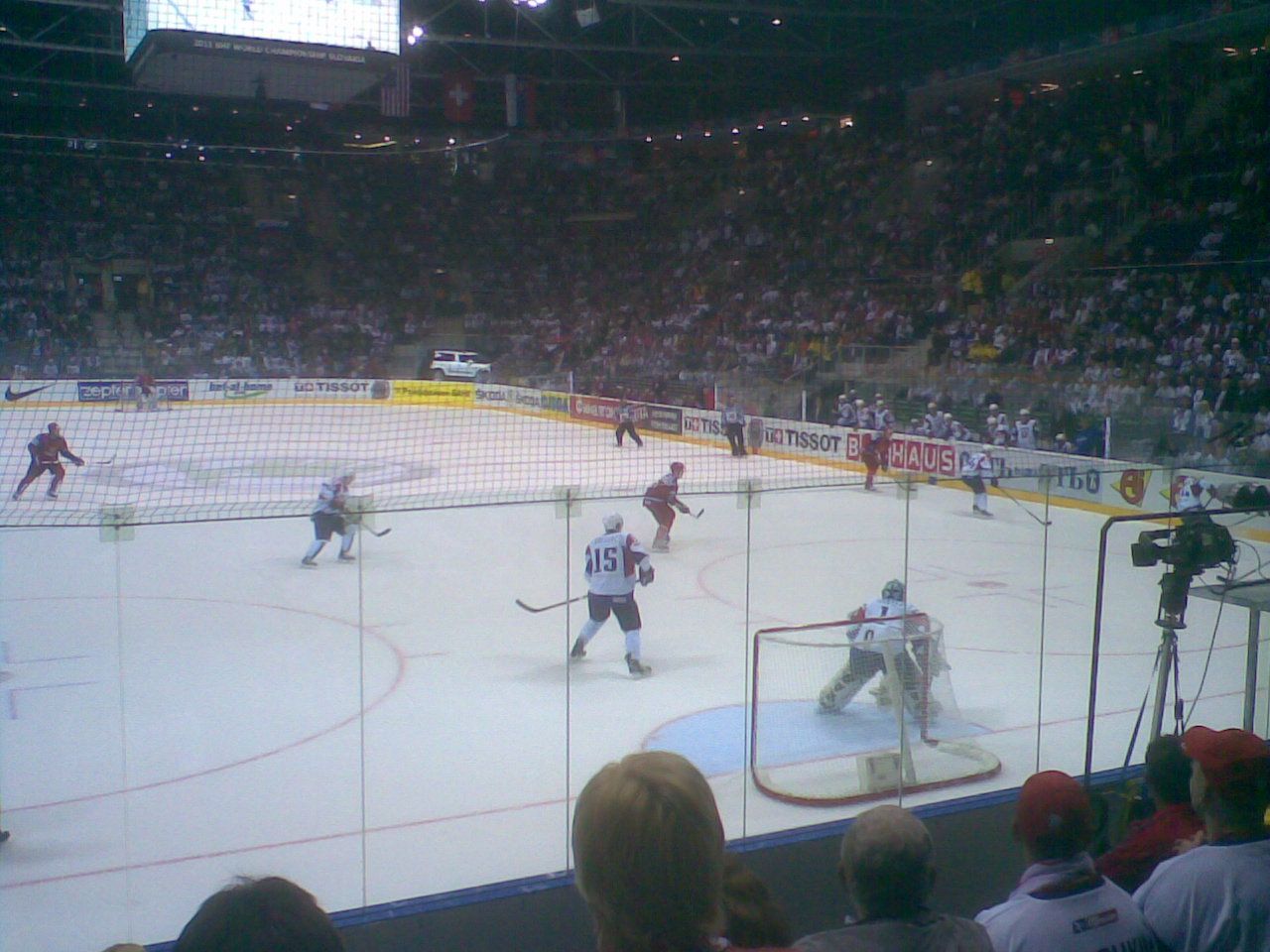
Key facts
- On Thursday 5 November 2026, President Vladimir Putin told a televised government meeting that countries opposing rulings to readmit Russia to international sport are violating the rights of Russian athletes and democratic institutions. CNA / Vanguard
- Putin said the restrictions on Russian sport are “not legal, but politicised” and called them “a clear and blatant violation of the law and court decisions”. CNA / Sweden Herald
- On Friday 30 October 2026, the Court of Arbitration for Sport upheld appeals by the Russian Ice Hockey Federation and ordered Russia’s teams readmitted to international ice hockey, overturning the International Ice Hockey Federation’s ban. CNA / Sweden Herald
- Finland was the first to say it will not play Russia, followed by Sweden, Norway, Denmark, Latvia and the Czech Republic. Sweden Herald / Vanguard
- Canadian Prime Minister Mark Carney said Russia and Belarus will be barred from the World Junior Championship beginning next month in Alberta, and the Finnish city of Turku threatened to drop its hosting duties for the 2028 edition. CNA / Vanguard
- The International Olympic Committee provisionally lifted its suspension of the Russian Olympic Committee in July, and several sports federations have since allowed Russian athletes to compete. CNA
What did Putin actually say; and where did he say it?
President Vladimir Putin spoke by video link to a meeting of his government on Thursday 5 November 2026, and the comments were posted on the Kremlin website the same day and carried within hours by news wires on three continents. He said the countries opposing rulings to allow Russia back into international sport are violating the rights of Russian athletes and the very institutions of democracy.
His words, as reported by both Reuters and AFP: “But unfortunately, not all countries are prepared to honour the obligations they once made. And they continue to impose not legal, but politicised restrictions on Russian sports.” Then came the sentence that gives this story its edge: “This is a clear and blatant violation of the law and court decisions and therefore of the very institutions of democracy.” Putin also praised the IOC and the CAS for “taking decisions to uphold the Olympic Charter and its principles”.
What the court ordered and who is refusing to play
The ruling at the centre of the row came on Friday 30 October, when the Court of Arbitration for Sport upheld appeals lodged by the Russian Ice Hockey Federation against the International Ice Hockey Federation, which had barred Russian teams from its events during the 2026–27 season, and the court ordered the teams readmitted. The CAS decision, and Europe’s immediate refusal to accept it, were the subject of the Bureau’s report last week.
Finland was first to say it will not play Russia; Denmark, Norway, Sweden and the Czech Republic followed on Tuesday, with Latvia joining them. Sweden’s position carries a careful nuance, since the chairman of the Swedish Ice Hockey Association, Anders Larsson, told the TT news agency that Swedish sport has “a common line not to boycott”, adding: “We do not intend to play against Russia, but we do not intend to boycott the entire World Cup.” Canada has gone further: Prime Minister Mark Carney said on Tuesday that Russia and Belarus will be barred from the World Junior Championship beginning next month in Alberta, while Turku has threatened to drop its 2028 hosting duties. The IOC barred Russia after the 2022 invasion of Ukraine, yet in July it provisionally lifted its suspension of the Russian Olympic Committee, and the 2027 world championship is due in Germany next May, with its draw already completed without Russia.
What remains undecided as the tournaments approach
For all the firm language of the past two days, the practical questions are still open, and they are the ones that will decide whether this becomes a lasting rupture or a noisy standoff that fades. Nobody has yet said how the International Ice Hockey Federation will schedule a tournament whose draw is already complete, and whether it will reopen the groups, restructure the fixtures, or accept that some games will not be played. The federation has not explained what happens to a team that refuses to take the ice, whether that means a forfeit, a fine, or a quiet rearrangement that nobody has to call a boycott.
Germany’s position is equally unresolved, because the German federation has openly questioned whether it should continue as host if Russian teams are admitted, yet no formal decision has been announced. Canada’s visa bar raises a separate legal question, since a host country is normally required to admit the participants in an international tournament, and it is not yet clear whether Ottawa will refuse visas in practice. Beyond hockey, the ruling’s reach is untested, because other Russian federations are now asking whether their own exclusions can survive a challenge.
Why a hockey ruling now tests the whole sanctions regime
This is no longer a story about ice hockey, because the question it poses reaches every sanction imposed on Russia since 2022, and the answer will be read far beyond the rink. If a court ruling can be set aside by federations that refuse to play, the authority of sport’s own legal system is in doubt. If, on the other hand, the ruling is enforced and teams are compelled to play Russia or forfeit, then governments that have treated the sporting boycott as a moral line will have to explain to their voters why a court in Lausanne overruled them.
The deeper significance lies in the split that has opened between the institutions and the governments, because the IOC and the CAS have been moving, step by step, towards readmitting Russian athletes, while the governments that imposed the bans have not moved at all. That gap is where Putin is now operating, since his argument is not that Russia should be forgiven but that the rules themselves demand its return. For the athletes caught in the middle, a season of fixtures and junior careers is now hostage to a dispute no player can settle.
How a court ruling became a test of who governs world sport
Putin’s intervention is best understood as a legal argument dressed as a moral one, because he is not asking the West to like Russia or to forget Ukraine, and instead he is insisting that the West follow its own rules. By praising the IOC and the CAS while condemning the countries that defy them, he positions Moscow as the defender of the institutions and the boycotting governments as the violators, which is a reversal of the roles that have held since 2022, and it is designed to travel well beyond Europe.
The Western response rests on a different theory of sport, because the refusing countries argue that playing Russia while the war continues would normalise an invasion, and that no court can compel a team to lend its presence to that normalisation. Sweden’s careful distinction shows how much effort goes into holding that line, and Canada’s visa bar shows the same logic taken further. The tension is genuine, and it cannot be resolved by quoting the Olympic Charter, because the Charter contains both the non-discrimination principle Moscow invokes and the political-neutrality principle the boycotting countries invoke; which is why the ruling has settled the legal question without settling the political one.
There is also a quieter institutional story here, because the CAS acknowledged on Thursday that its ruling had provoked a divisive reaction, yet it reiterated that the decision was based solely on the evidence submitted, which is the court’s way of saying it will not be moved by the political storm around it. The Kremlin, meanwhile, has confirmed trilateral talks on Ukraine in Abu Dhabi for 10–11 November, a reminder that the hockey dispute is unfolding against a diplomatic calendar that is moving as well.
What the standoff does to the federations, the sponsors and the athletes
The consequences of this dispute will not stay on the ice, because a boycott threat changes the economics of a tournament before a single puck is dropped. Sponsors do not want their brands attached to empty rinks or forfeited games, and broadcasters will ask what they are owed if the fixtures cannot be played. Turku’s threat to abandon the 2028 World Juniors shows a host city can judge the reputational cost of staging Russia higher than the revenue, and Germany will make the same calculation about next May.
For the athletes, the damage is more personal and harder to repair, because a junior player gets one World Juniors, and a season lost to a political standoff is a season that does not come back, while Russian players who trained for a return now face readmission by a court and exclusion by a visa officer. The precedent will travel, because every federation that excluded Russia is watching whether a court order can be defied; and if the boycott succeeds, the same tactic will be available to any group that disagrees with a future ruling.
When the next decisions fall due
The calendar now does the talking: the World Junior Championship begins next month in Alberta, the first live test of whether Canada’s bar will be enforced at the border or quietly overtaken by events. The IIHF must then decide how to handle the 2027 world championship in Germany, whose draw and schedule were completed without Russia, and whether it will reopen the draw or defend it. Germany’s federation will have to say whether it still wants to host.
Beyond the rink, the dispute will be read in the context of the wider diplomacy around the war, because Russian and Ukrainian envoys are due to meet at the White House and trilateral talks are scheduled in Abu Dhabi, so the question of Russia’s return will be answered in several rooms at once. The CAS and the IOC will also be watched, since both have staked their authority on the principle that the rules decide.
The three lenses
West Lens:
How the West reads it In the Western capitals, the refusal to play Russia is treated as a moral line that no court can erase, because the war in Ukraine is still killing people every week, and sharing a rink with the invading country’s team would read as normalisation. Canada’s position is the bluntest version of this view, since Prime Minister Carney has tied the bar on Russian athletes directly to the war itself.
East Lens:
How the East reads it From the East, the story looks first like a question of rules, because the court has spoken and the institutions have spoken, and the countries now refusing to comply are the same ones that lecture others about respecting international law. Singapore’s CNA carried the ruling and Putin’s remarks as a straightforward account of a legal dispute, with the emphasis on the institutional sequence, the ban, the appeal, the ruling, the refusal, rather than on the symbolism of the refusal.
South Lens:
How the Global South reads it In the Global South, the dispute is watched as a test of who gets to decide, because the countries that imposed the sporting bans are a small group of wealthy Western states, while the institutions that ordered Russia’s return claim to speak for world sport as a whole. Nigeria’s Vanguard carried the story as a straightforward report of Putin’s attack on “political” restrictions, a framing that captures the wider mood in capitals with their own experience of rules applied unevenly. The deeper question for the South is whether the CAS ruling will hold, because if a court’s decision can be ignored by the countries that dislike it, the institutions smaller nations depend on are worth less.
The consensus
- What we agree on
- What we agree on: on Thursday 5 November 2026, Vladimir Putin told a televised meeting of his government that countries resisting Russia’s return to international sport are violating the law, court rulings and democratic institutions, because the restrictions on Russian sport are political rather than legal; the Court of Arbitration for Sport ruled on Friday 30 October that Russia’s ice hockey teams must be readmitted after the Russian Ice Hockey Federation appealed against the International Ice Hockey Federation’s ban; and six European countries, Finland first, then Sweden, Norway, Denmark, Latvia and the Czech Republic, have said their teams will not play Russia, while Canada has barred Russia and Belarus from next month’s World Junior Championship in Alberta.
- What we don't agree on
- What we disagree on: whether a court ruling can compel national teams to take the ice against Russia while the war in Ukraine continues, or whether governments and federations are entitled to refuse on safety and political grounds; whether the restrictions on Russian athletes are a lawful sanction or, as Putin argues, a politicised punishment that breaks the Olympic Charter; whether the boycott threats strengthen the sanctions regime or hand Russia the moral argument that sport has been captured by politics; and whether the International Olympic Committee’s easing of restrictions in recent months is a careful return to principle or a retreat under pressure.
- What we know
- What we know: the exact words Putin used, carried by two independent wires, praising the IOC and the CAS for defending the Olympic Charter and condemning the countries that “have not honoured the commitments they once made”; the date and effect of the CAS ruling, which overturned the IIHF’s exclusion of Russian teams from 2026–27 events; the list of refusing countries and the order in which they spoke, with Finland first and four more following on Tuesday; Canada’s bar on Russia and Belarus at the World Juniors and Turku’s threat to give up the 2028 hosting; and the fact that the 2027 world championship is due in Germany next May, with its draw and schedule already completed without Russia.
- What we don't know yet
- What we do not know: whether the IIHF will now schedule Russian teams into the 2027 world championship or find a procedural way to keep them out; whether Germany will still host the tournament if Russia is admitted, and what the German federation will decide; whether the refusing countries will accept forfeit defeats or whether the IIHF will restructure the groups to avoid the fixtures altogether; whether Canada will actually refuse visas to Russian players and officials for the World Juniors; and whether the CAS ruling will be cited by other Russian federations to force their way back into other sports.
- What we expect
- What we expect: a formal IIHF response on scheduling before the 2027 championship draw has to be reopened; a German federation decision on hosting that will be watched as the test of whether a host country can be forced to stage a tournament it does not want; the World Juniors in Alberta to become the first live test of Canada’s visa bar; further statements from the CAS and the IOC as the pressure builds on both sides; and the dispute to widen beyond hockey, since every federation that excluded Russia is now reading the same ruling and asking whether its own ban can survive a challenge.
Questions, answered
What did Vladimir Putin say about Russia’s return to world sport?
On Thursday 5 November 2026, Putin told a televised government meeting that countries opposing rulings to readmit Russia to international sport are violating the rights of Russian athletes and democratic institutions. He said the restrictions are “not legal, but politicised” and called them “a clear and blatant violation of the law and court decisions”, while praising the IOC and the CAS for defending the Olympic Charter.
What did the Court of Arbitration for Sport decide about Russian ice hockey?
On Friday 30 October 2026, the CAS upheld appeals by the Russian Ice Hockey Federation against the International Ice Hockey Federation’s ban on Russian teams for the 2026–27 season, and ordered the teams readmitted to international competition. The court later said its decision was based solely on the evidence submitted, despite the divisive reaction it provoked.
Which countries have said they will not play Russia?
Finland was the first to refuse, followed on Tuesday by Denmark, Norway, Sweden and the Czech Republic, with Latvia joining them. Canada has gone further, barring Russia and Belarus from the World Junior Championship in Alberta next month, while the Finnish city of Turku has threatened to drop its hosting duties for the 2028 edition.
What happens next for the 2027 world championship?
The 2027 world championship is due in Germany next May, but its draw and schedule were completed without Russia, so the IIHF must decide whether to reopen the draw or defend it. Germany’s federation has questioned whether it should still host, and the World Juniors in Alberta next month will be the first live test of Canada’s bar on Russian athletes.
Sources
- CNA / Vanguard
- CNA / Sweden Herald
- Sweden Herald / Vanguard
- CNA