Melania Trump to bring Russian and Ukrainian envoys together at the White House after the Oleshky pause
The United States first lady will host officials from Moscow and Kyiv on Thursday to mark a six-day humanitarian ceasefire in occupied Oleshky, a day after Ukraine honoured her for the evacuation, and days before the three sides meet again in Abu Dhabi.
Published 5 November 2026 · 06:11 GMT
The summary
United States First Lady Melania Trump will bring representatives of Russia and Ukraine together at the White House on Thursday, 5 November, and will deliver remarks on the Oleshky ceasefire at 11:00 a.m. Russia is expected to be represented by presidential envoy Kirill Dmitriev and human rights commissioner Yana Lantratova, although the Kremlin has conditioned their attendance on logistical arrangements working out, according to TASS reporting cited by CNA.
The three lenses
- WestWestern coverage treats Thursday as genuinely unusual while keeping the wider war in view: that double stance is the honest Western reading.
- EastEastern coverage, led by CNA's Reuters wire from Singapore and The Hindu's reporting from India, puts sequence first and ceremony second, and that ordering changes the story's meaning.
- Global SouthNo dedicated Global South newsroom account of Thursday's meeting was located this cycle, and this section records that absence rather than inventing a southern line: a perspective without a source is no perspective at all.
Key facts
- United States First Lady Melania Trump will bring representatives of Russia and Ukraine together at the White House on Thursday, 5 November, and will deliver remarks on the Oleshky ceasefire at 11:00 a.m. Eastern Time, according to the Office of the First Lady. White House (3 Nov 2026)
- Russia is expected to be represented by presidential envoy Kirill Dmitriev and human rights commissioner Yana Lantratova, although the Kremlin has conditioned their attendance on logistical arrangements working out, according to TASS reporting cited by CNA. CNA (5 Nov 2026)
- Ukraine is expected to be represented by human rights ombudsman Dmytro Lubinets, who has himself announced the meeting, while lawmaker Davyd Arakhamia has been reported as a further expected participant rather than officially confirmed. CNN (3 Nov 2026)
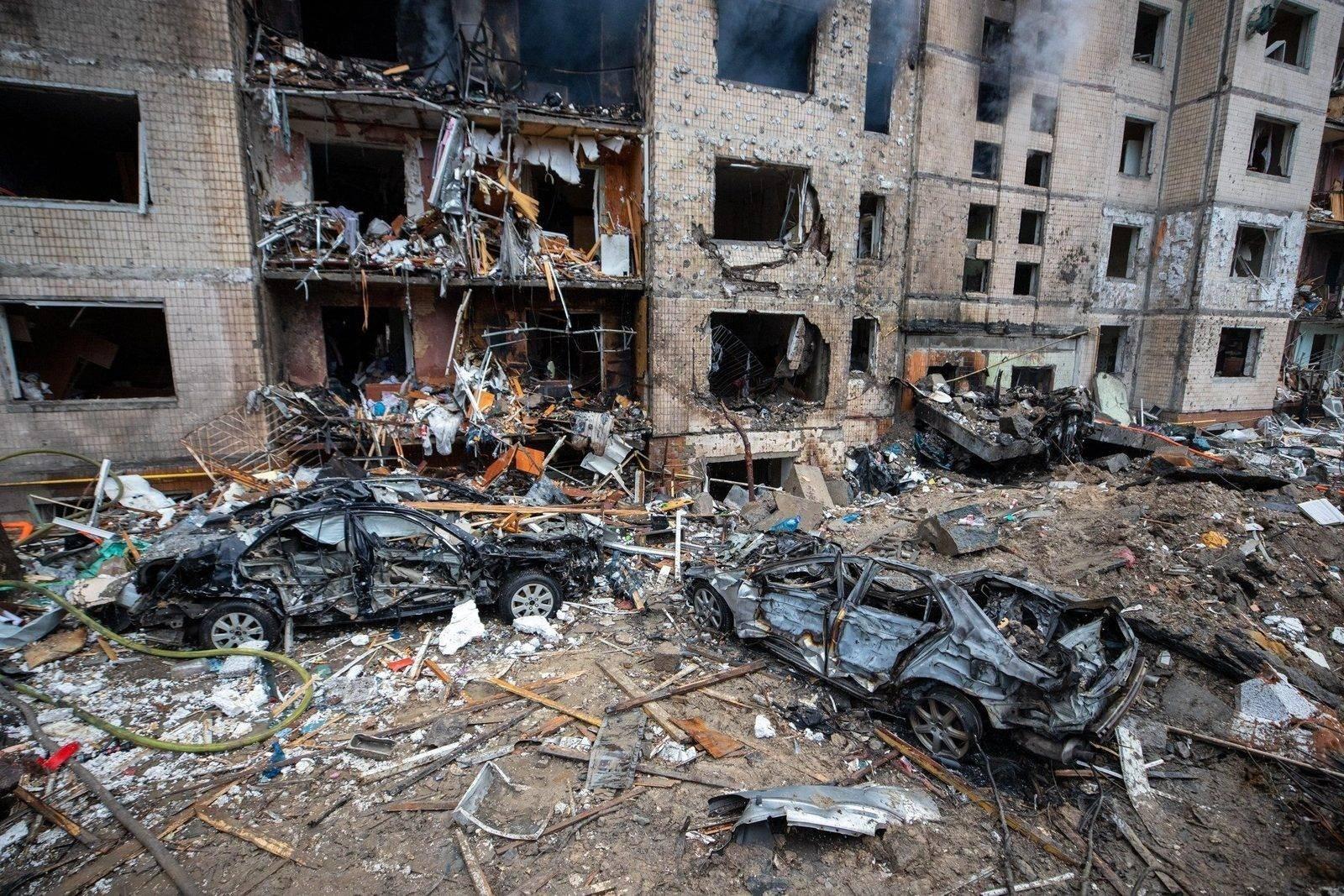
- The local ceasefire around Oleshky in the Kherson region ran from 27 October to 1 November, was observed by both sides, allowed food and medicine to reach residents, and enabled the evacuation of about 750 people from a town where roughly 2,000 still live. Le Monde (4 Nov 2026)
- President Volodymyr Zelenskyy awarded Melania Trump the Order of Princess Olga, First Class, under a decree dated 2 November and published on 4 November, citing her significant personal contribution to humanitarian support for Ukraine and her work for Ukrainian children. The Hindu (4 Nov 2026)
What will one White House room prove about a six-day pause?
United States First Lady Melania Trump will personally bring representatives of Russia and Ukraine, two nations actively at war, together at the White House on Thursday, 5 November, and will speak there at 11:00 a.m. Eastern Time on the Oleshky ceasefire, the local truce that let civilians leave the Russian-occupied Kherson town after weeks of food and medicine shortages. Her office announced the meeting on 3 November and called it an unprecedented diplomatic initiative by an American first lady.
The expected guests ran the Oleshky operation. Ukraine's human rights ombudsman, Dmytro Lubinets, has announced that he will meet Melania Trump in Washington, and Russian state news agency TASS, citing Kremlin spokesman Dmitry Peskov, has reported that Russia plans to send human rights commissioner Yana Lantratova and presidential envoy Kirill Dmitriev, provided all logistical arrangements work out, so Russian attendance is expected rather than guaranteed. Ukrainian lawmaker Davyd Arakhamia has also been reported as an expected participant, but that rests on reporting rather than official confirmation. The pause ran from 27 October to 1 November, roads were demined, aid reached residents, and evacuations are put at nearly 800 by the First Lady's office and about 750 by Le Monde, out of roughly 2,000 people still in the town.
How did a local truce in one occupied town reach the White House?
The sequence behind Thursday is agreed by every major account. Melania Trump announced on 23 October that she had secured a localised ceasefire to let elderly and vulnerable residents leave Oleshky, and the truce that followed, from 27 October to 1 November, was observed by both sides, which is why it matters: a pause both armies respect is rarer in this war than one merely announced. Her office says she independently initiated the engagement, and the two ombudsmen, Lubinets and Lantratova, carried the practical work, which is why they, not generals or ministers, are the natural guests.
The second confirmed fact is Kyiv's honour, bestowed the day before the meeting. President Volodymyr Zelenskyy awarded Melania Trump the Order of Princess Olga, First Class, under a presidential decree dated 2 November and published on 4 November, citing her significant personal contribution to humanitarian support for Ukraine and her work for Ukrainian children deported or forcibly transferred from Russian-occupied territory. Zelenskyy added that he had held very detailed, hour-and-a-half-long talks with United States envoys Steve Witkoff and Jared Kushner. The third fact is the calendar Thursday opens: negotiators from Ukraine, Russia and the United States meet in Abu Dhabi on 10-11 November, the first trilateral talks since February.
Why is the guest list still conditional hours before the meeting?
The most important unknown is the most visible one: the Kremlin has not given Russian attendance unconditionally. Peskov's formulation, as carried by TASS, is that Dmitriev and Lantratova plan to meet Melania Trump provided all logistical arrangements work out, leaving open a smaller Russian presence than announced. On the Ukrainian side, Lubinets has confirmed himself while Arakhamia's presence rests on reporting, so the full delegation will only be known when the doors open. The White House has also announced no broader negotiating agenda and no agreement for further humanitarian evacuations.
The Oleshky numbers are not fully settled either, and the gap is worth stating plainly. The First Lady's office says nearly 800 people were evacuated, Le Monde reports about 750 out of roughly 2,000 residents who remain in the town, and neither account breaks down how many of those who left went to Ukrainian-controlled territory and how many to Russia. The operation's success is not in doubt, since both sides observed the truce, but the precise ledger remains approximate, and Thursday should be judged on what is said in the room, not on advance announcements.
Why does a humanitarian pause carry weight beyond one town?
A six-day pause in one town would normally be a footnote in a war grinding through its fifth year, yet Oleshky matters because it is the first real local ceasefire since Russia's full-scale invasion began, in Le Monde's assessment, and because it held. Ceasefires in this war usually collapse under competing claims within hours, but this one was observed by both sides for its full span, roads were demined, aid moved, and civilians left, turning a small episode into proof that the two sides can still agree on a humanitarian corridor and keep their word long enough to use it. That proof is why Kyiv wants to replicate the mission elsewhere, and replication, not the ceremony, is the real test after Thursday.
The episode also matters because praise from both capitals at once is rare. Zelenskyy honoured Melania Trump with a state decoration, Peskov praised her humanitarian efforts and said Moscow hoped they would continue, and the two ombudsmen who ran the operation are now the guests of honour, which means the working channel was a humanitarian office dealing in prisoners, children and civilians, not a presidential summit. Timing adds a third layer, since the White House announced the gathering just as the United States absorbed its midterm results, covered in this paper's account of the Democratic breakthroughs, and days before the Abu Dhabi talks that will test whether Washington can still convene Moscow and Kyiv in the same negotiation.
What does the 5D lens reveal behind the ceremony?
Geopolitics: the meeting exposes the strange shape of American mediation in late 2026, where a first lady's humanitarian channel runs alongside, and slightly ahead of, formal negotiations, and in which Moscow's praise for her efforts sits beside a recent rapprochement between Presidents Donald Trump and Vladimir Putin that has raised concerns in Kyiv that Washington could turn its back on Ukraine, a concern CNA states openly. Thursday's geopolitics are therefore not about a breakthrough, but about whether a humanitarian success can keep open a door that formal talks, frozen since February, have not reopened, and Abu Dhabi next week will answer that more honestly than any ceremony.
Macroeconomics, demographics, history and technology: Oleshky's economic footprint is small in money and large in signal: a frontline town of about 2,000 remaining residents moves no markets, but a corridor letting aid in and civilians out shows the war economy still has humanitarian exceptions. The people at the centre are those wars usually leave behind: elderly residents and the Ukrainian children whose deportation or forced transfer the decree cites. The history that matters is the absence of any comparable local pause since 2022. The operation's technology was unglamorous and decisive: demining roads, running buses and coordinating two ombudsmen's offices across a front line took communication discipline more than new equipment. The contrast elsewhere is instructive, because while Europe's teams refuse to share the ice with a reinstated Russia, the ombudsmen in Oleshky proved that two wartime bureaucracies can still cooperate on a narrow, humane task. Readers can consult the Factbook profile of Ukraine and the Factbook profile of Russia for the wider picture.
What will this meeting set in motion next?
The first consequence is replication: Kyiv already wants the Oleshky operation as a model for civilians trapped elsewhere, and every further pause on the same ombudsmen-led pattern strengthens the case that corridors can be negotiated town by town while the wider war continues. The second consequence runs the other way: a failed or hollow Thursday, through a missing Russian delegation or remarks promising nothing further, would weaken the one channel that has just proved it works. The third concerns the first lady's role: a second success would turn an unprecedented initiative into a recognised channel, while a single success followed by silence would leave Oleshky an admired exception, and exceptions do not protect the next town.
When will we know whether the pause becomes a pattern?
Thursday gives the first answer, when the 11:00 a.m. remarks and photographs confirm who attended and whether any further commitment is announced. The second comes in Abu Dhabi on 10-11 November, at the first trilateral talks since February, where observers can judge whether the Oleshky channel warmed that table or merely decorated it. The third will take longer, since replication is proved town by town, not from a podium, and Thursday's honest measure is not White House applause, but whether another occupied town, weeks from now, gets its own six days of quiet.
The three lenses
West Lens:
Western coverage treats Thursday as genuinely unusual while keeping the wider war in view: that double stance is the honest Western reading. CNN and the BBC both lead with the fact that a first lady is bringing wartime enemies into the same room, and both note that Dmitriev is an experienced negotiator in United States-mediated talks, which frames the meeting as a humanitarian event with a diplomatic shadow rather than a negotiation in disguise.
East Lens:
Eastern coverage, led by CNA's Reuters wire from Singapore and The Hindu's reporting from India, puts sequence first and ceremony second, and that ordering changes the story's meaning. The Eastern account stresses that Thursday opens a run of diplomacy continuing in Abu Dhabi on 10-11 November, it carries Peskov's conditional language about the Russian delegation in full rather than trimming it, and it gives the presidential decree and its citation for Ukrainian children the same weight as the White House announcement.
South Lens:
No dedicated Global South newsroom account of Thursday's meeting was located this cycle, and this section records that absence rather than inventing a southern line: a perspective without a source is no perspective at all. The southern interest, stated as a question rather than as a quotation, is nonetheless clear, since capitals across Africa, Asia and Latin America have watched great-power mediation in this war promise much and deliver little for civilians, and a local pause that actually moved food, medicine and people is the kind of result they can measure.
The consensus
- What we agree on
- What we agree on: Melania Trump will host Russian and Ukrainian representatives at the White House on Thursday, 5 November, to mark the Oleshky humanitarian ceasefire, and she will speak about that operation at 11:00 a.m. Eastern Time, because the White House, the Kremlin account carried by TASS, and the Ukrainian ombudsman all point to the same meeting on the same day.
- What we don't agree on
- What we disagree on: whether this gathering is mainly a humanitarian ceremony that honours one local pause, as the White House framing suggests, or whether it is a usable diplomatic channel that can be repeated in other occupied towns, as Kyiv hopes, or a one-off gesture that changes nothing on the front lines, as sceptics of the wider peace effort argue.
- What we know
- What we know: the Oleshky ceasefire was announced on 23 October, held from 27 October to 1 November, allowed roads to be demined and residents to leave for either Ukraine or Russia, and ended on schedule; Zelenskyy awarded Melania Trump the Order of Princess Olga, First Class, under a decree dated 2 November; and negotiators from Ukraine, Russia and the United States are due to meet in Abu Dhabi on 10-11 November for the first time since February.
- What we don't know yet
- What we don't know: whether Lantratova and Dmitriev will in fact attend, since the Kremlin has made their presence conditional on logistics; whether Arakhamia will join the Ukrainian side, since his participation is reported rather than officially confirmed; how many people were actually evacuated, since the First Lady's office says nearly 800 while Le Monde reports about 750; and whether Thursday produces any commitment beyond remarks about one town.
- What we expect
- What we expect: Thursday's remarks will confirm the attendance and set the tone, the Abu Dhabi meeting on 10-11 November will test whether the humanitarian channel has any bearing on the wider negotiations, and Kyiv will press its case for repeating the Oleshky model elsewhere, while Moscow will be judged on whether it lets another local pause happen at all.
Questions, answered
Who is meeting Melania Trump at the White House on Thursday?
Ukraine's human rights ombudsman, Dmytro Lubinets, has announced that he will meet the First Lady in Washington, while Russia is expected to send human rights commissioner Yana Lantratova and presidential envoy Kirill Dmitriev, although the Kremlin has made their attendance conditional on logistical arrangements working out. Ukrainian lawmaker Davyd Arakhamia has been reported as a further expected participant, but his attendance is not officially confirmed.
What actually happened in Oleshky during the ceasefire?
A local ceasefire announced on 23 October took effect on 27 October and ran until 1 November, and it was observed by both sides throughout its six days. Roads into the Russian-occupied town were demined, food and medicine reached residents who had suffered weeks of shortages, and civilians who wished to leave were able to depart for either Ukrainian-controlled territory or Russia, with roughly 750 to 800 people evacuated.
Why did President Zelenskyy award Melania Trump a state honour?
Zelenskyy awarded her the Order of Princess Olga, First Class, under a decree dated 2 November and published on 4 November, citing her significant personal contribution to humanitarian support for Ukraine and her active human rights and charitable work. The decree also recognised her efforts concerning Ukrainian children who were deported or forcibly transferred from Russian-occupied territory during the war.
Does the White House meeting mean that peace talks are back?
Not by itself, because the White House has announced no broader negotiating agenda and no agreement for further evacuations, and the meeting is framed around the Oleshky ceasefire rather than a settlement. The wider test comes in Abu Dhabi on 10-11 November, when negotiators from Ukraine, Russia and the United States meet for the first trilateral talks since February.
Sources
- White House (3 Nov 2026)
- CNA (5 Nov 2026)
- CNN (3 Nov 2026)
- Le Monde (4 Nov 2026)
- The Hindu (4 Nov 2026)