A 22-year-old was arrested in Westminster on suspicion of preparation of terrorist acts, the seventh detention in the RAF Fairford investigation, one day after Washington withdrew its bombers over a reported Iranian drone threat.
Published 7 October 2026 · 00:04 GMT
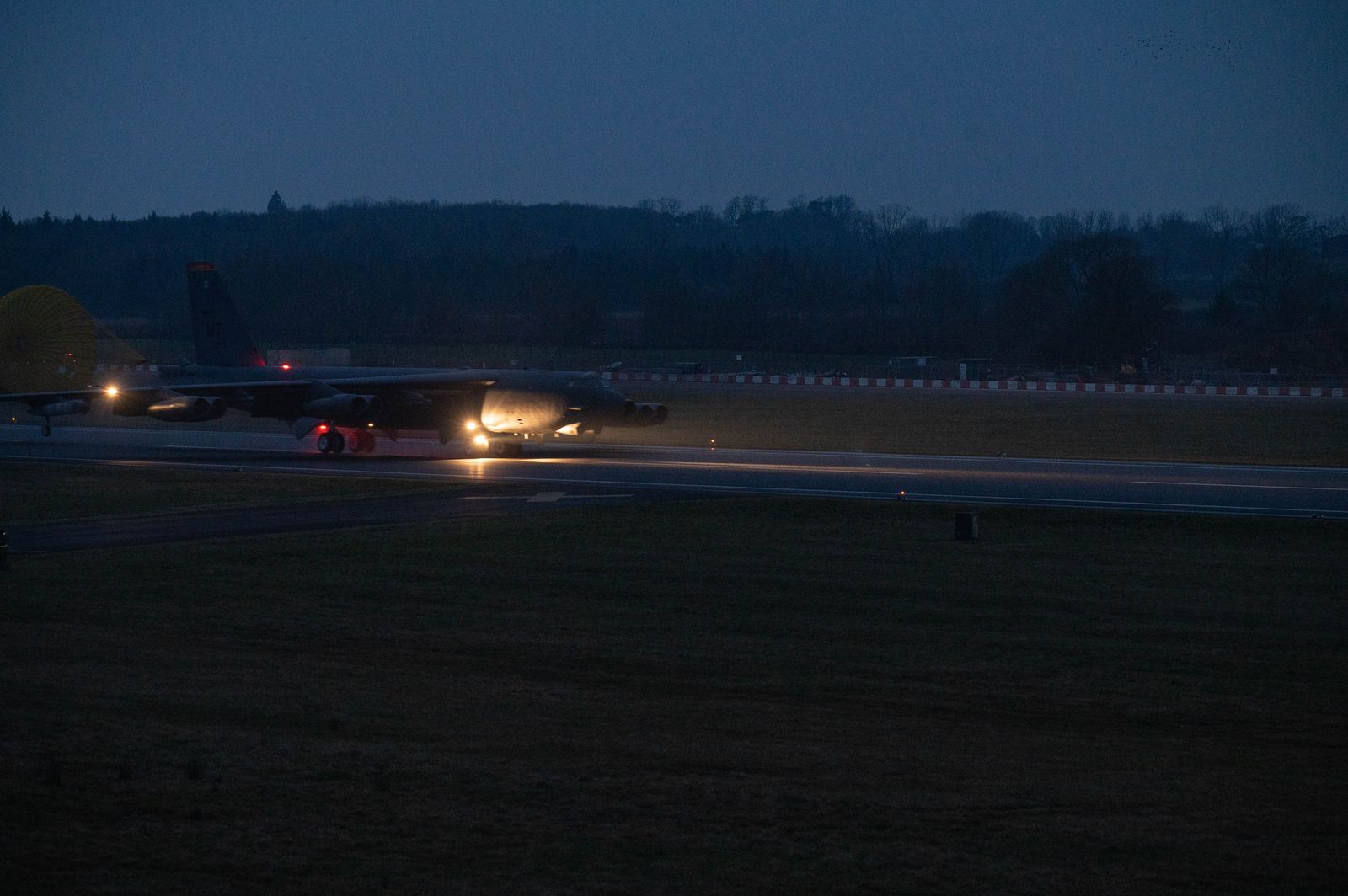
A 22-year-old British man was arrested on Tuesday, October 6, in Westminster, central London, on suspicion of preparation of terrorist acts, Britain's Counter Terrorism Policing network said. Sky News reported the arrest was made under Section 5 of the Terrorism Act 2006, and specialist officers carried out searches at related addresses in the Westminster area.
The detention is the seventh in a case that began on September 27, when three suspicious vans were stopped near RAF Fairford in Gloucestershire. Five men in their 20s were arrested that Sunday and a sixth followed on Thursday, October 1; all six have since been released on bail pending further investigation. Police have not said whether the newly detained man is linked to the six earlier suspects, and no charges have been announced in the case. The arrest landed one day after the United States withdrew its bomber force from RAF Fairford, tightening the knot between a criminal investigation inside Britain and a military decision in Washington. Vicki Evans, Senior National Coordinator for Counter Terrorism Policing, said: "This remains a live investigation and our specialist teams continue to pursue multiple lines of enquiry into the circumstances surrounding events near RAF Fairford." She added that officers remain committed to investigating all possible angles.
The established facts trace back to September 27, when police stopped three suspicious vans near RAF Fairford and arrested five men in their 20s. A sixth man was detained on October 1. All six were later released on bail. Officers found gasoline in the three vans but no explosives, a detail that has shaped the tone of the inquiry: a serious investigation, but one without the signature evidence of a bomb plot.
The new suspect, 22, was detained on October 6 under Section 5 of the Terrorism Act 2006, which covers the preparation of terrorist acts, and searches followed in Westminster. Separately, the United States removed its bombers from RAF Fairford on Sunday, October 4, with reports putting the figure at all 12 B-1 bombers. President Donald Trump said on October 5 that the move was a direct response to a specific threat, telling reporters: "Yeah, I think we can say that. They didn't fly out by accident. There were some threats." The Wall Street Journal reported that a branch of Iran's Islamic Revolutionary Guard Corps planned to recruit British citizens for a drone-swarming attack on the base, with a diversion staged nearby. Secretary of State Marco Rubio sought to play down the suggestion that the withdrawal was security-linked. Prime Minister Andy Burnham said on September 30 there were "strong indications" that Iran played a part in the events around Fairford; Iran's Embassy in London denied involvement, calling the speculation "unfounded and malicious."
Police have not released the identity or background of the arrested 22-year-old, nor said whether he is connected to the six men detained earlier. It is unclear what the gasoline found in the vans was intended for, and the absence of explosives leaves open whether investigators are looking at a disrupted attack, a reconnaissance operation, or something less developed.
The central allegation, that Iran's Revolutionary Guard Corps sought to recruit British citizens for a drone attack on Fairford, remains unconfirmed by British authorities. Neither Counter Terrorism Policing nor Downing Street has publicly validated the Wall Street Journal's account. It is also unclear whether the seventh arrest was prompted by fresh intelligence or by routine follow-up to the earlier detentions, and whether it will lead to charges or end, like the previous six, in release on bail. Finally, the gap between President Trump's account of a specific threat and Secretary Rubio's effort to play down the security link leaves the American motive partly obscured: precaution, politics, or a threat Washington will not describe.
RAF Fairford is not an ordinary airfield. The base hosts American bombers used for strikes on Iran, and its importance has grown since the war launched at the end of February: a shorter flight distance cuts the time and cost of hitting Iranian targets. A credible threat against such a base, on allied soil, during wartime, turns a police matter into a strategic one.
The timing compounds the stakes. The seventh arrest came the day after the bomber withdrawal, fusing domestic counter-terrorism with alliance force posture in a single news cycle. President Trump's public criticism of the suspects' release on bail has added political pressure to the investigation, while Tehran's denial keeps the diplomatic channel charged. For Europe's governments, the question is whether Fairford is an isolated incident or the first visible probe of Western bases in a widening war.
Strip the episode to its two tracks. Track one is a British criminal investigation: seven arrests, gasoline in vans, no explosives, six releases on bail. Track two is a wartime strategic decision: American bombers leave a forward base after a reported Iranian drone plot. The tracks may be linked, or they may be running in parallel, joined only by timing and geography. That ambiguity is the story. Britain's Counter Terrorism Policing is doing what it is built to do, pursuing multiple lines of enquiry in public, while Washington is doing what great powers do, moving assets first and explaining later. The friction between the two shows: Trump criticizes British bail decisions; Rubio softens Trump's threat narrative; Burnham points at Tehran; Tehran points back. Each statement is aimed at a domestic audience as much as at the facts. The danger is circular: the investigation's seriousness is used to justify the withdrawal, and the withdrawal is used to prove the investigation's seriousness. Until charges are filed or the intelligence is shared, the case will keep generating more politics than evidence.
The immediate effect is on base security across Europe: every host nation of American forces is now recalculating the threat to runways, fuel farms, and perimeter roads. The second is on deterrence: if a reported drone-swarm plot can move a bomber wing, adversaries learn that cheap unmanned systems can shape the movements of expensive manned ones. The third is domestic and British: the bail releases have reopened the perennial argument over how terrorism suspects should be handled before charge, with the Prime Minister's "strong indications" comment raising the temperature. If the investigation ends without charges, the political cost will be paid in credibility; if it ends in a trial, the cost may be paid in the exposure of sources.
The near term belongs to Counter Terrorism Policing: custody clocks, search results, and the decision to charge, release on bail, or release without charge. The seventh suspect's fate will set the tone. In parallel, watch whether the American bombers return to Fairford or redeploy elsewhere, which will say more about the threat assessment than any statement. Diplomatically, the United Kingdom and Iran are locked in a denial-and-accusation loop with no obvious exit; a formal British attribution would be the escalatory step to watch. The question hanging over it all is the one no official has answered: was Fairford a plot, a probe, or a coincidence that a war turned into a crisis?
In Britain and the United States, coverage has treated the investigation as serious and the threat as credible until proven otherwise. British reporting has focused on the mechanics of the case: the vans, the gasoline, the bail releases, the Section 5 arrests. In Washington, the dominant note is force protection, with Trump's blunt account of a specific threat carrying more weight than Rubio's caveats. The release of six suspects on bail has become a political talking point, with critics arguing that terrorism investigations should not keep ending at the custody desk.
Tehran's line, delivered through its embassy in London, is flat denial: the claims of Iranian involvement are "unfounded and malicious." In that telling, the arrests are a Western narrative built to justify pressure on Iran, and Prime Minister Burnham's "strong indications" are assertion without evidence. Iranian-aligned commentary frames the bomber withdrawal as an admission of vulnerability rather than a precaution, and warns that blaming Tehran for a domestic British police case risks manufacturing a pretext for escalation.
For much of the Global South, the Fairford case is a reminder that foreign military bases are flashpoints, not shields. The Gulf states and Yemen's neighbors watch any sign of a widening war for what it means for shipping lanes and oil prices, while governments across Africa, Asia, and Latin America tend to read the episode as another step toward escalation that they did not choose and cannot control. The recurring demand from these capitals is restraint: investigate the crime, but do not let a police case become a casus belli.
A 22-year-old British man was detained in Westminster, central London, on suspicion of preparation of terrorist acts under Section 5 of the Terrorism Act 2006. Specialist officers carried out searches at related addresses in the area. He is the seventh person arrested in the investigation that began with three suspicious vans stopped near RAF Fairford on September 27. Police have announced no charges so far.
Police stopped three suspicious vans near the base in Gloucestershire and arrested five men in their 20s; a sixth man was detained on October 1. Officers found gasoline in the vans but no explosives. All six were later released on bail pending further investigation. The base hosts US bombers used for strikes on Iran, which has made the case strategically sensitive from the start.
On October 4 the US removed its bombers, reportedly all 12 B-1s, from the base. President Trump said on October 5 the move was a direct response to a specific threat, adding that the aircraft did not leave by accident. The Wall Street Journal reported a branch of Iran's Revolutionary Guard Corps planned to recruit British citizens for a drone-swarming attack. Secretary of State Marco Rubio sought to play down the security link.
Iran's Embassy in London denied any involvement, calling the speculation unfounded and malicious. The denial followed Prime Minister Andy Burnham's September 30 statement that there were strong indications Iran played a part in the events around Fairford. British authorities have not publicly confirmed the reported Iranian drone plot, leaving Tehran's denial and London's suspicions in direct opposition.
