The $8 drop: oil plunges 7.6% as US–Iran talks hand the market a midterms-eve detente
Brent's biggest one-day fall since July came not from barrels but from words; a Vance letter, a two-day Hormuz plan, and a White House suddenly talking diplomacy ahead of Tuesday's midterms. The market believed. The veterans kept their notes.
Published 2 November 2026 · 23:26 GMT
The summary
On Monday, November 2, 2026, the eve of the US midterms, Brent crude settled 7.6% lower at $104.77 and WTI 7.4% lower at $96.46 , the biggest one-day percentage decline for both benchmarks since July 27. Vice President JD Vance sent a letter to Iranian national security chief Mohsen Rezaei about restarting peace talks; reported by the WSJ and Axios as the highest-level American contact with Tehran in months , with Trump's awareness and approval.
The three lenses
- WestThe West: the election is the price.
- EastThe East: supply security is the price.
- Global SouthThe Global South: the mediator is the story.
Key facts
- On Monday, November 2, 2026, the eve of the US midterms, Brent crude settled 7.6% lower at $104.77 and WTI 7.4% lower at $96.46, the biggest one-day percentage decline for both benchmarks since July 27. CNA / Reuters (Nov 2, 2026)
- Vice President JD Vance sent a letter to Iranian national security chief Mohsen Rezaei about restarting peace talks; reported by the WSJ and Axios as the highest-level American contact with Tehran in months, with Trump's awareness and approval. Wall Street Journal (Nov 2, 2026)
- Iran's foreign minister told Al Jazeera that Tehran could reopen the Strait of Hormuz within two days if the US meets its conditions, a compressed version of the seven-step September plan, with Washington acting on day one and shipping restored on day two. Al Jazeera (Nov 1, 2026)
- President Pezeshkian said Supreme Leader Khamenei had granted the government certain powers for peace talks with the US, while Rubio said Trump 'prefers not to use military force' and 'hasn't made a decision'; dovish signals on both sides. CNBC Africa (Nov 2, 2026)
- Goldman Sachs estimates a ~$27-a-barrel geopolitical risk premium was embedded in October's rally; Monday's drop shaved roughly a quarter of it, leaving most of the war premium still priced in. Wall Street Journal (Nov 2, 2026)
Why did oil fall 7% in a single trading day?
On Monday, November 2, 2026, the eve of the US midterm elections, crude oil posted its biggest one-day percentage decline since July. Brent futures settled $8.66, or 7.63%, lower at $104.77 a barrel; West Texas Intermediate fell $7.66, or 7.36%, to $96.46, per Reuters market data carried by CNA and the Wall Street Journal. Brent touched $103.28 intraday, WTI $95.15.
The trigger was a stack of headlines, not one: three straight days of Iran–Qatar talks aimed at ending the war; a letter from Vice President JD Vance to Iran's national security chief Mohsen Rezaei, the highest-level American outreach in months; Iran's offer to reopen the Strait of Hormuz within two days if Washington meets its conditions; and the clock; midterms on Tuesday, after which traders have long feared escalation.
The move reversed a brutal autumn rally. Brent ended October at a six-month high and had touched nearly $118 a barrel late last week as markets priced in a major military escalation after the vote. In one session, roughly a quarter of the war premium; which Goldman Sachs estimates at around $27 a barrel; evaporated. Energy shares fell with crude; most other sectors rose on the fuel-cost relief.
What actually changed on Monday?
Five verified signals moved the market; each checked against at least two independent reports:
1. The Vance letter. The Wall Street Journal reported, and Axios amplified, that Vance wrote to Mohsen Rezaei, secretary of Iran's Supreme National Security Council, about restarting peace talks; a move the Journal said President Trump knew of and approved. For markets that had priced in the death of diplomacy, that was worth repricing.
2. The two-day Hormuz plan. Foreign Minister Abbas Araghchi told Al Jazeera that Tehran could reopen the Strait of Hormuz, the artery for roughly a fifth of the world's oil, within two days if the United States meets its conditions, a compressed version of the seven-step plan Iran tabled in September. Under the sequence, Washington would act on day one and shipping would normalize on day two. Iran's conditions remain wide: ending the naval blockade, reinstating June's oil waivers, unfreezing assets, recognizing an Iran–Oman route, drawing down US forces, and ending the war on all fronts. An opening bid, not a signed page.
3. Khamenei's green light; as Pezeshkian framed it. President Masoud Pezeshkian said Supreme Leader Mojtaba Khamenei had granted the government certain powers for the talks, per the Reuters/CNA report; a signal that the offer comes from the top of Tehran's system.
4. Washington's soft tone. Secretary of State Marco Rubio said Trump "prefers not to use military force" and would like a diplomatic resolution, while adding he "hasn't made a decision." On Monday, Trump said Iran wanted to make a deal and that it "could happen" .
5. The Doha thread. Iranian negotiators left Qatar on Sunday after days of talks; their departure not attributed to difficulties, per an official cited by Rappler; while a draft proposal circulated and a follow-up meeting stayed possible. By Monday evening, Qatari mediators had flown on to Tehran to meet Araghchi himself, continuing a mediation effort that has defined the diplomatic track. Pakistan has been mediating alongside Qatar, a detail confirmed from both Doha and Tehran.
What the market is guessing at
The price move was built on signals, not signatures; and the unknowns are substantial. Whether the letter leads anywhere: the Vance–Rezaei contact is a channel, not a negotiation; no talks are confirmed and nothing says what Rezaei wrote back. A letter after months of silence is a cracked-open door, not an entered room. Whether Washington answers Tehran's conditions: the offer demands political currency the US has not shown; lifting the blockade, restoring waivers, releasing frozen funds. Rubio said he knew of no two-day timeframe; Trump said he was in no great hurry; Washington has not publicly responded at all. What Tehran really offered: the two-day plan exists in Araghchi's interview and a circulating draft whose text has not been published; while Iran insists its seven conditions are non-negotiable preconditions. What happens after Tuesday: the Journal previously reported the US told Gulf states to prepare for a possible short, intense campaign after the midterms, and Trump had threatened to restart hostilities after November 3. That reporting stands unretracted. Traders must price two worlds at once: Monday's detente on the screens, and the escalation still on the shelf.
A barrel at $104 instead of $118
Oil is the one economic variable that hits every household and every war chest at once. Brent at $104.77 rather than late last week's $118 changes the arithmetic of the whole conflict; and of the election. For consumers, it is relief: fuel and energy inflation ease across the importing world, from European commuters to African and Asian economies absorbing every dollar of the premium. For central banks, it loosens the constraint: UK 10-year gilt yields fell to a six-week low of 5.19% on Monday, and analysts immediately repriced how hawkish the Bank of England needs to sound when it is widely expected to raise rates to 4% from 3.75% on Thursday. For the war itself, the move signals expectation, not outcome: roughly three-quarters of Goldman's estimated $27 premium remains, so the market is discounting de-escalation, not disarming. And for Tuesday's vote, the timing is the story: with the economy and high prices the central voter issues, a president who had hinted the war might restart after the elections is projecting diplomacy on the eve of the vote. "The (Trump) signals may be tactical ahead of tomorrow's US midterm elections," said Arne Lohmann Rasmussen of Global Risk Management. Tactical or real, the signal is now priced.
Detente as a market input, not a diplomatic outcome
Strip away the geopolitics and Monday is a textbook demonstration of how modern oil markets price war: not barrels, but probabilities. The 7.6% drop was not a response to new supply; not one additional barrel reached a refinery. It was a response to changed expectations about future supply, and the expectations changed on words: a letter, an interview, a timetable. That is why the trading-desk veterans were the day's most skeptical voices. "The 'escalation longs' are at peak as we are so close to the midterms," said Scott Shelton of TP ICAP; positions had never been larger, so the reversal was mechanically amplified. Pavel Molchanov of Raymond James noted skepticism was warranted after many failed attempts. The size of the move reflected the size of the bets, not the solidity of the breakthrough. Through the 5D lens, the deeper dynamic is electoral: the midterms function as a deadline on escalation. Trump had said he would not attack before the vote; the market concluded he might after it; both weekend signalings were aimed at the window between. Diplomacy timed to an election is not fake; but it is calibrated, and calibrated things can be recalibrated on Wednesday. The structural question is whether the Hormuz plan can survive its own conditions: Iran wants the blockade lifted, waivers restored and assets unfrozen before the strait reopens; the US wants the strait reopened as a confidence step. The classic sequencing trap; each side's first step is the other's precondition. The draft circulating in Doha is the attempt to thread it. Markets are betting it can be threaded; the roughly $20 of premium they still hold, by Goldman's arithmetic, is the hedge against being wrong again.
The ripples: dollar, gilts, and the petrol station
The drop did not stay in the oil market. The dollar index eased 0.22% to 101.76 after touching its lowest since September 30, as cheaper energy softened an inflation driver the Fed watches. In the Global South, where governments from Pakistan to Sri Lanka to South Africa import every barrel, the move means fiscal breathing room, smaller fuel subsidies, slower currency pressure, cheaper food-transport costs. The losers were energy majors, whose shares fell with crude. But there is one second-order signal that did not move: war-risk insurance. If the two-day Hormuz plan were real, the surcharges inflating freight through the strait would start to unwind; Monday they did not, the insurance market, unlike the crude market, is not trading on the letter, and the question of whether reserves could absorb a supply shock still carries a war price.
Three forks after Tuesday
Fork one: the midterms constrain Trump. If Democrats take at least partial control of Congress, his freedom of military maneuver narrows; and a Democratic House could hasten a resolution and push oil below $100, as XTB's Kathleen Brooks argues. The diplomatic track gets harder to abandon. Fork two: the midterms liberate Trump. If Republicans hold, Monday's "hasn't made a decision" posture can harden back into the threat of two weeks ago; the Journal's earlier reporting, Gulf states told to prepare for a possible short, intense campaign after the vote, becomes the base case, and the premium refills. Monday becomes the pre-election dip of an escalating war. Fork three: the Doha track holds on its own. The least discussed possibility: the negotiation outlives the election calendar, and the draft circulating among Qatari and Pakistani mediators acquires its own momentum regardless of the House result. The test is concrete: does Washington answer the two-day plan this week, or wait for the electoral dust to settle? Watch the latest round of shuttle diplomacy before anything else.
The three lenses
West Lens:
The West: the election is the price. In US and European market coverage, Monday was read as an electoral event with an energy ticker attached. The Journal framed it through Wall Street analysts and Goldman's forecasts; British coverage (the Glasgow Times relay of the PA wire) translated it into gilt yields and Bank of England arithmetic.
East Lens:
The East: supply security is the price. Singapore-based CNA , carrying the Reuters report, led with the mechanics, settle levels, session lows, October's six-month high, and with Pezeshkian's claim of Khamenei's authorization, the one development speaking to the durability of Iran's position. For East Asia's giant crude buyers, the question is not Tuesday's election but the strait's reliability: a two-day Hormuz plan reads as a supply-chain event first, a diplomatic event second.
South Lens:
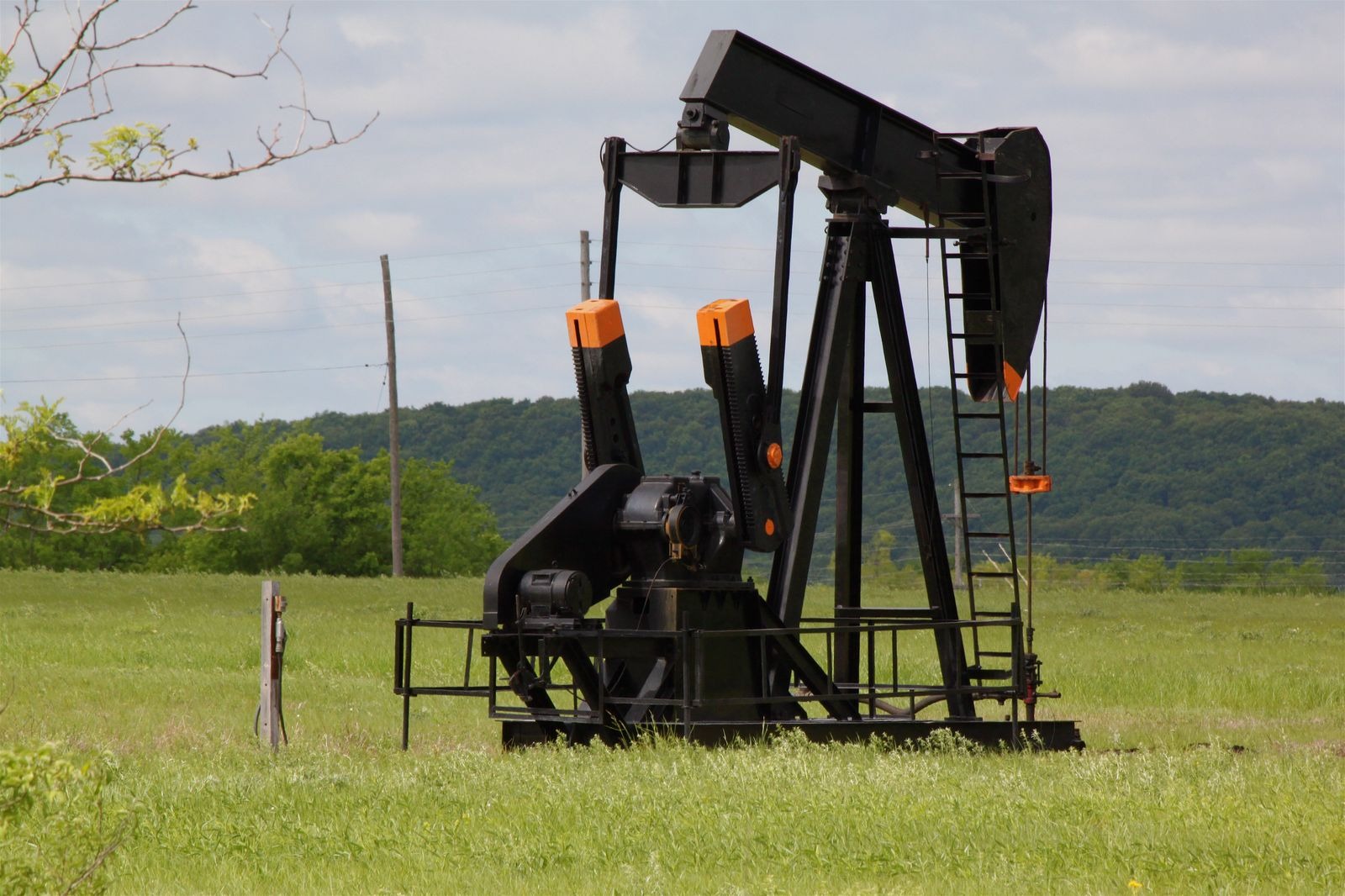
The Global South: the mediator is the story. From Doha, Al Jazeera 's live coverage centered Qatar's mediation and Araghchi's interview with the Qatari broadcaster, the plan as a Qatari-facilitated instrument, not a Washington gift. Pakistan's Geo TV and Sri Lanka's Daily News carried the Reuters wire with the pumpjack photo from Rmelan, Syria, the war's human geography, not the trading floor.
The consensus
- What we agree on
- We agree: the verified core is not in dispute; on Monday, November 2, 2026, Brent crude settled 7.6% lower at $104.77 and WTI 7.4% lower at $96.46, the biggest one-day percentage decline since July 27, driven by a stack of diplomatic signals: the Vance letter to Iran's national security chief, Tehran's two-day Hormuz reopening offer via Qatari mediators, Pezeshkian's statement that Khamenei authorized talks, and Washington's dovish weekend rhetoric on the eve of the US midterms.
- What we don't agree on
- We disagree on what the move means: oil traders and headline writers read it as the market pricing a genuine detente; veteran analysts (TP ICAP, Raymond James, PVM) read it as position-squaring amplified by peak 'escalation longs'; a mechanical reversal on signals, not on signatures. Tehran presents the two-day plan as good-faith flexibility; Washington has not publicly answered it; and both sides still hold their threats in reserve.
- What we know
- What we know: the settled prices (Brent $104.77, WTI $96.46; intraday lows $103.28 and $95.15), the five signals (Vance letter, Hormuz plan, Khamenei authorization claim, Rubio/Trump rhetoric, Doha draft circulating), Iran's seven stated conditions, Pakistan's co-mediation, Goldman's $27-a-barrel risk-premium estimate, and the July 27 benchmark for the last drop of this size.
- What we don't know yet
- What we do not know: whether the Vance letter produces negotiations, whether Washington answers the two-day plan and its conditions, the actual text of the circulating draft, and whether the midterms constrain Trump toward diplomacy or liberate him toward the escalation Gulf states were told to prepare for.
- What we expect
- What we expect: a binary Tuesday; a Democratic Congress pushes the diplomatic track toward a sub-$100 oil reading; a Republican hold revives the escalation premium; and in either case the Doha track's own momentum, not the election, is the variable markets are now underpricing.
Questions, answered
Why did oil prices fall so sharply on Monday, November 2, 2026?
Brent crude settled 7.6% lower at $104.77 a barrel and WTI 7.4% lower at $96.46; the biggest one-day drop since July 27. The fall was driven by diplomatic signals, not new supply: a letter from US Vice President JD Vance to Iran's national security chief, Tehran's offer to reopen the Strait of Hormuz within two days, and dovish weekend rhetoric from Washington, all arriving on the eve of the US midterm elections.
What is Iran's two-day plan to reopen the Strait of Hormuz?
Foreign Minister Abbas Araghchi told Al Jazeera that Tehran could restore shipping through Hormuz within two days if the US meets its conditions; a compressed version of Iran's September seven-step plan. Washington would act on day one and the strait would reopen on day two. Conditions include ending the naval blockade, reinstating oil waivers, and unfreezing assets.
Will oil prices keep falling after the US midterms?
It depends on Tuesday's result. Analysts note that a Democratic Congress would constrain the president's military options and could push Brent below $100 a barrel by hastening a resolution. A Republican hold could revive escalation fears; the US previously told Gulf states to prepare for a possible short, intense campaign after the vote. Goldman Sachs estimates about $27 a barrel of geopolitical risk premium remains in the price, so the market still hedges both outcomes.
How does the oil price drop affect inflation and interest rates?
Cheaper crude eases the energy component of inflation worldwide. On Monday the dollar index eased to 101.76 and UK 10-year gilt yields fell to a six-week low of 5.19%, which may soften the Bank of England's tone when it is expected to raise rates to 4% on Thursday. For importing economies in Africa and Asia, lower oil means smaller fuel subsidies, less currency pressure, and cheaper transport costs.
Is this the end of the US-Iran war?
No. Monday's price move reflected changed expectations, not a signed agreement. No negotiations are confirmed, the draft proposal circulating in Doha has not been published, and both sides retain their threats; Iran's supreme leader called for an 'immediate, impactful, and geographically unrestricted response' to any threat, while Washington has not retracted its earlier escalation planning. The market is discounting de-escalation; it is not disarming.
Sources
- CNA / Reuters (Nov 2, 2026)
- Wall Street Journal (Nov 2, 2026)
- Al Jazeera (Nov 1, 2026)
- CNBC Africa (Nov 2, 2026)
- Wall Street Journal (Nov 2, 2026)