OPEC+ pumped 39.07 million barrels a day in September, up 900,000 from August, on Saudi Arabia's two-million-barrel rebound. But OPEC cut its 2026 demand forecast for a sixth straight month — the market now faces a winter of more oil and thinner appetite.
Published 15 October 2026 · 06:00 GMT
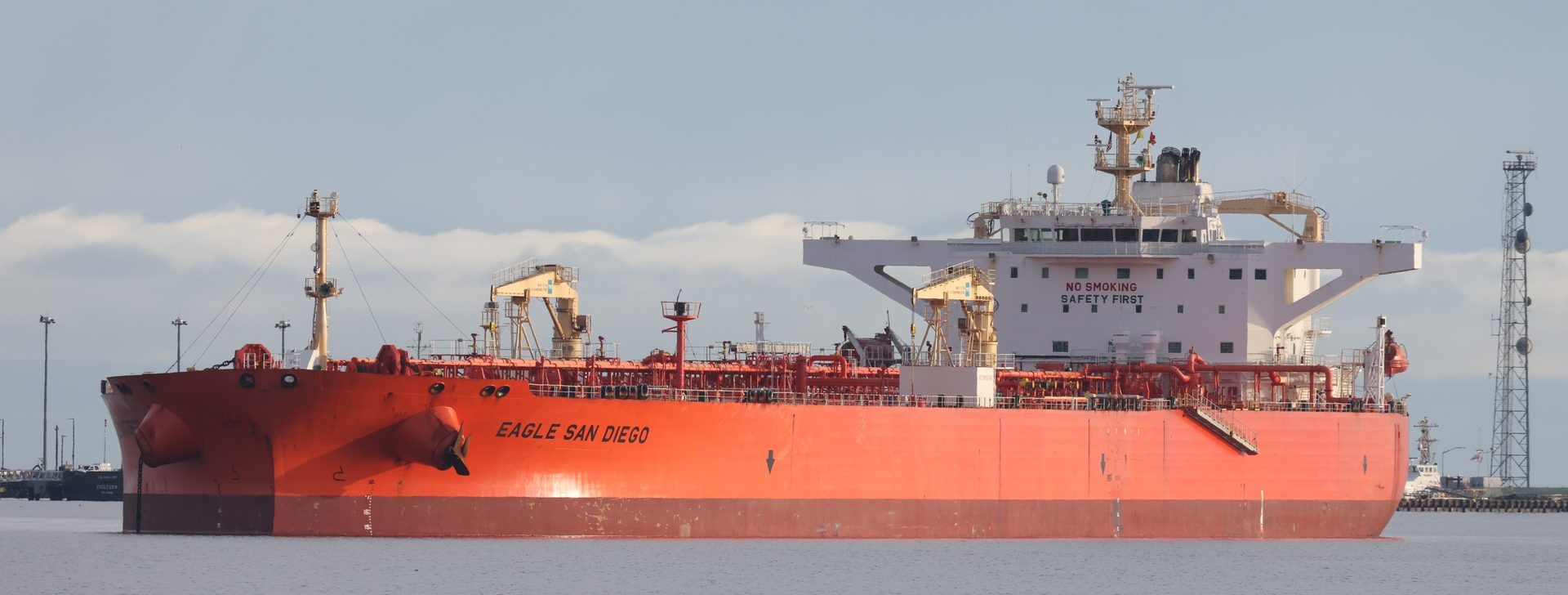
The light was still green over the Gulf when the tankers began to move. On September 20, seven very large crude carriers sat off Ras Tanura, the Saudi export terminal inside the Strait of Hormuz, and loaded roughly 14 million barrels of Saudi crude in a single day — two million barrels apiece, bound mostly for Asia. Satellite images showed them queued like beads on a string. A week earlier, the kingdom's East-West pipeline to the Red Sea had gone silent after a drone attack. The market read the tankers as a message: Saudi Arabia would find a way to ship, war or no war.
The numbers, published Tuesday in OPEC's October monthly report, confirm the message. OPEC+, the alliance of OPEC members and partners including Russia, pumped an average of 39.07 million barrels a day in September — up about 900,000 barrels a day from August, the largest monthly gain since the Iran war began on February 28. Saudi Arabia supplied most of the increase: the kingdom told OPEC it pumped 8.372 million barrels a day, up more than two million from an August figure of 6.24 million — its lowest self-reported reading on record. And here is the paradox the market is still digesting: in the same report, OPEC cut its forecast for 2026 oil demand growth for a sixth straight month, to a barely visible 180,000 barrels a day, while raising its 2027 view on the need to rebuild inventories the war has drained.
Riyadh sent its answer by tanker: 14 million barrels in a single day, loaded under the guns of the Strait of Hormuz.
The answer starts with a drone attack. On September 13, the East-West pipeline — the steel artery carrying Saudi crude from the Gulf coast to the Red Sea port of Yanbu — was shut down, halting loadings at Yanbu that had run near 3.9 million barrels a day in the first eleven days of the month. August had already been the kingdom's weakest month of the war: Saudi Arabia's self-reported output fell to 6.24 million barrels a day as Red Sea shipments faltered. Rather than wait, Aramco turned east. Through September, the state oil company ramped up loadings from its Gulf terminals, with Ras Tanura jumping to about 3.6 million barrels a day from 929,000 in August — still far below the 6.411 million the port shipped in February, before the war, but enough to lift the whole group's numbers. Iraq added its own push, rising by nearly 400,000 barrels a day to more than 93 percent of pre-war levels on aggressive cargo discounts. The losers were Kuwait, down 140,000 barrels a day, Libya, down 58,000, Nigeria, down 13,000 — and Iran, whose output fell 99,000 barrels a day to below two million for the first time since 2020 under the American blockade. Even after September's rebound, OPEC+ remains about 3.69 million barrels a day — nine percent — below its February pace.
With Yanbu silent, the barrels flowed east through the Strait of Hormuz — the waterway Iran has been threatening. Nineteen very large crude carriers, each holding about two million barrels of Saudi oil, exited the strait in a single week of September. Some 60 million barrels of Saudi crude from Ras Tanura were sold for ship-to-ship transfer at the Omani port of Sohar, loading this month and next. JPMorgan's satellite tracking put Saudi oil moving through Hormuz at 2.9 million barrels a day over a six-day stretch, against just 700,000 in August. The regional totals confirm it: Middle East crude exports rebounded to 12.8 million barrels a day in September, the highest since the war began, according to Kpler — though still about six million below February's 18.8 million. The International Energy Agency estimates Gulf producers' crude exports rose 4.4 million barrels a day in September, to about 75 percent of pre-war levels. Freight markets noticed: the Dubai M1-M3 spread narrowed from roughly $25 a barrel to $15. The corridor is no safe passage — a container ship and a dry bulk carrier sank near the strait within 24 hours of each other this week after being hit by projectiles — but for now, the barrels are moving.
While Saudi Arabia pumped, Russia slipped. OPEC's secondary sources put Russian output down 38,000 barrels a day in September, tied to Ukrainian strikes on Russian refineries — a campaign steadily reducing Moscow's ability to turn crude into the diesel and gasoline the market needs. The figures are genuinely contested: the IEA estimates Russian crude production actually rose 65,000 barrels a day in September to 8.43 million — while adding that Russia remains down 870,000 barrels a day from a year ago. The baselines differ, which is the point: even OPEC's partners cannot agree on how much oil Russia is producing. What no one disputes is the direction — Russia is a shrinking share of the alliance's output just as Saudi Arabia expands its own. Moscow is also hunting for outlets: Trump has announced an agreement to supply Russian diesel to American and global markets, a deal Moscow says is unrelated to any Ukraine peace talks.
Six months ago, OPEC still saw the world burning 1.4 million more barrels a day in 2026 than in 2025. Each report since May has shaved the figure, and the October edition nearly erased it: demand is now expected to grow by just 180,000 barrels a day. The culprit is diesel — set to fall by about 190,000 barrels a day in 2026 — and the rich world's shrinking appetite: OECD consumption is projected to drop 210,000 barrels a day while the rest of the world adds 390,000. The sequencing was almost theatrical. On Monday in Riyadh, Secretary General Haitham Al Ghais told the World Petroleum Congress the figure was down to 400,000 barrels a day. The next morning, his own organization's report cut it to 180,000. The new forecast finally brings OPEC close to the rest of the forecasting world: the IEA expects global demand to decline outright in 2026.
And of course, the oil-demand story is no longer written in the West. OPEC's raised 2027 forecast — growth of 2.55 million barrels a day, up from 2.36 million, to an average 108.3 million — bets that deferred demand comes back, and locates it outside the developed world: non-OECD countries are expected to add about two million barrels a day in 2027 against barely half a million in the OECD. India's demand, seen rising just 60,000 barrels a day this year, is projected to accelerate by 400,000 in 2027. China remains the swing buyer — most of the new Saudi Gulf loadings are heading east toward Asian refineries, with the IMF urging Beijing toward bigger stimulus to revive demand. This is the demographic math of energy: younger, growing populations buying first cars, flights and air conditioners. History rhymes: every oil shock ends with buyers rebuilding inventories. The 2023 voluntary cut of 1.65 million barrels a day finished its rollback in September; roughly two million barrels a day of cuts stay in force through end-2026 — but only an independent capacity review will set the 2027 baselines deciding who pumps what.
Geopolitics is doing the rest. Saudi Arabia's surge is, among other things, a signal: the kingdom will keep supplying the market even as Houthi strikes move from airports toward Aramco itself — an irony the market has not missed, since every extra Saudi barrel raises the value of hitting the kingdom's infrastructure. Tehran is deploying what it calls new tactics against ships in the strait to keep prices high, even as a senior Iranian official says Hormuz could reopen within seven days if Washington eases its military pressure and lifts the blockade on Iranian ports. And Washington is weighing the opposite lever: easing sanctions on shadow-fleet tankers so “legal oil” can flow on previously blacklisted vessels. The war for the barrel is now fought on three fronts: the field, the strait, and the sanctions list.
Winter is the deadline the whole report is written against. OECD commercial inventories stood at 2.8 billion barrels in August — about 177 million below their 2015-to-2019 average, with product stocks 80 million below the benchmark. That is the hole the war has dug, and the hole 2027 is supposed to fill. But first comes the cold season, and the early signals are tight. While crude fell this week, front-month diesel futures rose — the classic signature of a market anxious about heating and trucking fuel. Brent fell to $104.67 on Thursday from the $110-plus zone of September; WTI to $94.07. The structural constraint is unchanged: until shipping through Hormuz is boring again, every storm and every projectile gets priced in.
The three data sources tell the same broad story and split on the details — which is how you check a wartime report. OPEC, the satellite trackers at Kpler and the IEA all agree Gulf exports surged in September to their highest since February while staying well below pre-war volumes. They part company on Russia — OPEC's secondary sources show a decline, the IEA a small rise — a reminder that production figures in wartime are estimates with politics attached. As Jorge Leon of Rystad Energy put it: “OPEC+ currently has very limited power over the physical oil market.” The group can change targets on paper; it cannot guarantee the barrels reach a refinery.
From here, watch the calendar. On November 1, the seven core OPEC+ members — Saudi Arabia, Russia, Iraq, Kuwait, Algeria, Kazakhstan and Oman — meet again, and the question is whether they hold targets steady a second time while the far harder negotiation over 2027 production baselines begins. An independent capacity review by DeGolyer and MacNaughton is expected first. Then comes the inventory trade: if winter drains stocks further, the 2027 rebuild OPEC is betting on could start early and lift prices; if demand keeps disappointing, the barrels Riyadh is shipping now will be looking for tanks to sit in. Either way, the strait stays the world's most expensive chokepoint.
In Western capitals, the report lands as a cautiously welcome data point: the biggest monthly supply gain since February suggests the Iran war's grip on oil is loosening, even as Brent hovers above $104. Analysts read OPEC's sixth demand downgrade as honest — the group's famously bullish outlook has finally bowed to weak diesel and soft OECD consumption — and Washington is already reaching for its own levers, floating eased sanctions on shadow-fleet tankers to bring freight costs down.
In Moscow and Beijing, the emphasis falls on who is not pumping. Russian coverage notes the 38,000-barrel-a-day decline under OPEC's lens while stressing Ukrainian strikes on refineries as a wartime campaign, not a supply strategy; the IEA's estimate of a 65,000-barrel-a-day rise gets equal play. Chinese analysts frame the Saudi surge as Riyadh reclaiming its role as the Gulf's indispensable exporter, and read the 2027 demand bet as a signal that Beijing and Delhi, not Europe, will decide how fast inventories rebuild.
Across the Global South, the report is read through the price of survival. Importers in South Asia and Africa — from Pakistan to the Sahel — feel Brent above $100 as a direct tax on food transport and diesel for power, while India's accelerating 2027 demand is cited as proof the growth story still lives south of the rich world. Gulf commentary, by contrast, stresses resilience: the pipeline was hit, the route was changed, and the barrels moved anyway.
OPEC+ pumped 39.07 million barrels a day in September, up about 900,000 from August — the biggest monthly gain since the Iran war began in late February. Saudi Arabia drove the jump, reporting 8.372 million barrels a day, up more than two million from an August low of 6.24 million. Iraq also rebounded by nearly 400,000 barrels a day, while Iran slipped below two million barrels a day for the first time since 2020.
OPEC now expects demand to grow by just 180,000 barrels a day in 2026, with diesel demand falling by about 190,000 barrels a day and OECD consumption shrinking. The day before the report, Secretary General Haitham Al Ghais had said the figure was down to 400,000 barrels a day from 1.4 million at the start of the year. The new cut moves OPEC closer to most other forecasters — the IEA expects demand to decline outright in 2026.
More Gulf barrels are capping crude — Brent fell to $104.67 on Thursday, down from the $110-plus peaks of September — but inventories are thin, with OECD commercial stocks 177 million barrels below their 2015–2019 average. Diesel tells the story: futures rose even as crude fell, a sign of tight middle-distillate supply just as heating demand builds. Expect pump prices to stay elevated but volatile.
Probably not — at least not on paper. The group's seven core members agreed on October 4 to hold November targets steady, extending the pause that began in October after September completed the rollback of the 1.65-million-barrel-a-day voluntary cut agreed in 2023. About two million barrels a day of other cuts stay in place through the end of 2026. The real debate now is over 2027 production baselines, with an independent capacity review due before the November 1 meeting.
